
Embarking on the journey of investing can feel like stepping into a complex maze, filled with unfamiliar terminology, fluctuating markets, and an overwhelming amount of information. Yet, understanding stocks and investing is not merely a skill for the financially elite; it’s a fundamental aspect of personal finance that empowers individuals to grow their wealth, achieve financial independence, and secure their future. In an era where traditional savings accounts offer minimal returns, smart investing has become an indispensable tool for outpacing inflation and building substantial wealth over time. This guide is designed to demystify the world of stocks and investing, providing a structured, accessible path for anyone eager to learn and take control of their financial destiny. It requires patience, discipline, and a commitment to continuous learning, but the rewards—financial security and growth—are immeasurable.

Building a Foundational Understanding of the Market
Before diving into specific investments, it’s crucial to establish a robust understanding of the basic concepts and mechanics that govern the financial markets. This foundational knowledge acts as your compass, guiding your decisions and helping you navigate the inevitable ups and downs of investing.
Grasping Basic Terminology
The investment world has its own lexicon, and familiarizing yourself with key terms is the first step. Stocks, also known as equities, represent ownership shares in a company. When you buy a stock, you become a part-owner, with potential benefits from the company’s growth and profits. Bonds, on the other hand, are essentially loans made to a company or government. They offer fixed interest payments over a specified period, typically considered less risky than stocks. Mutual funds are professionally managed portfolios that pool money from many investors to purchase a diversified collection of stocks, bonds, or other securities. Exchange-Traded Funds (ETFs) are similar to mutual funds but trade like individual stocks on an exchange throughout the day. Understanding terms like dividends (portions of company profits paid to shareholders), capital gains (profit from selling an asset for more than its purchase price), and market capitalization (total value of a company’s outstanding shares) will equip you to comprehend financial news and investment reports more effectively.
Understanding Market Mechanics
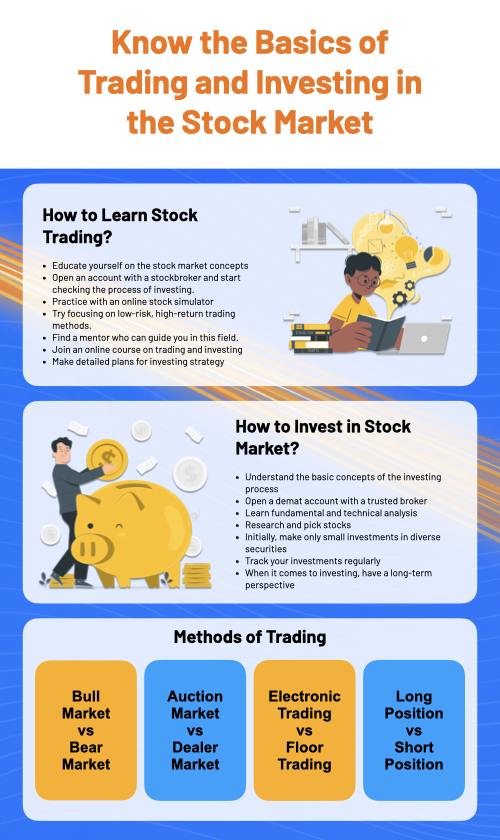
The stock market isn’t a single entity but a network of exchanges where buyers and sellers trade securities. Prices are determined by the forces of supply and demand. When demand for a stock is high, its price tends to rise; when supply exceeds demand, prices fall. Understanding this basic principle helps explain market volatility. The terms “bull market” and “bear market” describe overall market trends. A bull market signifies a period of rising stock prices and investor optimism, while a bear market indicates falling prices and widespread pessimism. Recognizing these broad trends, while not prescriptive for individual stock performance, provides context for the economic environment in which your investments operate.
The Importance of Diversification
Perhaps one of the most critical lessons for new investors is the principle of diversification. Often summarized by the adage “don’t put all your eggs in one basket,” diversification involves spreading your investments across various asset classes (stocks, bonds, real estate), industries, geographies, and company sizes. This strategy helps mitigate risk. If one investment performs poorly, the impact on your overall portfolio is cushioned by the performance of others. For instance, holding stocks in technology, healthcare, and consumer goods, alongside a portion of bonds, can provide a more stable return profile than investing solely in a single, volatile sector. Diversification doesn’t guarantee profits or eliminate risk, but it significantly reduces the risk of substantial losses.
Essential Research and Analysis Techniques
Once you have a grasp of the basics, the next step is to learn how to evaluate potential investments. This involves delving into the specifics of companies and market trends using established research and analysis techniques.
Fundamental Analysis: Valuing Companies
Fundamental analysis is the process of examining a company’s financial health, management, and industry to determine its intrinsic value. The goal is to identify companies whose stock prices are currently trading below their true worth, offering an opportunity for long-term growth. This involves scrutinizing financial statements such as the balance sheet (assets, liabilities, equity), income statement (revenues, expenses, profits), and cash flow statement (how cash is generated and used). Key financial ratios like the Price-to-Earnings (P/E) ratio, Earnings Per Share (EPS), and revenue growth provide insights into a company’s profitability, efficiency, and growth potential. Successful fundamental analysis often requires a long-term perspective, focusing on a company’s underlying business strength rather than short-term market fluctuations.
Technical Analysis: Interpreting Market Trends
In contrast to fundamental analysis, technical analysis focuses on studying past market data, primarily price and volume, to forecast future price movements. Technical analysts believe that all known fundamentals are already “priced in” to the stock, and patterns in charts can reveal investor sentiment and potential trends. Tools used in technical analysis include candlestick charts, which show open, close, high, and low prices for a period; moving averages, which smooth out price data to identify trends; and support and resistance levels, which are price points where a stock tends to stop falling or rising. While more commonly used by short-term traders, understanding basic technical indicators can complement fundamental analysis by helping long-term investors identify opportune entry and exit points. For beginners, it’s often best to prioritize fundamental analysis for long-term investing decisions.
Utilizing Reputable Financial Resources
Access to reliable information is paramount for effective investing. Do not rely on speculative tips or unverified sources. Instead, cultivate a habit of consulting reputable financial news outlets such as The Wall Street Journal, Bloomberg, Reuters, and the Financial Times for market insights and economic analysis. For company-specific information, the most authoritative sources are the companies themselves. Their official annual reports (10-K filings) and other regulatory documents submitted to the Securities and Exchange Commission (SEC) provide comprehensive and audited financial data. Many online brokerage platforms also offer research tools, analyst reports, and educational content that can be invaluable. Learning how to dissect this information critically will significantly enhance your investment decision-making capabilities.
Practical Steps to Getting Started with Investing

Learning about investing is one thing; actually putting money into the market is another. Taking the first practical steps requires a clear strategy and an understanding of the available tools.
Defining Your Investment Goals and Risk Tolerance
Before making any investment, clearly define why you are investing and what you hope to achieve. Are you saving for retirement decades away, a down payment on a house in five years, or simply wealth accumulation? Your investment goals will dictate your time horizon and, consequently, the level of risk you can comfortably take. Equally important is understanding your risk tolerance—your psychological and financial capacity to withstand potential losses. A younger investor with a long time horizon might be comfortable with a higher allocation to growth stocks, which are more volatile but offer higher potential returns. An investor nearing retirement might prioritize capital preservation and income, favoring more stable assets like bonds. Be honest with yourself about how much volatility you can handle without panic selling.
Choosing the Right Investment Account
The type of account you open significantly impacts your investment experience and tax implications. Common options include:
-
Taxable Brokerage Accounts: Flexible accounts where you pay taxes on capital gains and dividends annually. Good for short- to medium-term goals.
-
Retirement Accounts (IRAs, 401(k)s): These offer significant tax advantages for long-term retirement savings. Traditional IRAs/401(k)s offer tax deductions on contributions, with taxes paid upon withdrawal in retirement. Roth IRAs/401(k)s involve after-tax contributions, but qualified withdrawals in retirement are tax-free. Maxing out these accounts is often a cornerstone of a sound financial plan.
-
Custodial Accounts (e.g., UGMA/UTMA): For investing on behalf of a minor.
Research different brokers, considering their fees, available investment products, research tools, and customer service. Many reputable online brokers cater to beginners with user-friendly interfaces and low minimums.
Starting Small and Consistent Investing
You don’t need a large sum of money to begin investing. In fact, starting small and consistently contributing is often more effective than waiting to save a large lump sum. Dollar-cost averaging (DCA) is a powerful strategy where you invest a fixed amount of money at regular intervals (e.g., $100 every month), regardless of the asset’s price. This approach automatically leads you to buy more shares when prices are low and fewer when prices are high, averaging out your purchase price over time and reducing the impact of market volatility. Many brokerage platforms allow for automated contributions, making this strategy easy to implement and maintain discipline. Consistency is key to harnessing the power of compounding.
Learning from Mistakes and Continuous Education
Investing is an ongoing learning process. No investor, however experienced, is immune to mistakes. The market is dynamic, constantly influenced by economic shifts, technological advancements, and geopolitical events. Be prepared to learn from your missteps, adjust your strategies, and stay informed. Read books, listen to reputable financial podcasts, take online courses, and follow trusted financial advisors or experts. The more you learn, the better equipped you will be to make informed decisions and adapt to changing market conditions. Treat your financial education as an investment in itself, one that will yield significant returns over your lifetime.
Common Pitfalls and How to Avoid Them
The path to successful investing is often riddled with psychological and behavioral traps. Recognizing and avoiding these common pitfalls is as crucial as understanding market fundamentals.
Emotional Investing
One of the biggest enemies of successful investing is emotion. Fear and greed often drive investors to make irrational decisions. During market downturns, panic selling out of fear can lock in losses, preventing you from recovering when the market eventually rebounds. Conversely, chasing “hot” stocks or buying into market bubbles driven by greed can lead to substantial losses when speculative prices inevitably correct. Successful investors maintain a cool head, stick to their long-term strategy, and view market volatility as opportunities rather than threats. Adhere to your pre-defined investment plan and avoid making impulsive decisions based on news headlines or social media hype.
Chasing Hot Stocks
Closely related to emotional investing is the tendency to chase “hot” stocks or invest in the latest fad. While some trending companies may indeed have significant potential, many are overvalued due to speculative interest, making them susceptible to sharp corrections. Focusing solely on popular names distracts from fundamental analysis and sound valuation principles. Instead of chasing the next big thing, prioritize investing in quality companies with strong fundamentals, proven business models, and sustainable competitive advantages. These “boring” investments often provide more consistent and reliable returns over the long haul.
Lack of Diversification
As discussed earlier, putting all your investment capital into a single stock or a very narrow sector exposes you to immense risk. If that one investment falters, your entire portfolio could suffer catastrophic losses. Even if you’re confident in a particular company, a diversified portfolio across various asset classes, industries, and geographies is essential. Diversification helps protect against unforeseen events specific to a company or sector and smooths out overall portfolio returns, contributing to long-term stability and growth.
Ignoring Fees and Taxes
Overlooking the impact of fees and taxes can significantly erode your investment returns over time. High expense ratios in mutual funds, frequent trading commissions, and advisory fees can compound to a substantial cost. Similarly, failing to understand the tax implications of your investments – such as capital gains taxes, dividend taxes, and the rules surrounding retirement accounts – can lead to unexpected liabilities. Always read the fine print regarding fees associated with investment products and brokerage accounts. Strategize your investments with tax efficiency in mind, utilizing tax-advantaged accounts like IRAs and 401(k)s whenever possible to maximize your after-tax returns.
In conclusion, learning about stocks and investing is a continuous journey that promises significant financial empowerment. It begins with establishing a strong foundation of market knowledge, mastering essential research techniques, and taking practical, disciplined steps to build your portfolio. By understanding common pitfalls and committing to continuous education, you can navigate the complexities of the financial markets with confidence and build a secure, prosperous future. Remember, patience, discipline, and a long-term perspective are your most valuable assets in the world of investing.
aViewFromTheCave is a participant in the Amazon Services LLC Associates Program, an affiliate advertising program designed to provide a means for sites to earn advertising fees by advertising and linking to Amazon.com. Amazon, the Amazon logo, AmazonSupply, and the AmazonSupply logo are trademarks of Amazon.com, Inc. or its affiliates. As an Amazon Associate we earn affiliate commissions from qualifying purchases.