
Navigating the complexities of federal taxation is a fundamental aspect of financial literacy. For many Americans, the uncertainty of whether they have an outstanding balance with the Internal Revenue Service (IRS) can be a significant source of stress. Whether it stems from a simple mathematical error on a previous return, an overlooked 1099 form, or a misunderstanding of estimated tax requirements for self-employed individuals, tax debt can accumulate interest and penalties rapidly if left unaddressed. Understanding how to proactively verify your tax status is not just about compliance; it is a critical component of maintaining a healthy financial profile and ensuring long-term fiscal stability.

Leveraging Digital Platforms: The IRS Online Account
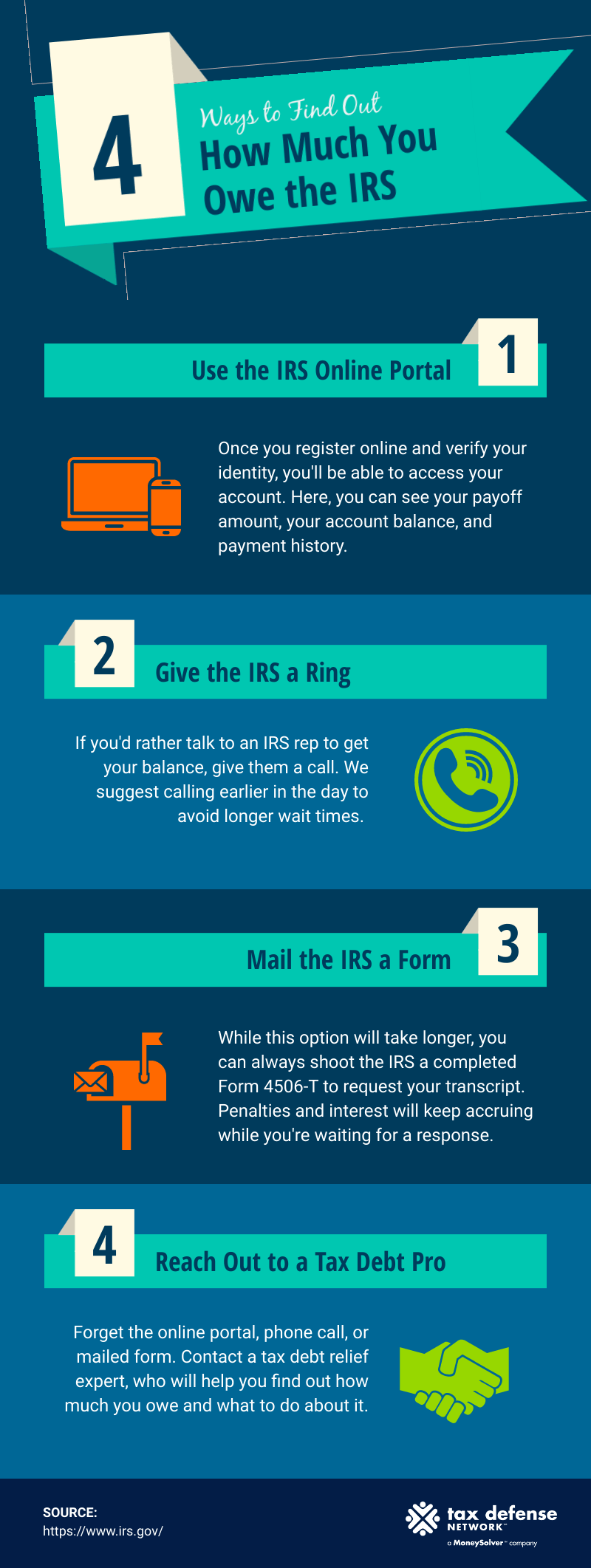
In recent years, the IRS has significantly modernized its digital infrastructure, providing taxpayers with a streamlined way to monitor their accounts in real-time. The most direct and efficient method to determine if you owe money is through the official IRS Online Account portal.
The ID.me Verification Process
To access your sensitive financial data, the IRS requires a high level of security. They currently use ID.me, a third-party identity verification service. When you attempt to sign in to your IRS account, you will be prompted to verify your identity using government-issued identification, such as a driver’s license or passport, and often a biometric scan or a video call with a representative. While this process may seem rigorous, it is designed to protect your personal information from identity theft. Once verified, you gain full access to your federal tax records.
What Your Online Account Reveals
Once logged in, the dashboard provides a comprehensive overview of your financial standing with the government. You can view your total balance owed, broken down by tax year. This includes the principal tax amount, any accrued interest, and penalties that have been assessed. Furthermore, the portal allows you to view your payment history for the past 24 months, see digital copies of certain notices sent to you, and even view key information from your most recent tax return. This transparency is invaluable for taxpayers who want to ensure their records align with the government’s data.
Requesting Transcripts Online
If the dashboard does not provide enough detail, you can use the “Get Transcript” tool within your online account. There are several types of transcripts, but for the purpose of identifying debt, the “Account Transcript” is the most useful. It shows any adjustments made by the IRS after your return was filed, any payments you made, and any credits applied to your account. By reviewing these transcripts, you can pinpoint exactly where a balance may have originated, such as a mismatch between your reported income and the information reported by your employers or financial institutions.
Deciphering Official IRS Correspondence
While digital tools are efficient, the IRS still relies heavily on the United States Postal Service for official legal notifications. Understanding how to interpret these notices is essential for identifying debt and responding appropriately before the situation escalates.
The CP14 Notice: The Initial Bill
The most common way taxpayers find out they owe money is through a CP14 notice. This is the first official bill sent by the IRS when a return is processed and a balance is due. The notice outlines the amount of tax owed, plus any initial interest and penalties for late payment or late filing. It is important to remember that receiving a CP14 is a standard procedure and not an immediate cause for panic; however, it does require a prompt response to stop the accrual of further interest.
Notice of Deficiency and the CP2000
Sometimes, the IRS identifies a discrepancy between your tax return and information received from third parties, such as banks (1099-INT) or employers (W-2). In these cases, you might receive a CP2000 notice. This is not a bill, but a proposal for an adjustment. If the IRS believes you underreported your income, they will outline the tax they believe you owe based on their records. If you do not respond or cannot prove the IRS is incorrect, this proposal eventually turns into a formal assessment of debt. Following this, if the debt remains unpaid, you may receive a “Notice of Intent to Levy,” which is a serious escalation indicating the government may begin seizing assets or garnishing wages.
Distinguishing Legitimate Notices from Scams
In the modern financial landscape, security is as important as accounting. The IRS will never initiate contact via email, text message, or social media to request personal or financial information. Furthermore, they do not call taxpayers to demand immediate payment using specific methods like wire transfers or gift cards. Legitimate IRS correspondence will always arrive via the mail and will include a specific notice number (e.g., CP or LTR) in the top right-hand corner. If you receive a suspicious communication, the safest course of action is to ignore it and check your status directly through the official IRS website or by calling their verified customer service line.
Manual Reconciliation and Financial Auditing
Relying solely on the IRS to tell you what you owe is a reactive strategy. Proactive taxpayers conduct their own internal audits to ensure their filings are accurate and that all obligations are met throughout the year.
Reconciling Withholding and Estimated Payments
For W-2 employees, tax debt often arises when withholding is set too low. If you have experienced major life changes—such as marriage, the birth of a child, or a significant raise—your previous withholding settings may no longer be sufficient. Similarly, for freelancers, contractors, and business owners, the burden of “Pay-As-You-Go” taxation falls on the individual. If you miss a quarterly estimated tax payment or underestimate your annual income, you will likely find yourself with a balance due when you file your annual return in April. Reviewing your bank statements and comparing them to your projected tax bracket can help you identify a potential shortfall before the IRS does.
The Role of Mathematical Errors and Omissions
The IRS has sophisticated automated systems that check every return for mathematical accuracy. A simple transposition of numbers or an error in calculating a specific tax credit (like the Earned Income Tax Credit or the Child Tax Credit) can result in an adjusted balance. If the IRS corrects an error that results in a higher tax liability, they will notify you via mail. By keeping meticulous records and using professional-grade tax software, you can minimize these errors. However, if you suspect you made a mistake on a past return that resulted in underpayment, you can file Form 1040-X, an amended return, to proactively correct the record and pay the difference.
Checking for Unclaimed Refunds or Offsets
Interestingly, knowing if you “owe” money also involves knowing if the IRS has “offset” a refund you were expecting. If you have federal debts—such as past-due student loans, child support, or state income tax debt—the IRS may legally intercept your federal tax refund to pay those debts. This is known as a Treasury Offset. You can check the status of an offset by calling the Bureau of the Fiscal Service. While this isn’t a debt owed directly to the IRS, it explains why an expected refund might vanish, effectively functioning as a payment toward an existing liability.
Professional Consultation and Resolution Pathways
When the amount owed is significant or the origin of the debt is unclear, seeking professional guidance becomes a strategic financial move. High-net-worth individuals and business owners often employ specialized help to navigate these waters.
The Power of Enrolled Agents and CPAs
Certified Public Accountants (CPAs) and Enrolled Agents (EAs) have the authority to represent taxpayers before the IRS. These professionals can pull “transcripts for practitioners,” which provide a deeper level of detail than the standard consumer transcripts. They can identify if the IRS has made a procedural error or if you qualify for “First-Time Abatement” of penalties. If you are unsure whether you owe money, a professional tax transcript analysis can provide a definitive answer and a roadmap for resolution.
Utilizing the Taxpayer Advocate Service (TAS)
If you are experiencing significant financial hardship or have been unable to resolve a dispute through normal IRS channels, the Taxpayer Advocate Service is an independent organization within the IRS that helps taxpayers. They can help clarify your account status and ensure that your rights as a taxpayer are being protected. This is particularly useful when there is a dispute over the amount owed or when the debt has resulted from identity theft.

Exploring Payment Alternatives
If you confirm that you do indeed owe money and cannot pay the full amount immediately, the IRS offers several pathways to manage the debt without facing aggressive collection actions.
-
Installment Agreements: These allow you to pay your debt over time, typically up to 72 months.
-
Offer in Compromise (OIC): In specific cases of extreme financial hardship, the IRS may allow you to settle your tax debt for less than the full amount you owe.
-
Currently Not Collectible (CNC) Status: If paying the debt would prevent you from meeting basic living expenses, the IRS may temporarily delay collection until your financial situation improves.
Staying informed about your tax status is a vital part of professional financial management. By utilizing the IRS Online Account, carefully monitoring official mail, and conducting regular internal audits of your income and withholdings, you can ensure that you are never blindsided by an unexpected tax bill. In the realm of personal finance, clarity is the best defense against interest, penalties, and the stress of the unknown.
aViewFromTheCave is a participant in the Amazon Services LLC Associates Program, an affiliate advertising program designed to provide a means for sites to earn advertising fees by advertising and linking to Amazon.com. Amazon, the Amazon logo, AmazonSupply, and the AmazonSupply logo are trademarks of Amazon.com, Inc. or its affiliates. As an Amazon Associate we earn affiliate commissions from qualifying purchases.