
In an era defined by digital transformation, the landscape of personal finance has undergone a profound shift, making investing more accessible than ever before. At the forefront of this revolution stands Robinhood, a pioneering brokerage platform that burst onto the scene with a simple yet radical proposition: commission-free trading. By removing the traditional barriers of high fees and complex interfaces, Robinhood has democratized access to the stock market, drawing in millions of new investors eager to take control of their financial futures.
This guide is designed for individuals looking to understand the mechanics of investing with Robinhood. Whether you’re a complete novice contemplating your first investment or someone seeking to optimize your existing portfolio on the platform, we’ll delve into the essential steps, strategic considerations, and practical tips for navigating the world of personal finance through Robinhood. Our focus will be squarely on empowering you to make informed investment decisions, leveraging Robinhood’s tools while understanding the broader financial context of your actions.
Getting Started with Robinhood: Laying the Foundation
Before you can begin your investment journey, establishing a robust foundation on Robinhood is paramount. This involves understanding the platform’s core appeal, setting up your account, and ensuring your finances are properly linked.
The Allure of Commission-Free Trading
Robinhood’s primary differentiator and indeed its most significant innovation was the elimination of commission fees on stock, ETF, options, and cryptocurrency trades. This move sent shockwaves through the brokerage industry, forcing competitors to follow suit and fundamentally reshaping how individuals approach investing. For new and small investors, the absence of per-trade fees means that more of their capital goes directly into investments, making it feasible to invest smaller amounts more frequently without being eroded by transaction costs. This low-barrier entry point is a major reason for its widespread adoption, especially among younger demographics.
Account Creation and Verification
Opening a Robinhood account is a streamlined process, but it requires adherence to standard financial regulations designed to prevent fraud and ensure financial security. To get started, you’ll download the Robinhood app (available on iOS and Android) or visit their website. The registration process typically involves:
- Providing Personal Information: Full name, date of birth, Social Security Number (or Tax ID for non-US citizens eligible to trade), and residential address. This information is legally required for Know Your Customer (KYC) procedures.
- Answering Financial Questions: Robinhood will ask about your employment status, income, and investment experience. This helps them assess your suitability for certain investment products and understand your financial profile.
- Identity Verification: You may be asked to upload a photo of a government-issued ID (like a driver’s license or passport) to confirm your identity. This is a crucial step to prevent identity theft and comply with regulatory requirements.
Once submitted, your application will undergo a review process, usually completed within a few business days. Upon approval, you’ll receive notification that your account is ready.
Funding Your Investment Journey
With your account approved, the next step is to deposit funds. Robinhood offers several convenient methods:
- Linking Your Bank Account: This is the most common method. You’ll securely link your checking or savings account using your bank’s login credentials or by providing your account and routing numbers. Robinhood uses secure third-party services for this, such as Plaid, to ensure data protection.
- Instant Deposits: For smaller amounts (typically up to $1,000, though this can vary), Robinhood offers instant access to your deposited funds for trading. Larger deposits may take a few business days to clear, during which the funds will appear in your account but may not be immediately available for withdrawal.
- Transfers from Other Brokerages: If you have an existing investment account elsewhere, you can initiate an Automated Customer Account Transfer Service (ACATS) to move your entire portfolio (or specific assets) to Robinhood. This process can take several business days and may involve fees from the outgoing brokerage.
Having funds in your account is the prerequisite for making your first investment, setting the stage for you to explore Robinhood’s diverse investment options.
Navigating Investment Choices on the Platform
Robinhood offers access to a variety of asset classes, catering to different investment goals and risk appetites. Understanding these options is crucial for building a well-rounded portfolio.
Stocks and Exchange-Traded Funds (ETFs): The Core Offerings
Stocks represent ownership in a company, offering the potential for capital appreciation and dividends. ETFs, on the other hand, are diversified baskets of securities (like stocks, bonds, or commodities) that trade like individual stocks. They offer instant diversification, often at a lower cost than mutual funds.
On Robinhood, you can search for stocks and ETFs by name or ticker symbol. The platform provides essential information for each asset, including:
- Current Price and Price History: Charts showing performance over various timeframes.
- Key Statistics: Market cap, volume, dividend yield (if applicable), and P/E ratio.
- News and Analyst Ratings: Relevant news articles and what professional analysts recommend.
- Company Profile: A brief description of the company or the ETF’s holdings.
To buy, you simply enter the ticker, specify the amount (in dollars or shares), and place a market or limit order.
Fractional Shares: Demystifying High-Priced Stocks
One of Robinhood’s most beginner-friendly features is fractional shares. This innovation allows you to invest in a portion of a share rather than needing to buy a full share. For example, if a company’s stock trades at $1,000 per share, you could invest just $100 and own 0.1 of a share. This significantly lowers the barrier to entry for expensive stocks, enabling investors with smaller budgets to build diversified portfolios that include high-growth companies. Fractional shares make dollar-cost averaging (investing a fixed amount regularly) more effective across a broader range of assets.
Cryptocurrencies: Exploring the Digital Frontier
Robinhood was one of the first mainstream brokerages to offer commission-free cryptocurrency trading. Investors can buy and sell popular digital assets like Bitcoin (BTC), Ethereum (ETH), Dogecoin (DOGE), and others. It’s important to note that Robinhood Crypto allows you to trade and hold cryptocurrencies, but it operates as a custodial service. This means you do not own the private keys to your crypto wallet and, therefore, cannot transfer your crypto off the platform to an external wallet or use it for transactions. This convenience comes with a trade-off in terms of full ownership and control, a crucial consideration for crypto enthusiasts.
Options Trading: A Tool for Experienced Investors
Options are contracts that give the buyer the right, but not the obligation, to buy or sell an underlying asset at a specified price (strike price) on or before a certain date (expiration date). Options trading is inherently complex and carries significant risk, making it generally unsuitable for novice investors. Robinhood provides access to options trading, but it requires approval based on your stated investment experience and financial background. While options can be powerful tools for hedging or speculating, beginners should approach them with extreme caution and thorough education, as losses can exceed the initial investment.
Other Features: Cash Management and Retirement
Beyond traditional trading, Robinhood has expanded its offerings:
- Robinhood Gold: A premium subscription service that provides access to margin investing (borrowing money to invest), larger instant deposits, professional research from Morningstar, and higher interest rates on uninvested cash.
- Cash Management: Robinhood offers an interest-bearing cash sweep program where uninvested cash in your brokerage account is swept to partner banks, earning interest. This effectively acts as a high-yield savings account linked to your brokerage.
- Retirement Accounts (IRAs): Robinhood has recently introduced Roth and Traditional IRAs, allowing users to invest for retirement with tax advantages, often including a matching bonus for contributions. This is a significant addition for long-term financial planning.
Crafting Your Investment Strategy with Robinhood’s Tools
Having explored the investment avenues, the next critical step is to develop a coherent strategy. Robinhood provides several tools and features that can assist in this process, but the underlying principles of smart investing remain universal.
Defining Your Financial Goals and Risk Profile
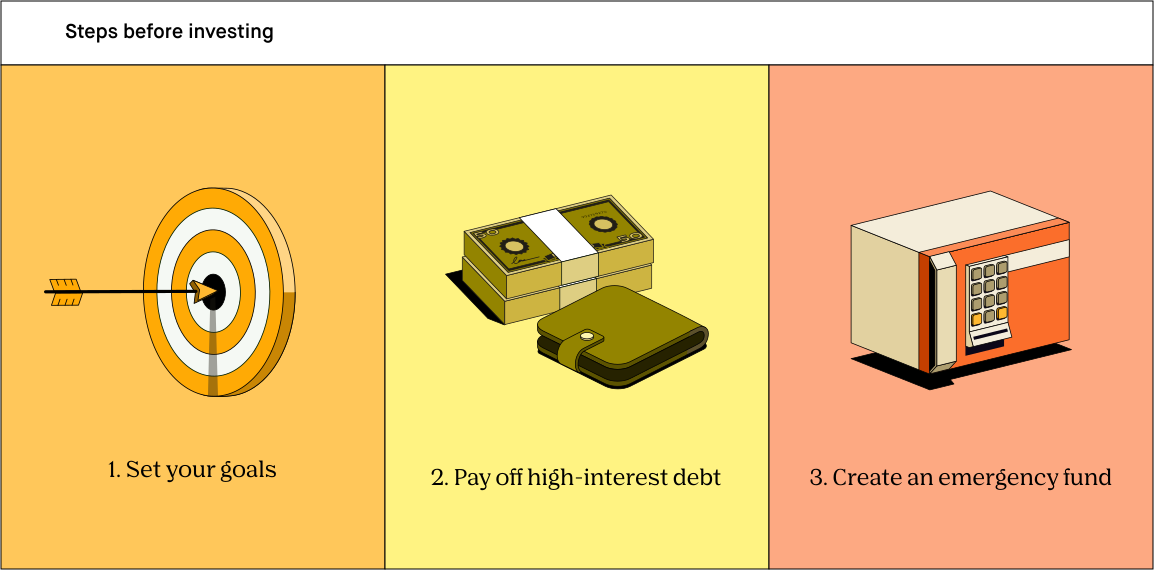
Before placing any trade, clarify what you’re investing for (e.g., retirement, a down payment, a child’s education) and your timeline. Equally important is understanding your risk tolerance—how much volatility and potential loss you’re comfortable with. Robinhood doesn’t explicitly guide you through this, so it’s a personal assessment you must conduct. Your goals and risk tolerance will dictate the types of assets you choose (e.g., aggressive growth stocks for long-term, conservative ETFs for short-term goals) and how much you allocate to each.
Building a Diversified Portfolio
Diversification is the cornerstone of risk management in investing. It means spreading your investments across various asset classes, industries, and geographies to mitigate the impact of poor performance in any single area. For instance, rather than putting all your money into one tech stock, you might invest in a tech ETF, a healthcare stock, a bond ETF, and some cryptocurrency. Robinhood’s fractional shares feature particularly aids diversification for smaller portfolios, allowing you to invest small amounts across many different companies and ETFs without prohibitive costs.
Researching Investments within the App
While Robinhood is known for its simplicity, it does offer basic research tools:
- News Feeds: Integrated news from various sources helps you stay updated on companies you follow or own.
- Analyst Ratings: For many stocks, Robinhood displays aggregated ratings from Wall Street analysts (buy, hold, sell). While not a substitute for your own due diligence, it provides a quick sentiment check.
- Basic Charts and Statistics: Visuals of price history and fundamental data points (like market cap, P/E ratio, dividend yield) are available to help you understand a company’s past performance and valuation.
For more in-depth research, especially for Robinhood Gold subscribers, Morningstar provides professional reports. However, prudent investors often supplement in-app information with external research from financial news sites, company reports, and independent analysis.
Setting Up Recurring Investments
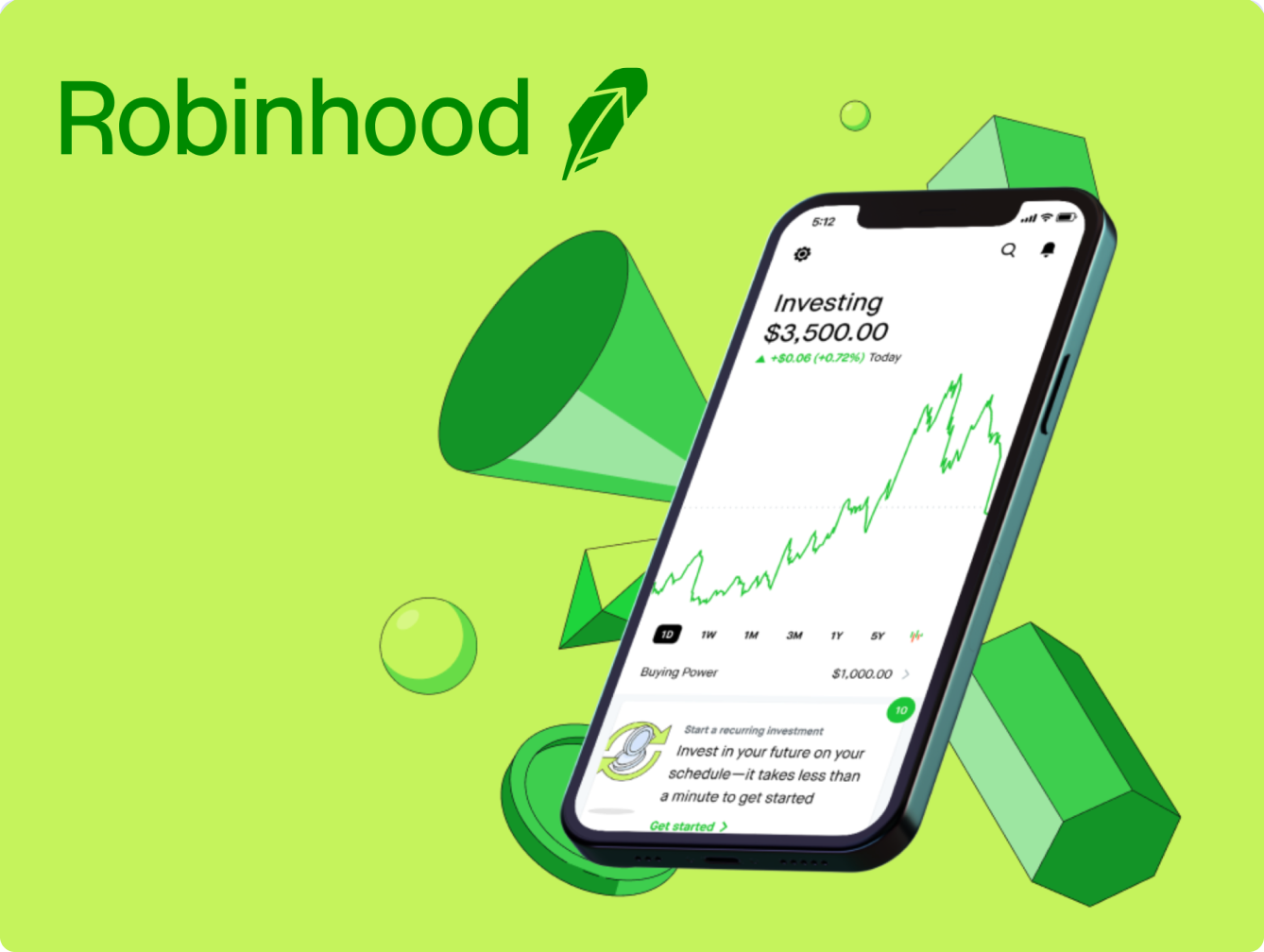
One of the most effective strategies for long-term wealth building is dollar-cost averaging (DCA). This involves investing a fixed amount of money at regular intervals, regardless of market fluctuations. By doing so, you buy more shares when prices are low and fewer when prices are high, averaging out your purchase price over time. Robinhood facilitates this with its recurring investments feature, allowing you to schedule automatic investments into specific stocks or ETFs on a daily, weekly, bi-weekly, or monthly basis. This automates disciplined investing and helps reduce the emotional impact of market timing.
Managing Your Portfolio and Understanding the Broader Picture
Investing is not a one-time event but an ongoing process of management and continuous learning. Effectively using Robinhood means not just placing trades but also monitoring your holdings and understanding the financial implications beyond the platform.
Monitoring Performance and Rebalancing Your Portfolio
Once you’ve made your investments, regular monitoring is essential. Robinhood’s intuitive interface allows you to easily track the performance of your individual holdings and your overall portfolio value. Key metrics like total return, daily change, and market value are prominently displayed.
- Rebalancing: Over time, some investments in your portfolio will perform better than others, causing your asset allocation to drift from your target. Rebalancing involves selling some of your outperforming assets and buying more of your underperforming ones to bring your portfolio back to its desired allocation. This helps manage risk and maintain your strategy. You can set reminders to rebalance periodically (e.g., annually or semi-annually).
The Real Cost: Understanding Fees, Spreads, and Taxes
While Robinhood touts “commission-free” trading, it’s crucial to understand that investing still involves costs and tax implications:
- Spreads: For cryptocurrencies, Robinhood may incorporate a small spread into the price you see. This is the difference between the bid and ask price and effectively acts as a transaction cost.
- Regulatory Fees: Small fees like the SEC fee and FINRA TAF are charged on sell orders of stocks and ETFs, though these are typically negligible for retail investors.
- Robinhood Gold: The subscription fee for Robinhood Gold is a direct cost if you opt for premium features.
- Tax Implications: Profits from selling investments (capital gains) are taxable. Dividends are also taxable income. Robinhood provides tax documents (e.g., Form 1099-B) annually, but understanding your personal tax situation and consulting a tax professional is critical for proper financial planning. Long-term capital gains are taxed at a lower rate than short-term gains, incentivizing holding investments for over a year.
Utilizing Educational Resources and Community
Robinhood offers an educational section called “Robinhood Learn,” which provides articles and guides on various investing topics, from basics like “What is a stock?” to more advanced concepts. While these resources are helpful, they should be supplemented with broader financial education. Engaging with reputable financial news, books, and educational platforms can deepen your understanding and foster a more robust investment mindset. While Robinhood has built a community, always be cautious about investment advice found on social media and ensure you conduct your own due diligence.
Weighing the Benefits and Considerations of Robinhood Investing
Robinhood has undoubtedly revolutionized personal investing, but like any financial platform, it comes with its own set of advantages and potential drawbacks. A balanced perspective is crucial for making an informed decision about whether it aligns with your investment philosophy.
Key Advantages: Accessibility and User Experience
- Commission-Free Trading: This remains its most significant draw, allowing more of your money to work for you.
- User-Friendly Interface: The app’s clean, intuitive design makes it exceptionally easy for beginners to navigate, search for investments, and execute trades.
- Low Barrier to Entry: Fractional shares and no minimum deposit requirements mean anyone can start investing with as little as a dollar.
- Instant Access to Funds: For smaller deposits, immediate trading power is a convenience.
- Broad Asset Access: The ability to trade stocks, ETFs, options, and cryptocurrencies from a single platform simplifies portfolio management.
Important Considerations: Potential Pitfalls and Limitations
- Gamification Concerns: Critics argue that Robinhood’s sleek interface, notifications, and instant gratification features can make investing feel like a game, potentially encouraging risky or impulsive trading behaviors among inexperienced users.
- Customer Support: Historically, Robinhood’s customer service was primarily email-based, leading to frustrations during high-volume periods or for urgent issues. While they have expanded phone support, it remains an area of ongoing development.
- Limited Research Tools: While improving, Robinhood’s in-app research capabilities are still relatively basic compared to more established brokerages, which might offer more comprehensive analytical tools, detailed reports, and advanced charting.
- Focus on Active Trading: The platform’s design often leans towards facilitating frequent trades, which may not always align with a long-term, buy-and-hold investment strategy, especially for passive investors.
- Past Controversies: Robinhood has faced scrutiny and regulatory action related to outages, payment for order flow (how they generate revenue from commission-free trades), and restrictions on certain trades during periods of high volatility (e.g., the GameStop saga), highlighting the importance of understanding the platform’s operational risks.
Is Robinhood Right for You?
Robinhood is particularly well-suited for:
- Beginner Investors: Its simplicity and low cost make it an ideal starting point for those new to the stock market.
- Small Investors: Fractional shares and commission-free trading allow individuals with limited capital to build diversified portfolios.
- Active Traders: While some aspects may encourage frequent trading, its zero-commission model is attractive for those who execute many trades.
- Those Seeking Convenience: The integrated access to multiple asset classes and a clean mobile experience is a major plus.
However, if you’re an experienced investor requiring advanced analytical tools, comprehensive research, dedicated financial advisory services, or direct control over your crypto private keys, you might find Robinhood’s offerings somewhat limited.

Conclusion
Investing with Robinhood represents a compelling entry point into the financial markets for millions. Its pioneering commission-free model and intuitive design have undeniably broken down traditional barriers, making it easier than ever for individuals to participate in wealth creation. By understanding the platform’s features, making informed decisions about your investment strategy, and acknowledging both its advantages and limitations, you can effectively leverage Robinhood to work towards your financial objectives.
Remember that successful investing is a journey that requires patience, continuous learning, and a disciplined approach. While Robinhood provides the tools, the responsibility for diligent research, strategic planning, and understanding your personal financial landscape ultimately rests with you. Approach your investments with thoughtfulness, manage your risks prudently, and commit to an ongoing process of financial education to empower your path to sustained financial growth.
aViewFromTheCave is a participant in the Amazon Services LLC Associates Program, an affiliate advertising program designed to provide a means for sites to earn advertising fees by advertising and linking to Amazon.com. Amazon, the Amazon logo, AmazonSupply, and the AmazonSupply logo are trademarks of Amazon.com, Inc. or its affiliates. As an Amazon Associate we earn affiliate commissions from qualifying purchases.