
The digital revolution has democratized finance, transforming what was once an exclusive realm into an accessible frontier for anyone with an internet connection. Gone are the days when investing was solely the domain of high-net-worth individuals or institutional behemoths. Today, the power to grow wealth and secure financial freedom through strategic investments lies literally at our fingertips, facilitated by an explosion of online platforms and innovative financial tools. Learning how to invest online and make money is no longer a niche skill but an essential component of modern financial literacy.
This comprehensive guide will demystify online investing, providing a roadmap for individuals looking to harness its potential. We’ll delve into the various platforms, asset classes, and strategies that can empower you to build a robust investment portfolio, generate returns, and work towards your financial aspirations. Whether you’re a novice taking your first steps or an experienced investor seeking to refine your approach, understanding the nuances of the online investment landscape is paramount to unlocking sustained financial success.

Understanding the Landscape of Online Investing
The internet has fundamentally reshaped how we interact with financial markets. This shift brings with it both unprecedented opportunities and new considerations.
The Digital Transformation of Investment
The evolution from brick-and-mortar brokerage firms to sophisticated online platforms has been swift and profound. Online brokers, robo-advisors, and a myriad of fintech applications have not only lowered the barriers to entry but also streamlined the entire investment process. These digital solutions offer intuitive interfaces, vast amounts of real-time data, and analytical tools that were once exclusive to professional traders. This accessibility means individuals can now research, buy, and sell a wide array of financial instruments from the comfort of their homes, often with minimal capital. The rise of fractional shares, in particular, has made investing in high-priced stocks attainable for everyday investors, further leveling the playing field.
Key Benefits of Online Investing
The advantages of online investing are compelling and numerous. Firstly, accessibility is unparalleled; global markets are available 24/7, often at the touch of a button. Secondly, online platforms typically boast lower fees compared to traditional full-service brokers. Reduced overheads often translate into commission-free trading for stocks and ETFs, significantly cutting down on costs that can eat into long-term returns. Thirdly, online investing offers greater control over your portfolio. Investors can make their own decisions, execute trades instantly, and monitor performance in real-time, fostering a deeper understanding and ownership of their financial journey. Finally, the sheer breadth of diversification opportunities available through online platforms, from global stocks and bonds to ETFs and even alternative assets, empowers investors to build resilient portfolios tailored to their risk profile.
Risks and Considerations
While the benefits are substantial, online investing is not without its risks. Market volatility is inherent to investing; prices can fluctuate rapidly based on economic news, geopolitical events, or company-specific developments. Investors must be prepared for potential dips and maintain a long-term perspective. Furthermore, the vast amount of information available online can lead to information overload or, worse, the spread of misinformation, making it crucial to discern reliable sources. The digital nature also exposes investors to cybersecurity threats and online scams, necessitating strong passwords, two-factor authentication, and vigilance against phishing attempts. Finally, the ease of trading can sometimes encourage over-trading or impulsive decisions driven by emotion rather than sound strategy, underscoring the importance of discipline and a well-defined investment plan.
Building Your Online Investment Foundation
Successful online investing begins with a clear understanding of your personal financial landscape and a strategic approach to selecting the right tools.
Defining Your Financial Goals and Risk Tolerance
Before making a single investment, it’s crucial to define what you want to achieve. Are you saving for retirement, a down payment on a house, your children’s education, or simply long-term wealth accumulation? Your financial goals will dictate your investment horizon (short-term vs. long-term) and influence your asset allocation. Equally important is understanding your risk tolerance. Are you comfortable with aggressive growth strategies that come with higher volatility, or do you prefer a more conservative approach focused on capital preservation? Your age, income stability, and personal temperament all play a role here. A young investor with a long horizon might tolerate more risk, while someone nearing retirement might opt for a more stable portfolio. Accurately assessing both your goals and risk tolerance forms the bedrock of a sound investment strategy.
Choosing the Right Online Investment Platform
The proliferation of online investment platforms means there’s a solution for almost every type of investor.
-
Traditional Online Brokers (e.g., Fidelity, Charles Schwab, TD Ameritrade) offer a comprehensive suite of investment products, advanced trading tools, and extensive research resources. They are ideal for active traders, investors who want a wide range of asset choices, and those who appreciate robust customer support. Many now offer commission-free trading for stocks and ETFs.
-
Robo-Advisors (e.g., Betterment, Wealthfront) are perfect for beginners or those who prefer a hands-off approach. They use algorithms to build and manage diversified portfolios based on your goals and risk tolerance, automatically rebalancing them as needed. Fees are generally low, typically a small percentage of assets under management.
-
Fintech Apps/Micro-Investing Platforms (e.g., Acorns, Robinhood) have popularized investing for a younger demographic, often featuring gamified interfaces and the ability to invest small amounts or fractional shares. While they offer an easy entry point, it’s important to understand their limitations, especially regarding educational resources and the breadth of investment options.
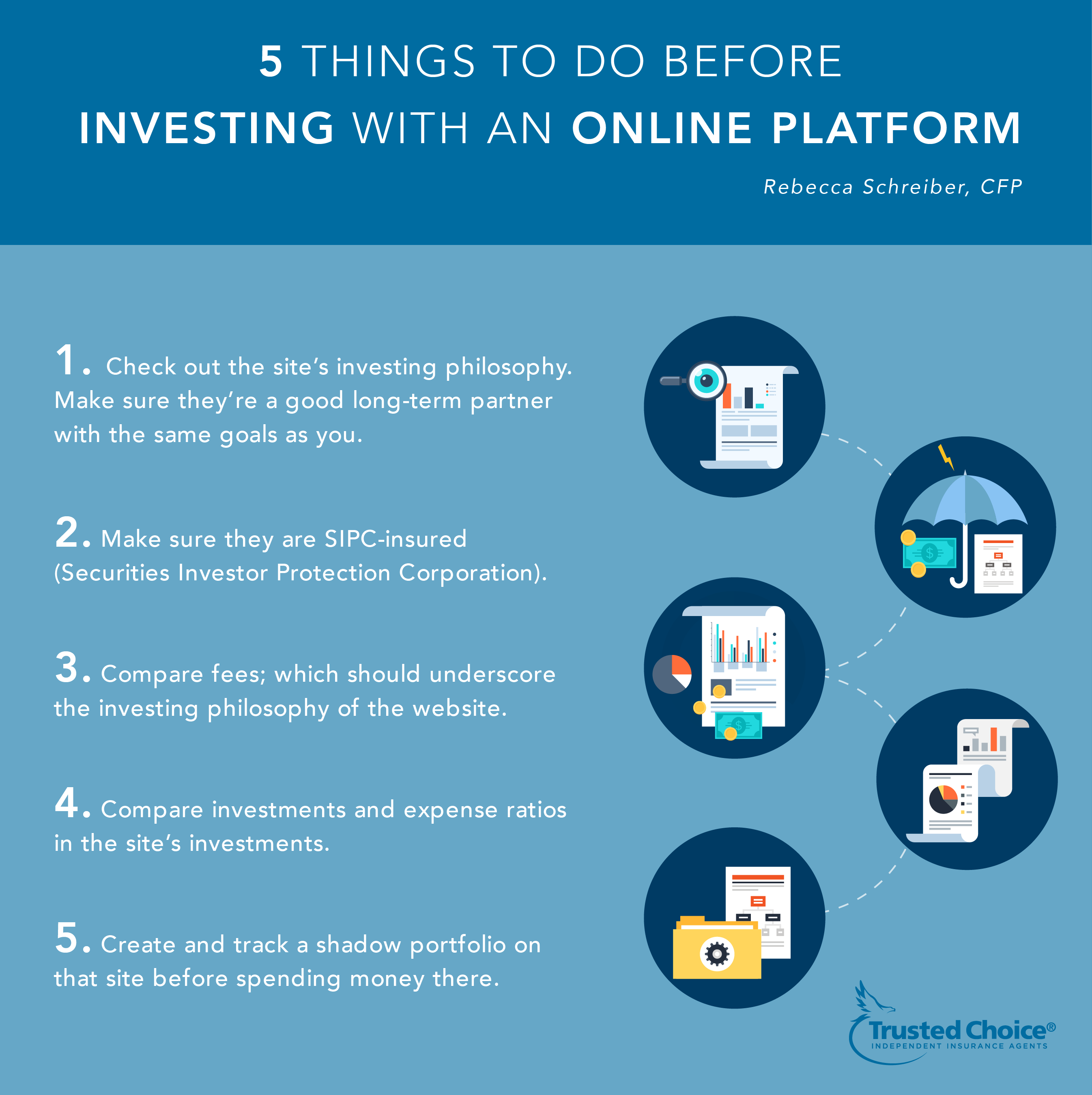
Researching platforms based on fees, investment options, user interface, customer service, and educational resources is vital to finding the one that best suits your needs.
Essential Account Setup and Security
Once you’ve chosen a platform, setting up your account is typically straightforward but requires attention to detail. You’ll need to provide personal information for Know Your Customer (KYC) verification, including your Social Security number, address, and proof of identity. This is a regulatory requirement designed to prevent fraud and money laundering. After account approval, you’ll need to fund your account, usually via bank transfer (ACH), wire transfer, or linking an external brokerage account. Security is paramount; always use strong, unique passwords and enable two-factor authentication (2FA) whenever available. Be wary of unsolicited emails or calls asking for personal financial information. A secure platform combined with diligent personal security practices will safeguard your investments.
Diverse Avenues for Online Investment
The online investment world offers a vast array of asset classes, each with its own risk-reward profile and role within a diversified portfolio.
Stocks and Exchange-Traded Funds (ETFs)
-
Stocks: Represent ownership in a company. Investing in individual stocks offers the potential for high capital appreciation if the company performs well, and some pay dividends (a portion of the company’s profits distributed to shareholders). However, individual stocks carry higher risk, as their value is tied directly to the performance and news surrounding that specific company. Thorough research into a company’s financials, management, and industry outlook is crucial.
-
ETFs: These are funds that hold a collection of assets, such as stocks, bonds, or commodities, and trade on stock exchanges like individual stocks. ETFs offer instant diversification, as they track an index (like the S&P 500), a sector (e.g., technology, healthcare), or a specific asset class. They generally have lower expense ratios than actively managed mutual funds and are a popular choice for investors seeking broad market exposure with reduced individual stock risk.
Bonds and Fixed Income
Bonds are essentially loans made to governments or corporations, which promise to pay back the principal amount at maturity, along with regular interest payments. They are generally considered less volatile than stocks and are often used to balance a portfolio, providing stability and predictable income.
-
Government Bonds: Issued by national or municipal governments, these are typically considered very low risk, especially those from stable economies, but offer correspondingly lower yields.
-
Corporate Bonds: Issued by companies, these offer higher yields than government bonds to compensate for the higher risk of default. The creditworthiness of the issuing company is a crucial factor to evaluate.
Bonds play an important role in a diversified portfolio, especially for investors with a lower risk tolerance or those nearing retirement who prioritize income and capital preservation.
Real Estate Investment Trusts (REITs) and Crowdfunding
For investors interested in real estate without the complexities of direct property ownership, these options provide valuable alternatives.
-
REITs: These are companies that own, operate, or finance income-producing real estate. They trade on stock exchanges like traditional stocks and are legally required to distribute a significant portion of their taxable income to shareholders as dividends, making them attractive for income generation. REITs offer liquidity and diversification within the real estate sector.
-
Real Estate Crowdfunding: Platforms allow multiple investors to pool their money to invest in specific real estate projects (e.g., residential developments, commercial properties). This allows access to direct real estate investments with smaller capital commitments than traditional routes, though it often comes with higher risk and lower liquidity than publicly traded REITs.
Alternative Investments (with caution)
Beyond traditional assets, online platforms have opened doors to various alternative investments, though these often come with higher risk and volatility.
-
Cryptocurrencies: Digital assets like Bitcoin and Ethereum have gained prominence, offering potentially high returns but also extreme price volatility. They are highly speculative and should only comprise a small portion of a portfolio for investors with a high risk tolerance and a thorough understanding of the underlying technology and market dynamics.
-
Peer-to-Peer (P2P) Lending: Platforms connect individual borrowers with individual lenders, allowing investors to earn interest by funding personal loans or small business loans. While offering attractive yields, P2P lending carries credit risk (borrower default) and may lack liquidity.
Strategies for Making Money Online Through Investing
Investing is not merely about choosing assets; it’s about employing intelligent strategies that align with your goals and risk profile.
Long-Term Growth Investing
This is perhaps the most fundamental and powerful strategy for wealth creation. Long-term growth investing involves buying assets (typically stocks or ETFs) with the expectation that their value will increase significantly over several years, often decades. Key principles include:
-
Compounding: Reinvesting returns to generate further returns, allowing your money to grow exponentially over time.
-
Dollar-Cost Averaging (DCA): Investing a fixed amount of money at regular intervals, regardless of market fluctuations. This strategy averages out your purchase price, reducing the risk of buying all your assets at a market peak.
-
Buy and Hold: A strategy where investors purchase securities and hold them for a long period, ignoring short-term market fluctuations. This approach minimizes transaction costs and taxes on capital gains while leveraging the power of compounding.
Dividend Investing
This strategy focuses on investing in companies that regularly pay dividends to their shareholders. Dividend stocks can provide a steady stream of income, which can be reinvested to buy more shares (further accelerating compounding) or used as passive income. Companies with a long history of paying and increasing dividends are often mature, financially stable businesses. This strategy can be particularly appealing to investors seeking income in retirement or those looking for a less volatile component in their portfolio.
Value Investing
Pioneered by Benjamin Graham and popularized by Warren Buffett, value investing involves identifying stocks that are trading below their intrinsic value. Value investors look for strong companies with solid fundamentals that the market has temporarily undervalued due to negative news, industry headwinds, or general market pessimism. This strategy requires extensive research and patience, as it can take time for the market to recognize the true value of an undervalued asset. The goal is to buy low and sell high when the market corrects its perception.
Passive vs. Active Management
-
Passive Management: This strategy involves investing in funds (like index funds or ETFs) that track a specific market index rather than trying to beat it. The philosophy is that over the long term, very few active managers consistently outperform market indexes after fees. Passive investing is characterized by lower fees, broad diversification, and a hands-off approach, making it highly suitable for most individual investors. Robo-advisors are a prime example of passive management in action.
-
Active Management: This involves making specific investment decisions (e.g., picking individual stocks, timing the market) in an attempt to outperform the market. While it offers the potential for higher returns if successful, it comes with higher fees (for actively managed mutual funds) and requires significant research, skill, and time. For most online investors, particularly beginners, starting with a passive approach is often more prudent and effective.
The Power of Diversification
Diversification is the cornerstone of risk management in investing. It involves spreading your investments across various asset classes, industries, geographies, and investment types to minimize the impact of any single investment performing poorly. For example, a portfolio might include a mix of domestic and international stocks, bonds, and perhaps a small allocation to real estate or commodities. The goal is not to eliminate risk entirely, but to manage it by ensuring that a downturn in one area of the market does not devastate your entire portfolio. Online platforms make diversification highly accessible through ETFs and low-cost mutual funds.
Maintaining and Optimizing Your Online Investments
Investing is not a “set it and forget it” endeavor. Ongoing management and adaptation are crucial for long-term success.
Regular Monitoring and Rebalancing
While long-term investing advocates against constant tinkering, regular monitoring is essential. This doesn’t mean checking your portfolio daily, but rather reviewing its performance periodically (e.g., quarterly or annually) to ensure it remains aligned with your financial goals and risk tolerance. Over time, market movements can cause your asset allocation to drift from your target. Rebalancing involves adjusting your portfolio back to your desired allocation by selling assets that have grown significantly and buying those that have underperformed, or by directing new contributions towards underweighted assets. This disciplined approach helps maintain your risk profile and can even force you to “buy low and sell high” systematically.
Tax Efficiency Strategies
Understanding the tax implications of your investments can significantly impact your net returns.
-
Capital Gains: Profits from selling an investment are subject to capital gains tax, which can be short-term (for assets held less than a year) or long-term (for assets held over a year), with long-term rates typically being lower.
-
Tax-Loss Harvesting: This strategy involves selling investments at a loss to offset capital gains and, potentially, a limited amount of ordinary income.
-
Utilizing Tax-Advantaged Accounts: Maximizing contributions to accounts like IRAs (Individual Retirement Accounts) and 401(k)s (if available through an employer) can offer significant tax benefits, such as tax-deferred growth or tax-free withdrawals in retirement. For online investors, Roth IRAs are particularly popular for their tax-free growth and withdrawals in retirement, provided certain conditions are met. Always consult a tax professional for personalized advice.
Continuous Learning and Adapting
The financial world is dynamic, with markets, economic trends, and investment opportunities constantly evolving. Successful online investors commit to continuous learning. Stay informed about global economic news, technological advancements, and shifts in various industries. Read reputable financial publications, listen to informed podcasts, and utilize the educational resources provided by your chosen online brokerage. Adaptability is key; while your core investment strategy should be robust, be prepared to make informed adjustments to your portfolio in response to significant market changes or personal life events.

Avoiding Common Pitfalls
Even with the best intentions, investors can fall prey to common mistakes.
-
Emotional Trading: Making impulsive decisions based on fear or greed can lead to poor outcomes. Stick to your predefined investment plan.
-
Chasing Hot Stocks/Trends: Often, by the time a particular stock or sector is widely touted as “hot,” much of its growth potential has already been realized, leading to potential losses for latecomers.
-
Neglecting Research: Blindly following tips or investing in companies you don’t understand is a recipe for disaster. Always do your due diligence.
-
Over-Leveraging: Investing with borrowed money (margin) can amplify gains but also magnify losses, leading to severe financial consequences. Exercise extreme caution, especially as a beginner.
-
Lack of Diversification: Putting all your eggs in one basket exposes you to undue risk.
By understanding these pitfalls and actively working to avoid them, you can protect your capital and enhance your chances of long-term success.
In conclusion, investing online offers an unparalleled opportunity for individuals to take control of their financial future and build significant wealth. From understanding the digital investment landscape and meticulously choosing the right platforms to implementing diversified strategies and diligently managing your portfolio, each step is crucial. While the allure of “making money” is strong, remember that successful investing is a marathon, not a sprint. It demands patience, discipline, continuous learning, and a commitment to a well-researched, long-term plan. By embracing these principles, you can navigate the complexities of online investing with confidence, transforming your financial aspirations into tangible reality.
aViewFromTheCave is a participant in the Amazon Services LLC Associates Program, an affiliate advertising program designed to provide a means for sites to earn advertising fees by advertising and linking to Amazon.com. Amazon, the Amazon logo, AmazonSupply, and the AmazonSupply logo are trademarks of Amazon.com, Inc. or its affiliates. As an Amazon Associate we earn affiliate commissions from qualifying purchases.