
Investing in the stock market can seem daunting, but with the right tools and understanding, it becomes an accessible path to wealth creation. One such powerful and popular investment vehicle is VOO, the Vanguard S&P 500 ETF. For many investors, from seasoned professionals to those just starting their financial journey, VOO represents a cornerstone of a diversified portfolio, offering broad market exposure and a historically robust track record. This guide will demystify VOO, explain its benefits, walk you through the investment process, and help you determine if it aligns with your financial aspirations.
Understanding VOO: What It Is and Why It Matters
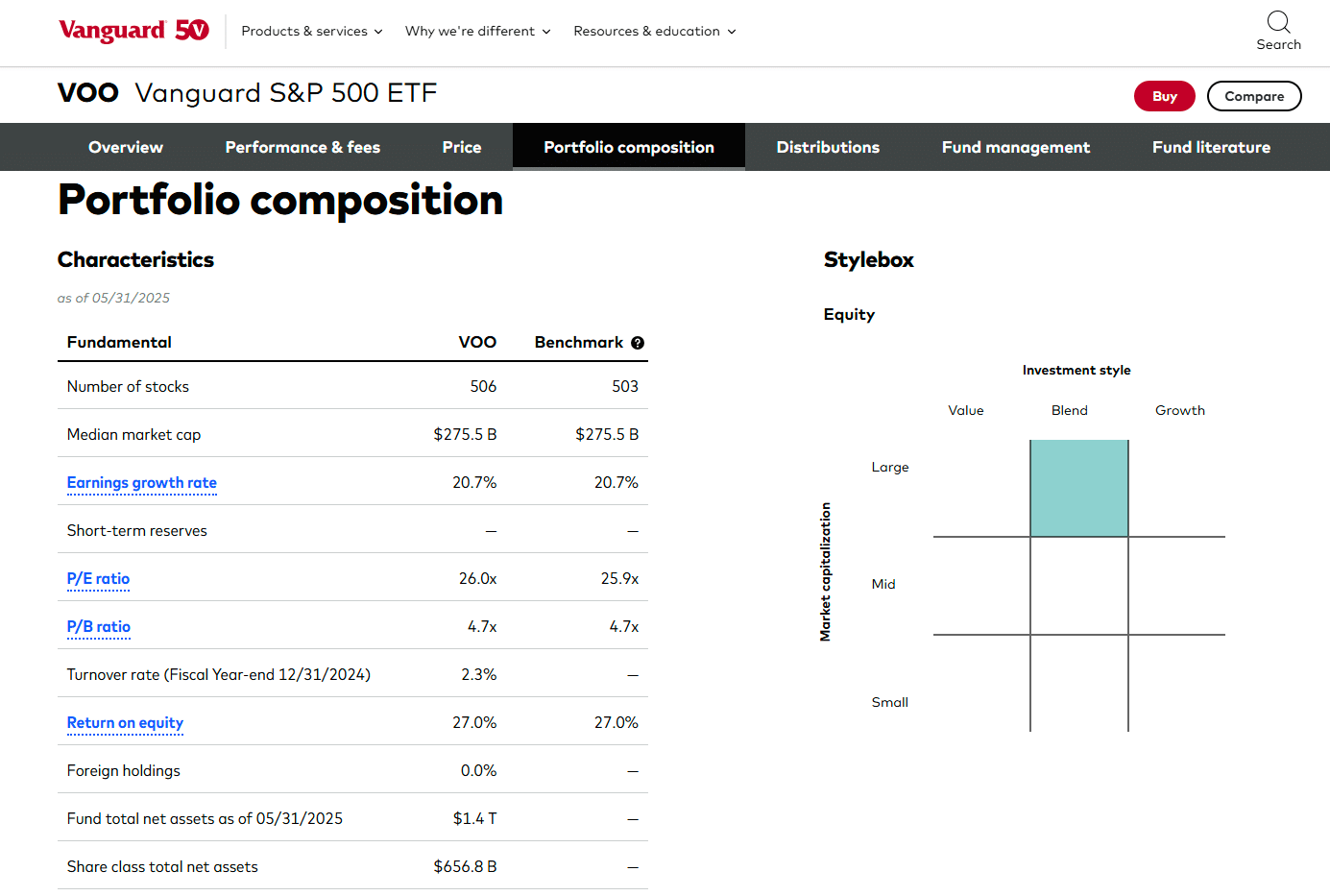
VOO is an Exchange Traded Fund (ETF) offered by Vanguard, one of the world’s largest investment companies. Its primary objective is to track the performance of the S&P 500 Index, a benchmark widely regarded as the best gauge of large-cap U.S. equities and the overall health of the American stock market.
The Essence of VOO: Tracking the S&P 500
At its core, VOO provides investors with exposure to 500 of the largest publicly traded companies in the United States, including giants like Apple, Microsoft, Amazon, Google (Alphabet), and Tesla. Instead of buying individual stocks of these companies, VOO allows you to own a small piece of all of them through a single share. This ‘basket’ approach means that when you invest in VOO, you are essentially investing in the performance of the broader U.S. economy, diversified across various sectors and industries.
VOO is a passively managed fund. This means its strategy isn’t to outperform the S&P 500 through active stock picking, but rather to mirror its performance as closely as possible. This passive approach often translates into significant benefits for investors, primarily through lower fees.
Advantages of Investing in VOO
Several compelling reasons make VOO an attractive option for a wide array of investors:
- Diversification: By holding 500 different companies, VOO inherently offers a high degree of diversification. This reduces the risk associated with any single company’s poor performance, as potential losses are offset by gains in others.
- Low Expense Ratio: Vanguard is renowned for its low-cost investment products, and VOO is no exception. Its expense ratio is remarkably low (e.g., 0.03% as of recent data), meaning a tiny fraction of your investment is eaten away by management fees each year. This allows more of your money to stay invested and compound over time.
- Market-Like Returns: The S&P 500 has historically delivered strong returns over the long term. By tracking this index, VOO offers the potential for significant growth, mirroring the overall upward trend of the U.S. stock market.
- Ease of Access and Liquidity: As an ETF, VOO trades on stock exchanges just like individual stocks. This means you can buy and sell shares throughout the trading day at market prices, offering flexibility and liquidity.
- Simplicity: For new investors, choosing individual stocks can be overwhelming. VOO simplifies the investment process by offering a single, diversified fund that covers a significant portion of the market.
- Dividend Reinvestment: VOO distributes dividends quarterly. Many brokerage platforms allow you to automatically reinvest these dividends, purchasing more VOO shares without incurring additional transaction fees, further accelerating your compounding growth.
Who Should Consider VOO?
VOO is an excellent choice for:
- Long-Term Investors: Those with an investment horizon of 5 years or more who are looking to grow their wealth steadily.
- Beginner Investors: Its simplicity, diversification, and low cost make it an ideal starting point for those new to investing.
- Investors Seeking Broad Market Exposure: Individuals who believe in the long-term growth of the U.S. economy and want a foundational holding in their portfolio.
- Cost-Conscious Investors: Those who prioritize minimizing fees to maximize returns.
- Retirement Savers: VOO can be a core component of an IRA or 401(k) portfolio.
Preparing for Your VOO Investment Journey
Before you can purchase VOO, there are a few foundational steps to ensure you’re set up for success and that your investment aligns with your broader financial plan.
Setting Up a Brokerage Account
The first prerequisite for investing in VOO (or any ETF/stock) is to open a brokerage account. These accounts act as your gateway to the stock market. You’ll need to choose a brokerage firm that suits your needs. Popular options include Vanguard (naturally, if you prefer to keep everything in one place), Fidelity, Charles Schwab, E*TRADE, Robinhood, and many others.
Consider the following types of accounts:
- Taxable Brokerage Account: A general investment account where capital gains and dividends are typically taxed each year. This offers maximum flexibility for withdrawals.
- Roth IRA: Contributions are made with after-tax money, and qualified withdrawals in retirement are tax-free. Excellent for long-term growth and tax-free income in retirement.
- Traditional IRA: Contributions might be tax-deductible, and earnings grow tax-deferred. Withdrawals in retirement are taxed as ordinary income.
- 401(k) or 403(b): If your employer offers a retirement plan, you might be able to invest in VOO or a similar S&P 500 fund within that plan, often with employer matching contributions – a powerful benefit.
When choosing a broker, evaluate factors like commission fees (many offer commission-free ETF trades), user-friendliness of their platform, research tools, customer service, and minimum deposit requirements.
Funding Your Account
Once your brokerage account is open, you’ll need to deposit funds into it. Common methods include:
- Electronic Funds Transfer (EFT) from your bank account: This is typically the easiest and most common method.
- Wire Transfer: For larger sums, though often comes with fees.
- Check Deposit: Slower, but an option.
- Transfer of Securities (ACATS): If you’re moving an existing investment account from one broker to another.
Ensure you only invest money that you won’t need in the short term, as the stock market can be volatile.
Understanding Investment Goals and Risk Tolerance
Before placing your first order, take a moment to reflect on your investment goals and risk tolerance.
- Goals: Are you saving for retirement, a down payment on a house, your children’s education, or simply long-term wealth accumulation? Your goals will influence your investment horizon and strategy.
- Risk Tolerance: How comfortable are you with market fluctuations? While VOO is diversified, it’s still an equity investment and subject to market downturns. Understanding your emotional response to potential losses will help you stick to your strategy during turbulent times. VOO is generally considered a moderate-risk investment due to its diversification, but it’s not risk-free.
Step-by-Step Guide to Buying VOO
With your account funded and your goals clear, you’re ready to make your first VOO purchase.
Navigating Your Brokerage Platform
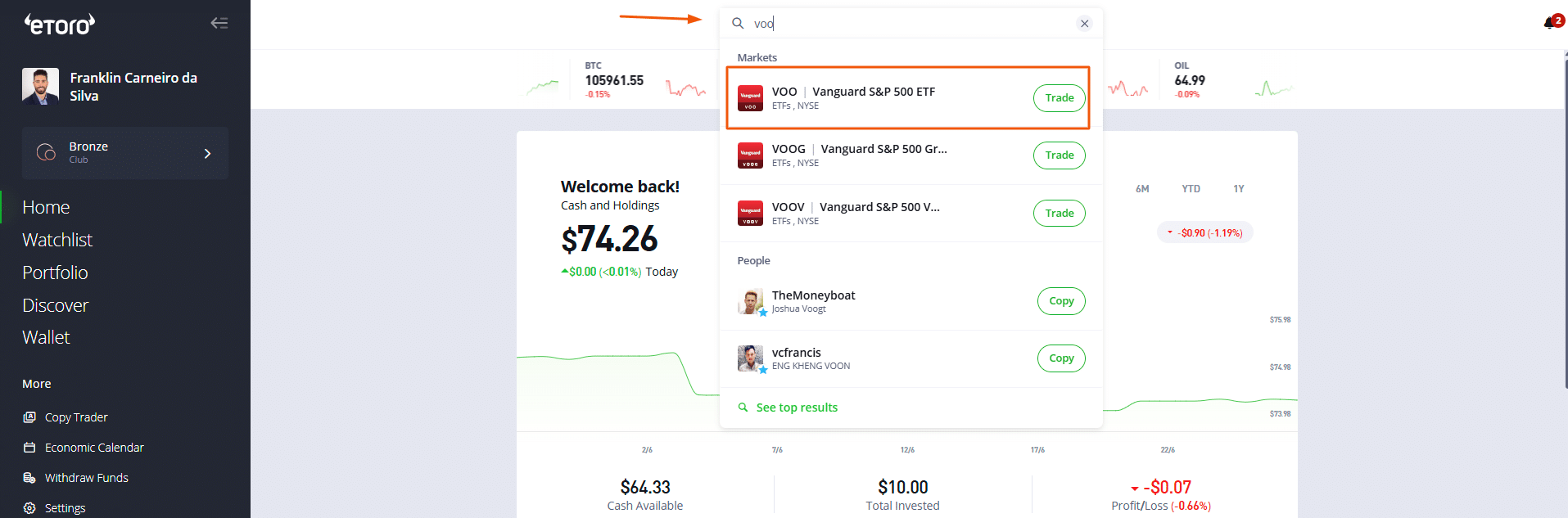
Log in to your chosen brokerage account. Most platforms will have a search bar or a “Trade” section. Type “VOO” into the search bar. You should see “VOO” listed along with its current price, daily change, and other relevant information (e.g., bid/ask prices).
Familiarize yourself with the interface. You’ll typically see a “Buy” button or option.
Placing a Buy Order
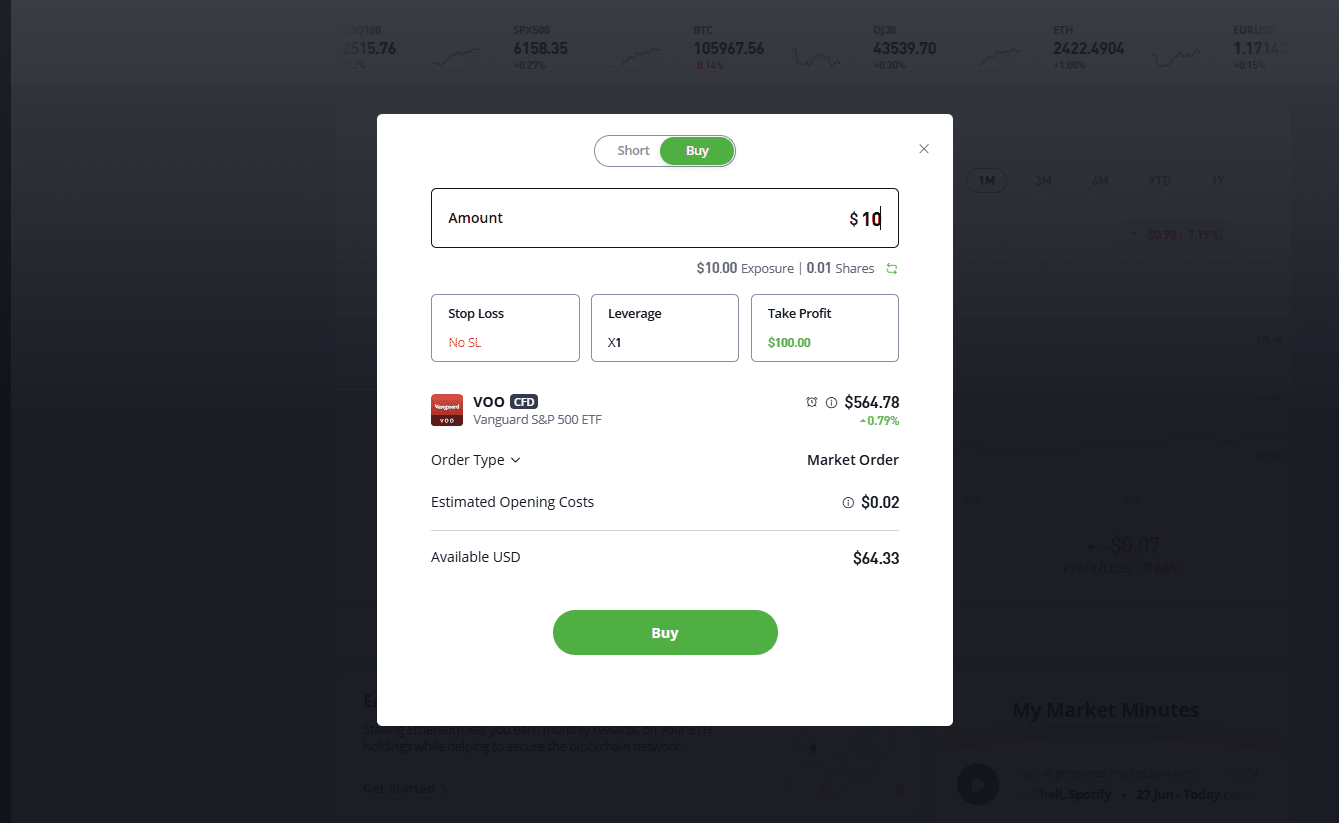
This is where you execute your trade. You’ll usually encounter these key options:
-
Quantity: The number of shares of VOO you wish to buy. Remember that VOO shares are purchased as whole units. If you have $1,000 and VOO is trading at $450, you can buy 2 shares.
-
Order Type:
- Market Order: This is the simplest. You instruct your broker to buy VOO immediately at the best available market price. While convenient, the exact price you pay might fluctuate slightly between the time you place the order and when it’s executed, especially in volatile markets.
- Limit Order: This allows you to set a maximum price you’re willing to pay per share. Your order will only be executed if VOO’s price falls to or below your specified limit price. This offers more control but means your order might not execute if the price never reaches your limit. For long-term investors in a highly liquid ETF like VOO, a market order is often sufficient, but a limit order can be useful for precise entry points.
-
Time in Force: How long your order remains active. Common options include “Day” (expires at market close) or “Good ‘Til Cancelled” (GTC – remains active until filled or manually cancelled).
For many investors, especially those using a dollar-cost averaging strategy (investing a fixed amount regularly, regardless of price), a market order is often acceptable for VOO.
Confirming Your Purchase and Monitoring Performance
After entering your order details, you’ll typically be prompted to review and confirm the trade. Once confirmed, the order will be sent to the market. Shortly after, you should receive a confirmation that your order has been executed.
Your brokerage account’s portfolio section will now show your VOO holdings. Regularly check your portfolio’s performance, but resist the urge to obsess over daily fluctuations. Remember, VOO is a long-term investment.
Beyond the Purchase: Managing Your VOO Investment
Investing in VOO isn’t a “set it and forget it” operation, though it requires minimal active management. There are ongoing considerations to optimize its role in your portfolio.
Reinvesting Dividends for Compounding Growth
VOO pays out dividends quarterly. These dividends represent a portion of the earnings from the underlying companies. Most brokerage firms offer a Dividend Reinvestment Plan (DRIP), allowing you to automatically use your dividends to purchase more shares (or fractional shares, depending on the broker) of VOO. This is a powerful strategy for compounding your returns, as your earnings start earning more money for you. Ensure this option is enabled in your account settings if you desire this automatic growth.
Tax Implications of ETF Investing
Understanding the tax implications is crucial. Generally:
- Dividends: Dividends from VOO are typically “qualified dividends” and are taxed at long-term capital gains rates, which are often lower than ordinary income tax rates. They are taxable in the year they are received, even if reinvested.
- Capital Gains: When you eventually sell your VOO shares for a profit, you’ll incur capital gains tax. If you’ve held the shares for less than a year, they are considered short-term capital gains and taxed at your ordinary income rate. If held for more than a year, they are long-term capital gains, typically taxed at a lower rate.
- Tax-Advantaged Accounts: Investing in VOO within a Roth IRA or Traditional IRA offers significant tax benefits, such as tax-free growth and withdrawals (Roth) or tax-deferred growth (Traditional).
- Wash Sale Rule: Be aware of the wash sale rule, which prevents you from immediately claiming a loss on an investment if you buy a “substantially identical” security within 30 days before or after the sale.
Always consult a qualified tax professional for personalized advice regarding your specific tax situation.
Long-Term Holding and Rebalancing Considerations
VOO is designed as a long-term investment. The S&P 500 has demonstrated resilience and growth over decades, overcoming numerous economic downturns and market corrections. Patience is key. Avoid impulsive selling during market dips; these often present opportunities to buy more shares at a lower cost.
While VOO provides excellent diversification within U.S. large-cap equities, it’s generally not the only investment you should hold. As your portfolio grows and your financial situation changes, you might consider rebalancing. This involves adjusting your asset allocation to maintain your desired risk profile. For instance, if VOO grows significantly and becomes too large a percentage of your total portfolio, you might trim some shares or allocate new contributions to other asset classes like international stocks or bonds to restore balance.
Is VOO the Right Fit? Alternatives and Complementary Investments
VOO is an excellent core holding for many, but it’s important to understand its place within a broader investment strategy and explore other options that might complement or serve as alternatives to your goals.
Comparing VOO with Similar ETFs
While VOO is a standout, it’s not the only S&P 500 ETF available. Its primary competitors include:
- SPDR S&P 500 ETF Trust (SPY): The original and largest S&P 500 ETF. It’s highly liquid but typically has a slightly higher expense ratio than VOO.
- iShares Core S&P 500 ETF (IVV): Another popular choice with an expense ratio often matching VOO.
All three track the same index, so their performance will be nearly identical over the long term, differing mainly by minute expense ratios and slight operational differences. For most long-term investors, the choice between VOO, SPY, and IVV often comes down to personal preference or which one is offered commission-free by their chosen brokerage.
Mutual Funds vs. ETFs for S&P 500 Exposure
Besides ETFs, you can also gain S&P 500 exposure through traditional mutual funds, such as Vanguard’s own S&P 500 Index Fund (VFIAX, the Admiral Shares class, which is a mutual fund equivalent to VOO).
- ETFs (like VOO): Trade throughout the day like stocks, can be bought with market or limit orders, often have lower minimum investment requirements (just one share), and can be slightly more tax-efficient due to their structure.
- Mutual Funds: Priced once a day after market close, typically require higher minimum initial investments (e.g., $3,000 for VFIAX), but allow for investment of exact dollar amounts (e.g., $100 per month).
The choice often depends on your trading style and minimum investment comfort. For long-term, set-it-and-forget-it investors making regular contributions, both are viable options.
Diversifying Beyond the S&P 500
While VOO offers broad exposure to large-cap U.S. stocks, a truly diversified portfolio typically includes other asset classes to reduce overall risk and capture different growth opportunities:
- Total Stock Market Exposure: Consider ETFs like VTSAX (Vanguard Total Stock Market Index Fund Admiral Shares) or VTI (Vanguard Total Stock Market ETF) which include small and mid-cap U.S. companies in addition to large caps.
- International Stocks: ETFs like VXUS (Vanguard Total International Stock ETF) or IXUS (iShares Core MSCI Total International Stock ETF) provide exposure to developed and emerging markets outside the U.S., offering additional diversification and growth potential.
- Bonds: To reduce portfolio volatility, particularly as you approach retirement, bond ETFs (like BND or AGG) can provide stability and income.
- Other Asset Classes: Depending on your risk tolerance and goals, you might explore real estate (REITs), commodities, or other alternative investments.
VOO can serve as an excellent core holding, providing a solid foundation in U.S. equities, but it should ideally be part of a broader, well-thought-out investment plan tailored to your individual financial situation and objectives.
Investing in VOO is a straightforward and effective way to participate in the growth of the U.S. stock market. By understanding what it is, how to invest, and how to manage it as part of a larger strategy, you can confidently take control of your financial future.
aViewFromTheCave is a participant in the Amazon Services LLC Associates Program, an affiliate advertising program designed to provide a means for sites to earn advertising fees by advertising and linking to Amazon.com. Amazon, the Amazon logo, AmazonSupply, and the AmazonSupply logo are trademarks of Amazon.com, Inc. or its affiliates. As an Amazon Associate we earn affiliate commissions from qualifying purchases.