
For decades, the S&P 500 has stood as the definitive barometer of the American economy and the primary vehicle for generational wealth creation. Comprising approximately 500 of the largest, most successful publicly traded companies in the United States, this index offers investors a blend of stability, growth, and diversification that is difficult to replicate through individual stock picking. Whether you are a novice investor opening your first brokerage account or a seasoned professional refining a portfolio, understanding how to effectively invest in the S&P 500 is a foundational skill in the world of personal finance.
The appeal of the S&P 500 lies in its simplicity and its historical performance. While markets fluctuate, the long-term trajectory of the index has consistently trended upward, rewarding patient investors with an average annualized return of approximately 10% before inflation. In this guide, we will explore the mechanics of the S&P 500, the best vehicles for investment, and the strategic approaches you can take to maximize your long-term returns.
Understanding the S&P 500 Index
Before committing capital, it is essential to understand exactly what you are buying. The Standard & Poor’s 500 Index is a market-capitalization-weighted index. This means that larger companies, such as Apple, Microsoft, and Amazon, exert a greater influence on the index’s performance than smaller constituents. When you invest in the S&P 500, you are essentially buying a small piece of the most dominant corporations in the world.
The Role of Market Capitalization
The index is not simply an average of stock prices; it is a reflection of total market value. Because it is “float-adjusted” market-cap weighted, the S&P 500 naturally evolves with the economy. As new industries emerge—such as the shift from industrial manufacturing to big tech—the index automatically rebalances to give more weight to the growing sectors and less to those in decline. This self-cleansing mechanism is one of the primary reasons why the index has remained relevant for nearly a century.
Why It Is the Gold Standard of Investing
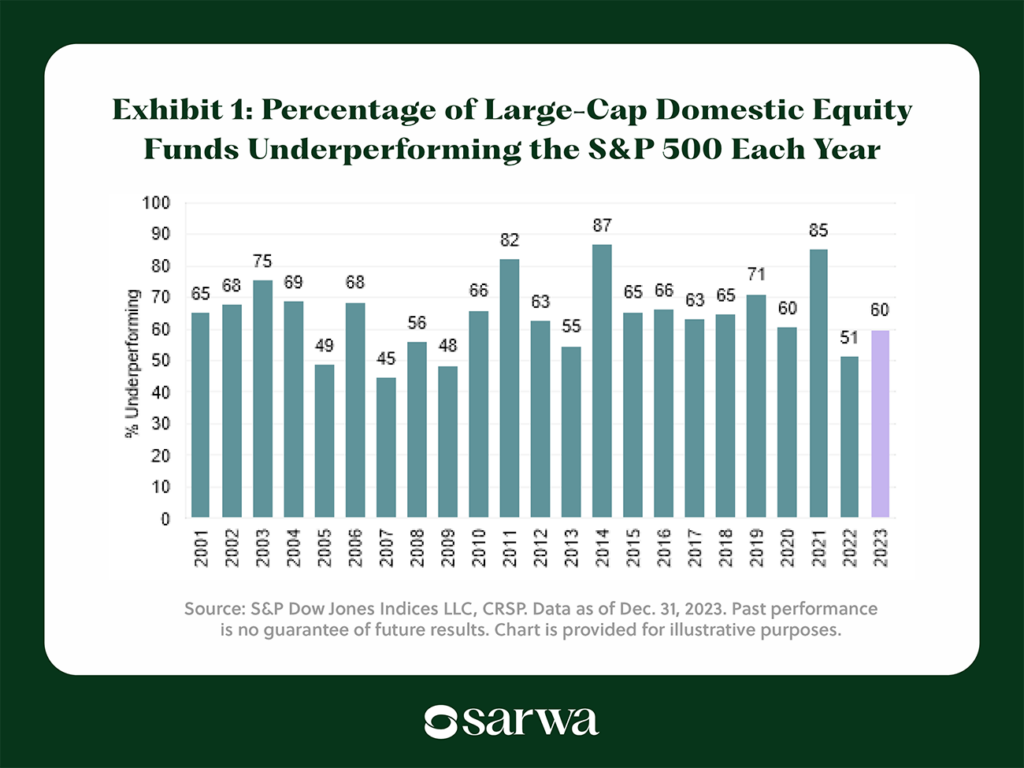
The S&P 500 is often cited as the “benchmark” because it covers approximately 80% of the available market value of the U.S. equity market. For the average investor, it represents a “set it and forget it” strategy. By owning the index, you are betting on the collective ingenuity and profitability of the American corporate sector. Historical data shows that the vast majority of actively managed funds—where professional stock pickers try to beat the market—actually underperform the S&P 500 over long periods. This has led to the massive rise of passive investing, where the goal is to match the market rather than outsmart it.
Choosing Your Investment Vehicle: ETFs vs. Index Funds
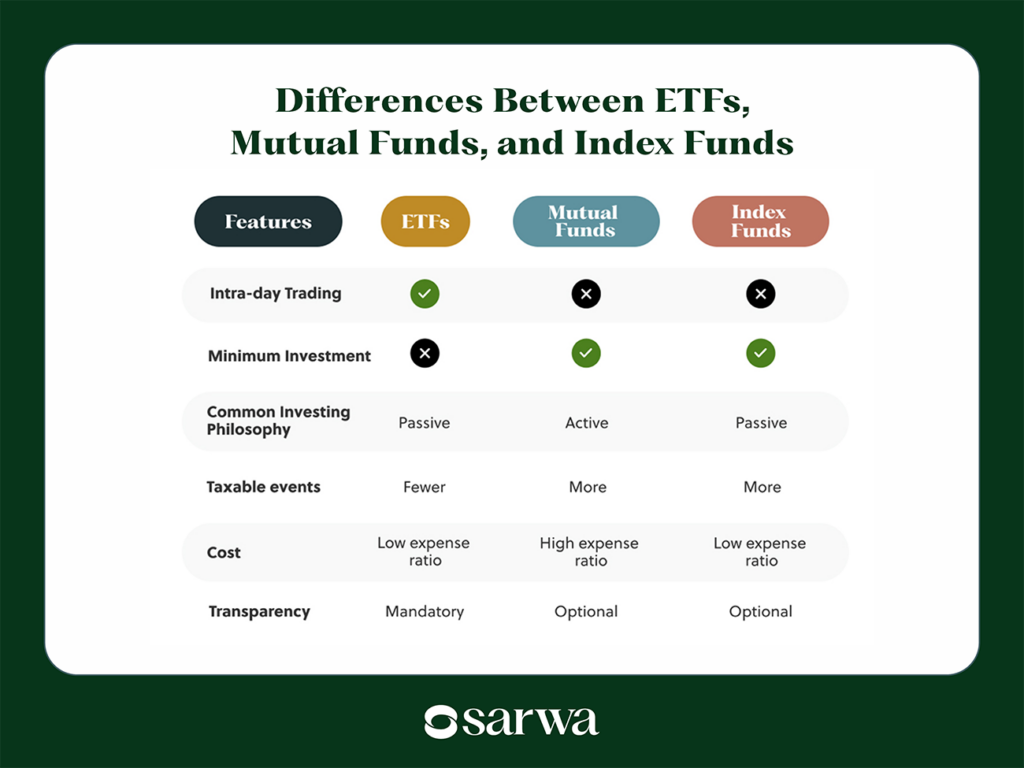
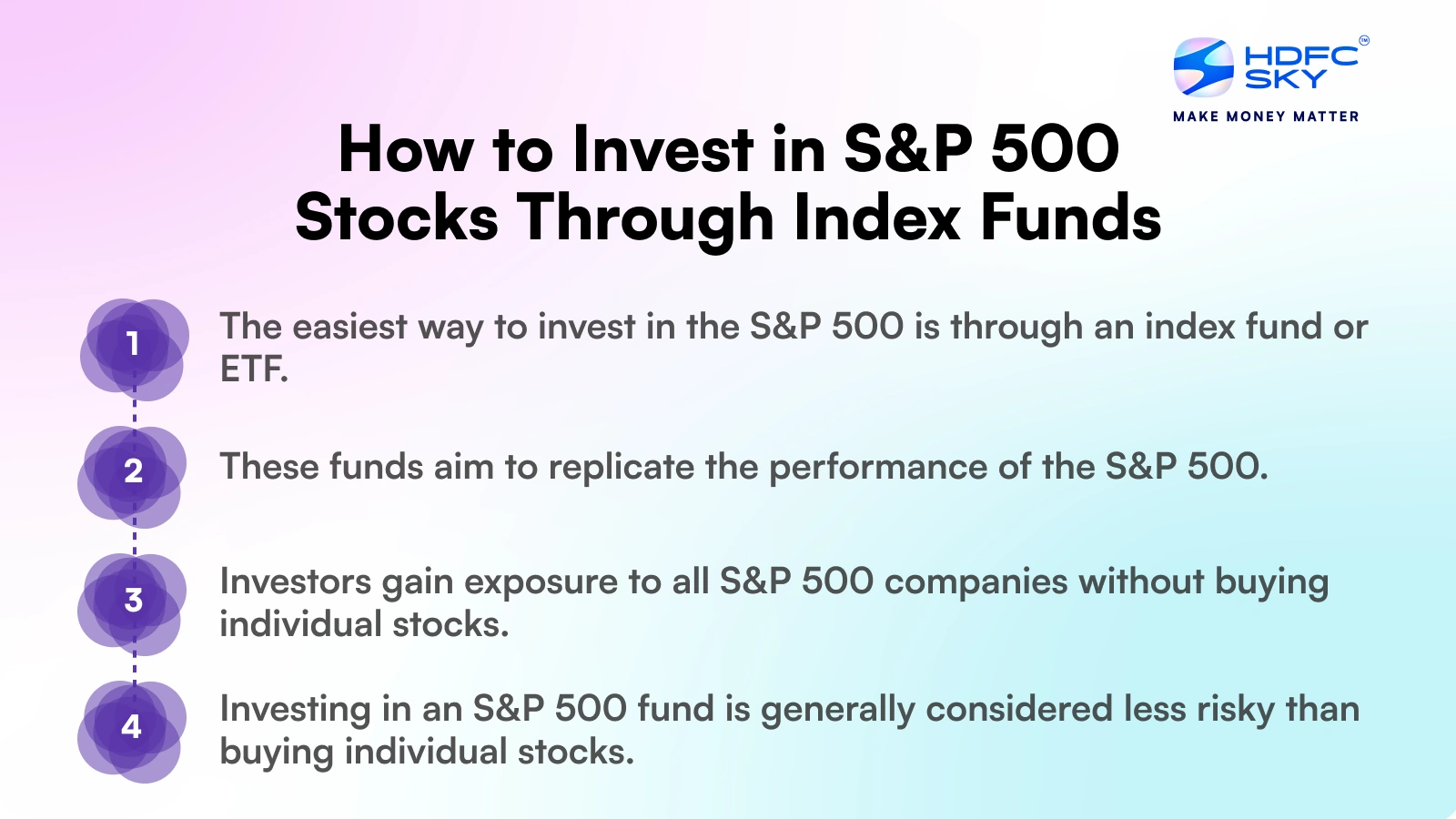
You cannot “buy” the S&P 500 directly, as it is a mathematical index. Instead, you must invest in a financial product that tracks the index. The two most common vehicles are Exchange-Traded Funds (ETFs) and Index Mutual Funds. Choosing between them depends on your personal trading style and your financial goals.
Exchange-Traded Funds (ETFs)
ETFs are the most popular way to gain S&P 500 exposure today. They trade on an exchange just like individual stocks, meaning their price fluctuates throughout the trading day. Common examples include the Vanguard S&P 500 ETF (VOO), the iShares Core S&P 500 ETF (IVV), and the SPDR S&P 500 ETF Trust (SPY).
- Pros: High liquidity, low expense ratios (often as low as 0.03%), and the ability to buy and sell at any time during market hours.
- Cons: Because they trade like stocks, some investors may be tempted to “day trade” them, which can lead to emotional decision-making.
Index Mutual Funds
Index funds are pooled investment vehicles that are priced only once a day at the close of the market. A famous example is the Vanguard 500 Index Fund (VFIAX).
- Pros: They are excellent for automated investing. You can set up a recurring transfer from your bank account to buy a specific dollar amount every month. They also discourage impulsive trading because you cannot see price fluctuations in real-time.
- Cons: Some mutual funds require a minimum initial investment (e.g., $3,000), whereas you can often buy a single share of an ETF for a much lower entry price.
Comparing Costs: The Expense Ratio
Regardless of the vehicle you choose, the most important metric to watch is the expense ratio. This is the annual fee charged by the fund manager to maintain the portfolio. Because S&P 500 funds are passively managed by computers, these fees should be extremely low. A fee of 0.03% means you pay only $3 for every $10,000 invested. Over 30 years, the difference between a 0.03% fee and a 1.00% fee can amount to hundreds of thousands of dollars in lost gains due to the erosion of compounding.
A Step-by-Step Guide to Buying the Index
Investing in the S&P 500 has never been more accessible. With the advent of zero-commission trading and fractional shares, you can begin your journey with as little as a few dollars.
1. Open a Brokerage Account
To buy an S&P 500 fund, you need an account with a brokerage firm. Leading options include Fidelity, Charles Schwab, and Vanguard for traditional investors, or apps like Robinhood and Betterment for those seeking a more mobile-centric experience. When choosing a broker, ensure they offer commission-free trades on ETFs and have a robust customer support system.
2. Select Your Specific Ticker Symbol
Once your account is funded, you must choose the specific fund that tracks the S&P 500. While there are many, the three heavyweights are:
- VOO (Vanguard): Preferred by long-term investors for its ultra-low fees.
- IVV (iShares): Equally low-cost and highly liquid.
- SPY (State Street): The oldest ETF, often used by institutional traders due to its massive trading volume.
3. Decide on a Lump Sum vs. Periodic Investing
If you have a large amount of cash sitting on the sidelines, you might wonder if you should invest it all at once or spread it out. While research suggests that “time in the market beats timing the market” (meaning lump-sum investing often wins), many people prefer Dollar-Cost Averaging (DCA). This involves investing a fixed amount of money at regular intervals (e.g., $500 every month), which reduces the risk of investing a large sum right before a market downturn.
Strategies for Long-Term Success and Risk Management
Investing in the S&P 500 is not a “get rich quick” scheme; it is a “get wealthy slowly” strategy. To succeed, you must adopt a mindset that ignores short-term noise and focuses on the power of compounding.
The Power of Reinvesting Dividends
Many of the 500 companies in the index pay out a portion of their profits to shareholders in the form of dividends. While these payments may seem small individually, they are the secret sauce of total returns. Most brokerages allow you to set up a Dividend Reinvestment Plan (DRIP). By automatically using your dividends to buy more shares of the S&P 500, you accelerate the growth of your portfolio exponentially over time.
Navigating Market Volatility
The S&P 500 does not go up every year. Historically, the index experiences a “correction” (a drop of 10% or more) roughly once a year and a “bear market” (a drop of 20% or more) roughly every few years. The key to successful S&P 500 investing is emotional discipline. When the market drops, the index is essentially “on sale.” Successful investors view these downturns as opportunities to buy more shares at a discount rather than reasons to panic and sell.
Utilizing Tax-Advantaged Accounts
In the realm of personal finance, where you hold your S&P 500 investment is just as important as what you are buying. Investing through a 401(k), a Roth IRA, or a Traditional IRA can save you a significant amount in taxes. In a Roth IRA, for example, your S&P 500 investments grow tax-free, and you can withdraw the gains without paying a cent to the government once you reach retirement age.
The Bottom Line: Why the S&P 500 is Essential
The journey to financial independence is often cluttered with complex advice and high-risk “opportunities.” However, for the vast majority of people, the most effective path is the simplest one: consistent, long-term investment in the S&P 500. By capturing the growth of the world’s most profitable companies and keeping investment costs to a minimum, you position yourself to benefit from the relentless progress of the global economy.
Investing in the S&P 500 is more than just a financial decision; it is a commitment to your future self. It requires the patience to weather economic storms and the wisdom to prioritize long-term stability over short-term speculation. Whether you start today with $50 or $50,000, the principles remain the same: choose a low-cost fund, reinvest your dividends, and let the power of time do the heavy lifting for you. In the world of money, sometimes the simplest strategy is the most powerful one.
aViewFromTheCave is a participant in the Amazon Services LLC Associates Program, an affiliate advertising program designed to provide a means for sites to earn advertising fees by advertising and linking to Amazon.com. Amazon, the Amazon logo, AmazonSupply, and the AmazonSupply logo are trademarks of Amazon.com, Inc. or its affiliates. As an Amazon Associate we earn affiliate commissions from qualifying purchases.