
The landscape of personal finance has undergone a profound transformation, with the internet democratizing access to avenues once reserved for institutional investors or the wealthy elite. Among these, online stock investing stands out as a powerful tool for individuals seeking to grow their wealth, build a secure financial future, and participate directly in the economic success of companies. Gone are the days of needing to call a broker to place a trade; today, a few clicks can open up a world of investment opportunities.
Investing in stocks online offers unparalleled convenience, lower costs, and a wealth of information at your fingertips. However, this accessibility also comes with the responsibility of understanding the market, choosing the right tools, and formulating a sound strategy. This guide will walk you through the essential steps and considerations for effectively investing in stocks online, empowering you to navigate the financial markets with confidence.

The Digital Revolution of Stock Investing
The transition from traditional, full-service brokerage houses to online investment platforms has been nothing short of revolutionary. This shift has fundamentally altered how individuals engage with the stock market, making investing more accessible, transparent, and user-friendly than ever before. Understanding this evolution is key to appreciating the current landscape of online stock investing.
Accessibility and Empowerment for Everyday Investors
Historically, stock investing was often perceived as a complex, exclusive domain, primarily accessible to those with significant capital or connections to financial professionals. High brokerage fees, complicated paperwork, and a lack of readily available information created formidable barriers to entry for the average individual. The advent of online brokerages shattered these barriers.
Today, anyone with an internet connection and a modest sum of money can open an investment account and start buying stocks. This unprecedented accessibility has empowered millions of individuals to take control of their financial destinies. It means that you, as an individual investor, can research companies, analyze market trends, execute trades, and manage your portfolio directly from your computer or smartphone, often with minimal fees. This empowerment extends beyond just access; it includes the ability to learn, strategize, and adapt in real-time, putting the power of investment growth directly into your hands.
The Evolution from Traditional Brokerage to Online Platforms
The journey from traditional brokerage to sophisticated online platforms represents a significant technological leap. Early online platforms, emerging in the late 1990s, primarily offered basic trading functionalities. They were digital interfaces to traditional market mechanisms. However, continuous innovation has transformed them into comprehensive financial ecosystems.
Modern online brokerage platforms offer a vast array of features:
- Advanced Trading Tools: From real-time quotes and charting capabilities to algorithmic trading options for sophisticated users.
- Research & Analytics: Access to professional-grade research reports, analyst ratings, financial news feeds, and fundamental/technical analysis tools.
- Educational Resources: Libraries of articles, videos, webinars, and courses designed to educate investors of all experience levels.
- Diverse Investment Products: Beyond individual stocks, platforms offer ETFs, mutual funds, bonds, options, and even cryptocurrencies, often from a single account.
- Low to Zero Commission Fees: A fiercely competitive market has driven transaction costs down, with many platforms now offering commission-free trading on stocks and ETFs.
This evolution signifies a shift towards self-directed investing, where the investor is equipped with the tools, information, and control to make informed decisions. While professional advice still holds value, the ability to independently manage and grow one’s investments online has redefined wealth building for the masses.
Essential Steps to Begin Your Online Stock Investment Journey
Embarking on your online stock investing journey requires more than just opening an account. It demands a clear understanding of your financial situation, goals, and risk tolerance, coupled with a strategic selection of the right tools. Laying this groundwork properly is crucial for a successful and sustainable investment experience.
Defining Your Investment Goals and Risk Tolerance
Before you even consider which stock to buy, you must first define why you are investing and how much risk you are comfortable taking.
- Investment Goals: Are you saving for retirement, a down payment on a house, your child’s education, or simply long-term wealth accumulation? Your goals will dictate your investment horizon (how long you plan to invest) and, subsequently, your strategy. Short-term goals might necessitate less volatile investments, while long-term goals often allow for higher risk (and potentially higher reward) strategies.
- Risk Tolerance: This is your psychological and financial capacity to endure fluctuations in your investment’s value. Are you comfortable with the idea of your portfolio dropping 20% in a volatile market, knowing it could recover, or would such a drop cause you significant stress and lead you to sell prematurely? Understanding your risk tolerance is vital in selecting appropriate investments. A conservative investor might favor dividend stocks or index funds, while an aggressive investor might seek out growth stocks or emerging market opportunities. Be honest with yourself about your comfort level with potential losses.
Choosing the Right Online Brokerage Account
The online brokerage you choose will be your primary interface with the stock market, so this decision is paramount. Consider the following factors:
- Fees and Commissions: While many offer commission-free stock and ETF trades, scrutinize other fees like account maintenance fees, inactivity fees, and fees for specific services (e.g., options trading, wire transfers).
- Investment Options: Does the broker offer access to all the asset classes you’re interested in (stocks, ETFs, mutual funds, bonds, international markets, options, etc.)?
- Platform Usability and Tools: Evaluate the user interface (is it intuitive?), mobile app quality, and the range of research tools, charting capabilities, and educational resources provided. Some platforms cater better to beginners, while others offer advanced features for experienced traders.
- Customer Service: How accessible and responsive is their customer support? Check their ratings and reviews.
- Security and Regulation: Ensure the broker is regulated by relevant authorities (e.g., SEC and FINRA in the US) and offers Securities Investor Protection Corporation (SIPC) insurance, which protects your investments up to $500,000 in case the brokerage firm fails.
Popular choices include platforms like Fidelity, Charles Schwab, E*TRADE, Vanguard, and newer fintech brokers like Robinhood (though the latter typically caters to a specific type of investor). Do your research, read reviews, and even try out demo accounts if available.
Understanding Different Account Types
When opening an online brokerage account, you’ll typically encounter two main types:
- Taxable Brokerage Account: This is a standard investment account where your investment gains (dividends, interest, capital gains) are subject to taxes in the year they are realized. It offers flexibility in terms of contributions and withdrawals.
- Tax-Advantaged Retirement Accounts: These include accounts like Individual Retirement Accounts (IRAs) – Traditional IRA and Roth IRA – and employer-sponsored plans like 401(k)s. These accounts offer significant tax benefits (e.g., tax-deferred growth or tax-free withdrawals in retirement) but come with specific rules regarding contributions, withdrawals, and eligibility. For long-term wealth building, maximizing contributions to these accounts is often a wise strategy.
Choosing the right account type depends on your financial goals, income level, and retirement planning strategy. Many investors utilize a combination of both.
Navigating the World of Stocks and Investment Strategies
Once your account is set up, the real work begins: understanding what stocks are, how to choose them, and how to manage your investments strategically. This phase requires education, research, and a disciplined approach.
The Fundamentals of Stocks: Ownership and Returns
At its core, a stock represents a fractional ownership share in a company. When you buy a company’s stock, you become a shareholder, and your fortunes are tied to the company’s performance. As a shareholder, you can benefit in two primary ways:
- Capital Appreciation: If the company performs well and its value increases, the price of its stock tends to rise. You can then sell your shares for more than you paid for them, realizing a capital gain.
- Dividends: Some profitable companies distribute a portion of their earnings to shareholders in the form of dividends. These payments can provide a regular income stream and are often reinvested to compound returns.
Understanding these fundamentals is crucial for evaluating potential investments and appreciating the underlying value proposition of owning a piece of a business.
Core Investment Strategies: Growth vs. Value, Long-Term vs. Short-Term
There are numerous approaches to stock investing, each with its own philosophy and risk profile.
- Growth Investing: Focuses on companies expected to grow at an above-average rate compared to the market. These companies often reinvest profits back into the business, may not pay dividends, and their stock prices can be more volatile. Examples include technology companies or innovative startups.
- Value Investing: Involves identifying companies whose stocks appear to be trading below their intrinsic value. Value investors look for established companies with solid fundamentals that might be out of favor with the market but are expected to recover. They often seek dividend-paying companies.
- Long-Term Investing: The most common and often recommended strategy for individual investors. It involves holding investments for several years or even decades, riding out short-term market fluctuations with the belief that quality companies will grow over time. This approach benefits from compounding returns.
- Short-Term Investing/Trading: Involves buying and selling stocks over short periods (days, weeks, or months) to profit from rapid price movements. This is a much higher-risk strategy that requires significant time, skill, and knowledge of technical analysis. It is generally not recommended for beginners.

Most individual investors will find success focusing on a long-term strategy, often combining elements of growth and value investing.
The Critical Role of Diversification
“Don’t put all your eggs in one basket” is perhaps the oldest and most important investment adage. Diversification involves spreading your investments across various asset classes, industries, company sizes, and geographies to reduce risk.
- If one stock or sector performs poorly, the impact on your overall portfolio is mitigated by other investments that might be performing well.
- Diversification doesn’t guarantee profits or eliminate the risk of loss, but it is a powerful tool for managing portfolio volatility.
This can be achieved by investing in a mix of individual stocks, but also by utilizing diversified instruments like Exchange Traded Funds (ETFs) or mutual funds, which hold a basket of many different stocks.
Researching and Analyzing Potential Investments
Successful online stock investing hinges on thorough research. Your online brokerage platform will provide a wealth of information, but it’s essential to know what to look for:
- Fundamental Analysis: This involves evaluating a company’s financial health, management quality, competitive landscape, industry outlook, and overall economic conditions. Key metrics include revenue growth, earnings per share (EPS), price-to-earnings (P/E) ratio, debt levels, and cash flow.
- Technical Analysis: Focuses on analyzing past market data, primarily price and volume, to predict future price movements. Chart patterns, indicators (like moving averages), and trends are key elements. This is more common in short-term trading.
- Industry Trends: Understand the broader industry in which a company operates. Is it growing or declining? What are the competitive pressures?
- Economic Factors: Interest rates, inflation, GDP growth, and employment data can all influence market sentiment and corporate performance.
Utilize the research tools provided by your broker, financial news websites, SEC filings (like 10-K and 10-Q reports), and independent financial analysis sites. Always do your own due diligence; never invest based solely on tips or hype.
Executing Trades and Managing Your Online Portfolio
Once you’ve done your research and decided on an investment, the next step is to execute your trade and then continuously manage your portfolio. This is where the online platform truly shines, offering immediate control over your investments.
Placing Your First Trade: Order Types and Execution
Placing a trade online is typically straightforward, but understanding different order types is crucial:
- Market Order: Instructs your broker to buy or sell a stock immediately at the best available current price. While fast, the exact price isn’t guaranteed, especially in volatile markets.
- Limit Order: Allows you to specify the maximum price you’re willing to pay to buy a stock, or the minimum price you’re willing to accept to sell a stock. Your order will only be executed if the stock reaches your specified price or better. This offers more control over the price but might mean your order isn’t filled immediately or at all if the price doesn’t hit your limit.
- Stop Order (Stop-Loss Order): An instruction to sell a stock once its price falls to a certain level, limiting potential losses. A stop order becomes a market order once the stop price is triggered. There are also Stop-Limit orders, which offer more control by combining elements of both.
For most long-term investors, limit orders are often preferred for buying, ensuring you don’t overpay, while stop-loss orders can be a risk management tool for protecting gains or limiting losses, though they can be triggered by temporary market dips.
Monitoring and Rebalancing Your Portfolio
Investing is not a “set it and forget it” activity. Your portfolio requires ongoing monitoring and occasional adjustments:
- Regular Review: Periodically review the performance of your investments. Are the companies still meeting your expectations? Has their financial health changed? Are your initial investment theses still valid?
- Rebalancing: Over time, some of your investments may grow faster than others, causing your portfolio allocation to drift from your target percentages (e.g., you aimed for 70% stocks/30% bonds, but stocks grew, making it 80/20). Rebalancing involves selling some of your overperforming assets and buying more of your underperforming ones to bring your portfolio back to your desired asset allocation. This helps maintain your target risk level.
- Lifecycle Adjustments: As you age or your financial goals change, your risk tolerance and investment strategy may need to adapt. For example, as you approach retirement, you might shift from a growth-heavy portfolio to one focused on income and capital preservation.
Regularly review your financial plan to ensure your investments remain aligned with your evolving objectives.
Understanding Fees, Taxes, and Regulatory Compliance
Beyond transaction fees, there are other financial implications to consider:
- Expense Ratios: If investing in ETFs or mutual funds, be aware of their expense ratios, which are annual fees charged as a percentage of your investment. Lower expense ratios mean more of your money working for you.
- Taxes: Investment gains are subject to capital gains taxes. Short-term capital gains (assets held for one year or less) are typically taxed at your ordinary income tax rate, while long-term capital gains (assets held for more than one year) usually qualify for lower tax rates. Dividends are also taxed. Understanding these tax implications is crucial for maximizing your net returns.
- Regulatory Compliance: Online brokers operate under strict regulatory frameworks designed to protect investors. Familiarize yourself with these protections, such as SIPC insurance, and always ensure you are using a reputable, regulated platform.
Smart tax planning and an awareness of associated fees can significantly impact your overall investment returns. Consider consulting a financial advisor or tax professional to optimize your strategy.
Mitigating Risks and Embracing Continuous Learning
Investing in stocks inherently involves risk. While online platforms make it easy to participate, they don’t eliminate the need for caution, continuous learning, and a long-term perspective.
Recognizing and Managing Investment Risks
Every investment carries some degree of risk. Key risks in stock investing include:
- Market Risk: The risk that the overall stock market declines, affecting even strong companies.
- Company-Specific Risk (Idiosyncratic Risk): The risk that a particular company performs poorly due to internal factors (e.g., poor management, product failures, competition). Diversification helps mitigate this.
- Inflation Risk: The risk that the purchasing power of your investment returns is eroded by inflation.
- Interest Rate Risk: Changes in interest rates can affect company valuations and investor sentiment.
- Liquidity Risk: The risk that you may not be able to sell your investment quickly at a fair price (less common with publicly traded stocks but can apply to less frequently traded securities).
Understanding these risks allows you to make more informed decisions and employ strategies to mitigate them, such as diversification, dollar-cost averaging (investing a fixed amount regularly, regardless of market fluctuations), and investing for the long term.
The Importance of Due Diligence and Education
The accessibility of online investing means it’s easier than ever to make impulsive decisions. Resist this urge. Always conduct thorough due diligence on any company or fund before investing. Leverage the educational resources provided by your brokerage and reputable financial outlets. The financial markets are dynamic, and staying informed about economic trends, industry developments, and company news is an ongoing process. Continuous learning is not just recommended; it is essential for long-term success.
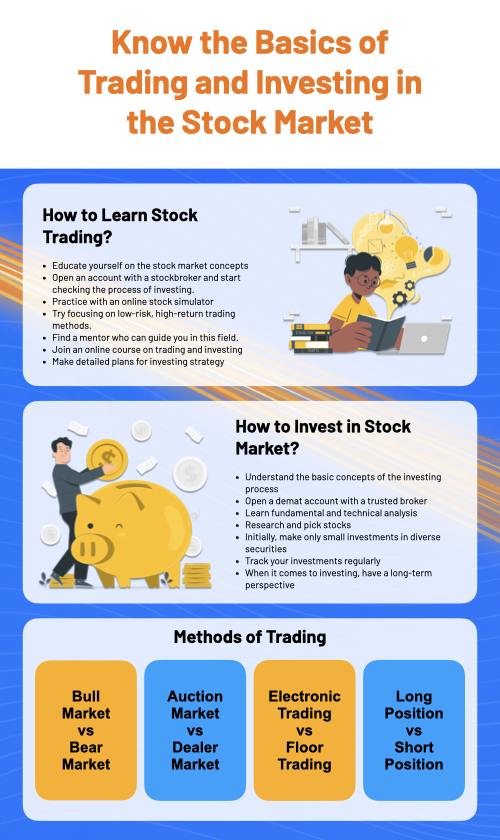
Avoiding Common Pitfalls
New online investors often fall prey to several common mistakes:
- Chasing Hot Stocks: Investing based on hype or “tips” without proper research often leads to losses.
- Emotional Investing: Panicking during market downturns and selling at a loss, or getting overconfident during bull markets and taking on excessive risk. Emotions are detrimental to sound investment decisions.
- Lack of Diversification: Concentrating too much capital in a single stock or sector exposes you to unnecessary risk.
- Ignoring Fees and Taxes: Underestimating the impact of fees and taxes on long-term returns.
- Not Having a Plan: Investing without clear goals, a defined strategy, or an understanding of your risk tolerance.
By adhering to a disciplined approach, focusing on long-term goals, and continuously educating yourself, you can avoid many of these pitfalls and build a robust online investment portfolio.
Investing in stocks online is a powerful avenue for wealth creation, offering unprecedented access and control. With the right knowledge, tools, and a disciplined approach, you can successfully navigate the complexities of the financial markets and work towards achieving your financial aspirations. Start small, learn continuously, and always invest with a clear plan in mind.
aViewFromTheCave is a participant in the Amazon Services LLC Associates Program, an affiliate advertising program designed to provide a means for sites to earn advertising fees by advertising and linking to Amazon.com. Amazon, the Amazon logo, AmazonSupply, and the AmazonSupply logo are trademarks of Amazon.com, Inc. or its affiliates. As an Amazon Associate we earn affiliate commissions from qualifying purchases.