
Investing in the S&P 500 has long been considered a cornerstone of sound financial planning for countless individuals and institutions worldwide. As a barometer for the health of the U.S. economy and a benchmark for large-cap American equities, the S&P 500 offers a diversified exposure to some of the world’s most influential companies. For many, it represents a straightforward yet powerful way to participate in the long-term growth of the stock market. However, despite its popularity, the “how-to” aspect can still seem daunting to newcomers. This comprehensive guide will demystify the process, providing a clear roadmap for both novice and experienced investors looking to add this robust index to their portfolio. We’ll explore what makes the S&P 500 such an attractive investment, the various accessible avenues for gaining exposure, and the strategic considerations to ensure your investment aligns with your financial goals. By the end, you’ll have a clear understanding of how to confidently and effectively invest in the S&P 500, harnessing its potential for long-term wealth creation.
Understanding the S&P 500: A Benchmark for U.S. Equities
Before diving into the mechanics of investment, it’s crucial to grasp what the S&P 500 truly represents. It’s more than just a list of companies; it’s a meticulously constructed index that offers a snapshot of the broad U.S. equity market.
What is the S&P 500?
The S&P 500, or Standard & Poor’s 500, is a stock market index that tracks the performance of 500 of the largest publicly traded companies in the United States. Managed by S&P Dow Jones Indices, it is a market-capitalization-weighted index, meaning companies with larger market values have a greater impact on the index’s performance. The companies selected for inclusion are chosen by a committee based on criteria such as market size, liquidity, and sector representation, ensuring it remains a relevant and representative measure of the large-cap segment of the U.S. stock market. These aren’t just any 500 companies; they are typically industry leaders, innovators, and household names spanning all major sectors, from technology and finance to healthcare and consumer goods.
Why Invest in the S&P 500?
The appeal of the S&P 500 lies in several key advantages:
- Diversification: By investing in the S&P 500, you gain instant diversification across 500 companies and numerous sectors. This mitigates the risk associated with investing in individual stocks, as the poor performance of one or a few companies is less likely to severely impact your overall portfolio.
- Historical Performance: Over the long term, the S&P 500 has demonstrated robust historical returns, averaging around 10-12% annually, though past performance is not indicative of future results. It has consistently recovered from downturns, reflecting the enduring resilience and growth of the American economy.
- Low Cost & Simplicity: Gaining exposure to the S&P 500 is remarkably cost-effective and straightforward, primarily through index funds and ETFs, which boast low expense ratios. This simplicity makes it an ideal option for investors who prefer a hands-off approach.
- Bellwether for the U.S. Economy: The S&P 500 is widely considered one of the best gauges of large-cap U.S. equities and, by extension, the broader U.S. economy. Investing in it is, in essence, investing in the engine of American capitalism.
Direct vs. Indirect Investing: How to Gain Exposure
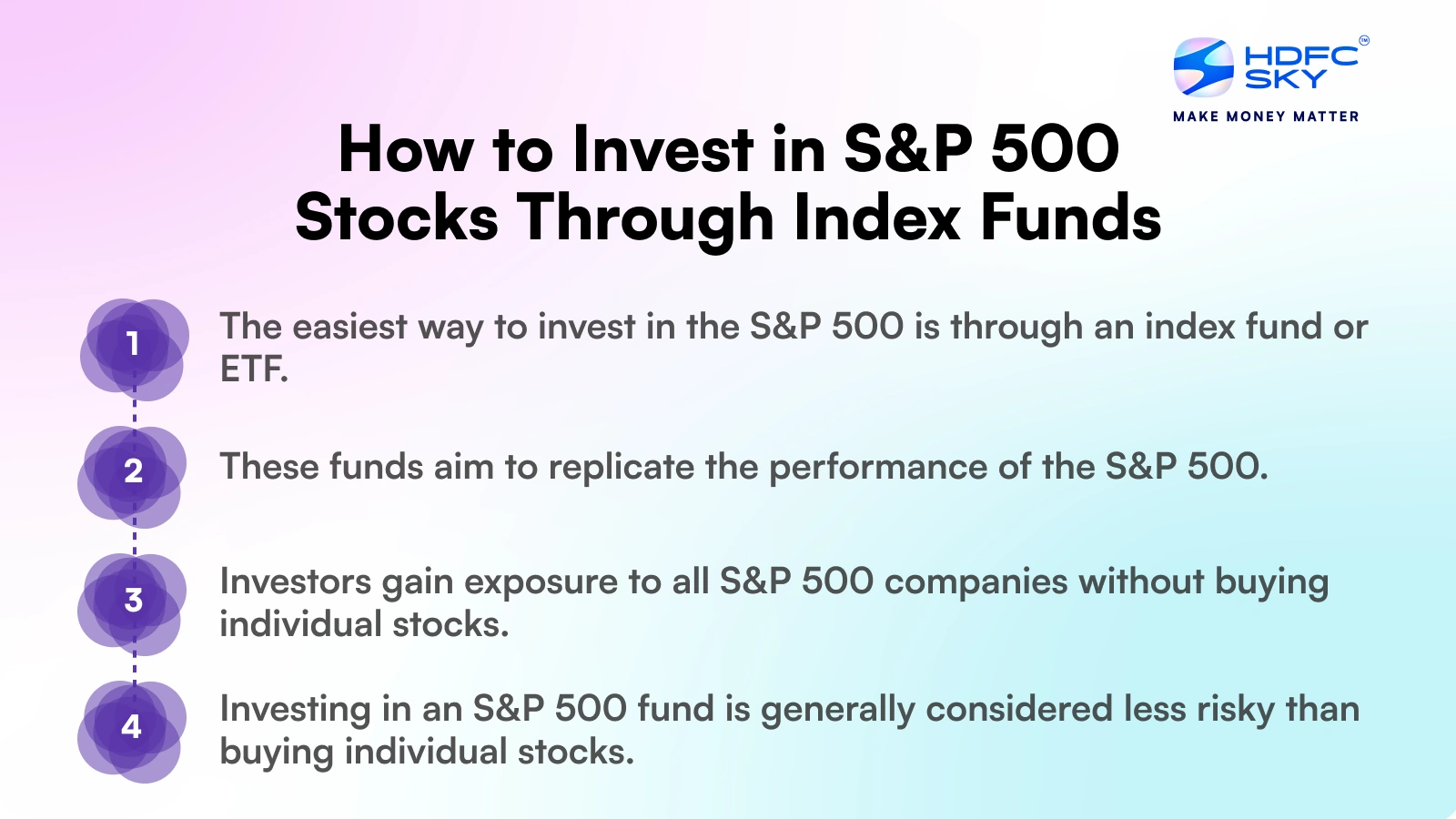
While you cannot directly “buy” the S&P 500 index itself, you can easily gain exposure to its performance through various investment vehicles. The most common and recommended methods involve index funds and exchange-traded funds (ETFs).
ETFs (Exchange-Traded Funds): The Most Popular Route
ETFs are investment funds that hold assets such as stocks, bonds, or commodities, but they trade on stock exchanges like regular stocks. S&P 500 ETFs aim to replicate the performance of the S&P 500 index.
- What are ETFs? An S&P 500 ETF is essentially a basket of the 500 stocks in the index, weighted in the same proportion. When you buy shares of an S&P 500 ETF, you are buying a tiny slice of all those companies simultaneously.
- Advantages:
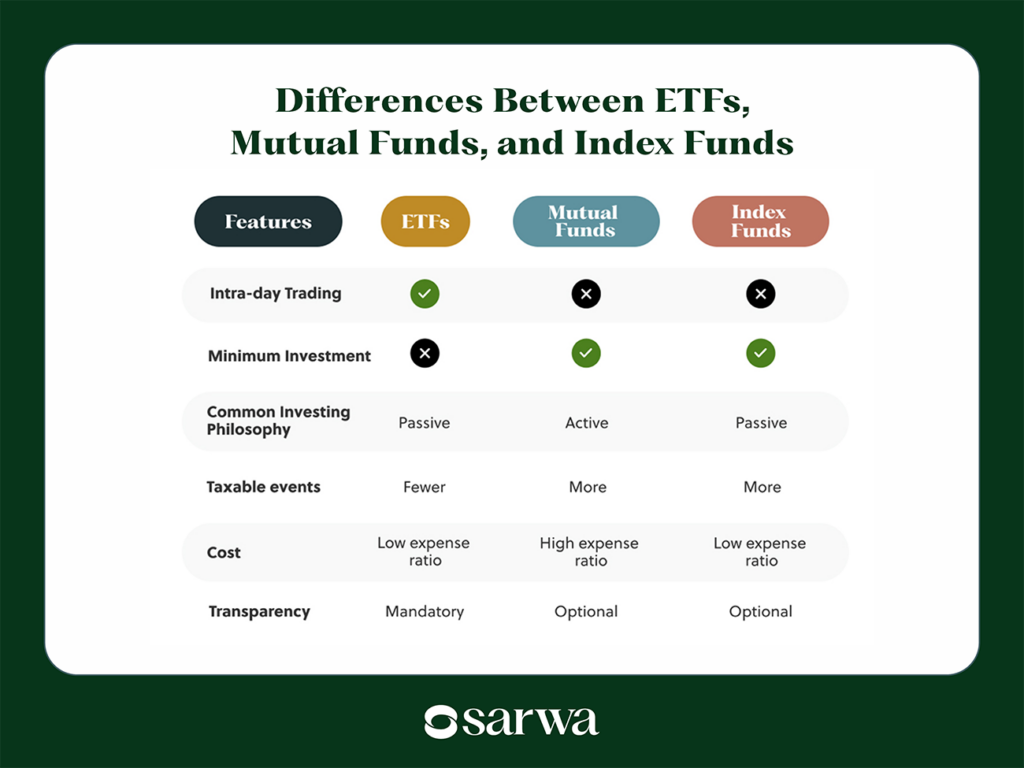
- Low Expense Ratios: ETFs are typically passively managed, meaning they don’t have a team of analysts actively picking stocks. This translates to very low management fees (expense ratios), often less than 0.10% per year.
- Intraday Trading: Unlike mutual funds, ETFs can be bought and sold throughout the trading day at market prices, offering flexibility.
- Tax Efficiency: ETFs are generally more tax-efficient than mutual funds due to their creation/redemption mechanisms, which can limit capital gains distributions.
- Liquidity: Popular S&P 500 ETFs are highly liquid, making it easy to buy and sell shares.
- Popular S&P 500 ETFs:
- SPDR S&P 500 ETF Trust (SPY): The oldest and one of the largest S&P 500 ETFs.
- iShares Core S&P 500 ETF (IVV): Known for its low expense ratio and broad appeal.
- Vanguard S&P 500 ETF (VOO): Another extremely popular option from Vanguard, offering a very competitive expense ratio.
- How to Buy ETFs: You purchase ETFs through a brokerage account, just like individual stocks. You place an order for the desired ticker symbol, specifying the number of shares.
Mutual Funds: Managed Diversification
S&P 500 index mutual funds also aim to track the performance of the S&P 500. They operate similarly to ETFs in their underlying holdings but differ in how they are bought and sold.
- What are Mutual Funds? An S&P 500 index mutual fund is a professionally managed collective investment scheme that pools money from many investors to invest in the 500 companies that comprise the index.
- Advantages:
- Professional Management: While passively managed for index funds, the fund structure provides oversight.
- Automatic Reinvestment: Many mutual funds offer automatic dividend and capital gains reinvestment, allowing for seamless compounding.
- Ease of Use: Ideal for setting up automated investments, making it simple for long-term, hands-off investing.
- Disadvantages:
- Higher Expense Ratios: While S&P 500 index mutual funds have low expense ratios compared to actively managed funds, they are often slightly higher than their ETF counterparts (though the difference is often negligible for large funds).
- End-of-Day Trading: Mutual funds can only be bought and sold once per day at their Net Asset Value (NAV) after the market closes.
- Popular S&P 500 Index Mutual Funds:
- Vanguard 500 Index Fund Admiral Shares (VFIAX): A very low-cost and popular choice.
- Fidelity 500 Index Fund (FXAIX): Another strong contender with a competitive expense ratio.
- Schwab S&P 500 Index Fund (SWPPX): A low-cost option from Charles Schwab.
Individual Stocks: A Less Common but Possible Approach
It is technically possible to invest in individual stocks that are part of the S&P 500. However, this method is generally not recommended if your goal is to “invest in the S&P 500” as a whole. Replicating the S&P 500 by buying all 500 component stocks individually would be incredibly complex, expensive (due to transaction fees, especially for smaller portfolios), and impractical to maintain as the index changes. It defeats the purpose of the S&P 500’s inherent diversification and low-cost access. Therefore, for most investors, ETFs or index mutual funds are the superior way to gain true S&P 500 exposure.
Opening a Brokerage Account: Your Gateway to Investing
Regardless of whether you choose an ETF or a mutual fund, the first practical step to investing in the S&P 500 is opening a brokerage account.
Choosing a Brokerage
Selecting the right brokerage firm is a critical decision. Consider the following factors:
- Fees and Commissions: Look for brokerages with $0 commission for stock and ETF trades. Check for any account maintenance fees or minimum balance requirements.
- Platform and Tools: Evaluate the user-friendliness of their website and mobile app. Do they offer robust research tools, educational resources, and analytical capabilities that match your needs?
- Investment Options: Ensure they offer the specific S&P 500 ETFs or mutual funds you are interested in.
- Customer Service: Good customer support is invaluable, especially for new investors.
- Account Types: Confirm they support the type of account you wish to open (e.g., taxable, IRA, Roth IRA).
Some popular and highly-rated brokerage firms include Fidelity, Vanguard, Charles Schwab, E*TRADE, and Interactive Brokers.
Types of Accounts
You can invest in the S&P 500 through various account types, each with different tax implications:
- Taxable Brokerage Account: A standard investment account where capital gains and dividends are typically taxed each year. It offers the most flexibility for withdrawals.
- Individual Retirement Accounts (IRAs):
- Traditional IRA: Contributions may be tax-deductible, and earnings grow tax-deferred until retirement, when withdrawals are taxed as ordinary income.
- Roth IRA: Contributions are made with after-tax money, but qualified withdrawals in retirement are tax-free.
- 401(k) or 403(b): If offered by your employer, these workplace retirement plans often include S&P 500 index funds as an investment option. These accounts offer significant tax advantages (tax-deferred growth for traditional plans, tax-free withdrawals for Roth plans).
- Health Savings Accounts (HSAs): If you have a high-deductible health plan, an HSA can be an excellent triple-tax-advantaged investment vehicle (tax-deductible contributions, tax-free growth, tax-free withdrawals for qualified medical expenses).
The Account Opening Process
Opening a brokerage account is typically straightforward and can be done entirely online in about 15-20 minutes. You will need:
- Personal Information: Name, address, date of birth, Social Security number.
- Employment Information: Employer’s name and address.
- Financial Information: Income, net worth (for suitability purposes).
- Bank Account Details: To link your bank account for funding your brokerage account.
Once your application is approved, you can transfer funds from your bank account to your brokerage account and begin investing.
Crafting Your Investment Strategy and Managing Risks
Simply buying an S&P 500 fund is a great start, but a well-thought-out strategy enhances your chances of long-term success.
Defining Your Investment Goals and Horizon
Before making any investment, clearly define what you’re saving for and when you’ll need the money.
- Long-Term Growth: The S&P 500 is best suited for long-term goals (5+ years, ideally 10+ years), such as retirement or a child’s education. Its historical returns smooth out short-term volatility over extended periods.
- Risk Tolerance: While the S&P 500 is diversified, it’s still a stock market investment and subject to market fluctuations. Understand your comfort level with potential losses.
Dollar-Cost Averaging (DCA): A Prudent Approach
Dollar-Cost Averaging is a strategy where you invest a fixed amount of money at regular intervals (e.g., $100 every month), regardless of the S&P 500’s current price.
- Benefits:
- Reduces Market Timing Risk: You avoid the temptation to try and “time the market,” which is notoriously difficult.
- Averages Out Purchase Price: When prices are high, your fixed amount buys fewer shares; when prices are low, it buys more shares. Over time, this averages out your purchase price.
- Disciplined Investing: Encourages consistent, disciplined savings.
Rebalancing and Reinvesting
- Rebalancing: Periodically, it’s wise to review your overall investment portfolio (which may include bonds, international stocks, etc.) and adjust it back to your target asset allocation. While an S&P 500 fund is self-rebalancing within its own holdings, your broader portfolio might need attention.
- Dividend Reinvestment: Most S&P 500 ETFs and mutual funds automatically reinvest dividends back into buying more shares, accelerating your compounding returns. This is often the default option and is highly recommended.
Understanding and Mitigating Risks
While diversified, S&P 500 investing isn’t without risks:
- Market Risk: The value of your investment will fluctuate with the overall stock market. Recessions, economic crises, or unforeseen global events can lead to significant downturns.
- Inflation Risk: The purchasing power of your returns can be eroded by inflation if returns don’t outpace it.
- Interest Rate Risk: Changes in interest rates can impact stock valuations and borrowing costs for companies.
- Lack of International Diversification: The S&P 500 focuses solely on large U.S. companies. For true global diversification, consider adding international stock funds to your portfolio.
Mitigate these risks by maintaining a long-term perspective, practicing dollar-cost averaging, and ensuring your overall portfolio includes a mix of asset classes (e.g., bonds) appropriate for your risk tolerance and goals.
Tax Implications of S&P 500 Investing
Understanding the tax implications of your S&P 500 investments is essential for maximizing your after-tax returns.
Capital Gains
When you sell shares of your S&P 500 ETF or mutual fund, you may realize a capital gain (if you sell for more than you bought them).
- Short-Term Capital Gains: If you held the investment for one year or less, gains are taxed at your ordinary income tax rate, which can be significant.
- Long-Term Capital Gains: If you held the investment for more than one year, gains are taxed at more favorable long-term capital gains rates (0%, 15%, or 20% depending on your income bracket). This is why a long-term strategy is often more tax-efficient.
Dividends
S&P 500 companies pay dividends, which are distributed to shareholders of the ETFs or mutual funds.
- Qualified Dividends: Most dividends from U.S. companies held for a certain period are “qualified” and taxed at the lower long-term capital gains rates.
- Ordinary Dividends: Some dividends (or those held for too short a period) are “ordinary” and taxed at your higher ordinary income tax rate.
Tax-Advantaged Accounts vs. Taxable Accounts
The choice of account type significantly impacts your tax liability:
- Tax-Advantaged Accounts (IRA, Roth IRA, 401(k), HSA): These accounts offer deferred or tax-free growth and withdrawals, making them ideal for long-term S&P 500 investments. You avoid annual taxes on dividends and capital gains within the account, allowing your money to compound faster.
- Taxable Brokerage Accounts: In these accounts, you will pay taxes on dividends and realized capital gains each year. While less tax-efficient, they offer unrestricted access to your funds.
It’s generally recommended to maximize contributions to tax-advantaged accounts first before investing in a taxable brokerage account, especially for retirement savings. Always consult with a qualified tax advisor to understand your specific situation.
In conclusion, investing in the S&P 500 is a powerful, accessible, and historically effective strategy for long-term wealth building. By leveraging low-cost ETFs or index mutual funds, establishing a disciplined investment strategy, and understanding the associated tax implications, you can confidently integrate this crucial benchmark into your financial future.
aViewFromTheCave is a participant in the Amazon Services LLC Associates Program, an affiliate advertising program designed to provide a means for sites to earn advertising fees by advertising and linking to Amazon.com. Amazon, the Amazon logo, AmazonSupply, and the AmazonSupply logo are trademarks of Amazon.com, Inc. or its affiliates. As an Amazon Associate we earn affiliate commissions from qualifying purchases.