
Investing in a business represents a significant step beyond traditional stock market investments or passive savings. It’s a venture into the heart of entrepreneurship, offering the potential for substantial returns, but also demanding a deeper understanding of market dynamics, financial health, and strategic vision. For many, it’s about more than just capital growth; it’s about fostering innovation, supporting job creation, and becoming an active participant in the economic landscape. This comprehensive guide will navigate the intricate world of business investment, equipping you with the knowledge to make informed, strategic decisions.
Understanding the Landscape of Business Investment
Before diving into specific strategies, it’s crucial to grasp the fundamental distinctions and opportunities within the realm of business investment. This field is vast, encompassing everything from fledgling startups seeking initial seed capital to established enterprises looking for growth equity or even outright acquisition. Each facet presents unique characteristics regarding risk, reward, and required investor engagement.
Direct vs. Indirect Investment
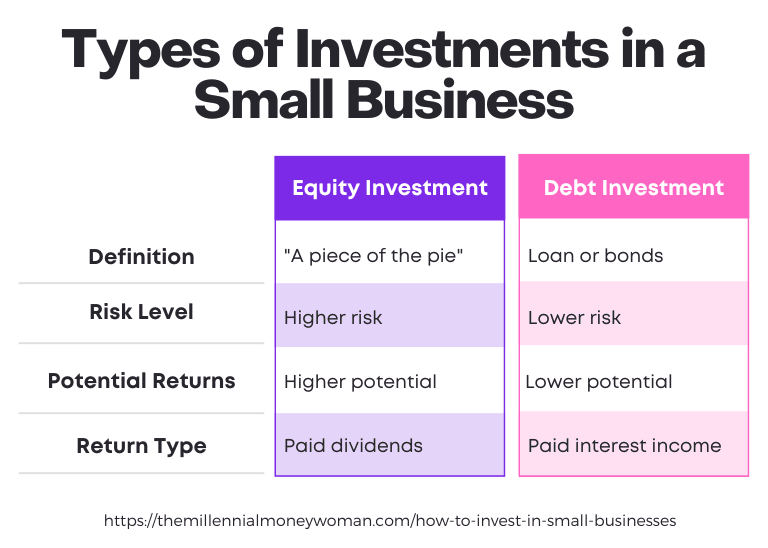
The first distinction lies in how you allocate your capital. Direct investment involves putting money directly into a specific business, often through equity (ownership shares) or debt (loans). This approach typically grants you a more hands-on role, greater influence, and a direct share in the business’s success or failure. Examples include becoming an angel investor, a venture capitalist, or acquiring a private business.
Indirect investment, on the other hand, involves investing in funds or vehicles that, in turn, invest in businesses. This could mean buying shares in publicly traded companies on a stock exchange, investing in private equity funds, or even certain exchange-traded funds (ETFs) that focus on specific sectors. Indirect investment generally offers greater diversification and liquidity but less direct control and often lower upside potential compared to a highly successful direct venture.
Types of Businesses to Consider
The choice of business type dramatically impacts the investment profile:
- Startups and Early-Stage Companies: These are high-risk, high-reward propositions. They often lack a proven track record but offer exponential growth potential if their innovative ideas disrupt markets. Investment here typically comes from angel investors or venture capitalists.
- Small and Medium-Sized Enterprises (SMEs): Established businesses with a history of revenue and profitability but often limited growth capital. Investing in SMEs can offer stable returns, potential for operational improvements, and a more tangible impact on the local economy.
- Established Public Companies: Investing in publicly traded companies via the stock market is arguably the most common indirect investment method. These businesses are typically mature, have strong market presence, and offer liquidity, but their growth rates might be more modest.
- Franchises: Investing in a franchise offers a blend of entrepreneurial ownership with the backing of a proven business model and brand recognition. This can be a less risky entry point into business ownership.
Risk vs. Reward Spectrum
Every investment carries risk, and business investment is no exception. Generally, the higher the potential reward, the higher the inherent risk. Startups, with their unproven models and high failure rates, sit at the highest end of this spectrum, offering the lure of massive returns. Established public companies, while subject to market fluctuations, typically present lower individual business risk due to their scale and diversification. Understanding your personal risk tolerance and financial goals is paramount before embarking on any business investment journey.
Key Due Diligence for Business Investors
Before committing any capital, thorough due diligence is not just recommended—it’s absolutely critical. This meticulous investigative process aims to uncover potential risks, verify claims, and confirm the viability and value of the target business. Skimping on due diligence can lead to costly mistakes and significant financial losses.
Assessing the Business Model and Market Opportunity
A strong business model is the bedrock of a successful enterprise. You need to understand:
- What problem does the business solve? Is it a real problem for a sizable market?
- What is its unique value proposition? How does it differentiate itself from competitors?
- Who are the target customers? Is the market large and growing?
- How does it generate revenue? Is the revenue stream sustainable and scalable?
- What are the competitive advantages? Are there barriers to entry for new competitors? (e.g., patents, network effects, brand loyalty).
- Market Trends: Is the industry growing or contracting? Are there regulatory changes or technological shifts that could impact its future?
Evaluating the Management Team
The quality of the leadership team is often as important, if not more important, than the idea itself, especially for early-stage investments. Investigate:
- Experience and Expertise: Does the team have relevant industry experience and a track record of success?
- Vision and Strategy: Do they have a clear, compelling vision for the company’s future and a credible strategy to achieve it?
- Cohesion and Commitment: Do they work well together? Are they fully committed to the business?
- Integrity and Transparency: Are they trustworthy and open in their communication?
- Advisory Board/Mentors: Who else is backing or advising the team?
Financial Health and Projections Analysis
This is where the numbers tell the story. You’ll need to scrutinize historical financial statements and future projections:
- Revenue Growth: Is sales revenue consistently increasing?
- Profitability: Is the business profitable, or does it have a clear path to profitability? Analyze gross margins, operating margins, and net income.
- Cash Flow: Does the business generate positive cash flow from operations? Can it cover its expenses without relying on external financing?
- Balance Sheet: Assess assets, liabilities, and equity to understand solvency and financial stability. Look at debt levels and working capital.
- Key Performance Indicators (KPIs): Identify industry-specific metrics (e.g., customer acquisition cost, churn rate, average revenue per user) to gauge operational efficiency and growth potential.
- Projections: Are the financial projections realistic and supported by reasonable assumptions? Understand the underlying drivers of future growth and potential sensitivities.
Legal and Regulatory Considerations
Neglecting legal due diligence can expose you to significant liabilities.
- Corporate Structure: Understand the legal entity (sole proprietorship, LLC, S-Corp, C-Corp).
- Contracts and Agreements: Review all significant contracts (customer agreements, supplier contracts, employee contracts, leases).
- Intellectual Property (IP): Ensure patents, trademarks, and copyrights are properly owned and protected.
- Litigation and Compliance: Check for any pending lawsuits, regulatory investigations, or compliance issues.
- Licensing and Permits: Verify that the business holds all necessary licenses and permits to operate legally.
Pathways to Investing in a Business
Once due diligence is complete and you’re confident in a business’s potential, several avenues exist for making your investment, each suited to different levels of capital, risk tolerance, and desired involvement.
Angel Investing and Venture Capital
These pathways are typically reserved for high-net-worth individuals and institutional investors who provide capital to early-stage companies in exchange for equity.
- Angel Investors: Often former entrepreneurs or executives, angels typically invest their own capital (usually ranging from tens of thousands to a few million dollars) in startups during their seed or early growth stages. They often provide mentorship and industry connections in addition to funding.
- Venture Capital (VC) Firms: These are professional investment firms that manage funds from limited partners (e.g., pension funds, endowments) and invest significantly larger sums (millions to hundreds of millions) into high-growth potential startups. VC firms usually take a more active role, often requiring board seats and providing strategic guidance. Access to VC investments is generally limited to accredited investors.

Crowdfunding Platforms
For those with smaller capital amounts or who wish to diversify across multiple businesses, crowdfunding has emerged as a viable option. Equity crowdfunding platforms allow a large number of individuals to invest small amounts in private companies in exchange for equity. This democratizes business investment, making it accessible to a broader audience. Popular platforms like StartEngine, Republic, and WeFunder facilitate these investments, often focusing on startups and small businesses. Investors should still perform their own due diligence, as the risks associated with early-stage companies remain.
Private Equity and Direct Acquisition
Private Equity (PE) firms specialize in investing in or acquiring established private companies, often with the goal of improving their operations and then selling them for a profit within a few years. These are typically large, sophisticated transactions requiring substantial capital.
For individual investors, direct acquisition involves buying an entire existing business. This could be a local restaurant, a manufacturing plant, or a service company. This path requires significant capital, comprehensive due diligence, and a willingness to take on the full responsibilities of business ownership. It offers complete control but also the highest level of personal risk and involvement. Business brokers often facilitate these transactions.
Investing in Publicly Traded Companies (via Stock Market)
While less direct, purchasing shares of publicly traded companies on a stock exchange is a form of investing in a business. When you buy stock, you become a part-owner of the company. This method offers high liquidity, transparency (due to regulatory reporting requirements), and diversification benefits. However, your influence on the company’s operations is minimal, and returns are tied to market sentiment as well as business performance. This is the most accessible and common form of business investment for retail investors.
Structuring Your Investment and Managing Risk
Making the decision to invest is just the beginning. How you structure that investment and the strategies you employ to manage risk can significantly impact your outcomes. A well-thought-out approach is essential to protect your capital and maximize potential returns.
Valuation and Negotiation Strategies
Determining the fair value of a private business is more art than science and is often a key point of negotiation.
- Valuation Methods: Common methods include discounted cash flow (DCF), comparable company analysis (multiples of revenue, EBITDA), asset-based valuation, and venture capital method (for early-stage). Understand the business’s specific stage and industry to apply the most appropriate method.
- Negotiation: Be prepared to negotiate terms beyond just the price, including ownership percentage, liquidation preferences (who gets paid first if the company is sold or liquidated), anti-dilution clauses (to protect your equity from future funding rounds at lower valuations), board seats, and exit rights. A good deal is one that is fair to both the investor and the entrepreneur.
Investment Instruments
The vehicle through which you invest can vary:
- Equity: The most common form, giving you ownership shares in the company. This means you participate in the company’s profits and appreciate in value, but also bear the full risk of loss.
- Convertible Debt/Notes: A loan that can convert into equity at a later date, typically upon a future funding round. This offers downside protection (as a loan, it usually needs to be repaid) with the upside potential of equity. It’s common in early-stage startups.
- Debt: Providing a loan to a business, often with a fixed interest rate and repayment schedule. This is generally lower risk than equity but offers limited upside.
- SAFE (Simple Agreement for Future Equity): Popular in tech startups, a SAFE is an agreement to provide future equity in a company, typically when a priced round of financing occurs. It’s simpler than convertible notes as it avoids interest rates and maturity dates.
Diversification Strategies
“Don’t put all your eggs in one basket” is particularly true for business investment.
- Across Industries: Investing in businesses across different sectors can mitigate risks associated with downturns in a single industry.
- Across Stages: A mix of early-stage, high-growth companies and more mature, stable businesses can balance risk and return.
- Across Geographies: Consider businesses in different regions or countries to hedge against localized economic issues.
- Portfolio Approach: For angel investors and VCs, building a portfolio of 10-20 investments significantly increases the likelihood of a successful “exit” compensating for several less successful ones.
Exit Strategies
An exit strategy outlines how an investor plans to eventually sell their stake and realize a return on investment. This should be considered even before the investment is made. Common exit strategies include:
- Acquisition: The business is bought by a larger company.
- Initial Public Offering (IPO): The business goes public, and shares are sold on a stock exchange.
- Secondary Sale: Another investor or a private equity firm buys your stake.
- Buyback: The company buys back your shares, often from founders or other investors.
- Dividend Recaps: While not a true “exit,” some mature businesses may perform a debt-financed dividend to investors.
Having a clear exit strategy guides investment decisions and sets expectations for both the investor and the business owner.
The Role of an Investor: Beyond Capital
Investing in a business, particularly directly, often extends beyond simply providing capital. Many investors, especially angel investors and venture capitalists, add significant value through their expertise, networks, and strategic guidance, becoming active partners in the company’s growth.
Providing Mentorship and Strategic Guidance
Experienced investors bring a wealth of knowledge from their own business ventures or professional careers. They can act as mentors to founders, offering insights on:
- Market Strategy: Identifying new markets, refining product-market fit, and scaling operations.
- Operational Efficiency: Optimizing processes, managing costs, and improving productivity.
- Talent Acquisition: Helping recruit key personnel and build strong teams.
- Problem Solving: Providing an objective perspective on challenges and helping navigate difficult decisions.
This hands-on involvement can be invaluable, especially for first-time entrepreneurs.
Leveraging Networks
Investors often possess extensive networks of contacts across various industries. They can introduce the business to:
- Potential Customers: Opening doors to new sales opportunities.
- Strategic Partners: Facilitating collaborations or alliances.
- Future Investors: Assisting with subsequent fundraising rounds.
- Key Advisors: Connecting the business with legal, financial, or technical experts.
These connections can significantly accelerate a company’s growth and reduce the time and effort required to establish crucial relationships.

Active vs. Passive Investment Approaches
The degree of involvement an investor chooses to take can vary widely.
- Active Investors: These investors are deeply involved, often taking a board seat, attending regular meetings, and dedicating significant time to advising the company. This approach is common in angel and venture capital investing, where the investor’s expertise is a key part of the value proposition.
- Passive Investors: These investors provide capital but take a minimal role in day-to-day operations or strategic decisions. This is more typical for equity crowdfunding participants or limited partners in private equity funds, where the fund managers handle the active management.
Choosing the right approach depends on your available time, expertise, and desire for involvement. For many, the reward of not just financial returns, but also contributing to a business’s success, is a powerful motivator for active engagement.
Investing in a business is a dynamic and potentially rewarding journey. It requires meticulous research, a clear understanding of financial principles, and a willingness to embrace risk. By thoroughly understanding the investment landscape, diligently performing due diligence, choosing the right pathways, and strategically managing your capital, you can unlock significant growth opportunities and become a crucial catalyst for entrepreneurial success.
aViewFromTheCave is a participant in the Amazon Services LLC Associates Program, an affiliate advertising program designed to provide a means for sites to earn advertising fees by advertising and linking to Amazon.com. Amazon, the Amazon logo, AmazonSupply, and the AmazonSupply logo are trademarks of Amazon.com, Inc. or its affiliates. As an Amazon Associate we earn affiliate commissions from qualifying purchases.