
In the ever-evolving landscape of personal computing, the humble optical drive has largely faded into obscurity. Most modern laptops, and even many desktop PCs, now ship without a CD/DVD drive. This shift, coupled with the inherent speed and convenience of solid-state storage, has firmly established the USB flash drive (or thumb drive) as the go-to medium for operating system installation. Whether you’re building a new PC, reinstalling Windows to refresh a sluggish system, or troubleshooting a corrupted installation, knowing how to install Windows from a thumb drive is an indispensable skill for any tech-savvy individual.
This comprehensive guide will walk you through every step of the process, from preparing your tools to configuring your new Windows environment. We’ll explore the ‘why’ behind using a USB drive, delve into the essential preparations, detail the creation of a bootable drive, guide you through the actual installation, and even touch upon crucial post-installation steps and common troubleshooting scenarios. Get ready to empower yourself with the knowledge to perform a clean and efficient Windows installation.
Preparing for a Smooth Windows Installation
Before you dive into the technicalities, a well-prepared setup is the cornerstone of a successful Windows installation. Skipping these preliminary steps can lead to frustrating delays or even potential data loss. Think of this as laying a solid foundation before building your digital home.
Gathering Your Essential Tools and Software
You won’t need an elaborate workshop, but a few key items are absolutely critical. Ensuring you have these on hand will streamline the entire process.
A Reliable USB Flash Drive
This is the star of our show. You’ll need a USB flash drive with at least 8GB of storage for most Windows versions (16GB is recommended for Windows 10/11 to be safe, especially if you’re using the Media Creation Tool). Speed matters, too; a USB 3.0 or newer drive will significantly cut down on the time it takes to create the bootable media and install the OS. Remember that all data on this USB drive will be erased during the process, so back up any important files before proceeding. Consider dedicating a specific USB drive for OS installations, marking it clearly to avoid accidental data loss in the future.
The Windows Installation Media (ISO File)
The Windows ISO file is essentially a digital snapshot of the entire Windows installation DVD. This single file contains all the necessary setup files, drivers, and components to install the operating system. For most users, obtaining this file directly from Microsoft is the safest and most recommended approach. You’ll need a stable internet connection to download it.
- For Windows 10/11: Microsoft provides the “Media Creation Tool,” which not only downloads the ISO but also directly creates the bootable USB for you, often simplifying the process.
- For Windows 7/8.1 or specific editions of 10/11: You might need to download the ISO file directly from Microsoft’s website using your product key, or from other legitimate sources if you have a valid license. Always prioritize official sources to avoid corrupted or malicious installers.
A Tool for Creating Bootable USBs (or Microsoft’s Media Creation Tool)
While the Windows Media Creation Tool (MCT) is excellent for Windows 10 and 11, you might need a dedicated third-party utility for other scenarios, such as installing older Windows versions, using a specific ISO that MCT doesn’t support, or if you need more control over the bootable drive’s partition scheme (MBR vs. GPT, UEFI vs. Legacy BIOS).
- Windows Media Creation Tool (Recommended for Windows 10/11): This official Microsoft tool automates the download of the Windows ISO and the creation of a bootable USB drive. It’s user-friendly and ensures compatibility.
- Rufus: A popular, open-source utility that’s small, fast, and incredibly powerful. Rufus allows you to create bootable USB drives from a wide range of ISO files, offering options for different partition schemes (MBR for BIOS, GPT for UEFI) and file systems. It’s often preferred by advanced users for its flexibility and speed.
- BalenaEtcher: Another user-friendly, cross-platform tool that works well for creating bootable drives, though perhaps less feature-rich than Rufus for Windows-specific installations.
A Computer to Prepare the USB Drive
You’ll need a functional computer (either the one you plan to reinstall Windows on, or a different one) with internet access to download the Windows ISO and run your chosen bootable USB creation tool. Ensure this computer has a stable power source and sufficient free disk space for the ISO download (typically 5-10GB).
Important Pre-Installation Considerations
Before you wipe your primary drive, take a moment to consider these crucial points.
Backing Up Your Data
This is arguably the most critical step. Installing Windows will erase all data on the drive you select for installation. If you’re reinstalling Windows on an existing system, ensure all your documents, photos, videos, music, and any other important files are backed up to an external hard drive, cloud storage (like OneDrive, Google Drive, Dropbox), or another computer. Do not proceed until you are absolutely certain your valuable data is safe.
Locating Your Windows Product Key
While many modern Windows installations (especially those pre-installed on new PCs) use digital licenses tied to your hardware, it’s always good practice to have your product key handy.
- Digital License: If your Windows license is digital, it will usually activate automatically once you connect to the internet after installation, assuming you’re reinstalling the same edition of Windows on the same hardware.
- Retail Key: If you purchased a retail copy, the key will be on a sticker, card, or in an email.
- OEM Key: For pre-built systems, the key might be on a sticker on the PC chassis. Tools like “ShowKeyPlus” can sometimes retrieve an embedded OEM key from a running Windows system.
You can often skip entering the product key during installation, and Windows will activate automatically later if a digital license is detected.
Understanding UEFI vs. Legacy BIOS and MBR vs. GPT
Modern computers use UEFI (Unified Extensible Firmware Interface) for booting, which replaced the older BIOS (Basic Input/Output System). UEFI systems typically use the GPT (GUID Partition Table) partitioning scheme, while Legacy BIOS systems use MBR (Master Boot Record).
- Why does this matter? Your bootable USB drive must be configured correctly for your computer’s firmware. If you create a USB drive for UEFI (GPT) but your computer is set to boot in Legacy BIOS mode (MBR), it won’t recognize the drive. The Media Creation Tool and Rufus will often prompt you or intelligently choose the correct option based on your ISO.
- How to check: In Windows, you can open Disk Management, right-click your main drive, select Properties, then the Volumes tab to see if it’s MBR or GPT. You can also check your computer’s BIOS/UEFI settings for boot mode options. For simplicity, if your PC is relatively new (post-2012), it’s likely using UEFI/GPT.
Creating Your Bootable Windows USB Drive
With your preparations complete, it’s time to transform your ordinary thumb drive into a powerful Windows installation tool. This step is crucial and can be achieved through a couple of primary methods.
Method 1: Using the Windows Media Creation Tool (Recommended for Windows 10/11)
This is Microsoft’s official, user-friendly tool, perfect for creating bootable media for Windows 10 and 11.
- Download the Tool: Go to Microsoft’s official Windows 10 or Windows 11 download page and click “Download tool now” under the “Create Windows installation media” section.
- Run the Tool: Execute the downloaded
MediaCreationTool.exefile. Accept the license terms. - Choose Your Options:
- On the “What do you want to do?” screen, select “Create installation media (USB flash drive, DVD, or ISO file) for another PC” and click “Next.”
- The tool will usually suggest the recommended language, edition, and architecture for your current PC. You can uncheck “Use recommended options for this PC” if you need to create media for a different architecture (e.g., 64-bit instead of 32-bit). Click “Next.”
- Select USB Flash Drive: Choose “USB flash drive” as the media you want to use. Make sure your USB drive is plugged in. Click “Next.”
- Select Your USB Drive: From the list of available drives, select your USB flash drive. Be absolutely certain you pick the correct drive, as all data on it will be deleted. Click “Next.”
- Download and Create: The tool will now download the Windows ISO and write it to your USB drive, making it bootable. This process can take some time depending on your internet speed and USB drive speed.
- Finish: Once completed, you’ll see a message confirming that your USB flash drive is ready. Click “Finish.” Your bootable Windows USB is now prepared.
Method 2: Using Rufus (For ISO Files and Advanced Options)
Rufus is an excellent choice if you have an existing Windows ISO file, need to create a bootable drive for an older Windows version, or require specific partitioning schemes (MBR/GPT, UEFI/BIOS).
- Download Rufus: Go to the official Rufus website (
rufus.ie) and download the latest portable version. - Run Rufus: Plug in your USB flash drive and then launch Rufus.
- Configure Rufus Settings:
- Device: Ensure your correct USB flash drive is selected from the “Device” dropdown menu. Again, double-check this to avoid wiping the wrong drive.
- Boot selection: Click the “SELECT” button and browse to your downloaded Windows ISO file.
- Image option: For most Windows ISOs, “Standard Windows installation” is the correct choice.
- Partition scheme: This is crucial.
- If your target computer uses UEFI firmware, select “GPT” for the “Partition scheme” and “UEFI (non CSM)” for the “Target system.”
- If your target computer uses Legacy BIOS, select “MBR” for “Partition scheme” and “BIOS (or UEFI-CSM)” for “Target system.”
- If you’re unsure, “GPT” with “UEFI (non CSM)” is generally recommended for modern PCs. Rufus sometimes offers intelligent defaults based on the ISO.
- Volume label: You can leave this as default or give your USB a descriptive name (e.g., “Win11_Install”).
- File system: For most Windows installations, “NTFS” is the recommended file system.
- Start the Process: Click the “START” button. Rufus will warn you that all data on the USB drive will be destroyed. Confirm by clicking “OK.”
- Wait for Completion: Rufus will now format the USB drive and copy the Windows installation files. This can take several minutes.
- Close Rufus: Once the status bar shows “READY,” you can close Rufus. Your bootable USB drive is now ready.
Initiating the Windows Installation

With your bootable USB drive in hand, the next step is to instruct your computer to boot from it and begin the installation process. This usually involves adjusting settings in your computer’s firmware.
Configuring Your PC to Boot from USB
Your computer’s BIOS or UEFI firmware controls the boot order – which device it tries to load the operating system from first. By default, it usually boots from your internal hard drive. We need to change this to boot from the USB drive.
Accessing BIOS/UEFI Settings
The method to enter BIOS/UEFI setup varies by manufacturer.
- Restart Your PC: Power off your computer completely, then power it back on.
- Press the BIOS/UEFI Key: Immediately upon startup, repeatedly tap the designated key to enter BIOS/UEFI. Common keys include
Del,F2,F10,F12, orEsc.- Look for a message on the screen during startup (e.g., “Press DEL to enter Setup,” “Press F2 for BIOS,” etc.).
- If you miss it, restart and try again.
- For some modern systems, you might need to go through Windows Advanced Startup Options to access UEFI firmware settings.
- Navigate the Interface: Once in BIOS/UEFI, you’ll typically use the arrow keys to navigate and Enter to select. Look for sections like “Boot,” “Boot Order,” “Boot Options,” or “Advanced Startup.”
Changing the Boot Order
- Locate Boot Priority: Find the “Boot Order” or “Boot Priority” list.
- Move USB to Top: Move your USB drive (it might be listed as “USB HDD,” “USB Device,” or by its brand name) to the very top of the boot order.
- Save and Exit: Find the “Save and Exit” or “Exit Saving Changes” option. Confirm your changes and let the computer restart.
Your computer should now attempt to boot from the USB drive. If successful, you’ll see a message like “Press any key to boot from USB…” (for Legacy BIOS) or the Windows logo appearing as it loads the installer (for UEFI).
The Windows Installation Process Itself
Once your PC boots from the USB drive, the graphical Windows installation wizard will begin. Follow these steps carefully:
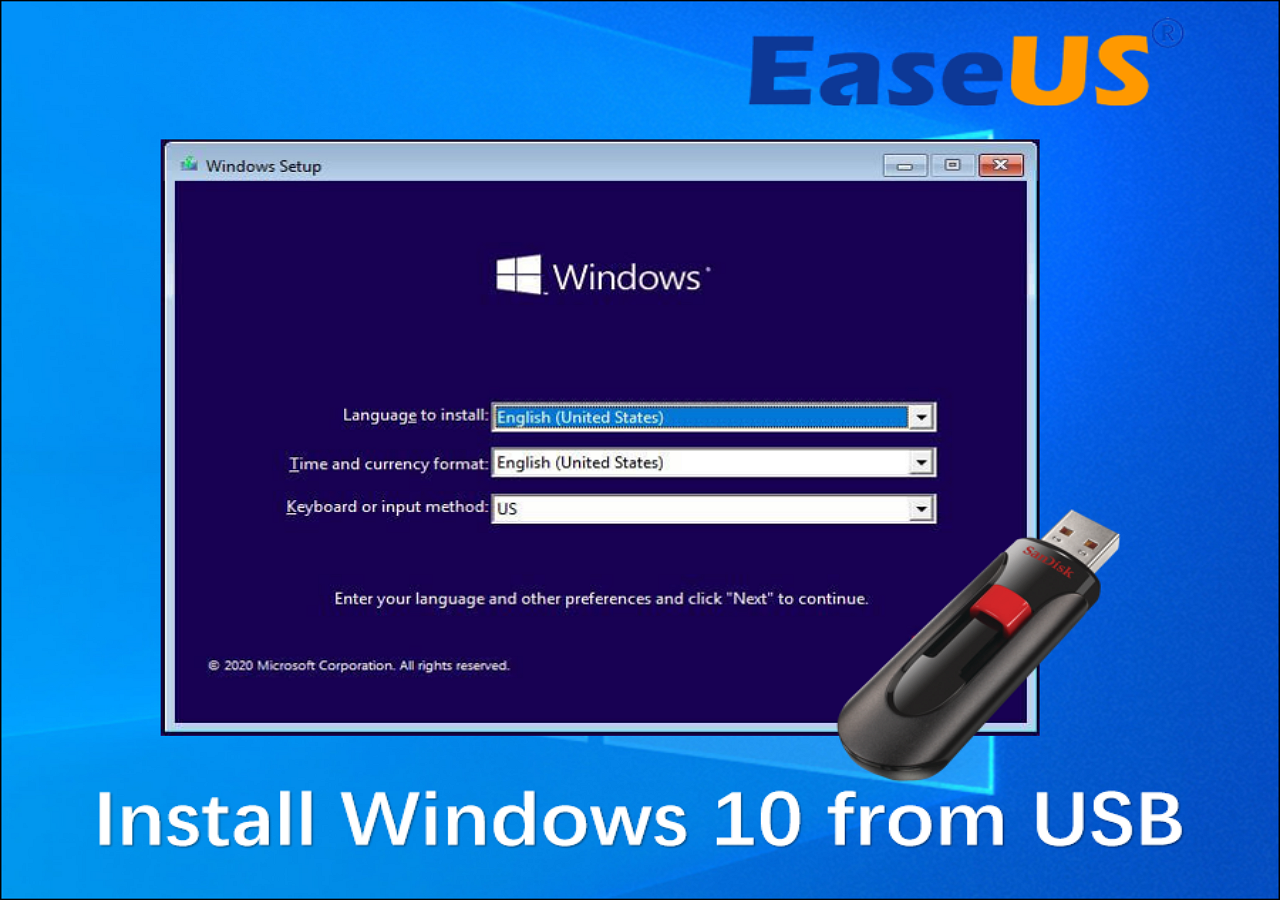
- Language, Time, and Keyboard: On the first screen, select your preferred language, time and currency format, and keyboard layout. Click “Next.”
- Install Now: Click the “Install now” button.
- Activate Windows:
- If you have a product key, enter it here.
- If you don’t have one, or your PC has a digital license, click “I don’t have a product key.” Windows will usually activate automatically after installation when connected to the internet.
- Choose Operating System (if applicable): If your ISO contains multiple editions (e.g., Windows 11 Home, Pro), select the one you want to install and click “Next.”
- License Terms: Read and accept the license terms. Click “Next.”
- Choose Installation Type:
- Upgrade: Install Windows and keep files, settings, and applications: This option is for upgrading an existing Windows installation without losing data. Do NOT select this if you want a clean installation.
- Custom: Install Windows only (advanced): This is the option you want for a clean installation. Select this.
- Partitioning Your Drive: This is a critical step.
- You’ll see a list of drives and partitions. For a clean install, you generally want to delete all existing partitions on the target drive (the drive where you want to install Windows). Select each partition (e.g., “Drive 0 Partition 1,” “Drive 0 Partition 2”), click “Delete,” and confirm.
- Once all partitions on your target drive are deleted, you’ll have “Drive 0 Unallocated Space.” Select this unallocated space.
- You can either click “Next” to let Windows automatically create the necessary partitions (recommended for most users), or click “New” to manually create and size partitions if you know what you’re doing (e.g., separate drive for programs and data).
- Important: Ensure you select the correct drive for installation. Installing Windows on the wrong drive will erase its contents!
- Installation Begins: After selecting the partition, click “Next.” Windows will now begin copying files and installing. Your PC will restart multiple times during this phase. Do not remove the USB drive until the first reboot after the “Getting files ready for installation” percentage reaches 100%. After the first reboot, the PC will boot into a setup mode to finish the installation, and you can remove the USB drive if you wish, although it often won’t interfere if left in.
- Initial Setup and User Configuration: After the restarts, you’ll be greeted by the Out-of-Box Experience (OOBE) where you’ll configure basic settings:
- Region, Keyboard layout
- Network connection (connect to Wi-Fi or Ethernet)
- Microsoft Account sign-in (or create a local account)
- Privacy settings
- Cortana/Voice assistant setup (if applicable)
- Choose a PIN (optional)
Follow the on-screen prompts until you reach the Windows desktop. Congratulations, Windows is now installed!
Post-Installation Essentials and Troubleshooting
Installing Windows is just the beginning. To ensure a smooth, secure, and fully functional operating system, a few more steps are highly recommended. Additionally, knowing how to tackle common issues can save you a lot of frustration.
Getting Your New Windows System Ready
Once you land on the desktop, don’t rush into heavy use just yet. There are some vital housekeeping tasks to complete.
Installing Device Drivers
Windows usually includes generic drivers for most hardware components, allowing your system to function immediately. However, for optimal performance, stability, and access to all features, you should install the latest, manufacturer-specific drivers.
- Check Device Manager: Right-click the Start button and select “Device Manager.” Look for any devices with yellow exclamation marks, indicating missing or problematic drivers.
- Motherboard/Chipset Drivers: Start by visiting your motherboard manufacturer’s website (for desktops) or your laptop manufacturer’s website. Download and install the latest chipset drivers. This is foundational.
- Graphics Card Drivers: For NVIDIA, AMD, or Intel integrated graphics, download and install the latest drivers directly from their respective websites. These are crucial for display performance, gaming, and video playback.
- Other Drivers: Install drivers for Wi-Fi, Ethernet, audio, webcam, card readers, and any other specific peripherals from the manufacturer’s support page.
- Windows Update: Often, Windows Update will also find and install many necessary drivers.
Running Windows Updates
Keeping Windows updated is paramount for security and stability.
- Check for Updates: Go to Start > Settings > Windows Update (or Update & Security for older Windows versions).
- Download and Install: Click “Check for updates” and allow Windows to download and install all available updates. This might take some time and require multiple restarts.
- Restart: Ensure you restart your computer as prompted to finalize the updates.
Installing Essential Software
Now you can start customizing your PC with the applications you use daily.
- Web Browser: Download your preferred browser (Chrome, Firefox, Edge, Brave, etc.).
- Antivirus/Security Software: While Windows Defender is built-in and generally capable, you might prefer a third-party solution. Ensure your system has robust protection.
- Productivity Suites: Install Microsoft Office, LibreOffice, or other productivity tools.
- Cloud Storage Clients: Install OneDrive, Google Drive, or Dropbox clients to sync your cloud files.
- Utilities: Any other essential tools for your workflow (e.g., VLC Media Player, 7-Zip, Adobe Reader).
Troubleshooting Common Installation Issues
Even with careful preparation, issues can arise. Here are some common problems and their solutions.
USB Drive Not Recognized or Not Booting
- Check BIOS/UEFI Settings: Double-check that the USB drive is at the top of the boot order.
- UEFI/Legacy Mismatch: Ensure your bootable USB’s partition scheme (GPT/MBR) matches your computer’s boot mode (UEFI/Legacy BIOS). Try recreating the USB with the opposite setting if unsure.
- Secure Boot: Some older Windows versions or specific hardware configurations might require disabling “Secure Boot” in your UEFI settings.
- USB Port Issues: Try a different USB port, preferably a USB 2.0 port if you’re using an older motherboard (some older BIOS/UEFI might have issues with USB 3.0 during boot).
- Recreate the USB: The bootable media might be corrupted. Try recreating it using the Media Creation Tool or Rufus.
- Faulty USB Drive: The thumb drive itself might be damaged. Try a different one.
“Missing Media” or “Operating System Not Found” Errors
This often indicates that the system couldn’t find a bootable device or the boot files on the USB are corrupted.
- Confirm USB is Bootable: Ensure the USB was created correctly (e.g., using Rufus or MCT).
- Check BIOS Boot Order: Make sure your USB drive is the first boot device.
- Remove Other Drives: Temporarily disconnect other hard drives or SSDs during installation to ensure the installer focuses on the correct target drive.
Driver Issues During Installation (e.g., “A media driver your computer needs is missing”)
This error is common on newer hardware or systems with complex RAID configurations, particularly for NVMe SSDs.
- Download Storage Drivers: Go to your motherboard or laptop manufacturer’s website, find the “SATA” or “NVMe” or “RAID” drivers, download them (usually as a
.zipfile), extract them to a separate folder on your bootable USB drive (or another USB drive). - Load Drivers During Setup: When you encounter the drive selection screen during Windows installation, click “Load driver,” browse to the folder containing your extracted drivers, and install them.
Windows Installation Stuck at a Certain Percentage or Loop
- Patience: Some steps can take a long time. Give it ample time, especially if your hardware is older or the USB is slow.
- Disconnect Peripherals: Unplug any unnecessary peripherals (printers, external hard drives, etc.) except for the keyboard, mouse, and bootable USB.
- Check RAM/HDD: Faulty RAM or a failing hard drive can cause installation issues. Run memory diagnostics or check your drive’s health if possible.
- Corrupted ISO: The downloaded ISO file might be corrupted. Re-download it from a reliable source and recreate the bootable USB.
By meticulously following these steps and being prepared for common hiccups, you’ll be able to confidently install Windows from a thumb drive, ensuring a fresh start for your computer. This skill is invaluable for maintaining system health, upgrading hardware, and swiftly resolving software issues, making you more productive and secure in your digital endeavors.
aViewFromTheCave is a participant in the Amazon Services LLC Associates Program, an affiliate advertising program designed to provide a means for sites to earn advertising fees by advertising and linking to Amazon.com. Amazon, the Amazon logo, AmazonSupply, and the AmazonSupply logo are trademarks of Amazon.com, Inc. or its affiliates. As an Amazon Associate we earn affiliate commissions from qualifying purchases.