
The phrase “how to hotwire” immediately conjures images of clandestine operations, sparking wires, and illicit vehicle starting. It’s a term rooted in a bygone era of simpler mechanics and less sophisticated security. However, in the 21st century, with vehicles evolving into complex networked computers on wheels, the very concept of “hotwiring” has been rendered largely obsolete by advanced technology and digital security protocols. This article will not, for ethical and legal reasons, provide instructions on how to hotwire a vehicle for unauthorized use. Instead, we will leverage the intriguing nature of the title to embark on an insightful journey through the technological evolution of automotive ignition systems and the sophisticated digital security measures that have fundamentally transformed vehicle access and protection. We will demystify the underlying electrical principles that traditional hotwiring sought to exploit, explore the rise of intelligent anti-theft systems, and delve into the broader implications of cybersecurity in the modern connected car. Understanding “how to hotwire” in a historical and analytical context allows us to appreciate the ingenuity of modern automotive engineering and the critical role digital security plays in safeguarding our vehicles today.

Demystifying the Ignition: The Fundamentals of Vehicle Starting
At its core, starting an internal combustion engine involves a precise sequence of events: engaging the starter motor to crank the engine, supplying fuel, and generating a spark for ignition. For decades, the primary interface for initiating this sequence was the ignition switch, a seemingly simple mechanical device that controlled a complex electrical dance. Understanding this fundamental circuit is crucial to comprehending why older vehicles were susceptible to traditional hotwiring.
The Basic Electrical Circuit
Every vehicle relies on a 12-volt battery as its primary power source. This battery provides the energy for all electrical components, including the engine’s starting mechanism. When you turn a key in the ignition, you are essentially closing a series of electrical circuits. The main components involved in starting include:
- Battery: The power reservoir.
- Ignition Switch: The central control point, acting as a multi-position electrical switch.
- Starter Solenoid: A magnetic switch that transmits high current from the battery to the starter motor.
- Starter Motor: An electric motor designed to crank the engine until it starts on its own power.
- Fuel Pump: Delivers fuel from the tank to the engine’s fuel injectors or carburetor.
- Ignition System: Generates the high-voltage spark needed to ignite the fuel-air mixture (e.g., coil, distributor/ignition module, spark plugs).
When the key is turned to the “START” position, the ignition switch sends a low-current signal to the starter solenoid, which then closes a high-current circuit, allowing massive electrical flow from the battery directly to the starter motor. Simultaneously, power is directed to the fuel pump and ignition system, preparing the engine for combustion.
The Role of the Ignition Switch
The ignition switch is far more than just an on/off toggle. It typically has several positions, each controlling different circuits:
- OFF/LOCK: All major circuits are open, and the steering wheel may be locked.
- ACC (Accessory): Provides power to non-essential accessories like the radio or power windows, without powering the engine’s critical systems.
- ON/RUN: Powers the vehicle’s essential systems, including the fuel pump, ignition system, engine control unit (ECU), and dashboard instruments, without engaging the starter. This is the position for normal driving.
- START: Momentarily engages the starter motor to crank the engine. Once the engine starts, the key springs back to the “ON/RUN” position.
The physical design of the ignition switch, with its tumbler and key, was the primary security mechanism for decades. Only the correctly cut key could manipulate the internal tumblers to complete the necessary circuits.
Early Vehicle Security (or Lack Thereof)
In the early to mid-20th century, vehicle security was rudimentary. The physical key and ignition switch were the main deterrents. If a thief could bypass the mechanical lock of the ignition switch, or physically access the wires connected to it, they could potentially mimic the actions of the key. This simplicity, born from a lack of advanced electronics, created vulnerabilities that traditional hotwiring techniques exploited. There were no sophisticated electronic immobilizers, encrypted communication protocols, or complex digital networks to contend with, making vehicles of that era relatively easy targets for those with a basic understanding of automotive electrical systems.
The Era of Analog Vulnerabilities: Traditional Hotwiring Techniques
The historical practice of “hotwiring” stems from a time when a vehicle’s electrical system was largely analog and physically accessible. The goal was to bypass the mechanical ignition switch and manually complete the circuits necessary to power the engine and engage the starter motor. While this discussion provides historical context, it is crucial to reiterate that this information is purely for understanding past vulnerabilities and does not endorse or instruct in illegal activities. Unauthorized vehicle use is a serious crime with severe legal consequences.
Identifying Key Wires
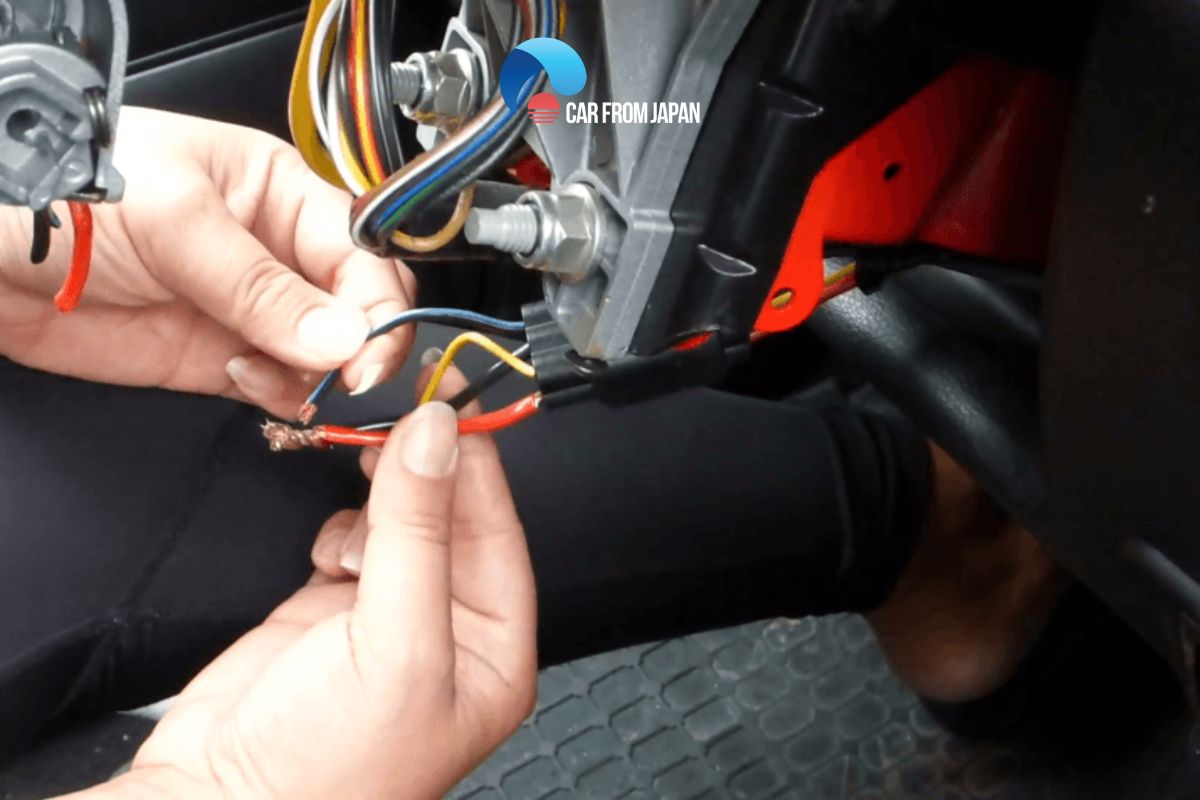
For traditional hotwiring to work, a perpetrator needed to identify three critical sets of wires typically found near the steering column or under the dashboard:
- Constant Power Wire (Battery Wire): This wire provides continuous 12-volt power directly from the battery. It is always “hot” (carrying power), regardless of the ignition switch position. This serves as the primary power source for the bypass.
- Ignition Wire (Accessory/Run Wire): This wire powers the vehicle’s essential systems when the ignition switch is in the “ON/RUN” position. This includes the fuel pump, ignition system, and the vehicle’s computer (if present).
- Starter Wire: This wire sends a signal to the starter solenoid when the ignition switch is turned to the “START” position, engaging the starter motor.
Identifying these wires often involved cutting into the wiring harness, using a test light to find live circuits, and a rudimentary understanding of the vehicle’s electrical diagram (or trial and error).
The “Bypass” Principle
Once identified, the principle of hotwiring was straightforward:
- Powering Essential Systems: The constant power wire would be connected directly to the ignition wire. This would simulate turning the key to the “ON/RUN” position, providing power to the fuel pump and ignition system, and preparing the engine to run.
- Engaging the Starter: With the essential systems powered, the constant power wire would then be momentarily touched to the starter wire. This would send a direct signal to the starter solenoid, causing the starter motor to crank the engine. Once the engine started, the connection to the starter wire would be broken (as the key would spring back from “START” to “ON/RUN”).
In essence, hotwiring was a crude, manual, and often damaging way to emulate the key’s function by physically manipulating the electrical circuits.
Limitations and Risks (Ethical and Legal)
Beyond the inherent illegality and ethical reprehensibility of vehicle theft, traditional hotwiring presented numerous practical limitations and risks:
- Damage to Vehicle Systems: Cutting and stripping wires could cause short circuits, damage to the electrical system, and fire hazards.
- Difficulty and Skill: While seemingly simple, correctly identifying and connecting the right wires under pressure without causing damage required a degree of skill and knowledge.
- Noise and Visibility: The process itself was often noisy, attracting attention, and left visible evidence of tampering.
- Increasingly Obsolete: As we will explore, the introduction of electronic immobilizers and other digital security features has rendered this method virtually useless on modern vehicles.
It is paramount to understand that any attempt to hotwire a vehicle without authorization is a serious criminal offense, punishable by imprisonment and substantial fines. This historical overview serves solely to illustrate a past vulnerability that automotive technology has since overcome, emphasizing the importance of modern security advancements.
The Digital Revolution: Modern Automotive Security Systems
The analog vulnerabilities exploited by traditional hotwiring became glaringly apparent as vehicle theft rates climbed. This prompted a significant technological shift in automotive security, moving from purely mechanical and electrical safeguards to sophisticated digital systems. The digital revolution in vehicle security has made traditional hotwiring virtually impossible for the vast majority of modern cars, replacing simple wire connections with encrypted communication and intelligent electronic control units (ECUs).
Electronic Immobilizers
The electronic immobilizer is arguably the most significant advancement that rendered traditional hotwiring obsolete. Introduced widely in the 1990s, immobilizers prevent the engine from starting unless a specific, electronically coded key is present and recognized.
- How they work: The key contains a transponder chip (often passive, meaning it doesn’t require a battery). When the key is inserted into the ignition (or simply present in a keyless entry system), an antenna coil around the ignition barrel (or within the cabin) reads a unique digital code from the transponder chip. This code is then sent to the vehicle’s Engine Control Unit (ECU) or a dedicated immobilizer control module. If the code matches the one programmed into the ECU, the ECU allows the engine to start by enabling critical functions like fuel delivery and ignition. If the code doesn’t match, the ECU prevents these functions, effectively “immobilizing” the vehicle.
- Security Strength: Because the immobilizer system relies on a complex, encrypted digital handshake between the key and the ECU, simply hotwiring the physical wires will not bypass this electronic lockout. The ECU will not receive the correct authorization code, and thus, the engine will not start, even if power is supplied directly to the starter and fuel pump.
Key Fobs and Remote Access Systems
Modern key fobs, beyond merely unlocking doors, are integral components of vehicle security. They operate using radio frequency (RF) signals and advanced encryption to communicate with the vehicle’s Body Control Module (BCM) or other dedicated security modules.
- Encryption and Rolling Codes: Key fobs use encryption algorithms to secure their signals. Many also employ “rolling codes” (or hopping codes), where a new, unique code is generated for each unlock/lock command. This prevents “code grabbing,” where a thief records a signal and replays it later to gain access. Even if a signal is intercepted, it becomes invalid after one use.
- Keyless Entry and Start: Systems like smart keys allow owners to unlock and even start their vehicles without physically inserting a key. The car detects the key fob’s presence within a certain range, verifies its encrypted signal, and allows the push-button start to activate. This relies on constant, secure digital communication between the fob and the vehicle.
CAN Bus and Networked Vehicle Systems
Contemporary vehicles are not just collections of individual components; they are complex networks of ECUs communicating via protocols like the Controller Area Network (CAN) bus. This network architecture adds another layer of security against physical tampering.
- Integrated Digital Networks: Instead of individual wires running from a switch to each component, ECUs communicate digitally over shared data lines. For instance, the ignition switch might send a digital message over the CAN bus to the engine ECU, steering column ECU, and infotainment system ECU, rather than a direct electrical current.
- Complexity and Interdependence: Bypassing one physical connection no longer guarantees control. To start a modern car, a thief would need to digitally mimic the complex, synchronized communication across multiple ECUs, which is exponentially more difficult than simply connecting a few wires. Tampering with one part of the network often triggers security alerts or renders other critical systems inoperable.
Advanced Anti-Theft Features
Beyond immobilizers and key fobs, modern vehicles integrate a range of advanced anti-theft technologies:
- Advanced Alarm Systems: Far more sophisticated than simple sirens, these systems can detect intrusion, changes in tilt (e.g., towing), glass breakage, and even interior motion, triggering alarms and sometimes notifying vehicle owners via smartphone apps.
- GPS Tracking and Telematics: Many vehicles come equipped with integrated GPS tracking, allowing owners or law enforcement to locate a stolen vehicle. Telematics systems can even remotely disable the engine or lock the doors.
- Biometric Access (Emerging): Some high-end vehicles and concepts are exploring biometric authentication (e.g., fingerprint readers, facial recognition) for vehicle access and ignition, offering an even higher level of personalized security.
These digital advancements have moved the battleground against vehicle theft from simple electrical circuits to the realm of cybersecurity, making traditional “hotwiring” a relic of the past.
Beyond the Wires: Contemporary Threats and Digital Security in Vehicles
As vehicles transitioned from mechanical machines to rolling computers, the nature of threats shifted dramatically. The vulnerability of exposed wires gave way to the more insidious and complex challenges of cyber-physical security. Modern vehicle theft is less about brute-force electrical bypass and more about exploiting digital vulnerabilities, making “hotwiring” in its traditional sense largely irrelevant, replaced by digital sophisticated attacks.
Cyber-Physical Security
The concept of “cyber-physical security” highlights that digital attacks can have real-world physical consequences. In the automotive world, this means a hacker doesn’t need to cut wires; they might aim to:
- Key Fob Cloning: Rather than bypassing the ignition, sophisticated thieves might attempt to intercept and clone the digital signal from a legitimate key fob. Relay attacks, for instance, involve using signal boosters to extend the range of a key fob’s signal, allowing the car to be “tricked” into thinking the key is present, even if it’s inside the owner’s home.
- Software Exploits: Like any computer system, a vehicle’s ECUs run software, which can have vulnerabilities. Skilled attackers might attempt to hack into a vehicle’s onboard diagnostics (OBD-II) port, or even remotely via wireless connections, to reprogram the ECU or disable the immobilizer.
- Supply Chain Attacks: Vulnerabilities could be introduced at any stage of a vehicle’s manufacturing or software development, creating backdoors that could be exploited later.
The focus has moved from tampering with physical wires to manipulating or bypassing the digital “brain” that controls those wires.
The Connected Car and IoT Security
The advent of the connected car, an integral part of the Internet of Things (IoT), introduces a new frontier of security challenges. Vehicles are increasingly connected to the internet, often equipped with Wi-Fi, cellular modems, and Bluetooth capabilities. This connectivity enables features like over-the-air (OTA) software updates, remote diagnostics, infotainment streaming, and integration with smart home ecosystems.
- Attack Surfaces: Each connection point represents a potential “attack surface.” A hacker could attempt to exploit vulnerabilities in a vehicle’s Wi-Fi hotspot, infotainment system, mobile app, or even cellular modem to gain unauthorized access to critical vehicle systems.
- Data Privacy and Integrity: Connected cars collect vast amounts of data about driving habits, location, and vehicle performance. Ensuring the privacy and integrity of this data, and preventing it from being compromised or misused, is a major cybersecurity concern.
- Over-the-Air (OTA) Updates: While beneficial for delivering bug fixes and new features, insecure OTA update mechanisms could be exploited to push malicious software to a vehicle, compromising its security.
Protecting Your Digital Keys
For vehicle owners, understanding these contemporary threats means shifting focus from protecting physical keys to safeguarding digital access.
- Key Fob Security: Store key fobs in Faraday pouches or signal-blocking boxes when not in use, especially at home, to prevent relay attacks. Be wary of where you place your key fob, as proximity can be exploited.
- Software Updates: Ensure your vehicle’s software and firmware are always up-to-date, as manufacturers regularly release patches for newly discovered vulnerabilities.
- Vehicle Apps: Use strong, unique passwords for vehicle-related smartphone apps and enable two-factor authentication if available.
- OBD-II Port Protection: Be cautious about who connects devices to your vehicle’s OBD-II port, as this can be a direct gateway to the vehicle’s internal network. Consider an OBD-II port lock or disabling access if not regularly used for legitimate diagnostics.
- Awareness: Stay informed about emerging automotive cybersecurity threats and recommendations from your vehicle manufacturer.
The battle against vehicle theft is now a sophisticated game of cat and mouse in the digital realm, demanding continuous vigilance and technological innovation.
The Future of Automotive Access and Protection
The journey from simple mechanical keys to complex digital authentication underscores a profound evolution in automotive technology. Looking ahead, the future of vehicle access and protection promises even more radical transformations, driven by advancements in biometrics, decentralized technologies, and artificial intelligence. The concept of “hotwiring” will continue its descent into historical obscurity, replaced by layers of intelligent and virtually impenetrable security.
Biometrics and Beyond
Physical keys and even traditional key fobs may eventually become relics, replaced by methods of authentication that are intrinsically linked to the user.
- Fingerprint and Facial Recognition: Already making inroads in smartphones and smart homes, biometric authentication offers a highly secure and personalized method of vehicle access and ignition. The car could recognize the authorized driver’s fingerprint on the steering wheel or their face via an interior camera, granting access and even adjusting preferences automatically.
- Voice and Iris Recognition: As these technologies mature, they could also be integrated, providing multi-modal biometric security that is extremely difficult to spoof. The advantage of biometrics is that they are difficult to lose, steal, or replicate, moving security from “what you have” (a key) to “who you are.”
- Wearable Technology Integration: Smartwatches and other wearables could become secure digital keys, leveraging their own biometric authentication and encrypted communication to authorize vehicle access.
Blockchain and Decentralized Identity
Blockchain technology, known for its role in cryptocurrencies, offers intriguing possibilities for revolutionizing vehicle ownership and access management.
- Tamper-Proof Ownership Records: A blockchain could serve as an immutable, transparent ledger for vehicle ownership, transfer, and service history, making title fraud virtually impossible.
- Decentralized Access Control: Instead of relying on a central server, vehicle access permissions could be managed via smart contracts on a blockchain. This could enable secure, granular control over who can access a vehicle, when, and for what purpose (e.g., granting temporary access to a car-sharing service or a valet without giving them a physical key).
- Secure Data Sharing: Vehicle data (telemetry, maintenance records) could be securely and selectively shared with trusted parties (e.g., mechanics, insurance companies) through blockchain, ensuring data integrity and user control.
AI and Predictive Security
Artificial intelligence and machine learning are poised to transform vehicle security from reactive measures to proactive, predictive defense systems.
- Behavioral Biometrics: AI could learn an authorized driver’s unique driving style, seating position, and even how they operate various controls. Any significant deviation could trigger an alert or prevent the vehicle from starting, adding a dynamic layer of security beyond static biometrics.
- Threat Detection and Prediction: AI algorithms can analyze vast amounts of data from vehicle sensors, network traffic, and external threat intelligence to identify unusual patterns that might indicate an attempted hack or theft. This could allow the vehicle to autonomously take protective actions or alert the owner/authorities before an incident escalates.
- Automated Response Systems: In the event of a detected threat, AI-powered systems could activate advanced countermeasures, such as localized jamming of communication, remote disabling of non-essential functions, or alerting nearby security infrastructure.

The Irrelevance of Traditional “Hotwiring”
Ultimately, these advancements solidify the obsolescence of traditional “hotwiring.” The future of automotive security is not about preventing a direct electrical connection but about safeguarding complex digital identities, securing intricate networked systems, and leveraging intelligent technologies to predict and prevent unauthorized access. The phrase “how to hotwire” will increasingly be seen as a historical curiosity, a testament to how far technology has advanced in making our vehicles safer, more secure, and seamlessly integrated into our digital lives. The focus has entirely shifted from circumventing simple circuits to protecting the sophisticated software and hardware that form the very essence of modern mobility.
aViewFromTheCave is a participant in the Amazon Services LLC Associates Program, an affiliate advertising program designed to provide a means for sites to earn advertising fees by advertising and linking to Amazon.com. Amazon, the Amazon logo, AmazonSupply, and the AmazonSupply logo are trademarks of Amazon.com, Inc. or its affiliates. As an Amazon Associate we earn affiliate commissions from qualifying purchases.