
In an increasingly complex financial landscape, the pursuit of financial freedom and a more balanced lifestyle has led many to explore the concept of passive income. Often romanticized as a utopian state of earning without effort, true passive income is a powerful engine for wealth creation and time liberation, provided one understands its mechanics and is willing to invest the initial strategic effort. This comprehensive guide will demystify passive income, explore various avenues, and outline a robust strategy for building and sustaining streams of income that work for you, even when you’re not actively working.
Understanding the Core Principles of Passive Income
Before delving into specific strategies, it’s crucial to establish a foundational understanding of what passive income truly entails. Dispelling common myths and grasping its essential characteristics will set a realistic and actionable framework for your journey.
What Exactly is Passive Income?
At its heart, passive income is revenue that continues to flow with minimal ongoing effort after the initial work or investment has been completed. Unlike active income, where you trade your time directly for money (e.g., a salary from a job, hourly freelancing), passive income allows for a decoupling of time and earnings. The initial effort might involve creating a product, investing capital, or setting up a system, but once established, the income generated requires significantly less active management. It’s about building assets that generate cash flow, rather than constantly exchanging your labor for wages.
The Myth of “Get Rich Quick” and “Do Nothing”
One of the most pervasive misconceptions surrounding passive income is that it signifies “getting rich quick” or “doing nothing.” This couldn’t be further from the truth. Genuine passive income streams almost always demand a significant upfront investment—be it time, money, specialized knowledge, or a combination thereof. Establishing a successful passive income source often requires diligent research, strategic planning, consistent effort, and often, a considerable amount of capital before it begins to generate substantial returns with minimal ongoing involvement. The “passive” aspect refers to the reduced ongoing effort, not the absence of initial effort. Thinking of it as “front-loaded effort” for long-term dividends is a far more accurate and productive perspective.
Key Characteristics of Successful Passive Income Streams
For an income stream to truly be considered passive and sustainable, it typically exhibits several key characteristics:
- Scalability: The ability to increase earnings without a proportional increase in effort or cost. For instance, an ebook can be sold hundreds or thousands of times without needing to be rewritten.
- Automation Potential: The capacity to automate processes such as sales, marketing, customer service, and delivery, thus reducing the need for direct intervention.
- Low Maintenance: Once set up, the stream should require minimal regular input to continue functioning effectively. This distinguishes it from active businesses that demand constant oversight.
- Recurring Revenue: Ideally, passive income streams generate repeat business or subscriptions, providing a predictable and stable cash flow over time. This could be through subscriptions, repeat purchases, or ongoing interest/dividends.
By focusing on these characteristics, you can evaluate potential passive income opportunities more effectively and build a portfolio designed for long-term success and minimal active management.
Investment-Based Passive Income Streams
One of the most traditional and often most reliable avenues for generating passive income involves leveraging capital through strategic investments. These methods require an initial monetary investment, with the potential for returns that grow over time.
Real Estate Investments
Real estate remains a cornerstone of passive income generation, offering tangible assets and diverse opportunities.
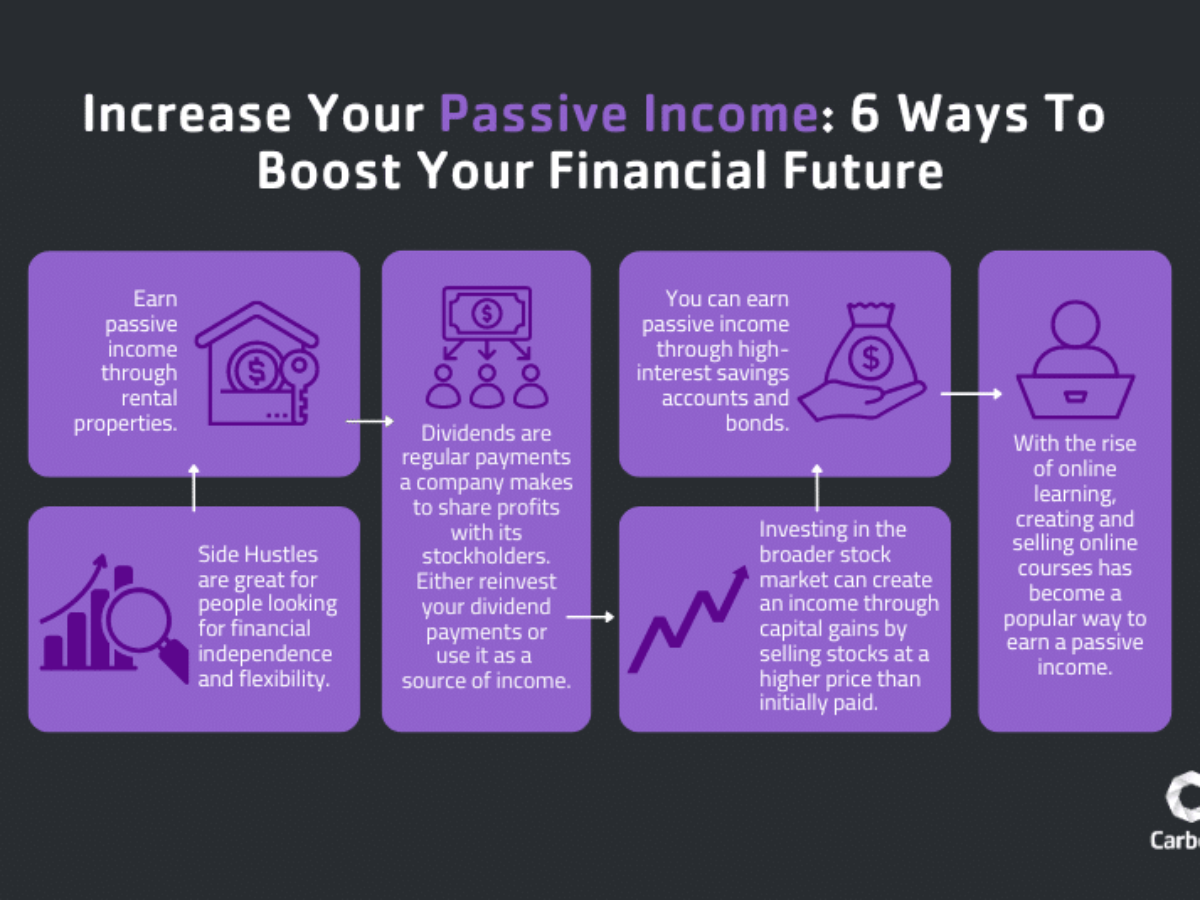
- Rental Properties: Purchasing residential or commercial properties and renting them out is a classic method. While it can be highly lucrative, it also requires significant upfront capital and can involve active management (tenants, maintenance) unless property management services are employed, which reduces net income but increases passivity. Long-term rentals offer stable income, while short-term rentals (e.g., Airbnb) can offer higher returns but demand more dynamic management.
- Real Estate Investment Trusts (REITs): For those seeking exposure to real estate without direct property ownership or management, REITs are an excellent option. These companies own, operate, or finance income-producing real estate across various sectors. Investors buy shares in REITs, which are traded on major exchanges, and typically receive regular dividend payments from the rental income generated by the underlying properties. This offers a highly passive way to earn from real estate, often with lower capital requirements than direct property ownership.
Stock Market Investments
The stock market offers multiple pathways to passive income, primarily through dividends and capital appreciation.
- Dividend Stocks: Investing in companies that regularly distribute a portion of their earnings to shareholders in the form of dividends. These payments can provide a consistent income stream. Focus on established, financially sound companies with a history of consistent dividend payments and growth. Reinvesting dividends can significantly accelerate wealth accumulation through compounding.
- Index Funds and Exchange-Traded Funds (ETFs): These investment vehicles hold a diversified portfolio of stocks or bonds, often tracking a specific market index. They offer diversification, lower fees than actively managed funds, and many also pay dividends. This is a highly passive strategy, as you’re investing in a broad market segment rather than individual stocks, reducing the need for constant research and stock picking.
- Bonds and Fixed Income: While typically offering lower returns than stocks, bonds and other fixed-income securities provide regular interest payments, making them a conservative choice for passive income, especially for those prioritizing capital preservation.
Peer-to-Peer Lending
Peer-to-peer (P2P) lending platforms connect individual borrowers with individual lenders, bypassing traditional financial institutions. As a lender, you can invest in various loans and earn interest on your capital. While it offers potentially higher returns than traditional savings accounts, it comes with increased risk, including borrower default. Diversifying your investments across multiple loans and borrowers is crucial to mitigate this risk.
High-Yield Savings Accounts & Certificates of Deposit (CDs)
For the most risk-averse, high-yield savings accounts and CDs offer a modest but guaranteed passive income stream through interest payments. While returns are typically lower compared to other investment avenues, they provide a safe haven for capital and ensure liquidity (for savings accounts) or a fixed return over a set period (for CDs). These are foundational elements for building an emergency fund or holding cash while awaiting other investment opportunities.
Digital & Business-Based Passive Income Streams
The digital age has ushered in an unprecedented era of opportunities for creating passive income, often leveraging technology and creativity. These methods typically involve building a digital asset or system once and selling it repeatedly or allowing it to generate ongoing revenue.
Creating Digital Products
The beauty of digital products lies in their scalability: create once, sell infinitely.
- Ebooks and Online Courses: Sharing your expertise through a written book or a structured video course allows you to educate a wide audience while earning royalties or direct sales revenue. Once created, these products can be marketed and sold for years with minimal updates.
- Stock Photos, Videos, and Music: If you have a talent for photography, videography, or music composition, you can license your work on platforms like Shutterstock, Adobe Stock, or Epidemic Sound, earning a royalty each time your assets are used.
- Software, Apps, and Templates: For those with technical skills, developing a useful software application, a mobile app, or even premium digital templates (for websites, presentations, graphic design) can generate passive income through sales or subscriptions.
- Print-on-Demand (POD): Design unique graphics for t-shirts, mugs, phone cases, and other merchandise. When a customer places an order, a third-party printer creates and ships the product, meaning you hold no inventory. Your passive role is in the design and marketing.
Affiliate Marketing
Affiliate marketing involves partnering with companies to promote their products or services. When someone makes a purchase through your unique affiliate link, you earn a commission. This strategy is highly effective for content creators (bloggers, YouTubers, podcasters) who can organically integrate product recommendations into their content. The passive aspect comes from the content continuing to attract viewers/readers and generate sales long after its initial creation. Success hinges on building trust with your audience and choosing relevant, high-quality products.
Advertising Revenue (Blogs, YouTube)
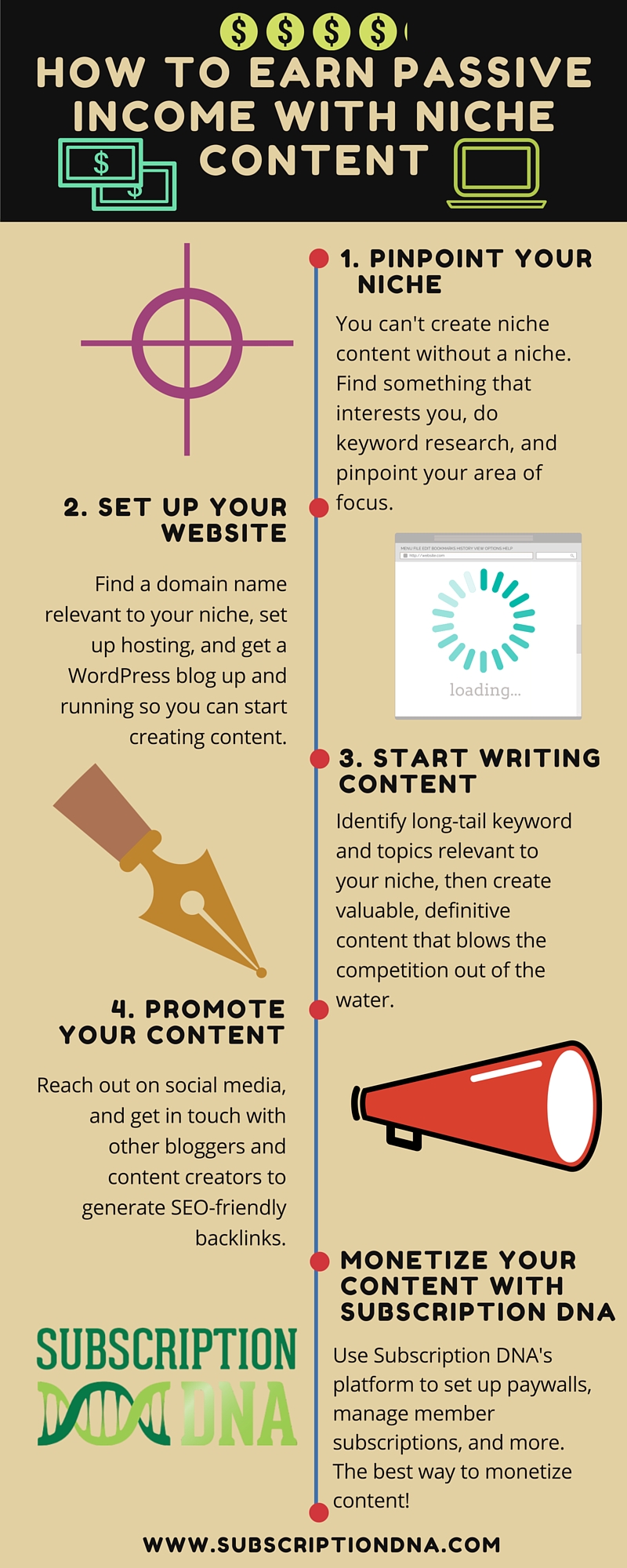
If you’re skilled at content creation and can attract a substantial audience, advertising revenue can become a significant passive income stream.
- Display Ads on Blogs/Websites: By placing ads from networks like Google AdSense or Mediavine on your blog, you earn money based on page views or clicks. The more traffic your content generates, the higher your ad revenue.
- YouTube Channel Monetization: Content creators on YouTube can earn revenue from ads displayed on their videos once they meet specific subscriber and watch-time thresholds. Once a video is uploaded and gains traction, it can continue to generate income for years.
- Sponsored Content: While less purely passive as it often requires active negotiation and creation, once a sponsored post or video is published, it can continue to drive traffic and meet contractual obligations without further effort.
Royalties (Books, Music, Patents)
For creators in various fields, royalties offer a classic form of passive income. Authors earn royalties from book sales, musicians from song plays and sales, and inventors from patented technologies. This income stream typically requires significant initial creative output but then generates ongoing revenue each time the intellectual property is used or sold.
Dropshipping and E-commerce Automation
Dropshipping involves setting up an online store where you sell products without holding any inventory. When a customer places an order, you forward it to a third-party supplier who then ships the product directly to the customer. Your role is primarily marketing and customer service, and while it requires initial setup and ongoing marketing, fulfillment is automated, making it more passive than traditional e-commerce. Building a strong brand and automating customer support can further enhance its passivity.
Building Your Passive Income Portfolio: Strategy & Mindset
Achieving sustainable passive income isn’t just about picking a method; it’s about adopting a strategic approach and cultivating the right mindset. This involves careful planning, diversification, and a commitment to long-term growth.
Start Small and Diversify
The journey to substantial passive income rarely begins with a single, massive undertaking. Instead, it’s often more prudent to start with one or two manageable streams that align with your skills, interests, and available capital. As these streams begin to generate returns, you can gradually expand into other areas. Diversification is key; putting all your efforts or capital into a single passive income source exposes you to undue risk. If one stream underperforms or fails, others can help maintain your overall income.
Reinvesting Profits
One of the most powerful strategies for accelerating wealth accumulation through passive income is reinvesting your profits. Instead of immediately spending the income generated, funnel a portion (or all, initially) back into your passive income ventures. This could mean buying more dividend stocks, investing in additional rental properties, scaling your digital product marketing, or developing new online courses. The principle of compounding—earning returns on your returns—will significantly amplify your growth over time.
Automation and Systems
The true “passive” nature of these income streams is largely contingent on the level of automation and efficient systems you implement.
- Financial Automation: Set up automatic transfers to investment accounts, use robo-advisors for portfolio management, or leverage financial software to track income and expenses.
- Business Automation: For digital products or e-commerce, utilize email marketing automation, scheduling tools for content, virtual assistants for customer service, and third-party fulfillment services. The more you can systemize and automate, the less active intervention will be required.
- Delegation: Don’t be afraid to delegate tasks that consume your time but don’t require your unique expertise. This could be outsourcing content creation, social media management, or administrative tasks, freeing you to focus on strategic growth.
Continuous Learning and Adaptation
The financial and digital landscapes are constantly evolving. What works today might be less effective tomorrow. Therefore, a commitment to continuous learning is vital. Stay informed about market trends, new technologies, changes in regulations, and emerging opportunities within your chosen passive income niches. Be willing to adapt your strategies, explore new tools, and refine your approach based on performance and market shifts.
Patience and Persistence
Building meaningful passive income streams is a marathon, not a sprint. It demands patience to see investments grow, and persistence to overcome initial challenges and setbacks. There will be periods of slow growth, unexpected expenses, or low sales. Those who succeed are the ones who remain persistent, continue to refine their strategies, and understand that consistent effort over time is the ultimate determinant of success. Celebrate small wins, learn from failures, and keep your long-term financial freedom goals in sight.
Common Pitfalls to Avoid
While the allure of passive income is strong, several common mistakes can derail your efforts. Being aware of these pitfalls can help you navigate the journey more successfully.
Underestimating Initial Work/Investment
Many aspiring passive income earners underestimate the sheer volume of initial work, time, or capital required to set up a truly passive stream. Rushing into an endeavor without adequately preparing for the foundational effort often leads to frustration and abandonment. Remember, “passive” refers to the ongoing effort, not the startup effort.
Lack of Due Diligence
Failing to thoroughly research an opportunity before committing resources is a significant pitfall. This includes understanding the market, potential risks, regulatory requirements, tax implications, and the competitive landscape. Forgetting to read the fine print on investment platforms, not vetting suppliers for dropshipping, or failing to understand audience needs for digital products can lead to costly mistakes.
Chasing “Shiny Objects” without Focus
The internet is rife with promises of easy money from the “next big thing.” Constantly jumping from one passive income idea to another without giving any a real chance to succeed is a common trap. It dissipates effort and capital, preventing you from building momentum in any single area. Choose one or two avenues, commit to them, and refine your approach before diversifying further.
Ignoring Taxes and Legalities
Passive income, just like active income, is subject to taxation. Many overlook the importance of understanding the tax implications of their various income streams, leading to unexpected liabilities. Furthermore, depending on the nature of your passive income (e.g., rental properties, online businesses), there might be specific legal requirements, licenses, or permits needed. Consulting with a financial advisor and legal professional is crucial to ensure compliance and optimize your financial strategy.

Conclusion
The journey to financial freedom through passive income is both challenging and incredibly rewarding. It’s a paradigm shift from trading time for money to building assets that generate wealth independently. By understanding the true nature of passive income—the significant initial effort required, the power of automation, and the importance of strategic investment and digital asset creation—you can systematically build a diversified portfolio of income streams.
Whether you choose to invest in real estate, leverage the stock market, create digital products, or harness the power of affiliate marketing, remember that patience, persistence, and continuous learning are your greatest allies. Avoid the common pitfalls, commit to smart strategies, and progressively move towards a future where your money works harder for you, allowing you to reclaim your time and pursue the life you truly desire. Start today, even with small steps, and lay the groundwork for your financial independence.
aViewFromTheCave is a participant in the Amazon Services LLC Associates Program, an affiliate advertising program designed to provide a means for sites to earn advertising fees by advertising and linking to Amazon.com. Amazon, the Amazon logo, AmazonSupply, and the AmazonSupply logo are trademarks of Amazon.com, Inc. or its affiliates. As an Amazon Associate we earn affiliate commissions from qualifying purchases.