
In the realm of personal finance, travel is often categorized as a “discretionary expense”—a luxury that many believe requires a significant sacrifice of savings. However, viewed through the lens of financial optimization and strategic capital allocation, airfare is not a fixed cost, but a highly volatile commodity. Just as an investor looks for undervalued stocks or a day trader seeks market inefficiencies, a savvy traveler can exploit the complexities of airline pricing models to secure “very cheap” tickets.
Achieving significant savings on airfare is less about luck and more about mastering the financial mechanics of the travel industry. By treating flight procurement as a disciplined financial exercise, you can transform one of your largest annual expenses into a manageable line item, freeing up capital for investments, emergency funds, or further experiences.
1. Mastering the Arbitrage of Airline Pricing Models
To find the cheapest flights, one must first understand that airline pricing is not based on the cost of the service provided, but on “yield management”—a complex algorithmic system designed to extract the maximum amount of money from every passenger. From a financial perspective, this creates an environment ripe for arbitrage.
Understanding Dynamic Pricing and Yield Management
Airlines employ thousands of data points to adjust prices in real-time. Factors such as historical demand, competitor pricing, and even the time remaining until departure dictate the current “ask” price. As a consumer, your goal is to identify the “low-water mark” of this volatility. This involves moving away from the mindset of a “buyer” and toward the mindset of a “market analyst.” By monitoring price fluctuations over a period of weeks, you can identify the baseline price for a route and recognize when the market is offering a genuine discount versus a superficial “sale.”
Leveraging Geo-Arbitrage via Currency and Point of Sale
One of the most effective financial tactics for lowering flight costs is geo-arbitrage. Because airlines price their tickets differently based on the purchaser’s perceived purchasing power or local market competition, you can often find significant discrepancies by changing your “Point of Sale” (POS). By using a Virtual Private Network (VPN) or searching on a country-specific version of an airline’s website (e.g., .co.uk vs. .com), you may find that a ticket priced in a weaker currency or for a different regional market is substantially cheaper. This is a pure financial play, exploiting currency exchange rates and regional pricing biases to reduce your total capital outlay.
The Financial Logic of “Hidden City” Ticketing
A more advanced, though slightly riskier, financial strategy is “hidden city” ticketing. This occurs when a flight with a layover in your actual destination is cheaper than a direct flight to that destination. For example, a flight from New York to London with a layover in Paris might be cheaper than a direct flight from New York to Paris. By booking the New York-London trip and simply exiting the airport in Paris, you capture the price difference. While this requires a firm understanding of airline Terms of Service and carries risks (such as only being able to bring a carry-on), it represents a classic example of exploiting market inefficiencies to save hundreds of dollars.
2. Strategic Credit Card Maximization and Travel Hacking
In the ecosystem of personal finance, credit card rewards are effectively a form of “tax-free” rebate on your daily spending. When managed with the precision of a business ledger, these rewards can offset the cost of airfare entirely.
Sign-up Bonuses as Venture Capital for Travel
The fastest way to acquire the capital needed for “cheap” or free flights is through the strategic acquisition of credit card sign-up bonuses. Think of these bonuses as a high-return investment on your organic spending. By opening a new travel-focused credit card and meeting the minimum spend requirement through regular bills and groceries, you can earn 60,000 to 100,000 points—often enough for a round-trip international flight. The “cost” here is merely the organized management of your credit profile, while the “return” is a high-value asset (the points) that can be liquidated for travel.
Calculating the Value of Points (CPM Analysis)
To truly master the “Money” aspect of flight booking, you must understand Cents Per Mile (CPM). Not all point redemptions are created equal. If a flight costs $500 or 50,000 points, your CPM is 1.0. However, if that same 50,000 points can buy a $2,000 business class seat, your CPM jumps to 4.0. Savvy financial planners never spend points unless the CPM exceeds a certain threshold (usually 1.5 to 2.0). By calculating the ROI of your points versus paying cash, you ensure that you are always using the most cost-effective “currency” for your journey.
Utilizing Transfer Partners for Maximum ROI
Directly booking through a credit card portal (like Chase or Amex) often gives you a fixed value for your points. However, the real financial gain lies in “Transfer Partners.” By moving your credit card points to specific airline loyalty programs, you can often take advantage of “sweet spot” award charts. For instance, transferring 50,000 points to a partner airline might unlock a flight that would have cost 80,000 points on the primary portal. This is a form of leverage, where you increase the purchasing power of your rewards through strategic movement of assets.
3. The Opportunity Cost of Timing: When to Invest in Your Ticket
In finance, timing is everything. Whether it is the “Goldilocks window” for booking or the decision to wait for a market correction, the timing of your purchase dictates your final margin.
The “Goldilocks Window” for Capital Allocation
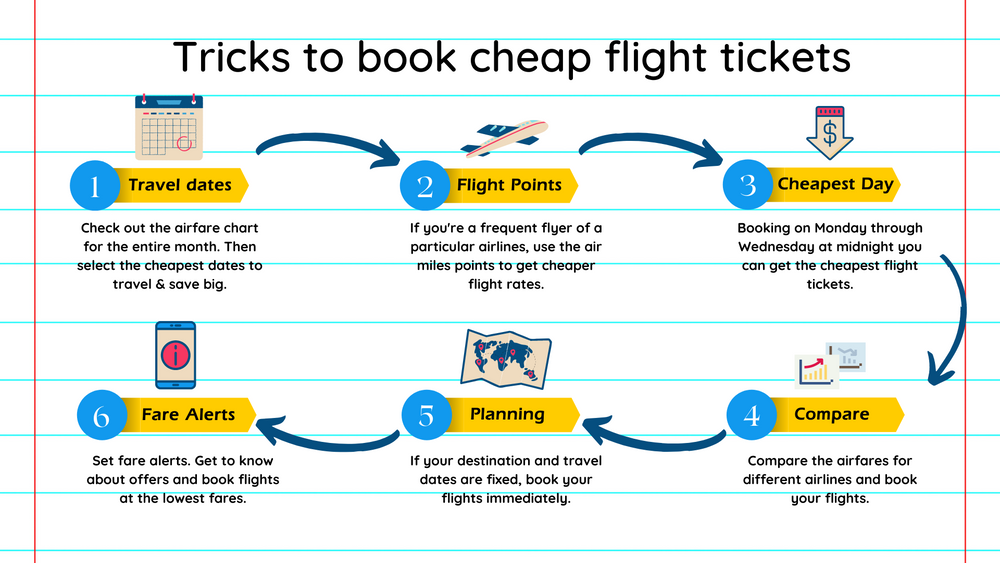
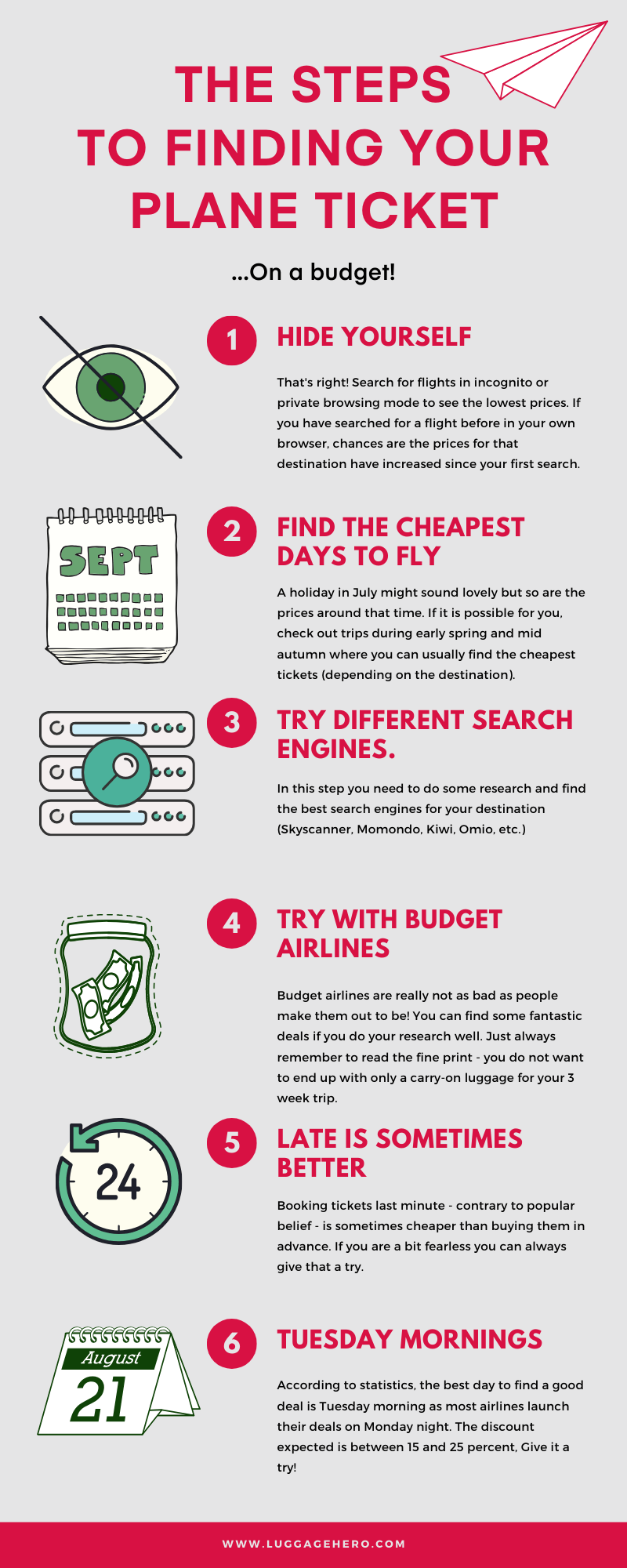
Data suggests that there is a specific window where airlines are most likely to lower prices to fill remaining seats without appearing desperate. For domestic flights, this is typically 1 to 3 months in advance; for international, 2 to 8 months. Booking too early (before the algorithm has adjusted for demand) or too late (when business travelers with high price elasticity are booking) results in a premium. Treating this window as a “buy signal” allows you to automate your savings strategy.
Budgeting for Error Fares and Flash Sales
Market glitches, known as “error fares,” occur when a human or technical error lists a flight for a fraction of its cost (e.g., a $1,200 flight listed for $120). From a financial standpoint, these are high-alpha opportunities that require immediate liquidity. To take advantage of these, one must have a “travel fund” ready to deploy at a moment’s notice. Subscribing to alert services that monitor these glitches allows you to act as a “first mover” in the market, securing tickets at prices that defy traditional economic logic.
The ROI of Mid-Week and Off-Peak Travel
Most travelers are constrained by a Monday-Friday work week, leading to high demand—and high prices—on Fridays and Sundays. By shifting your “investment” to mid-week (Tuesday or Wednesday), you are participating in a lower-demand market. The financial savings of flying mid-week can often reach 30-40%. Additionally, traveling during the “shoulder season” (the period between peak and off-peak) offers the best balance of cost-efficiency and quality of experience, ensuring your travel dollars go further.
4. Tactical Tools for Financial Oversight in Travel
To manage any financial portfolio, you need the right tools. In the context of cheap flights, this means using technology to provide transparency and data-driven insights.
Aggregators vs. Direct Booking: A Risk-Reward Analysis
While aggregators and Online Travel Agencies (OTAs) can often find lower “sticker prices,” a sophisticated financial approach considers the “Total Cost of Ownership.” Booking through a third-party site might save you $20 upfront, but if the flight is canceled, the cost of rebooking and the lack of customer support can result in a net loss. Always weigh the marginal savings of an OTA against the “insurance” of booking directly with the airline.
Leveraging Price Protection and Refund Policies
Some high-end credit cards and travel tools offer price protection. If the price of your flight drops after you buy it, these services can help you reclaim the difference. Furthermore, understanding the “24-hour rule”—a regulation in many jurisdictions that allows you to cancel a flight for a full refund within 24 hours of booking—allows you to “lock in” a good price while you continue to scan the market for an even better one. This is essentially a “no-cost call option” on your travel.
The Budget Airline Trap: Calculating Ancillary Costs
A flight that appears “cheap” at $40 can quickly become expensive when you factor in baggage fees, seat selection, and boarding passes. A disciplined financial approach requires calculating the “all-in” cost before committing. Often, a legacy carrier that includes a carry-on and a meal provides a better “Value for Money” (VFM) than a budget airline that charges for every amenity. By running a full cost analysis, you avoid the hidden “taxes” that erode your travel budget.

Conclusion: Developing a Wealth-Building Travel Mindset
Securing very cheap flight tickets is not merely a hobby; it is a manifestation of sound financial habits. By understanding market volatility, leveraging credit as an asset, timing your entries into the market, and using data-driven tools, you treat your travel spending with the same rigor as your investment portfolio.
The ultimate goal of finding cheap flights is to increase your “travel runway”—the ability to see more of the world while maintaining a healthy financial trajectory. When you master the art of the deal in airfare, you are no longer a passive consumer of travel; you are a strategic manager of your own global mobility. Through discipline, research, and a commitment to financial optimization, the world becomes significantly more affordable, one flight at a time.
aViewFromTheCave is a participant in the Amazon Services LLC Associates Program, an affiliate advertising program designed to provide a means for sites to earn advertising fees by advertising and linking to Amazon.com. Amazon, the Amazon logo, AmazonSupply, and the AmazonSupply logo are trademarks of Amazon.com, Inc. or its affiliates. As an Amazon Associate we earn affiliate commissions from qualifying purchases.