
In an economy driven by transactions, prices, and financial decisions, understanding how to calculate the percentage of a price isn’t just a useful skill—it’s an indispensable one. From deciphering discounts during a sale to accurately calculating sales tax, tipping at a restaurant, or even evaluating business profit margins, percentages are interwoven into the fabric of our financial lives. This guide will demystify the process, providing you with the knowledge and tools to confidently navigate any scenario involving a percentage of a price, empowering you to make smarter financial choices in both your personal and professional endeavors.

Understanding the Fundamentals: What is a Percentage of a Price?
Before diving into calculations, it’s crucial to grasp the core concept behind percentages and their application to prices. This foundational understanding will illuminate why this skill is so vital for financial literacy.
The Core Concept of Percentage
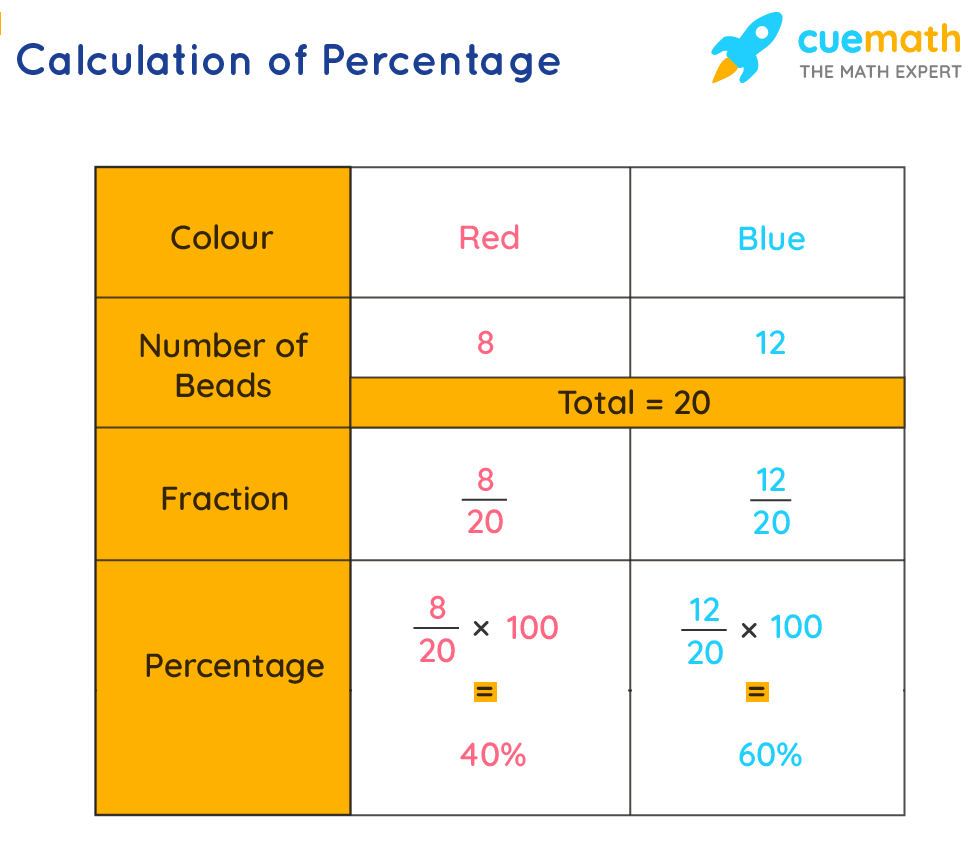
At its heart, a percentage is simply a way to express a part of a whole, represented as a fraction of 100. The word “percent” originates from the Latin “per centum,” meaning “by the hundred.” So, when we say “20 percent,” we literally mean 20 out of 100, or 20/100.
When applied to a price, a percentage refers to a specific portion or share of that total price. For instance, if an item costs $100 and you receive a 20% discount, that 20% represents $20 – a part of the original $100 price. It’s a universal language for expressing proportional relationships, making it easier to compare values and understand relative changes. Without a common baseline like “out of 100,” comparing a discount of $15 on a $75 item to a discount of $20 on a $200 item would be less intuitive. Percentages provide that clear, comparative framework.
Why It Matters: Practical Applications
The relevance of calculating percentages of a price extends across numerous daily financial interactions, impacting both personal spending and business operations.
-
Personal Finance:
- Sales & Discounts: The most common application. Knowing how to calculate a 15%, 25%, or 50% discount helps you understand the actual savings and compare deals effectively.
- Tipping: Whether it’s 15%, 18%, or 20% for service, quickly calculating a tip ensures you compensate appropriately without overpaying or underpaying.
- Taxes: Sales tax, property tax, and even some income tax calculations involve percentages of a base value.
- Interest Rates: Understanding interest on savings accounts, credit cards, or loans requires grasping how a percentage rate applies to your principal amount.
- Inflation/Deflation: The percentage change in prices over time directly impacts your purchasing power.
-
Business Finance:
- Profit Margins: Businesses rely on percentages to determine their profitability. Gross profit margin, operating profit margin, and net profit margin are all expressed as percentages of revenue.
- Markups: Retailers use markup percentages to set selling prices above their cost, ensuring they cover overheads and make a profit.
- Commissions: Sales professionals often earn a commission, which is a percentage of the sales price of a product or service.
- Budgeting & Forecasting: Businesses use percentage analysis to track expenses relative to revenue, allocate budgets, and forecast future financial performance based on percentage growth or decline.
- Price Adjustments: Analyzing the percentage impact of price increases or decreases on demand and revenue is crucial for strategic pricing.
Key Terminology
To communicate clearly about percentages and prices, familiarize yourself with these terms:
- Original Price (or Base Value): This is the total amount or the starting value from which the percentage is taken. For a discount, it’s the price before the discount. For tax, it’s the price before tax.
- Percentage Rate: This is the specific percentage value itself (e.g., 10%, 25%, 7%). It’s always followed by the percent symbol (%).
- Part/Amount (or Percentage Value): This is the actual numerical value that represents the calculated percentage of the original price. For example, if 20% of $100 is $20, then $20 is the “part” or “percentage value.”
The Universal Formula: How to Calculate a Percentage of a Price
Calculating a percentage of a price relies on a simple yet powerful formula that can be adapted to various situations. Mastering this formula is your gateway to financial fluency.
The Basic Formula Explained
The most fundamental way to calculate a percentage of a price involves converting the percentage rate into a decimal and then multiplying it by the original price.
The core formula is:
Percentage Amount = (Percentage Rate / 100) * Original Price
Alternatively, if you want to find what percentage one amount is of another:
Percentage Rate = (Percentage Amount / Original Price) * 100
Let’s break down the first formula:
- Percentage Rate / 100: This step converts the percentage into a decimal. For example, 20% becomes 20/100 = 0.20. This is because “percent” means “per hundred,” so dividing by 100 effectively removes the percent symbol and gives you its decimal equivalent.
- Multiply by Original Price: Once you have the decimal equivalent of the percentage, you multiply it by the original price to find the specific monetary amount that the percentage represents.
Step-by-Step Calculation Guide
Let’s put the formula into action with practical examples.
Example 1: Finding a Discount
You want to buy a jacket that costs $150, and it’s on sale for 20% off. How much is the discount?
- Identify values:
- Original Price = $150
- Percentage Rate = 20%
- Convert percentage to decimal:
- 20 / 100 = 0.20
- Multiply by Original Price:
- Percentage Amount = 0.20 * $150 = $30
The discount is $30. The final price would be $150 – $30 = $120.
- Percentage Amount = 0.20 * $150 = $30
Example 2: Calculating Sales Tax
You’re buying a book for $50, and the sales tax rate is 7%. How much sales tax will you pay?
- Identify values:
- Original Price = $50
- Percentage Rate = 7%
- Convert percentage to decimal:
- 7 / 100 = 0.07
- Multiply by Original Price:
- Percentage Amount = 0.07 * $50 = $3.50
You will pay $3.50 in sales tax. The total cost of the book will be $50 + $3.50 = $53.50.
- Percentage Amount = 0.07 * $50 = $3.50
Example 3: Determining a Tip
Your restaurant bill is $65, and you want to leave an 18% tip. How much should you tip?
- Identify values:
- Original Price = $65
- Percentage Rate = 18%
- Convert percentage to decimal:
- 18 / 100 = 0.18
- Multiply by Original Price:
- Percentage Amount = 0.18 * $65 = $11.70
You should leave an $11.70 tip. The total amount including the tip would be $65 + $11.70 = $76.70.
- Percentage Amount = 0.18 * $65 = $11.70
Reversing the Calculation: Finding the Original Price
Sometimes, you know the percentage amount and the percentage rate, but you need to find the original price. This often happens when you see a discount amount advertised, but not the original cost.
The formula for finding the original price is:
Original Price = Percentage Amount / (Percentage Rate / 100)
Example: A sale sign says, “Save $30! That’s 15% off!” What was the original price of the item?
- Identify values:
- Percentage Amount = $30
- Percentage Rate = 15%
- Convert percentage to decimal:
- 15 / 100 = 0.15
- Divide Percentage Amount by decimal rate:
- Original Price = $30 / 0.15 = $200
The original price of the item was $200.
- Original Price = $30 / 0.15 = $200
Advanced Applications and Common Scenarios
Beyond basic discounts and taxes, percentage calculations are crucial for understanding price changes, business profitability, and complex financial scenarios.

Calculating Price Increases and Decreases
Understanding how to directly calculate a new price after an increase or decrease is incredibly useful.
-
Price Decrease (Markdown/Discount): If an item decreases by a certain percentage, you’re essentially paying (100% – Percentage Decrease).
- New Price = Original Price * (1 – (Percentage Decrease / 100))
- Example: A $200 item is 25% off. New Price = $200 * (1 – (25/100)) = $200 * (1 – 0.25) = $200 * 0.75 = $150.
-
Price Increase (Markup/Inflation): If an item increases by a certain percentage, you’re paying (100% + Percentage Increase).
- New Price = Original Price * (1 + (Percentage Increase / 100))
- Example: A $50 item increases in price by 10%. New Price = $50 * (1 + (10/100)) = $50 * (1 + 0.10) = $50 * 1.10 = $55.
Understanding Profit Margins and Markups
For anyone involved in business or entrepreneurship, distinguishing between profit margin and markup percentage is critical. While both relate to profitability, they’re calculated differently.
-
Gross Profit Margin: This tells you the percentage of revenue that is left after subtracting the cost of goods sold (COGS). It’s a measure of how much profit a company makes on each sale, relative to the selling price.
- Gross Profit Margin = ((Revenue – Cost of Goods Sold) / Revenue) * 100
- Example: If an item sells for $100 (Revenue) and cost $60 to produce (COGS), the profit is $40. Margin = ($40 / $100) * 100 = 40%. This means 40% of every dollar of revenue is gross profit.
-
Markup Percentage: This indicates how much a product’s selling price is above its cost, expressed as a percentage of the cost. Businesses use markup to determine their selling price.
- Markup Percentage = ((Selling Price – Cost) / Cost) * 100
- Example: If an item costs $60 to acquire (Cost) and sells for $100 (Selling Price), the markup is $40. Markup Percentage = ($40 / $60) * 100 = 66.67%. This means the selling price is 66.67% above the cost.
Dealing with Multiple Percentages
A common trap is to simply add or subtract percentages when dealing with sequential discounts or a discount followed by tax. This is incorrect! Percentages are always applied to the current base value.
-
Sequential Discounts: You cannot add a 10% discount and a 5% discount and call it a 15% discount. The second discount is applied to the reduced price after the first discount.
- Example: An item costs $100. It’s 10% off, then an additional 5% off at the register.
- First discount: $100 * (1 – 0.10) = $100 * 0.90 = $90 (Price after first discount)
- Second discount: $90 * (1 – 0.05) = $90 * 0.95 = $85.50 (Final Price)
If you had simply added them (15% off), you’d pay $85, which is different.
- Example: An item costs $100. It’s 10% off, then an additional 5% off at the register.
-
Discount then Tax: Tax is typically calculated on the price after any discounts have been applied.
- Example: A $100 item is 20% off, and there’s a 7% sales tax.
- Price after discount: $100 * (1 – 0.20) = $80
- Tax on discounted price: $80 * 0.07 = $5.60
- Total cost: $80 + $5.60 = $85.60
- Example: A $100 item is 20% off, and there’s a 7% sales tax.
Tools and Strategies for Effortless Calculations
While understanding the manual calculation is paramount, modern tools can significantly streamline the process and minimize errors.
The Humble Calculator
Your basic calculator, whether physical or on your smartphone, is your most immediate ally. Most calculators have a dedicated “%” button, which can simplify steps, but understanding its functionality is key.
- To find 20% of 150: Type
150 * 20 %(some calculators, particularly older ones, might require150 * 20 = %). - For discounts (e.g., 20% off 150): Type
150 - 20 %. This usually calculates the discount amount and subtracts it automatically.
Always test your calculator’s percentage function with a simple example to ensure you understand how it operates.
Spreadsheet Power (Excel/Google Sheets)
For more complex scenarios, budgeting, or managing multiple price calculations, spreadsheets are invaluable.
- Basic Percentage: To calculate 20% of a value in cell A2, you’d use
=A2*0.20or=A2*(20/100). - Discounted Price: If the original price is in A2 and the discount percentage (e.g., 20) is in B2, the formula for the new price would be
=A2*(1-(B2/100)). - Total with Tax: If the price is in A2 and the tax rate (e.g., 7) is in B2, the formula for total would be
=A2*(1+(B2/100)).
Spreadsheets allow you to create templates for sales, budgeting, profit analysis, and easily adjust variables to see immediate impacts.
Online Percentage Calculators and Apps
Numerous websites and mobile apps are dedicated to percentage calculations. These are fantastic for quick checks and for those times when you prefer not to do manual math. They often provide fields for original price, percentage rate, and the resulting amount, quickly solving for any missing variable. While convenient, remember to understand the underlying math yourself to avoid over-reliance and ensure you can verify results.
Mental Math Shortcuts (Approximations)
For quick estimations, especially when shopping or tipping, mental math can be a lifesaver.
- Finding 10%: Simply move the decimal point one place to the left. For $65, 10% is $6.50.
- Using 10% for other percentages:
- To find 20%: Double 10% ($6.50 * 2 = $13).
- To find 5%: Halve 10% ($6.50 / 2 = $3.25).
- To find 15%: Add 10% and 5% ($6.50 + $3.25 = $9.75).
Practicing these shortcuts can significantly speed up your decision-making in real-time financial situations.
Mastering Percentage of Price for Financial Empowerment
The ability to calculate percentages of a price goes far beyond just mathematical proficiency; it’s a cornerstone of financial literacy and responsible money management.
Smart Shopping and Budgeting
Armed with percentage calculation skills, you become a more discerning consumer. You can:
- Identify True Savings: Accurately gauge the real discount value, especially during complex sales events or when comparing multiple offers.
- Avoid Overspending: Clearly see the impact of sales tax or additional fees on your total purchase, preventing budget overruns.
- Allocate Funds Precisely: When budgeting, you can better estimate percentages of your income for savings, investments, or discretionary spending.
Informed Business Decisions
For business owners and managers, understanding these calculations is non-negotiable for sustainable growth:
- Strategic Pricing: Set competitive and profitable prices by accurately calculating markups.
- Profitability Analysis: Monitor and improve financial health by consistently tracking profit margins.
- Inventory Management: Make data-driven decisions on purchasing and selling based on cost and profit percentages.
- Financial Reporting: Interpret and create clearer financial statements, understanding the proportional relationships between different line items.
Enhancing Financial Literacy
Ultimately, mastering percentage calculations builds confidence and sharpens your overall financial acumen. It enables you to:
- Understand Financial News: Grasp economic indicators like inflation, interest rate changes, and market fluctuations that are often expressed in percentages.
- Evaluate Investments: Understand rates of return, yields, and portfolio allocations.
- Negotiate Effectively: Whether buying a car or discussing a salary, understanding percentage changes can give you a significant advantage.
- Avoid Pitfalls: Become less susceptible to misleading financial offers or pricing strategies.
Conclusion
The phrase “how to get the percentage of a price” might sound like a simple mathematical query, but its implications for personal and business finance are profound. It’s a fundamental skill that underpins everything from daily transactions to complex financial planning. By understanding the core formulas, practicing with real-world examples, and leveraging modern tools, you can transform from someone who passively accepts prices into an active, informed financial participant. Embracing these calculations is not merely about crunching numbers; it’s about taking control of your financial destiny, making smarter choices, and building a more secure and prosperous future. Make percentage calculations a cornerstone of your financial toolkit, and watch your confidence and capabilities soar.
aViewFromTheCave is a participant in the Amazon Services LLC Associates Program, an affiliate advertising program designed to provide a means for sites to earn advertising fees by advertising and linking to Amazon.com. Amazon, the Amazon logo, AmazonSupply, and the AmazonSupply logo are trademarks of Amazon.com, Inc. or its affiliates. As an Amazon Associate we earn affiliate commissions from qualifying purchases.