
The world of stock market investing can appear daunting, a complex labyrinth of charts, jargon, and financial headlines that seem to move at warp speed. Yet, it remains one of the most powerful avenues for building wealth, combating inflation, and securing your financial future. For many, the idea of dipping a toe into this market is exciting but equally intimidating, often leading to paralysis by analysis. The good news is that starting your investment journey doesn’t require a finance degree or a massive initial capital. It primarily demands a willingness to learn, a clear understanding of your financial goals, and a disciplined approach.

This comprehensive guide aims to demystify the stock market for beginners, breaking down the essential concepts, outlining practical steps, and equipping you with the knowledge to embark on your investing adventure with confidence. From understanding the basics of what stocks are to selecting your first investments and developing a robust long-term strategy, we’ll cover everything you need to know to transform from a market spectator into an active participant in your financial growth.
Understanding the Fundamentals of the Stock Market
Before you dive into buying and selling, it’s crucial to grasp the foundational elements that underpin the stock market. A solid understanding of these basics will not only boost your confidence but also help you make more informed decisions.
What is the Stock Market?
At its core, the stock market is a collection of markets and exchanges where investors can buy and sell shares of publicly traded companies. When you buy a stock, you’re essentially purchasing a tiny fraction of ownership in that company, making you a shareholder. Companies issue stocks to raise capital for various purposes, such as expansion, research and development, or paying off debt. In return, shareholders have the potential to benefit from the company’s growth through increased stock value (capital appreciation) and sometimes through dividends, which are portions of the company’s profits distributed to shareholders. The value of a stock can fluctuate based on a multitude of factors, including the company’s performance, industry trends, economic indicators, and investor sentiment.
Why Invest in Stocks?
Investing in stocks offers several compelling advantages, making it a cornerstone of many financial plans. Historically, the stock market has provided significant long-term growth potential that often outpaces other asset classes like bonds or savings accounts. This growth is essential for combating inflation, which erodes the purchasing power of your money over time. Beyond capital appreciation, many companies pay dividends, offering a regular income stream that can be reinvested to accelerate growth through the power of compounding. Investing in stocks also allows you to participate in the success of innovative companies and entire economies, positioning your wealth to grow alongside global progress.
Key Concepts for Beginners
Navigating the stock market requires familiarity with several core concepts. Risk vs. Reward is fundamental: generally, higher potential returns come with higher risk. Understanding your personal risk tolerance is paramount. Volatility refers to the degree of variation in a stock’s price over time; some stocks are more volatile than others. While volatility can be unnerving, it also presents opportunities. Diversification is perhaps the most critical concept for beginners. It involves spreading your investments across various assets, industries, and geographies to reduce overall risk. The adage “don’t put all your eggs in one basket” perfectly encapsulates the essence of diversification. Other important terms include “bull market” (a period of rising prices) and “bear market” (a period of falling prices), as well as understanding different types of orders like market orders and limit orders.
Preparing for Your Investment Journey
Successful investing isn’t just about picking the right stocks; it’s about laying a strong personal financial foundation and approaching the market with a well-thought-out strategy. This preparation phase is crucial for long-term success.
Define Your Financial Goals and Risk Tolerance
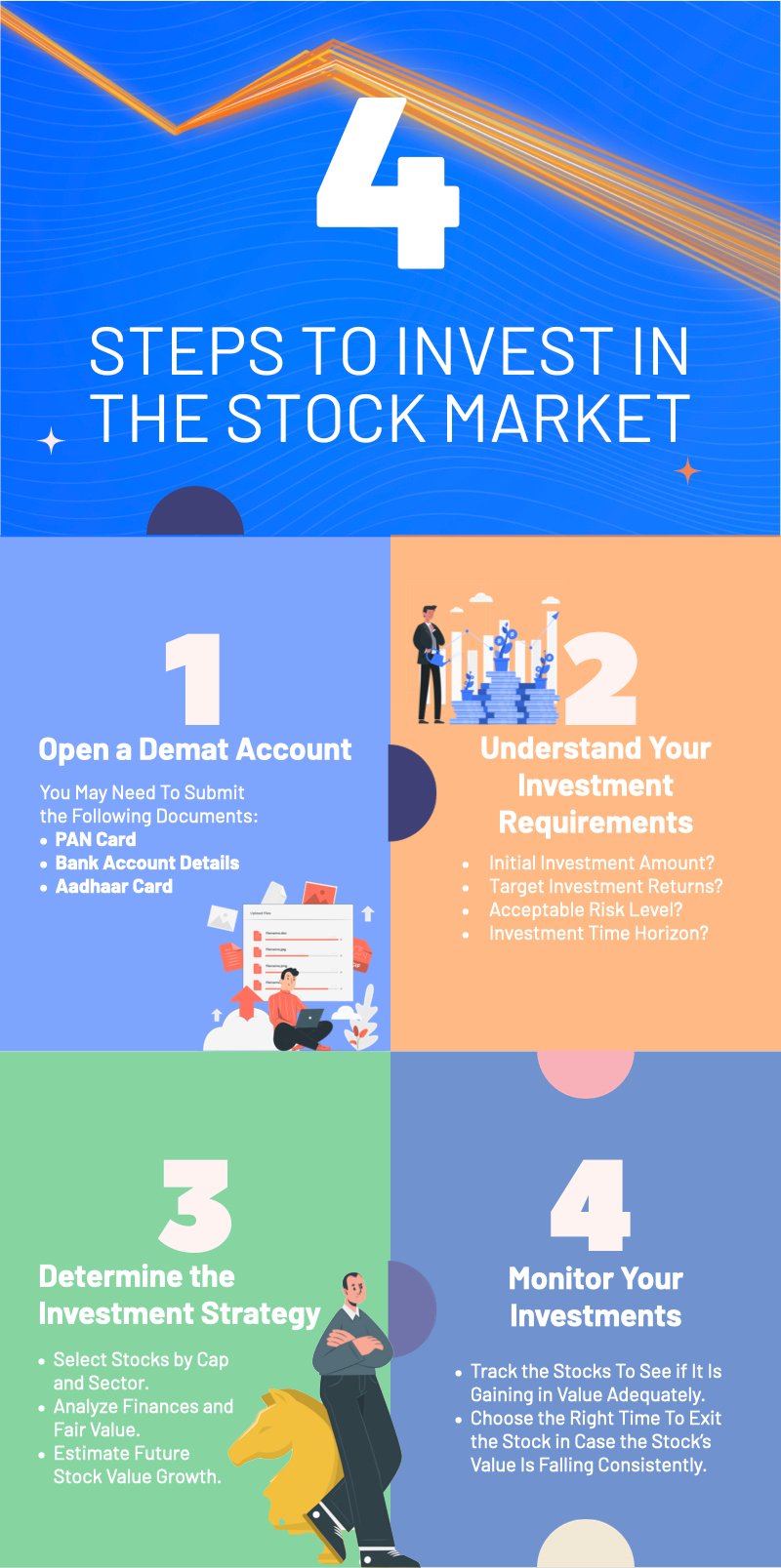
Before investing a single dollar, take the time to define why you are investing. Are you saving for retirement decades away? A down payment on a house in five years? Funding your child’s education? Your goals will dictate your investment horizon and, consequently, the level of risk you should consider taking. Longer time horizons generally allow for higher risk tolerance, as there’s more time to recover from market downturns. Simultaneously, assess your risk tolerance – how comfortable are you with the possibility of losing money in exchange for higher potential returns? Be honest with yourself. Someone who panics at a 10% market dip should probably pursue a less aggressive strategy than someone who views it as a buying opportunity. This self-assessment will guide your asset allocation decisions.
Educate Yourself Continuously
The stock market is an ever-evolving landscape, and knowledge is your most powerful asset. Commit to continuous learning. Start with reputable books on investing fundamentals (e.g., Benjamin Graham’s “The Intelligent Investor” or Burton Malkiel’s “A Random Walk Down Wall Street”). Follow financial news from credible sources, read articles from established financial publications, and explore online courses or webinars offered by reputable institutions. Be wary of “get rich quick” schemes or advice from unverified sources. Focus on understanding economic principles, company analysis, and market history rather than chasing hot tips. The more you understand, the better equipped you’ll be to make independent, sound decisions.
Start Small and with Money You Can Afford to Lose
For beginners, starting with a modest amount is a prudent approach. This allows you to gain experience and learn from the market without risking a significant portion of your savings. Crucially, only invest money you can afford to lose. This means ensuring you have a fully funded emergency fund (3-6 months of living expenses) in a liquid, easily accessible account before considering stock market investments. Avoid investing money that you might need for essential expenses in the short term, as market fluctuations could force you to sell at an unfavorable time. Many brokerage firms now allow you to start with very small amounts, sometimes even fractional shares, making investing accessible to virtually everyone. This concept also aligns with dollar-cost averaging, where you invest a fixed amount regularly, regardless of market conditions.
Practical Steps to Making Your First Investment
Once you’ve built your foundational knowledge and prepared your finances, the next step is to open an account and make your initial investment. This process is more straightforward than many people imagine.
Choose the Right Brokerage Account
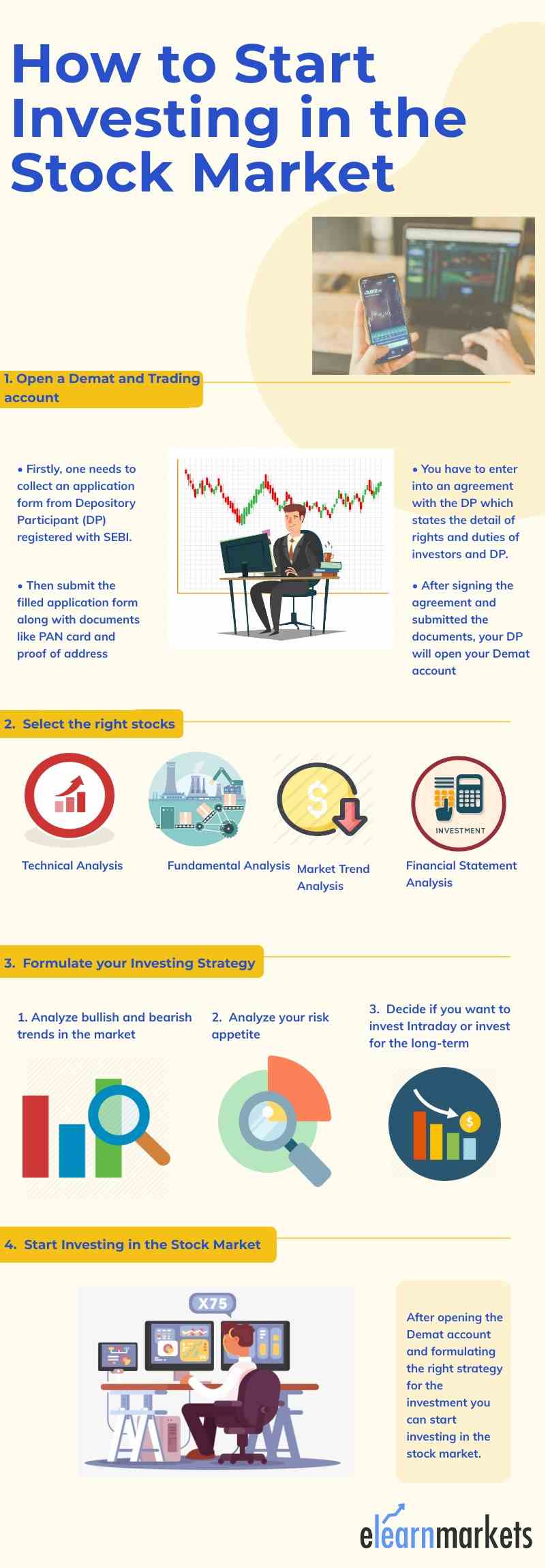
To buy and sell stocks, you’ll need a brokerage account. There are two main types:
- Full-service brokers: These offer a wide range of services, including personalized advice, financial planning, and active management, often at a higher fee. They are suitable for investors who prefer hands-on guidance.
- Discount brokers: These provide platforms for self-directed investing with lower fees. They are ideal for beginners and experienced investors comfortable making their own decisions. Many popular online brokers (e.g., Fidelity, Charles Schwab, Vanguard, E*TRADE, Robinhood) fall into this category, offering user-friendly interfaces, extensive research tools, and educational resources. When choosing, consider factors like trading fees, minimum deposit requirements, available investment products, research tools, customer service, and ease of use.
Understand Account Types
Beyond the broker itself, you’ll need to choose the type of investment account:
- Taxable Brokerage Account: This is a standard investment account where your capital gains and dividends are typically taxed in the year they are realized. It offers flexibility as there are no income or contribution limits, making it suitable for short-term or supplementary investments.
- Individual Retirement Accounts (IRAs): These tax-advantaged accounts are designed for retirement savings.
- Traditional IRA: Contributions may be tax-deductible, and taxes are paid upon withdrawal in retirement.
- Roth IRA: Contributions are made with after-tax dollars, but qualified withdrawals in retirement are tax-free. Roth IRAs are particularly attractive for young investors expecting to be in a higher tax bracket in the future.
The choice between account types depends on your financial situation, income level, and tax strategy.
Selecting Your First Investments
For beginners, starting with broadly diversified, low-cost investments is often the wisest approach.
- Index Funds and Exchange-Traded Funds (ETFs): These are excellent starting points. They hold a basket of stocks (or bonds) that track a specific market index, like the S&P 500. This provides instant diversification at a low cost. For example, an S&P 500 index fund gives you exposure to 500 of the largest U.S. companies.
- Blue-Chip Stocks: These are shares of large, well-established, financially sound companies with a long history of stable earnings and often, dividend payments. Think companies like Apple, Microsoft, Johnson & Johnson. While not immune to market fluctuations, they are generally considered less volatile than smaller companies.
- Dollar-Cost Averaging: Regardless of what you choose to invest in, implement a dollar-cost averaging strategy. This means investing a fixed amount of money at regular intervals (e.g., $100 every month) rather than trying to time the market by investing a lump sum all at once. This strategy reduces the risk of buying at a market peak and smooths out your average purchase price over time.
Developing a Long-Term Investment Strategy
Investing successfully is a marathon, not a sprint. A well-defined, long-term strategy is paramount for navigating market ups and downs and achieving your financial objectives.
The Power of Diversification
We mentioned diversification earlier, but its importance warrants further emphasis. True diversification goes beyond just buying several different stocks. It involves spreading your investments across:
- Asset Classes: A mix of stocks, bonds, and potentially real estate or commodities.
- Industries: Don’t put all your money into tech, or finance, or energy.
- Geographies: Invest in both domestic and international markets.
- Company Sizes: A blend of large-cap, mid-cap, and small-cap companies.
The goal is to ensure that if one segment of the market performs poorly, the others might compensate, thus reducing the overall risk to your portfolio. Index funds and ETFs are excellent tools for achieving broad diversification easily.
Dollar-Cost Averaging
As noted, dollar-cost averaging is a powerful strategy, especially for long-term investors. By consistently investing a fixed amount, you buy more shares when prices are low and fewer shares when prices are high. Over time, this averages out your purchase price and removes the emotional element of trying to time the market, which is notoriously difficult even for seasoned professionals. It enforces discipline and is a stress-free way to build wealth incrementally. Automating your investments through your brokerage account is an effective way to stick to this strategy.
Monitoring and Rebalancing Your Portfolio
While a long-term strategy implies less frequent intervention, it doesn’t mean setting it and forgetting it entirely. It’s wise to review your portfolio periodically, perhaps once or twice a year. During this review, assess:
- Performance: How have your investments performed against your expectations and relevant benchmarks?
- Goals Alignment: Are your investments still aligned with your financial goals and risk tolerance? Life circumstances can change, prompting adjustments.
- Rebalancing: Over time, some assets in your portfolio may grow faster than others, causing your asset allocation to drift from your target. Rebalancing involves selling some of the overperforming assets and buying more of the underperforming ones to bring your portfolio back to its desired allocation. This helps maintain your intended risk level and forces you to “buy low and sell high” in a disciplined manner.
Common Pitfalls and How to Avoid Them
The journey of stock market investing is fraught with potential missteps. Being aware of these common pitfalls can help you steer clear of costly mistakes.
Emotional Investing
One of the biggest enemies of a successful investor is their own emotions. Fear of missing out (FOMO) can lead beginners to chase “hot” stocks or invest in trends they don’t fully understand, often just before a correction. Conversely, panic selling during market downturns locks in losses and prevents investors from participating in the subsequent recovery. The key is to develop a rational, disciplined approach based on your long-term plan, not on daily market noise or herd mentality. Remind yourself that market fluctuations are normal and often temporary. Stick to your investment thesis and avoid making impulsive decisions based on headlines or social media hype.
Lack of Research
Investing in a company or a sector without understanding its fundamentals is akin to gambling. Before you invest, take the time to research the company’s business model, financial health, management team, competitive landscape, and future prospects. For index funds or ETFs, understand what index they track and what their underlying holdings are. While you don’t need to become an expert analyst, a basic understanding of what you own and why you own it is crucial. Relying on anonymous tips or superficial information from non-reputable sources is a recipe for disaster.
Chasing Hot Stocks and Market Timing
Many new investors are tempted by the allure of “the next big thing” or the idea of consistently buying at the absolute bottom and selling at the absolute top. This pursuit of market timing is exceedingly difficult and rarely successful even for professional investors. The transaction costs and taxes associated with frequent trading can also eat into your returns. Instead of trying to outsmart the market, focus on a long-term strategy of consistent investing in diversified assets. Remember that slow and steady often wins the race in investing. Focus on time in the market, not timing the market.
In conclusion, getting started in the stock market is a journey of learning, discipline, and patience. By understanding the fundamentals, preparing diligently, taking practical steps to invest, and adhering to a long-term strategy while avoiding common pitfalls, you can confidently build a robust portfolio and harness the power of compounding to achieve your financial aspirations. The market awaits, offering a potent path to wealth creation for those willing to engage thoughtfully.
aViewFromTheCave is a participant in the Amazon Services LLC Associates Program, an affiliate advertising program designed to provide a means for sites to earn advertising fees by advertising and linking to Amazon.com. Amazon, the Amazon logo, AmazonSupply, and the AmazonSupply logo are trademarks of Amazon.com, Inc. or its affiliates. As an Amazon Associate we earn affiliate commissions from qualifying purchases.