
Embarking on the journey of share market investing can seem daunting, a complex labyrinth of jargon, charts, and seemingly unpredictable movements. Yet, for many, it represents a powerful avenue for wealth creation, a means to achieve long-term financial goals, and a direct stake in the growth of companies and economies. The share market is not just for seasoned financial professionals; with the right knowledge, discipline, and a clear strategy, anyone can learn to navigate its waters and build a robust investment portfolio. This guide aims to demystify the process, providing a clear roadmap for absolute beginners looking to make their first foray into the world of stocks.
Understanding the Share Market Basics
Before you commit any capital, it’s crucial to grasp the fundamental concepts that underpin the share market. Think of it as learning the rules of a game before you start playing.
What is the Share Market?
At its core, the share market (or stock market) is a collection of markets and exchanges where investors can buy and sell shares of publicly traded companies. When you buy a share, you are purchasing a tiny fraction of ownership in that company. This makes you a shareholder, with potential benefits ranging from capital appreciation (the stock price increasing) to dividends (a portion of the company’s profits paid out to shareholders). The primary purpose of the share market is to provide companies with capital for expansion and operations, while offering investors an opportunity to participate in the growth and profitability of these businesses.
Why Invest in Shares?
People invest in shares for several compelling reasons. The most prominent is the potential for capital growth. Historically, equities have outperformed other asset classes like bonds and savings accounts over the long term, offering a hedge against inflation and a path to significant wealth accumulation. Additionally, many companies pay dividends, providing a regular income stream to shareholders. Investing in shares also allows you to be a part of innovative companies and industries, aligning your personal finances with the economic progress of the world. However, it’s equally important to acknowledge that share prices can fluctuate, and investments carry inherent risks, including the potential loss of capital.
Key Terminology for Beginners
Navigating the share market requires familiarity with its lexicon. Here are some essential terms:
-
Stock/Share/Equity: These terms are often used interchangeably to refer to a unit of ownership in a company.
-
Stock Exchange: A marketplace where shares are bought and sold (e.g., NYSE, NASDAQ, BSE, NSE).
-
Broker: An individual or firm that executes buy and sell orders on behalf of investors.
-
Dividend: A portion of a company’s earnings distributed to its shareholders.
-
Capital Gain/Loss: The profit or loss realized when you sell an investment for more or less than its purchase price.
-
IPO (Initial Public Offering): The first time a company offers its shares to the general public.
-
Market Order: An order to buy or sell a stock immediately at the best available current price.
-
Limit Order: An order to buy or sell a stock at a specified price or better.
Preparing for Your Investment Journey
Investing is not a sprint; it’s a marathon that requires careful preparation and a disciplined approach. Before you dive in, ensure your personal finances are in order.
Assess Your Financial Health
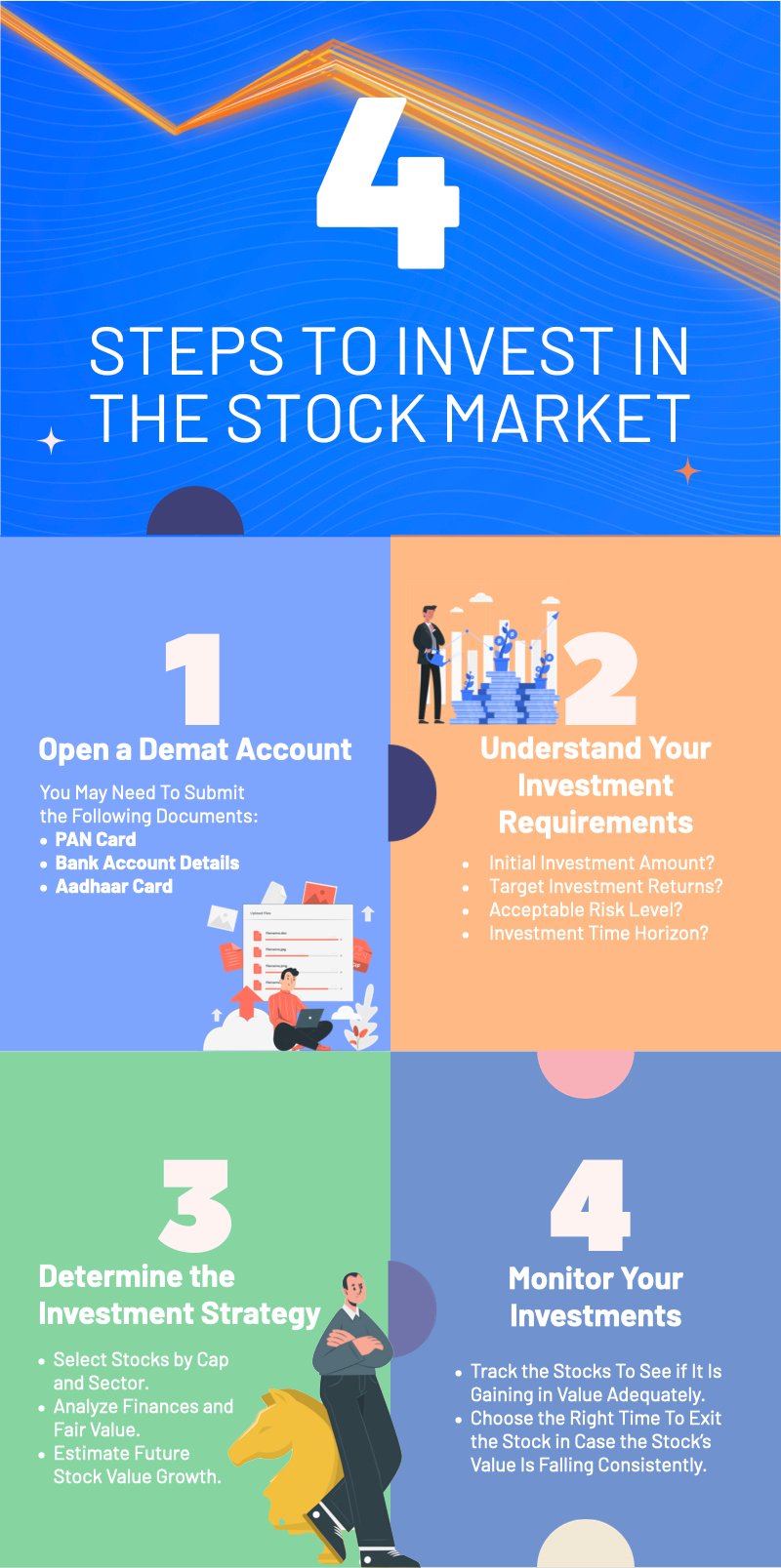
Before thinking about investing in the share market, conduct a thorough review of your overall financial situation. Do you have an emergency fund covering 3-6 months of living expenses? Is high-interest debt, like credit card balances, under control? It’s generally advisable to build an emergency fund and tackle high-interest debt first, as the guaranteed savings from avoiding interest payments often outweigh potential investment returns, especially for beginners. Investing should primarily be done with money you won’t need in the short to medium term.
Define Your Investment Goals
What are you hoping to achieve by investing? Are you saving for a down payment on a house in five years, retirement in thirty years, your children’s education, or simply aiming for long-term wealth growth? Your investment goals will significantly influence your strategy, including the types of assets you choose, your time horizon, and your risk tolerance. Clearly defined goals provide direction and help you stay focused during market volatility.
Determine Your Risk Tolerance
Risk tolerance refers to your comfort level with potential losses in exchange for potential gains. Are you comfortable with significant fluctuations in your portfolio’s value for the chance of higher returns (aggressive)? Or do you prefer a more stable, albeit potentially slower, growth path (conservative)? Understanding your risk tolerance is crucial because it dictates the asset allocation of your portfolio. Younger investors with a longer time horizon can typically afford to take on more risk, while those closer to retirement might opt for a more conservative approach. Be honest with yourself about how much risk you can genuinely stomach without losing sleep.
Education is Your Best Asset
The share market is not a place for guesswork. Continuous learning is paramount. Read reputable financial books, follow trusted financial news sources, take online courses, and educate yourself on investment strategies, economic indicators, and company analysis. Many brokerage firms also offer educational resources for their clients. The more you understand, the more confident and informed your investment decisions will be, reducing the likelihood of making costly mistakes driven by emotion or misinformation.
Practical Steps to Making Your First Investment
Once you’ve laid the groundwork, it’s time to take the concrete steps toward making your first investment. This involves choosing a platform, funding your account, and finally, executing your trades.
Choose the Right Brokerage Account
To buy or sell shares, you need a brokerage account. There are generally two types:
-
Discount Brokers: These offer lower fees and commissions but provide minimal research or advisory services. They are suitable for investors who prefer to do their own research and manage their portfolios actively.
-
Full-Service Brokers: These offer a wider range of services, including personalized advice, financial planning, and extensive research, but come with higher fees. They might be suitable for investors who prefer professional guidance.
When choosing, consider fees (trading commissions, account maintenance fees), platform usability, available investment products (stocks, ETFs, mutual funds), and customer support. Most beginners start with a discount online broker due to ease of access and lower costs.
Open and Fund Your Account
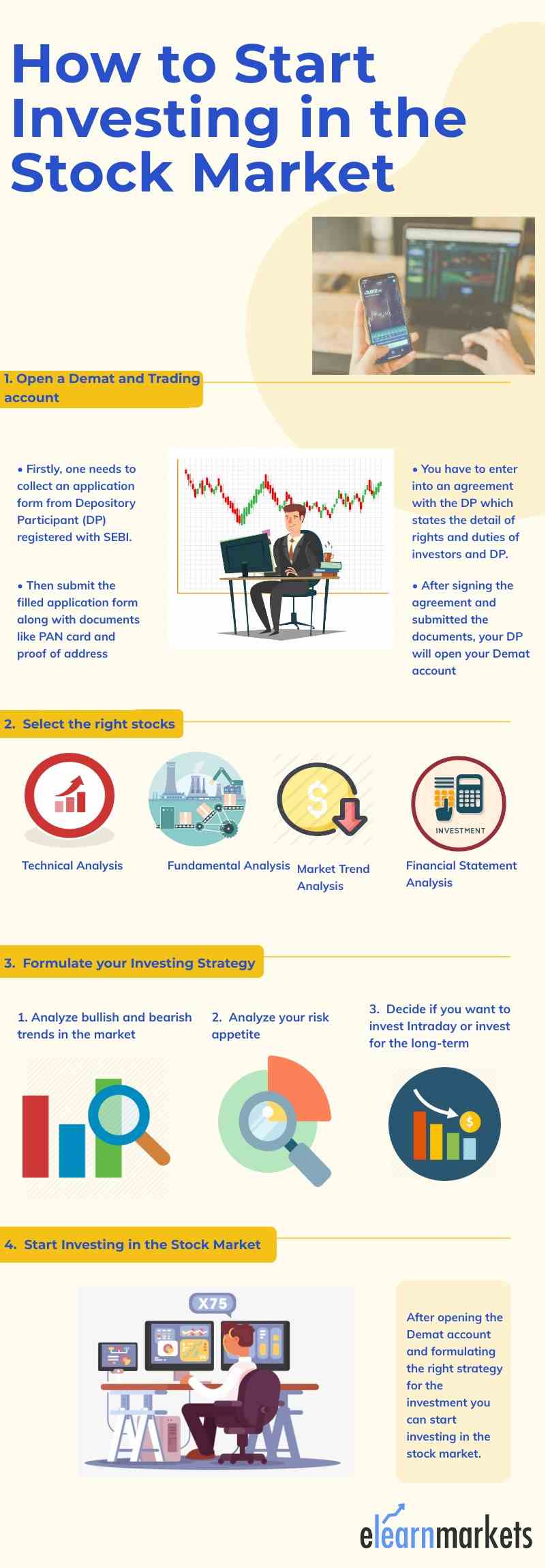
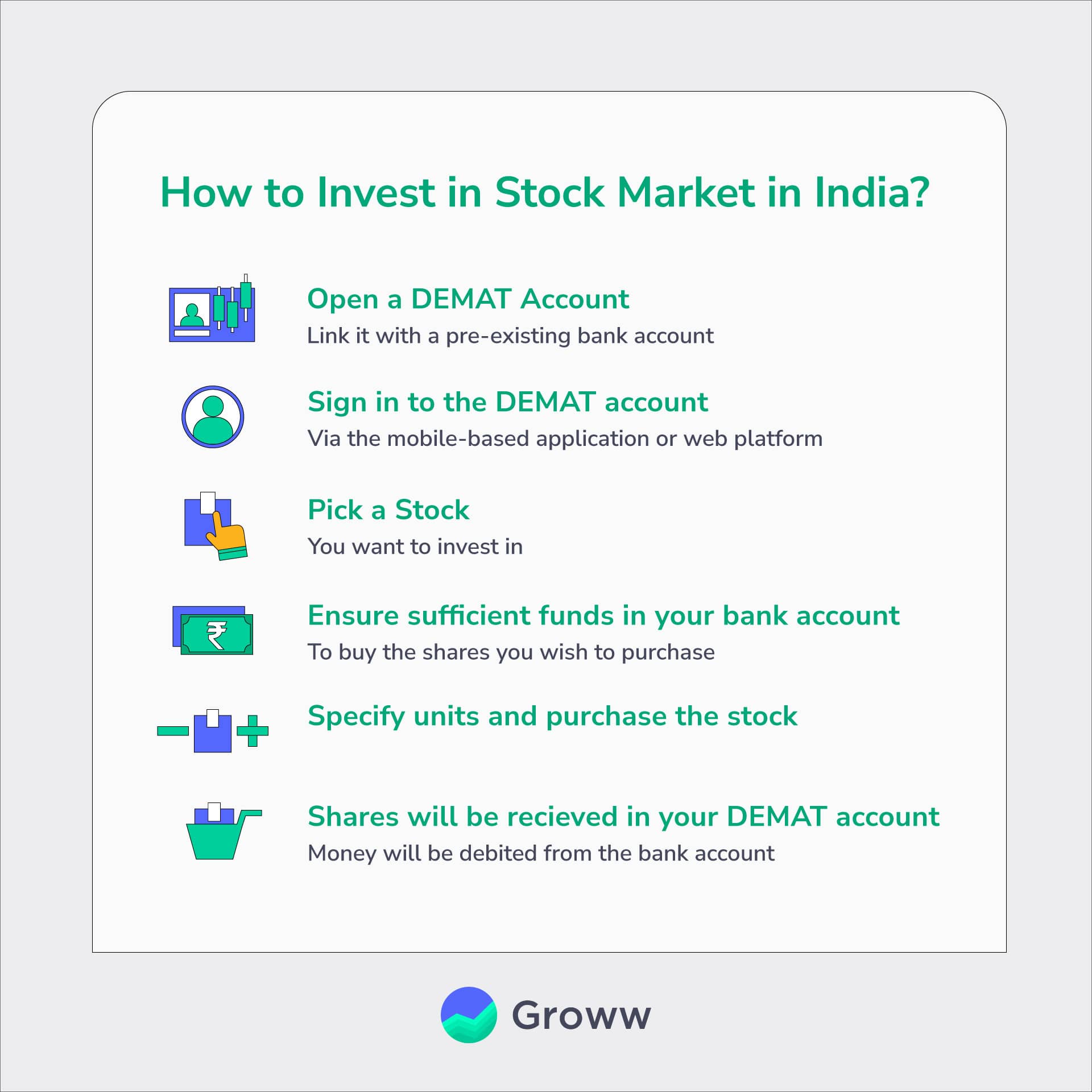
Opening a brokerage account is similar to opening a bank account. You’ll typically need to provide personal identification (ID, proof of address), your social security number (or equivalent), and employment details. This process is often called KYC (Know Your Customer). Once your account is approved, you’ll need to fund it. This can usually be done via electronic bank transfer (ACH), wire transfer, or by mailing a check. Start with an amount you’re comfortable investing, keeping in mind the money should be “extra” and not needed for essential expenses.
Researching and Selecting Investments
This is where your education comes into play. Don’t blindly pick stocks based on hype.
-
Fundamental Analysis: This involves evaluating a company’s financial health, management quality, industry position, and economic outlook to determine its intrinsic value. Look at financial statements (balance sheet, income statement, cash flow statement), earnings reports, and industry trends.
-
Technical Analysis: This involves studying historical price charts and trading volumes to identify patterns and predict future price movements. While some investors use it, beginners often find fundamental analysis more accessible.
For beginners, investing in Exchange-Traded Funds (ETFs) or Mutual Funds can be an excellent starting point. These are diversified baskets of stocks, providing instant diversification and managed by professionals, often at a lower cost than individual stock picking. An S&P 500 index fund, for instance, gives you exposure to 500 of the largest U.S. companies.
Placing Your First Trade
Once you’ve selected what you want to invest in, you’ll place an order through your brokerage platform.
-
Market Order: This executes your trade immediately at the best available price. While simple, the price might fluctuate slightly from what you see.
-
Limit Order: This allows you to specify the maximum price you’re willing to pay for a buy order or the minimum price you’re willing to accept for a sell order. Your order will only execute if the stock reaches your specified price. For beginners, using limit orders for less liquid stocks can offer more control. Start small, perhaps buying just a few shares or a small amount of an ETF, to get a feel for the process.
Essential Strategies for Long-Term Success
Investing in the share market is rarely about quick riches. Sustained success comes from adhering to proven, long-term strategies.
The Power of Diversification
“Don’t put all your eggs in one basket” is perhaps the oldest and most vital investment adage. Diversification means spreading your investments across different companies, industries, sectors, and even asset classes (like stocks, bonds, real estate). If one investment underperforms, others may compensate, reducing the overall risk of your portfolio. For beginners, diversified ETFs and mutual funds are an excellent way to achieve this instantly.
Adopt a Long-Term Perspective
The share market can be volatile in the short term, with daily, weekly, or monthly fluctuations. However, over decades, the market has historically shown an upward trend. A long-term perspective (5+ years, ideally 10+ years) allows your investments to weather short-term downturns, benefit from compounding returns, and align with the organic growth of the economy. Resist the urge to panic sell during market corrections; often, these periods present buying opportunities.
Dollar-Cost Averaging
This strategy involves investing a fixed amount of money at regular intervals (e.g., $100 every month), regardless of the share price. When prices are high, your fixed amount buys fewer shares; when prices are low, it buys more. Over time, this averages out your purchase price, reducing the risk of making a large investment at an unfavorable peak. It’s a simple yet powerful strategy that automates disciplined investing and mitigates the need to “time the market.”
Regular Portfolio Review and Rebalancing
Your financial goals, risk tolerance, and market conditions can change over time. It’s important to review your portfolio at least once a year. Assess whether your asset allocation still aligns with your goals. Rebalancing involves selling some of your well-performing assets and buying more of those that have underperformed, bringing your portfolio back to its target allocation. This helps manage risk and ensures your investments remain aligned with your long-term strategy.
Avoiding Common Beginner Mistakes
The path to successful investing is often fraught with pitfalls. Being aware of common beginner mistakes can help you steer clear of them.
Don’t Invest Emotionally
Fear and greed are powerful emotions that can lead to poor investment decisions. Panic selling during a market downturn or chasing “hot” stocks based on hype are common emotional traps. Stick to your investment plan, which should be based on rational analysis and your financial goals, not fleeting market sentiment.
Avoid Chasing Hot Tips
While a friend or a social media influencer might tout the next big stock, resist the urge to invest without doing your own thorough research. “Hot tips” often come from unreliable sources and lack fundamental backing. Always verify information and understand why you are investing in a particular company.
Don’t Put All Your Eggs in One Basket
As mentioned with diversification, concentrating all your capital in one or two stocks, no matter how promising they seem, exposes you to immense risk. A single company’s misfortune could wipe out a significant portion of your capital. Spread your investments.
Over-leveraging
Using borrowed money (margin) to buy stocks can amplify returns, but it can also amplify losses dramatically. For beginners, it’s highly advisable to avoid margin trading altogether. Stick to investing money you own, rather than money you owe.
Neglecting Continuous Learning
The market is dynamic, and new financial products, technologies, and economic trends emerge constantly. Believing you know everything after a few initial successes is a recipe for stagnation or even failure. Remain a lifelong student of investing.
Getting started in the share market is a journey of learning, discipline, and patience. By understanding the basics, preparing thoroughly, executing your investments thoughtfully, and adhering to proven long-term strategies, you can build a solid foundation for financial growth. Remember, every seasoned investor was once a beginner. Start small, stay educated, and remain committed to your financial goals.
aViewFromTheCave is a participant in the Amazon Services LLC Associates Program, an affiliate advertising program designed to provide a means for sites to earn advertising fees by advertising and linking to Amazon.com. Amazon, the Amazon logo, AmazonSupply, and the AmazonSupply logo are trademarks of Amazon.com, Inc. or its affiliates. As an Amazon Associate we earn affiliate commissions from qualifying purchases.