
In the world of finance, precision is the difference between a portfolio that thrives and one that merely survives. One of the most common yet frequently misunderstood mathematical concepts in wealth management and business accounting is the calculation of a “percentage of a percentage.” Whether you are calculating the effective tax rate on a specific investment, determining the real-world impact of a management fee on your net returns, or analyzing multi-tiered commission structures, mastering this calculation is essential.
Understanding how these figures interact allows investors and business owners to see the “cascading effect” of costs and gains. This article explores the mechanics of calculating percentages of percentages within the “Money” niche, providing you with the insights needed to manage your personal finances and business operations with mathematical certainty.
Understanding the Mathematical Foundation in Finance
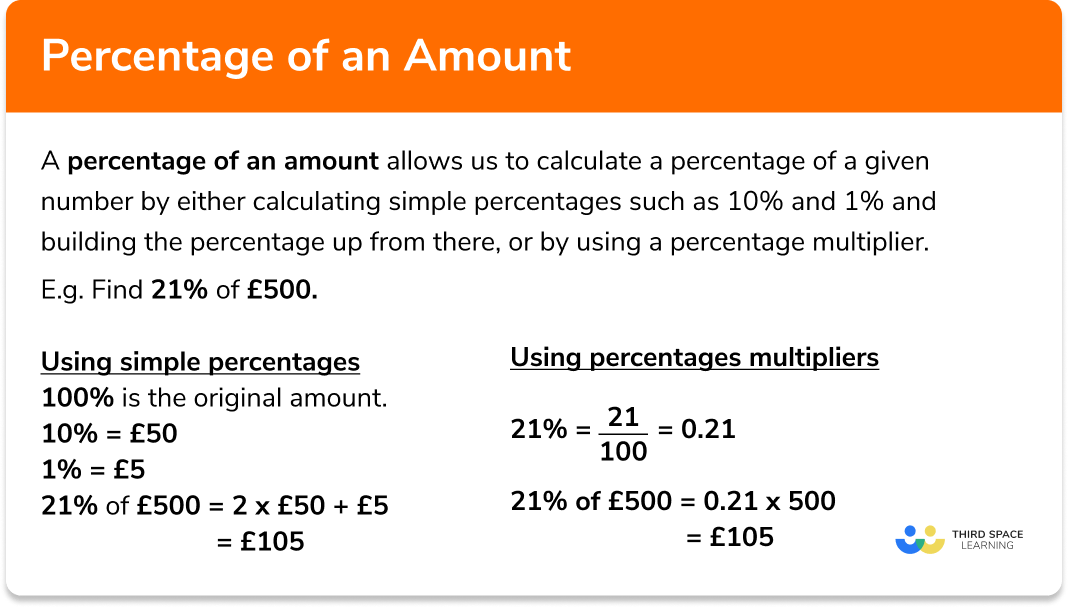
To the uninitiated, calculating a percentage of a percentage can feel redundant. However, in financial modeling, it is a daily necessity. At its core, this calculation is an exercise in multiplication. When you take a percentage of another percentage, you are essentially determining a portion of a previously defined subset.
The Basic Formula and the Decimal Method
The most reliable way to calculate a percentage of a percentage is to convert both percentages into decimals, multiply them, and then convert the result back into a percentage.
For example, if you want to find 20% of 10%, the steps are:
- Convert the percentages to decimals: 0.20 and 0.10.
- Multiply the decimals: 0.20 × 0.10 = 0.02.
- Convert back to a percentage: 0.02 × 100 = 2%.
In a financial context, this is often referred to as “compounding” or “layering.” If a hedge fund takes a 20% performance fee on a portfolio that gained 10% this year, the fund is effectively taking 2% of the total portfolio value as their performance incentive.
Why It Matters for Wealth Preservation
In personal finance, failing to understand these “layers” can lead to a significant erosion of wealth over time. This is particularly true when dealing with “Expense Ratios” and “Advisory Fees.” If your mutual fund has an internal expense ratio and you also pay an external financial advisor a percentage of your assets under management (AUM), these two percentages interact. Understanding the combined “drag” on your investment requires you to see how each percentage eats into the remaining whole.
Practical Applications in Investing and Compound Growth
The most powerful application of calculating a percentage of a percentage is in the realm of compounding. Investors often look at annual growth rates, but the true growth occurs when those percentages are applied to the already-grown principal.
Calculating Compound Interest and Multi-Year Returns
Compound interest is effectively a percentage of a percentage in action over time. If your investment grows by 10% in Year 1 and another 10% in Year 2, your total gain is not 20%. Instead, the 10% in Year 2 is applied to the new total (which is 110% of the original).
To find the cumulative percentage:
- Year 1: 100% + 10% = 110% (or 1.10)
- Year 2: 1.10 × 1.10 = 1.21
- Total Gain: 21%
This extra 1%—the “percentage of the percentage”—is what makes compounding so powerful over decades. Over 30 years, these small fractional differences determine whether an investor retires comfortably or continues to work.
Dealing with Tiered Commissions and Performance Fees
High-net-worth individuals and business owners often deal with tiered structures. For instance, a real estate broker might charge a 6% commission, of which 50% goes to the buyer’s agent. To the seller, the buyer’s agent is receiving a percentage of a percentage (50% of 6%, which is 3% of the total sale price).
In private equity, the “2 and 20” rule is a classic example. A firm might charge a 2% management fee on the total capital and a 20% “carry” (percentage) on the profits (which are also a percentage of the capital). Calculating the net return for the limited partner requires a rigorous understanding of how these percentages stack and subtract from one another.
Tax Brackets and Effective Tax Rates
Taxation is perhaps the most common area where “percentage of a percentage” logic is applied. If you are in a 25% tax bracket and you earn a capital gain that is taxed at a specific 15% rate, your effective tax burden is a calculation of your income layers. More specifically, when calculating “tax on tax” or adjustments like the “Alternative Minimum Tax (AMT),” knowing how a percentage deduction impacts your top-line percentage rate is vital for accurate tax planning and cash flow management.
Business Finance: Profit Margins and Discounting Strategies
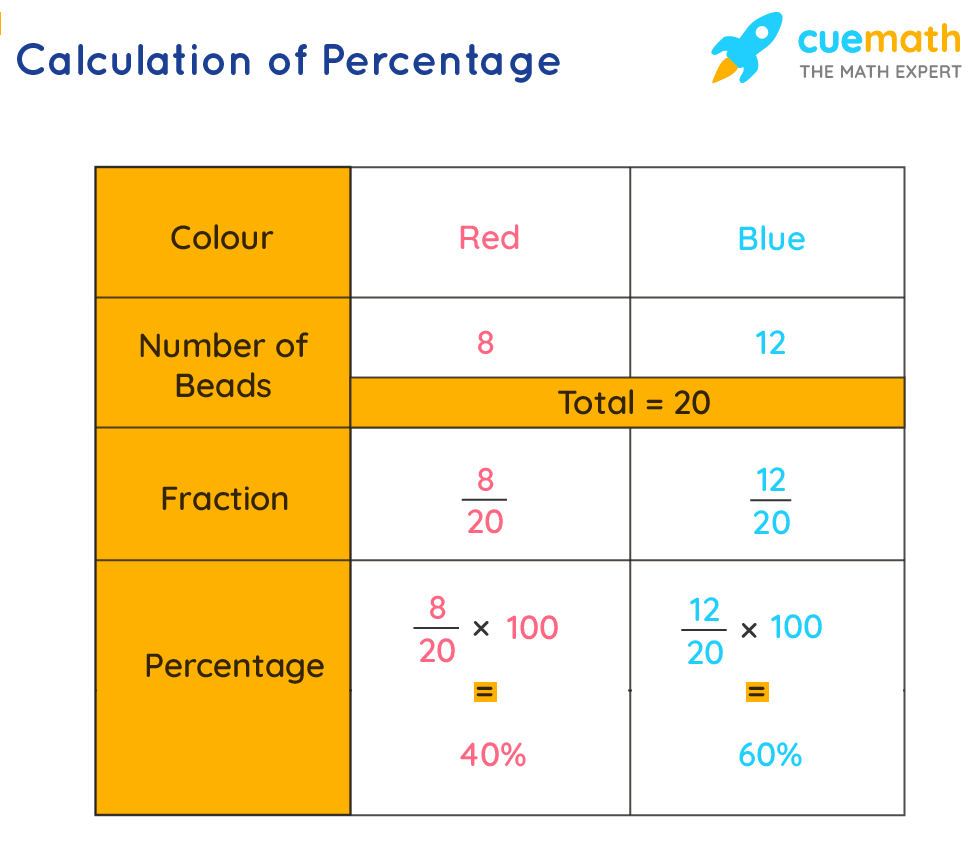
For business owners, the ability to calculate percentages of percentages is a prerequisite for maintaining healthy margins. From supply chain discounts to retail markdowns, these numbers dictate the bottom line.
Gross vs. Net Margin Analysis
A business might operate with a 40% gross margin. However, after accounting for operating expenses, which might consume 15% of that gross margin, the owner needs to know the final net profit. This is not 40% – 15% = 25%. Instead, if expenses are 15% of the margin itself, the calculation is:
- 0.40 (Gross Margin) × 0.15 (Expense Rate) = 0.06.
- 40% – 6% = 34% Net Margin.
Miscalculating this “percentage of a margin” can lead to overestimating the company’s profitability and making poor reinvestment decisions.
Multi-Stage Discounting in Retail and Wholesale
In the world of B2B sales, “chain discounts” are common. A manufacturer might offer a “20/10” discount to a wholesaler. This does not mean a 30% discount. It means:
- A 20% discount is applied to the list price.
- A subsequent 10% discount is applied to the already discounted price.
If an item costs $100:
- First discount: $100 – 20% = $80.
- Second discount: $80 – 10% = $72.
- Total effective discount: 28% (not 30%).
Understanding this nuance allows procurement officers to compare vendor offers accurately and ensure they are not overpaying for inventory.
Advanced Tools and Financial Modeling for Precision
While manual calculations are important for conceptual understanding, professional financial management requires tools that handle these multi-layered percentages at scale.
Utilizing Basis Points (BPS) for Clarity
In professional finance, to avoid the confusion of “percentage of a percentage,” experts use “Basis Points” or BPS. One basis point is equal to 1/100th of 1 percent (0.01%).
- If a bank raises an interest rate by “10% of its current 5% rate,” that could be confusing.
- Instead, they would say the rate increased by 50 basis points.
Using BPS removes the ambiguity of whether you are adding to the percentage or multiplying the percentage. When modeling your portfolio, converting your findings into basis points can help in comparing different financial products, such as credit card interest rates vs. personal loan APRs.
Avoiding Common Calculation Pitfalls
The most common mistake in financial calculations is the “Addition Fallacy.” Many people mistakenly add percentages together (10% + 10% = 20%) instead of multiplying them (1.10 × 1.10 = 1.21). In the context of a market crash, this is even more dangerous.
Consider this: If your portfolio drops by 50%, you need a 100% gain to get back to where you started.
- $100 reduced by 50% = $50.
- $50 increased by 50% (a percentage of the new percentage) = $75.
You are still down 25%! This mathematical reality is why risk management—minimizing the “percentage of loss”—is more important than chasing the “percentage of gain.”
Financial Software and Spreadsheet Precision
For complex business modeling, Excel or Google Sheets are the standard tools. To calculate a percentage of a percentage in a spreadsheet, the formula is simple but must be structured correctly to account for order of operations. Using cells A1 (Initial Amount), B1 (First Percentage), and C1 (Second Percentage), the formula =(A1*B1)*C1 provides the specific value, while =(B1*C1) provides the effective percentage.
By building these models, investors can simulate various “what-if” scenarios, such as how a 2% increase in inflation (a percentage) will impact the 4% withdrawal rate (another percentage) of their retirement fund.

Conclusion: The Value of Mathematical Rigor in Wealth Management
Mastering the calculation of a percentage of a percentage is more than a mathematical exercise; it is a fundamental skill for anyone serious about money. From the compounding interest that builds generational wealth to the tiered discounts that keep a business competitive, these figures are the invisible architecture of the financial world.
By converting to decimals, avoiding the addition fallacy, and thinking in terms of basis points, you can gain a clearer picture of your financial health. Whether you are an investor looking at net-of-fee returns or a business owner calculating net margins, remember that in finance, the smallest fractional percentage—when applied to another—can result in a massive impact on your ultimate bottom line. Stay precise, calculate carefully, and let the math work in your favor.
aViewFromTheCave is a participant in the Amazon Services LLC Associates Program, an affiliate advertising program designed to provide a means for sites to earn advertising fees by advertising and linking to Amazon.com. Amazon, the Amazon logo, AmazonSupply, and the AmazonSupply logo are trademarks of Amazon.com, Inc. or its affiliates. As an Amazon Associate we earn affiliate commissions from qualifying purchases.