
In the world of finance, percentages are the universal language. Whether you are evaluating the performance of a stock portfolio, determining the interest on a loan, or calculating a discount at a retail store, the ability to accurately derive a percentage of an amount is a fundamental skill. At its core, a percentage is a way of expressing a number as a fraction of 100. While the mathematical formula is simple, its applications in personal and business finance are vast and complex.
Understanding how to get a percentage of an amount allows you to peel back the layers of financial marketing and see the raw data beneath. It empowers you to make informed decisions about where your money goes and how it grows. This guide will explore the essential methods of percentage calculation and demonstrate their critical roles in budgeting, investing, and business management.
1. The Fundamentals of Percentage Calculations in Finance
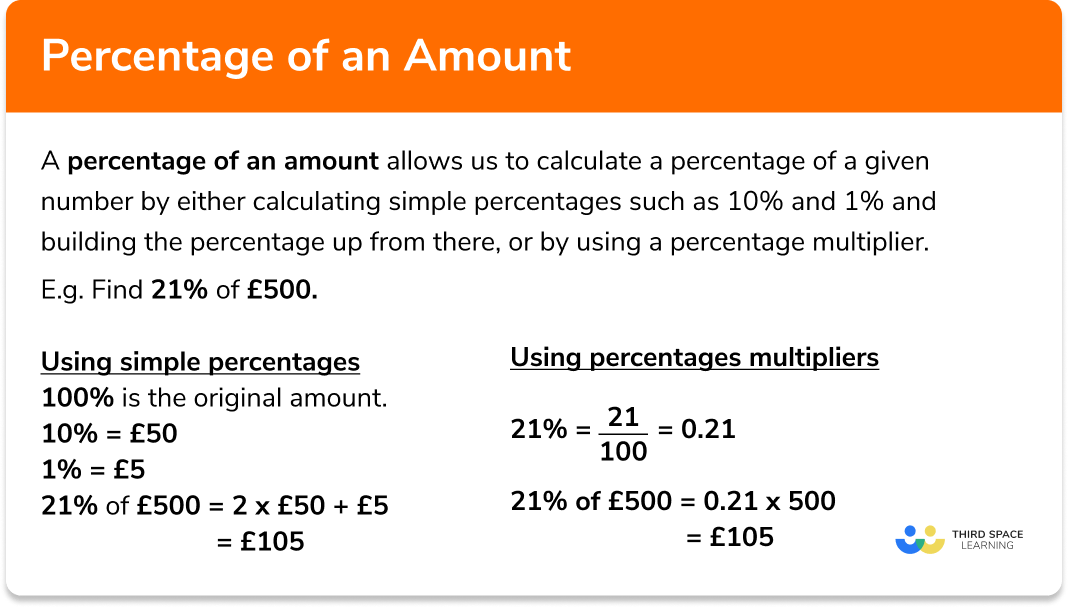
Before diving into complex financial scenarios, one must master the basic arithmetic that governs all percentage-based calculations. In financial terms, a percentage represents a portion of a total value, and the “amount” is the base or the principal figure you are analyzing.
The Core Formula: Finding the Part
To find a specific percentage of a total amount, the formula is straightforward:
** (Percentage / 100) × Total Amount = Result**
For example, if you want to find 15% of a $1,200 bonus, you would divide 15 by 100 to get 0.15, and then multiply that by $1,200. The result, $180, is the portion of the bonus you are looking for. In finance, this is most commonly used to calculate sales tax, tips, or flat-rate commissions.
Converting Decimals and Fractions for Speed
In professional finance environments, speed and accuracy are paramount. Most financial analysts do not use the “divide by 100” step manually; they work directly with decimals. Understanding that 5% is 0.05, 50% is 0.50, and 125% is 1.25 is vital.
When you are looking for a “percentage of an amount,” the word “of” almost always translates to multiplication in mathematical terms. Therefore, “25% of $400” is simply 0.25 times 400. Mastering these mental conversions allows for quicker assessments of financial deals and interest rates without needing to reach for a calculator every time.
Calculating Percentage Change: Increases and Decreases
Financial growth is rarely stagnant. Investors need to know how much an amount has changed over time. To calculate the percentage increase or decrease between two amounts, use this formula:
[(New Amount – Original Amount) / Original Amount] × 100
If your savings account grew from $10,000 to $10,500, the “amount” increased by $500. Dividing $500 by the original $10,000 gives you 0.05, or a 5% increase. This calculation is the bedrock of evaluating market performance and inflation impacts.
2. Percentages in Personal Finance and Budgeting
Budgeting is essentially the art of dividing a single amount—your income—into various percentage-based categories. By viewing your finances through the lens of percentages rather than just raw dollar amounts, you can maintain a balanced lifestyle regardless of how much your income fluctuates.
The 50/30/20 Rule: A Percentage-Based Framework
One of the most popular budgeting strategies is the 50/30/20 rule. This method suggests that you should allocate your after-tax income into three distinct percentage buckets:
- 50% for Needs: This includes “must-have” amounts like rent, utilities, and groceries.
- 30% for Wants: This covers discretionary spending like dining out or hobbies.
- 20% for Savings and Debt Repayment: This is the portion dedicated to your future self.
By calculating these percentages against your monthly take-home pay, you create a sustainable financial roadmap. If your income increases, the dollar amounts in each category grow, but the structural balance of your finances remains intact.
Tracking Debt-to-Income (DTI) Ratios
Lenders use percentages to determine your creditworthiness. The Debt-to-Income ratio is calculated by taking your total monthly debt payments (the “part”) and dividing them by your gross monthly income (the “amount”).
If you earn $5,000 a month and your total debts (student loans, car payments, credit cards) equal $1,500, your DTI is 30%. Financial experts generally recommend keeping this percentage below 36% to ensure you aren’t overleveraged. Knowing how to calculate this percentage allows you to see your financial health through the eyes of a bank or mortgage lender.
The Impact of Effective Tax Rates
Many people confuse their “tax bracket” with their “effective tax rate.” While a bracket determines the percentage you pay on the last dollar you earned, your effective tax rate is the actual percentage of your total income that goes to the government. To find this, you divide your total tax paid by your total earned amount. Understanding this percentage is crucial for accurate annual budgeting and retirement planning.

3. Calculating Returns on Investment (ROI)
In the world of investing, the “amount” is your capital, and the “percentage” is your harvest. Investors use percentage calculations to compare the performance of different asset classes, such as stocks, bonds, or real estate, on an equal playing field.
Simple ROI vs. Annualized Returns
The most basic investment calculation is the Return on Investment (ROI). It tells you what percentage of your initial investment you earned back as profit.
ROI = (Net Profit / Cost of Investment) × 100
However, the amount of time it takes to earn that profit matters. A 20% return over one year is vastly superior to a 20% return over five years. This leads to the “Annualized Return,” a percentage calculation that factors in time, allowing you to compare a high-growth tech stock to a steady dividend-paying utility stock.
Understanding Yield and Dividends
For income-focused investors, the “dividend yield” is a vital percentage. It represents how much a company pays out in dividends each year relative to its stock price.
Dividend Yield = (Annual Dividends per Share / Price per Share) × 100
If a stock is priced at $100 and pays $4 in annual dividends, the yield is 4%. By understanding this percentage, an investor can determine if the income “amount” generated by the stock is sufficient to meet their cash flow needs, regardless of the stock’s price volatility.
Real vs. Nominal Returns: The Inflation Percentage
Inflation is the hidden percentage that erodes purchasing power. If your investment earns a 7% return (nominal return) but inflation is running at 3%, your “real” return is only 4%. Professional investors always calculate the percentage of an amount in “real terms” to ensure that their wealth is actually growing in terms of what it can buy, rather than just the numerical value on a screen.
4. Business Finance: Margins and Profitability
For business owners and entrepreneurs, calculating the percentage of an amount is not just a habit—it is a necessity for survival. Businesses live and die by their “margins,” which are simply percentages that express how much of every dollar of sales a company keeps as profit.
Gross Profit Margin vs. Net Profit Margin
A company might have high sales, but if its expenses are equally high, the business is in trouble.
- Gross Profit Margin: This is the percentage of revenue exceeding the cost of goods sold (COGS). It shows how efficiently a company produces its products.
- Net Profit Margin: This is the “bottom line.” It is the percentage of revenue left over after all expenses, taxes, and interest have been paid.
If a business generates $1,000,000 in revenue but only $100,000 in net profit, its net profit margin is 10%. Understanding this percentage helps business owners decide where to cut costs or if they need to raise their prices.
Markup vs. Margin: A Common Pitfall
Many new business owners confuse “markup” with “margin.”
- Markup is the percentage added to the cost to reach a selling price. (If a product costs $80 and you sell it for $100, the markup is 25%).
- Margin is the percentage of the selling price that is profit. (In the same scenario, the margin is 20%).
Mistaking these two can lead to significant financial errors. If you want a 25% margin but apply a 25% markup, you will end up with less profit than anticipated. Mastering the math of how to get these percentages ensures the long-term solvency of a commercial enterprise.
5. Strategies for Efficient Financial Calculation
In a modern financial landscape, you don’t always have to do the heavy lifting manually. However, knowing how to leverage tools and mental shortcuts is part of being financially literate.
Utilizing Spreadsheet Automation
For complex financial planning, software like Excel or Google Sheets is indispensable. To get a percentage of an amount in a spreadsheet, you simply use the formula =A1*B1, where A1 is the total amount and B1 is the percentage (formatted as a decimal or percentage). This allows for “what-if” modeling—changing a single percentage (like an interest rate) to see how it affects the total amount over 30 years.
Mental Math Shortcuts for Daily Life
In the heat of a business negotiation or while shopping, you may need a quick estimate.
- To find 10%: Move the decimal point one place to the left. (10% of $450 is $45).
- To find 5%: Find 10% and cut it in half. ($45 / 2 = $22.50).
- To find 1%: Move the decimal point two places to the left. (1% of $450 is $4.50).
These shortcuts allow you to verify the accuracy of financial documents and service charges on the fly, ensuring you are never overcharged due to a technical error.

Conclusion: The Power of Percentage Literacy
Learning how to get a percentage of an amount is more than a mathematical exercise; it is a vital component of financial freedom. When you look at your money through the lens of percentages, you gain a clearer picture of your spending habits, the health of your investments, and the efficiency of your business. By mastering these calculations, you transition from a passive observer of your finances to an active, informed manager of your wealth. Whether you are saving for retirement or scaling a startup, the math of percentages is the foundation upon which financial success is built.
aViewFromTheCave is a participant in the Amazon Services LLC Associates Program, an affiliate advertising program designed to provide a means for sites to earn advertising fees by advertising and linking to Amazon.com. Amazon, the Amazon logo, AmazonSupply, and the AmazonSupply logo are trademarks of Amazon.com, Inc. or its affiliates. As an Amazon Associate we earn affiliate commissions from qualifying purchases.