
In the realm of financial literacy, few mathematical concepts are as foundational—and as frequently misunderstood—as the percentage. Whether you are calculating the interest on a high-yield savings account, determining the tax implications of a stock sale, or evaluating the gross profit margin of a burgeoning startup, knowing how to get the percentage of a number is a non-negotiable skill.
Percentages serve as the universal language of proportion. They allow investors, entrepreneurs, and everyday consumers to compare values of different scales on a level playing field. Without a firm grasp of these calculations, navigating the complexities of the modern financial landscape is akin to sailing without a compass. This guide will explore the mechanics of percentage calculations and their critical applications in the world of money.

The Fundamental Mechanics of Percentages in Finance
Before diving into complex investment portfolios or corporate balance sheets, one must master the basic arithmetic that governs the percentage. At its core, the term “percent” comes from the Latin per centum, meaning “by the hundred.” Therefore, a percentage is a fraction of 100.
The Basic Formula for Financial Calculation
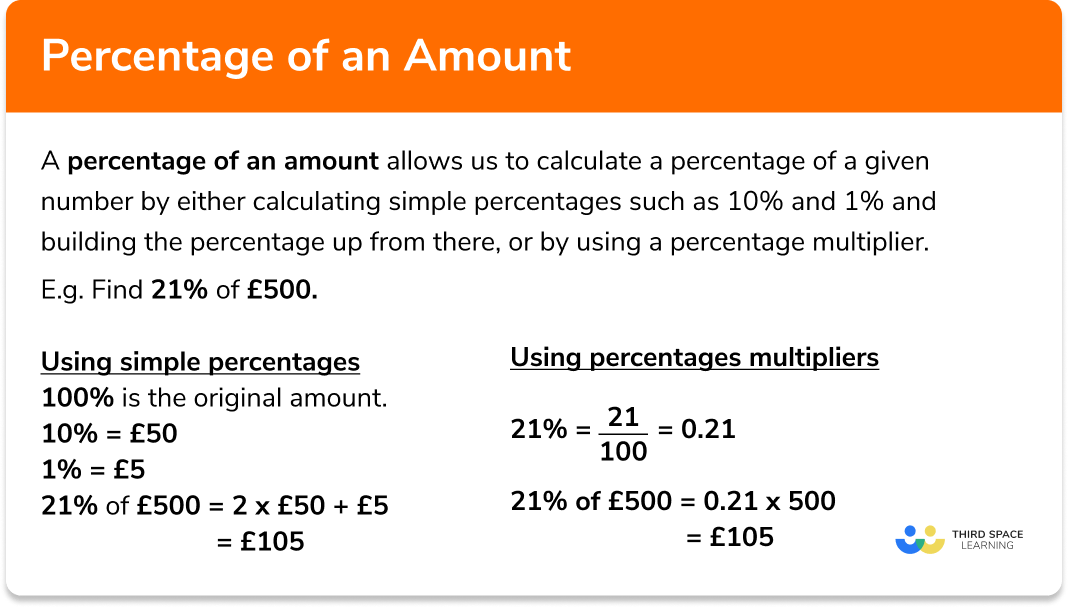
To find the percentage of a specific number, the mathematical process is straightforward: multiply the total amount by the percentage expressed as a decimal.
The formula is:
Amount = (Total Value × Percentage Rate) / 100
For example, if you are a freelancer setting aside 25% of a $5,000 payment for quarterly taxes, the calculation would be:
$(5,000 times 25) / 100 = 1,250$.
By understanding this simple movement of the decimal point, you can quickly assess the impact of various financial variables on your liquid capital.
Converting Fractions and Decimals for Quick Analysis
In professional finance, speed is often as important as accuracy. Calculating percentages in your head allows for “back-of-the-envelope” math during negotiations or high-stakes meetings. To convert a percentage to a decimal, you simply move the decimal point two places to the left (e.g., 7.5% becomes 0.075).
Conversely, to understand what percentage one number is of another—such as determining what percentage of your income is spent on housing—the formula is:
(Part / Whole) × 100 = Percentage
If your rent is $1,500 and your monthly take-home pay is $4,500, the calculation $(1,500 / 4,500) times 100$ reveals that 33.3% of your income is dedicated to housing.
Applying Percentages to Personal Finance and Budgeting
Strategic budgeting is the cornerstone of wealth accumulation. Most modern budgeting frameworks rely heavily on percentage-based allocations rather than fixed dollar amounts. This allows a budget to remain scalable as your income grows or fluctuates.
The 50/30/20 Rule of Budgeting
One of the most popular financial frameworks is the 50/30/20 rule. This strategy suggests that 50% of your after-tax income should go toward “Needs” (housing, utilities, groceries), 30% toward “Wants” (dining out, hobbies, travel), and 20% toward “Financial Goals” (debt repayment, emergency funds, and investments).
Calculating these percentages is the first step toward financial freedom. If your monthly net income is $6,000, applying these percentages tells you exactly how much you can afford to spend in each category:
- Needs (50%): $3,000
- Wants (30%): $1,800
- Savings/Debt (20%): $1,200
By focusing on the percentage rather than the raw number, you create a sustainable lifestyle that automatically adjusts to your economic reality.
Navigating Sales Tax, Discounts, and Gratuity
On the consumer side, calculating percentages is a daily necessity. When a retailer offers “20% off,” or when a service provider expects a “15% to 20% tip,” being able to derive those numbers instantly ensures you are never surprised at the register.
A professional tip for calculating a 20% discount or tip: find 10% of the number by moving the decimal one place to the left, then double it. If a bill is $84.00, 10% is $8.40. Doubling that gives you $16.80. This mental shortcut is a hallmark of a financially savvy individual who maintains control over their outflow.
Investment Mathematics: ROI and Compound Interest

In the world of investing, percentages are the primary metric used to measure success. Raw dollar gains are deceptive; a $1,000 profit is impressive on a $2,000 investment but negligible on a $1,000,000 investment. This is why Return on Investment (ROI) is always expressed as a percentage.
Calculating Return on Investment (ROI)
ROI measures the efficiency of an investment. To calculate it, you subtract the initial cost of the investment from its current value, divide by the initial cost, and multiply by 100.
ROI = [(Current Value – Original Cost) / Original Cost] × 100
If you purchased shares of a fintech company for $10,000 and sold them for $13,500, your total gain is $3,500. Dividing that by your initial $10,000 gives you 0.35, or a 35% ROI. Understanding this percentage allows you to compare the performance of your stock portfolio against other benchmarks, such as the S&P 500, which historically averages about a 10% annual return.
The Power of Annual Percentage Yield (APY)
When choosing where to park your cash, understanding the difference between a simple interest rate and the Annual Percentage Yield (APY) is vital. APY reflects the real rate of return on an account, taking into account the effect of compounding interest.
Compounding occurs when the interest you earn on your principal begins to earn interest itself. Even a small percentage difference can lead to massive discrepancies in wealth over time. For instance, the difference between a traditional savings account offering 0.01% and a high-yield savings account offering 4.50% isn’t just a few dollars—it is a 450-fold increase in the growth of your capital.
Advanced Financial Ratios for Business Growth
For entrepreneurs and business owners, percentages are the heartbeat of the company’s health. Calculating “the number” isn’t just about total revenue; it’s about the percentages that define your margins and debt levels.
Profit Margins: Gross vs. Net
Profit margin is a percentage that expresses how much of every dollar of sales a company actually keeps in earnings.
- Gross Profit Margin: This calculates the percentage of revenue exceeding the Cost of Goods Sold (COGS). It is calculated as:
[(Revenue - COGS) / Revenue] × 100. A high percentage here suggests an efficient production process. - Net Profit Margin: This is the “bottom line.” It accounts for all expenses, including taxes, interest, and operating costs. If a business generates $1,000,000 in revenue but only $100,000 in net profit, it has a 10% net profit margin.
Monitoring these percentages allows business owners to identify where they are losing money and where they can optimize for better fiscal health.
Debt-to-Income (DTI) and Leverage Ratios
Lenders and creditors use percentage-based ratios to determine the risk of a borrower. The Debt-to-Income ratio (DTI) is the percentage of your gross monthly income that goes toward paying your monthly debt obligations.
In the mortgage industry, a DTI of 36% or lower is generally preferred. If your gross monthly income is $10,000, a lender wants to see that your total monthly debt payments (including the potential mortgage) do not exceed $3,600. Knowing how to calculate this percentage before applying for a loan can save you from rejection and help you strategize your debt repayment.
Tools for Automating Financial Percentages
While mental math is a valuable skill, professional financial management requires the precision of technology. Modern financial tools and software have built-in functions designed to handle percentage calculations with zero margin for error.
Spreadsheet Formulas for Financial Efficiency
Microsoft Excel and Google Sheets are the industry standards for financial modeling. Instead of manually calculating percentages for hundreds of rows of data, you can use simple formulas:
- To find the percentage of a number in cell A1:
=A1*0.20(for 20%). - To find the percentage change between two years:
=(New_Value - Old_Value) / Old_Value.
By setting the cell format to “Percentage,” the software automatically multiplies the result by 100 and adds the “%” symbol, providing a clean, professional report for investors or stakeholders.
Utilizing Online Financial Calculators
For more complex scenarios—such as calculating the percentage of interest paid over the life of a 30-year fixed-rate mortgage—online financial tools are indispensable. These calculators use the “how to get percentage of a number” logic but apply it across a temporal axis, factoring in monthly payments and declining principal balances.
Ultimately, mastering percentages is about more than just numbers; it is about gaining a clear, proportional view of your financial reality. Whether you are managing a household budget or a corporate empire, the ability to calculate and interpret percentages is the bridge between raw data and actionable financial intelligence. By applying the formulas and strategies outlined in this guide, you can move forward with the confidence that every financial decision you make is backed by mathematical precision.
aViewFromTheCave is a participant in the Amazon Services LLC Associates Program, an affiliate advertising program designed to provide a means for sites to earn advertising fees by advertising and linking to Amazon.com. Amazon, the Amazon logo, AmazonSupply, and the AmazonSupply logo are trademarks of Amazon.com, Inc. or its affiliates. As an Amazon Associate we earn affiliate commissions from qualifying purchases.