
In the intricate world of personal finance, a few numbers stand out as cornerstones of our ability to manage money efficiently and securely. Among these, the routing number holds a position of fundamental importance, acting as a digital fingerprint for your financial institution. Whether you’re setting up direct deposit for your paycheck, automating bill payments, or sending money to a friend, this nine-digit code is an indispensable piece of information.
Yet, despite its ubiquitous presence in financial transactions, many individuals aren’t entirely sure what a routing number is, where to find it, or why it’s so critical. This article aims to demystify the routing number, guiding you through its significance and providing a comprehensive roadmap to reliably locate yours. By understanding how to access this vital piece of information, you empower yourself with greater control and confidence in managing your financial life, ensuring that your money moves precisely where and when it needs to.

Understanding the Essence of Your Routing Number
Before diving into the practicalities of locating your routing number, it’s essential to grasp its fundamental nature and why it plays such a critical role in the financial ecosystem. This nine-digit code is more than just a sequence of numbers; it’s a key identifier that facilitates countless transactions every single day.
What Exactly Is a Routing Number?
Also known as an ABA routing transit number (ABA standing for American Bankers Association), a routing number is a nine-digit numerical code used to identify a specific financial institution in the United States. Think of it as a unique address for your bank or credit union within the vast network of financial service providers. When you initiate a transaction, the routing number ensures that the funds are directed to the correct bank, while your account number then guides them to your specific account within that institution.
It’s crucial to understand that a routing number is generally assigned to a bank or a specific branch, rather than being unique to an individual account. This means many customers of the same bank, or even the same branch, will share the same routing number. While most banks operate with a single routing number for all their branches for standard transactions, larger institutions or those with a long history might have multiple routing numbers, sometimes based on the geographical region where the account was opened or the type of transaction (e.g., wire transfers might use a different routing number than ACH transfers). This nuance makes it even more important to verify the correct routing number for your specific account and transaction type.
The history of the routing number dates back to 1910, designed to facilitate the sorting and routing of paper checks. In today’s digital age, its function has evolved to encompass electronic fund transfers, making it a cornerstone of modern financial infrastructure.
Why Is It So Crucial for Your Finances?
The routing number is an unsung hero behind many of the seamless financial operations we take for granted. Its importance stems from its role as the primary identifier for interbank transfers, ensuring accuracy and efficiency. Here are the key areas where your routing number is absolutely indispensable:
- Direct Deposit: Perhaps its most common application, your routing number (along with your account number) is what your employer needs to deposit your paycheck directly into your bank account. Similarly, government benefits like Social Security or tax refunds are often disbursed via direct deposit using these numbers.
- Automated Clearing House (ACH) Transfers: ACH is a network that processes large volumes of credit and debit transactions in batches. This includes direct deposits, but also encompasses automated bill payments (e.g., utilities, mortgage, car loans, subscriptions), person-to-person payments, and certain online purchases. Without the correct routing number, these automated transactions simply cannot occur.
- Wire Transfers: While often using a specific routing number designated for wire transfers (which might differ from the standard ACH routing number), this service relies on routing numbers to send funds electronically from one bank to another, often across long distances and for larger sums, typically with faster settlement times than ACH.
- Check Writing: Although less common in an increasingly cashless society, when you write a physical check, your bank’s routing number is pre-printed on the bottom-left corner. This allows the recipient’s bank to identify your bank and request the funds from your account.
- Setting Up Payment Apps and Services: Many financial technology (fintech) apps and online payment platforms require your routing and account numbers to link to your bank account, enabling you to transfer funds to and from these services.
- Fund Transfers Between Your Own Accounts: If you hold accounts at different financial institutions and wish to transfer money between them, you will invariably need the routing number of the receiving bank.
In essence, any transaction that involves moving money between different banks within the U.S. will almost certainly require a routing number. Its accuracy is paramount; an incorrect routing number can lead to delayed transactions, bounced payments, or, in worst-case scenarios, funds being sent to the wrong institution, leading to significant headaches and potential financial loss.
Traditional Methods for Locating Your Routing Number
Before the advent of widespread online banking, individuals relied on a few standard, tangible sources to find their routing number. These methods remain reliable and readily accessible, offering a straightforward path to this crucial piece of information.
Your Physical Checks
For many, the most immediate and common place to find a routing number is right on their personal checks. If you still use a checkbook, this is often the quickest way to verify the number.
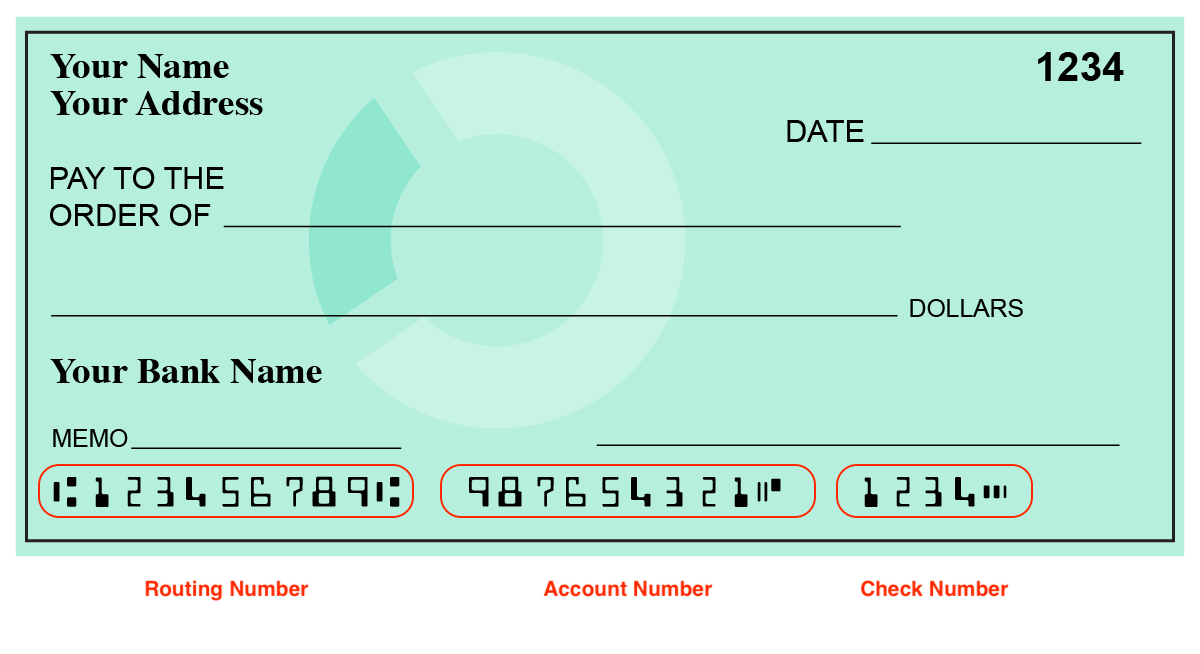
Look at the bottom edge of one of your checks. You’ll typically see three sets of numbers printed in magnetic ink (MICR line). From left to right, these represent:
- Routing Number (9 digits): This is usually the first set of numbers on the far left.
- Account Number: This is your individual account number, unique to you within your bank.
- Check Number: This is the sequential number of the individual check.
Example Check Layout:
[Routing Number] [Account Number] [Check Number]
It’s important to note that the order of the account number and check number can sometimes be swapped depending on the bank, but the routing number almost invariably appears first on the left. If you have multiple bank accounts, ensure you are looking at a check from the specific account for which you need the routing number. Also, be cautious if using very old checks, as a bank might sometimes change routing numbers due to mergers, acquisitions, or internal restructuring, though this is relatively uncommon for established accounts. Always aim to use a current check or cross-reference with another method if in doubt.
Bank Statements
Your monthly or quarterly bank statements are another reliable source for locating your routing number. Whether you receive paper statements in the mail or access them digitally, this information is almost always present.
- Paper Statements: On a physical statement, the routing number is commonly printed near the top, often alongside your account number, bank’s name, and address. It might be listed under a section like “Account Information” or “Bank Details.”
- Digital Statements (e.g., PDF): If you opt for paperless statements, you can usually download a PDF version through your online banking portal. The PDF will mirror the layout of a physical statement, with the routing number typically found in the same prominent location.
Bank statements are an excellent source because they are officially generated documents by your financial institution, providing an accurate record specific to your account. They are also useful if you don’t have physical checks readily available or if you need to confirm the routing number for an account that doesn’t have check-writing privileges.
Contacting Your Bank Directly
When in doubt, or if you prefer direct confirmation, reaching out to your bank’s customer service or visiting a branch in person are foolproof methods. This ensures you receive the most accurate and up-to-date information directly from the source.
- Customer Service Hotline: Locate your bank’s customer service number (usually found on their official website, the back of your debit card, or on a bank statement). When you call, be prepared to verify your identity with personal information such as your account number, full name, address, and possibly answers to security questions. The representative will be able to provide the exact routing number for your specific account.
- Visiting a Bank Branch: If you prefer face-to-face interaction, visit a local branch of your bank. A teller or customer service representative will be able to assist you. Remember to bring a valid form of identification (like a driver’s license or passport) and your account number to facilitate the process. This method is particularly useful if you have complex account structures or specific transaction needs that require nuanced information.
While these traditional methods might take slightly more effort than digital alternatives, they offer a high degree of certainty and are particularly valuable if you are handling sensitive transactions or simply want to double-check information obtained elsewhere.
Digital Pathways to Your Routing Number
In our increasingly digital world, accessing financial information has become remarkably convenient. Your bank provides multiple online avenues to retrieve your routing number quickly and securely, often from the comfort of your home or on the go.
Online Banking Portals
Most modern financial institutions offer robust online banking platforms that serve as a central hub for managing your accounts. Finding your routing number here is usually a straightforward process.
Once you log into your bank’s online banking portal, navigate to the specific account for which you need the routing number. Look for sections labeled “Account Details,” “Account Summary,” “Information,” or “Statements.” Often, the routing number will be prominently displayed alongside your account number, current balance, and other key information. Some banks might have a dedicated “Direct Deposit Information” link or a section within their “FAQs” or “Help” pages that lists routing numbers specific to different transaction types (e.g., one for ACH, another for wire transfers).
The exact path may vary slightly between banks, but generally, you’ll find it within the details of your checking or savings account. If it’s not immediately obvious on the main account summary page, explore links like “Show details,” “View account information,” or check the “Settings” or “Profile” sections. The convenience of online banking means you can access this information 24/7 from any device with internet access.
Mobile Banking Apps
For those who manage their finances primarily through smartphones or tablets, mobile banking apps offer a streamlined way to find your routing number. These apps are designed for ease of use and instant access.
Similar to online banking portals, once you log into your bank’s mobile app, select the specific account (e.g., checking or savings). The routing number is frequently displayed directly on the account’s main screen, or you might need to tap an “Account Details,” “Account Info,” or a similar option. Some apps feature a dedicated section for “Direct Deposit” information, which will explicitly list both your routing and account numbers ready for use.
Mobile apps prioritize user experience, so finding this information is typically intuitive. However, always ensure you are using the official app provided by your bank and are connected to a secure network to protect your financial data. The ease of access makes mobile banking apps an incredibly convenient tool for retrieving your routing number on the fly, whether you’re setting up a new service or need to provide it to an employer.
Bank’s Official Website (Publicly Accessible)
Even without logging into your personal account, you can often find a general routing number for your bank directly on their public website. This method is particularly useful if you’re exploring opening an account with a new bank or need a general routing number for a broad purpose.
Most banks list their primary routing numbers on pages such as:
- “Contact Us” or “Help/FAQ” pages: These sections often provide a direct link or listed information for common inquiries, including routing numbers.
- “About Us” or “Bank Info” pages: Some banks include this information as part of their corporate details.
- Dedicated “Direct Deposit” or “Wire Transfer” pages: These sections will explicitly state the routing number required for these specific types of transactions.
Important Distinction: While a bank’s public website will display a valid routing number for the institution, it’s crucial to understand that large banks, or those with various branches across states, might operate with multiple routing numbers. The one listed publicly is usually the main or most common one. However, for utmost accuracy, especially for personal direct deposits or critical transfers, it is always best to log into your specific account via online banking or the mobile app, or to refer to a physical check or statement. This ensures you are using the precise routing number associated with your individual account, which could sometimes differ from a general number listed on the main site.
Safeguarding Your Financial Information
While knowing how to find your routing number is essential, understanding how to protect it and differentiate it from other critical financial details is equally important. In the digital age, being vigilant about your financial data is non-negotiable.
Differentiating Routing and Account Numbers
A common source of confusion, and a potentially costly mistake, is mixing up your routing number with your account number. While both are nine digits in many cases, their functions are distinct, and incorrect entry can lead to significant issues.
- Routing Number: Identifies your bank (the financial institution).
- Account Number: Identifies your specific account within that bank.
Think of it like an address: the routing number is the street address of the building (the bank), while the account number is the specific apartment number within that building (your individual account). Providing the wrong number can result in funds being sent to the wrong bank entirely or, if the routing number is correct but the account number isn’t, the transaction will likely be rejected, causing delays and potentially fees. Always double-check both numbers meticulously before initiating any transaction.
When to Share (and When Not To)
Your routing number, combined with your account number, provides access to your funds. While necessary for legitimate transactions, this information should be handled with care.
When to Share:
You typically need to provide your routing and account numbers for:
- Setting up direct deposit with your employer.
- Enrolling in automated bill pay for utilities, loans, or credit cards.
- Initiating transfers between your own accounts at different banks.
- Setting up payment links with legitimate financial apps (e.g., Venmo, PayPal, Zelle).
- Processing tax refunds or government benefits.
- Authorizing a legitimate merchant for an ACH payment.
When NOT to Share:
Be highly suspicious and never provide your routing and account numbers in response to:
- Unsolicited emails, texts, or phone calls claiming to be from your bank, the IRS, or any other entity, especially if they threaten consequences or promise rewards.
- Requests from unfamiliar websites or individuals that seem too good to be true.
- Any situation where you did not initiate the contact or request for information.
A legitimate institution will generally not ask you to “verify” your full account and routing numbers via insecure channels like email or unsolicited calls. If in doubt, contact the organization directly using a verified phone number from their official website, not one provided in a suspicious message.
Best Practices for Security
Maintaining the security of your financial information, including your routing number, is an ongoing responsibility. Incorporate these best practices into your routine:
- Secure Online Banking Credentials: Use strong, unique passwords for your online banking accounts. Enable two-factor authentication (2FA) wherever available.
- Monitor Account Activity: Regularly review your bank statements and online transaction history for any unauthorized or suspicious activity. Report discrepancies immediately to your bank.
- Be Wary of Phishing Attempts: Learn to recognize the signs of phishing scams (e.g., generic greetings, urgent tone, spelling errors, suspicious links). Never click on links or download attachments from unknown sources.
- Shred Sensitive Documents: When disposing of old checks, bank statements, or other documents containing your routing and account numbers, always shred them to prevent identity theft.
- Use Secure Networks: When accessing online banking or financial apps, always use a secure, private Wi-Fi network. Avoid public Wi-Fi networks for sensitive transactions.
- Keep Software Updated: Ensure your computer and mobile devices have up-to-date operating systems, web browsers, and antivirus software.
By adhering to these security measures, you significantly reduce the risk of your financial information falling into the wrong hands, allowing you to use your routing number with confidence when necessary.

Conclusion
The routing number, a seemingly simple nine-digit code, is an indispensable component of the modern financial landscape. It serves as the unique identifier for your bank, facilitating everything from direct deposits and automated bill payments to interbank transfers, acting as the critical link in the chain of financial transactions.
As we’ve explored, there are multiple reliable ways to locate your routing number. Whether you prefer the tangible proof of a physical check or bank statement, the digital convenience of your online banking portal or mobile app, or the direct confirmation from your bank’s customer service, the information is readily accessible. The key is knowing where to look and understanding the nuances, especially when distinguishing between general routing numbers and those specific to your account or transaction type.
Beyond simply finding this number, it is paramount to understand its significance, differentiate it from your account number, and practice robust security measures. In an era where financial transactions are increasingly digital, safeguarding your routing and account numbers is a fundamental aspect of protecting your financial well-being. By taking the time to understand and secure this vital piece of information, you empower yourself with greater control, confidence, and peace of mind in managing your personal finances effectively. Should you ever have any doubt or encounter a unique situation, remember that your bank is always the ultimate authority and resource for accurate information.
aViewFromTheCave is a participant in the Amazon Services LLC Associates Program, an affiliate advertising program designed to provide a means for sites to earn advertising fees by advertising and linking to Amazon.com. Amazon, the Amazon logo, AmazonSupply, and the AmazonSupply logo are trademarks of Amazon.com, Inc. or its affiliates. As an Amazon Associate we earn affiliate commissions from qualifying purchases.