
The allure of the stock market is undeniable. It represents a dynamic arena where wealth can be grown, financial independence can be fostered, and future aspirations can be funded. For many, however, the very concept of “getting in” can seem daunting, shrouded in complex jargon, volatile headlines, and an intimidating sense of exclusivity. This perception often deters potential investors, leading them to miss out on one of the most powerful wealth-building tools available.
This comprehensive guide is designed to demystify the process, providing a clear, actionable roadmap for anyone looking to enter the stock market. We’ll break down the essentials, from understanding fundamental concepts to choosing the right investment path and adopting effective strategies, all while emphasizing a professional, insightful, and engaging approach. The journey into the stock market is not about getting rich quick; it’s about informed decision-making, discipline, and a long-term perspective. By understanding the foundational principles and taking deliberate steps, you can confidently navigate this exciting financial landscape and begin building a more secure financial future.
1. Understanding the Fundamentals Before You Begin
Before embarking on any investment journey, it’s crucial to grasp the basic principles of the stock market. Investing without a foundational understanding is akin to setting sail without a compass – you might drift, but you won’t reach your intended destination.
What is the Stock Market?
At its core, the stock market is simply a collection of exchanges and markets where buying, selling, and issuance of shares of publicly-held companies take place. When you buy a stock, you’re purchasing a small piece of ownership in a company. This ownership stake, however fractional, gives you a claim on the company’s assets and earnings, and often, a vote in corporate decisions. The stock market facilitates the exchange of these shares between investors, providing liquidity and enabling price discovery based on supply and demand, company performance, economic outlook, and investor sentiment. It’s a vital component of the capitalist system, allowing companies to raise capital for expansion and innovation while offering individuals and institutions an opportunity to grow their wealth.
Why Invest in Stocks?
There are several compelling reasons why individuals choose to invest in the stock market, primarily centered around wealth accumulation. Historically, stocks have outperformed most other asset classes over the long term, offering a robust hedge against inflation and a significant potential for capital appreciation. As companies grow and become more profitable, their stock prices tend to rise, increasing the value of your investment. Many companies also pay dividends, which are portions of their earnings distributed to shareholders, providing a regular income stream. Beyond financial gains, investing in stocks allows you to participate in the growth of industries and companies you believe in, aligning your financial interests with economic progress.
Key Terminology: Stocks, Shares, Dividends, Exchanges
Navigating the stock market requires familiarity with its lexicon.
- Stocks (or Shares): These are units of ownership in a company. When you buy 100 shares of Apple stock, you own a very small piece of Apple Inc.
- Dividends: A distribution of a portion of a company’s earnings, decided by the board of directors, paid to a class of its shareholders. Dividends can be paid out as cash or in additional shares.
- Stock Exchange: A marketplace where stocks are bought and sold. Examples include the New York Stock Exchange (NYSE) and Nasdaq. These exchanges provide regulated environments for trading, ensuring fairness and transparency.
- Broker: An individual or firm that executes buy and sell orders on behalf of clients. You’ll need a brokerage account to buy and sell stocks.
- Volatility: The degree of variation of a trading price series over time. High volatility means prices fluctuate widely, while low volatility means prices are relatively stable.
- Market Capitalization (Market Cap): The total value of a company’s outstanding shares. It’s calculated by multiplying the current share price by the number of shares outstanding.
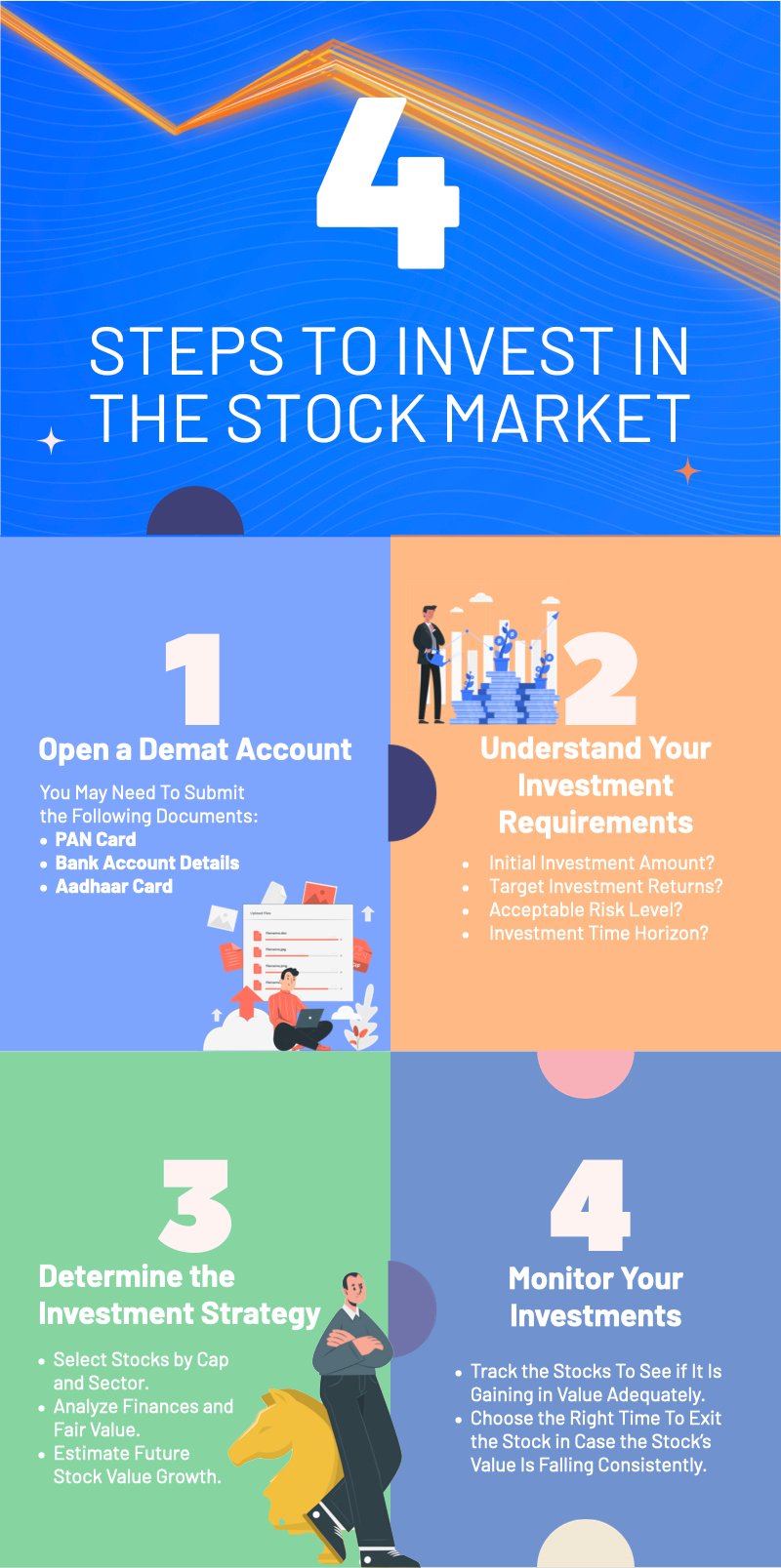
2. Preparing for Your Investment Journey
Successful investing isn’t solely about picking the right stocks; it’s also about laying a solid personal financial foundation. Rushing into the market without adequate preparation can expose you to unnecessary risks and hinder your long-term success.
Assessing Your Financial Readiness
Before allocating funds to the stock market, conduct a thorough assessment of your current financial health. This involves understanding your income, expenses, debts, and savings. Create a detailed budget to identify how much discretionary income you truly have. It’s crucial that any money you invest in stocks is capital you can afford to lose or tie up for an extended period without impacting your essential living expenses. Avoid using money earmarked for rent, groceries, or debt payments for investing, as this can lead to financial distress during market downturns. Start small if necessary, but start smart.
Defining Your Investment Goals and Risk Tolerance
Your investment goals will dictate your strategy. Are you saving for retirement decades away, a down payment on a house in five years, or simply looking to grow wealth over the long term? Different goals require different approaches regarding asset allocation and risk. Equally important is understanding your personal risk tolerance.
- Risk Tolerance: This refers to the degree of uncertainty an investor is willing to undertake in exchange for potential returns. Are you comfortable with significant fluctuations in value for potentially higher returns (aggressive)? Or do you prefer more stable investments with lower, but more predictable, returns (conservative)?
Your risk tolerance is influenced by factors like your age, financial situation, personality, and investment horizon. Younger investors with a longer time horizon often have a higher risk tolerance, as they have more time to recover from market downturns. Be honest with yourself about how you would react to seeing your portfolio value drop by 20% or more.
Building an Emergency Fund
Perhaps the most critical preparatory step is establishing a robust emergency fund. This fund should contain enough liquid cash to cover 3 to 6 months (or even 12 months for greater security) of essential living expenses. This money should be easily accessible, ideally in a high-yield savings account, and not invested in the stock market. An emergency fund acts as a crucial financial buffer, preventing you from being forced to sell your investments at an inopportune time (e.g., during a market downturn) to cover unexpected expenses like job loss, medical emergencies, or car repairs. Only once your emergency fund is sufficiently established should you consider investing in the stock market.
3. Choosing Your Investment Path
Once you’re financially prepared, the next step is to decide how you want to access the market and what types of investments align with your goals and risk tolerance. The landscape offers various avenues, each with its own advantages.
Brokerage Accounts: Full-Service vs. Discount
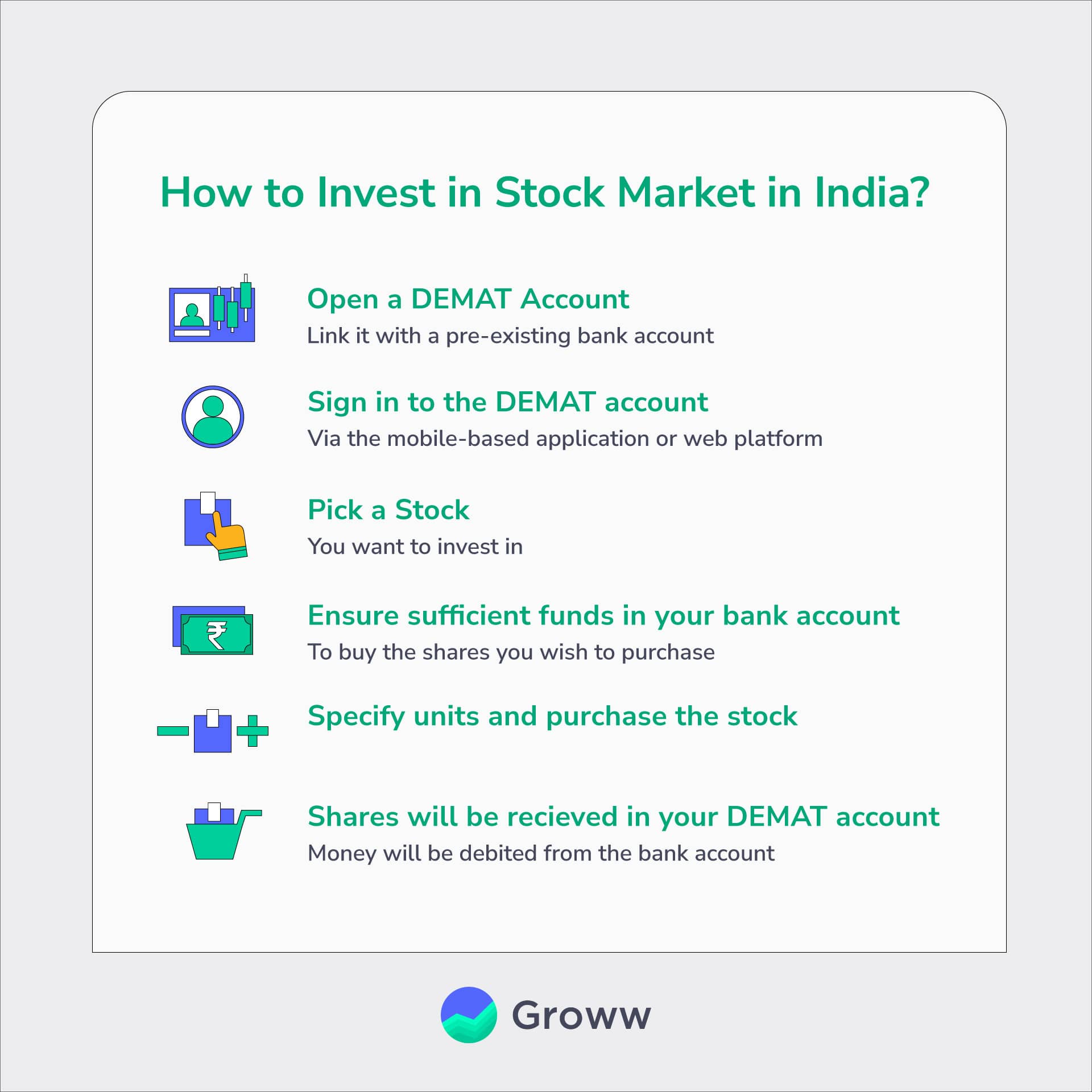
To buy and sell stocks, you’ll need a brokerage account. These accounts can be broadly categorized into two types:
- Discount Brokerages: These are typically online platforms that offer low fees, commission-free trades for many stocks and ETFs, and self-directed investing tools. They are ideal for investors who are comfortable making their own investment decisions. Examples include Fidelity, Charles Schwab, E*TRADE, and Robinhood.
- Full-Service Brokerages: These firms offer a more personalized experience, providing financial advice, portfolio management, estate planning, and a wider range of investment products. They come with higher fees, often based on a percentage of assets under management or higher commissions per trade. They are better suited for high-net-worth individuals or those who prefer professional guidance and a hands-off approach.
For most new investors, a discount brokerage account is the most practical and cost-effective starting point.
Types of Investment Vehicles: Individual Stocks, ETFs, Mutual Funds
The stock market offers a variety of investment vehicles, each with distinct characteristics:
- Individual Stocks: Buying individual stocks means owning shares in specific companies. This approach offers the highest potential for reward if you pick successful companies, but also carries the highest risk. It requires significant research, analysis, and ongoing monitoring. For beginners, concentrating too heavily on a few individual stocks can be precarious.
- Exchange-Traded Funds (ETFs): ETFs are baskets of securities (like stocks, bonds, or commodities) that trade on exchanges like individual stocks. They offer instant diversification, as a single ETF can hold hundreds or even thousands of underlying assets. For example, an S&P 500 ETF holds stocks of the 500 largest U.S. companies. ETFs are generally low-cost, transparent, and tax-efficient, making them an excellent choice for new investors seeking broad market exposure with less individual company risk.
- Mutual Funds: Similar to ETFs, mutual funds pool money from multiple investors to invest in a diversified portfolio of securities. They are managed by professional fund managers who make investment decisions on behalf of the fund. Mutual funds are typically bought directly from the fund company at the end of the trading day’s price, unlike ETFs which trade throughout the day. While offering diversification and professional management, they often come with higher expense ratios and sometimes sales charges (loads) compared to ETFs.
Robo-Advisors vs. Self-Directed Investing
Deciding between professional assistance and managing your own portfolio is another key choice:
- Robo-Advisors: These are digital platforms that provide automated, algorithm-driven financial planning services with little to no human supervision. You answer a questionnaire about your financial goals and risk tolerance, and the robo-advisor constructs and manages a diversified portfolio for you, often using low-cost ETFs. They are an excellent, low-cost option for beginners who want professional portfolio management without the high fees of traditional financial advisors. Examples include Betterment and Wealthfront.
- Self-Directed Investing: This approach involves opening a discount brokerage account and making all investment decisions yourself. You research companies, choose individual stocks or ETFs, and execute trades independently. This requires more time, effort, and continuous learning but offers complete control and potentially lower costs if you avoid unnecessary trades. This path is suitable for those who enjoy research and want to be actively involved in their investments.
4. Strategies for Smart Stock Market Entry
Entering the stock market successfully isn’t just about buying; it’s about buying smart. Employing proven strategies can mitigate risk and enhance your potential for long-term growth.
Diversification: The Golden Rule
Diversification is arguably the most fundamental principle of smart investing. It means spreading your investments across various assets, industries, and geographic regions to reduce risk. The old adage, “Don’t put all your eggs in one basket,” perfectly encapsulates this concept. If you invest all your money in a single company and that company falters, your entire investment is at risk. By diversifying, a poor performance in one area can be offset by better performance in another.
For new investors, diversification can be easily achieved through broad-market ETFs or mutual funds that inherently hold many different stocks. As you become more experienced, you might diversify across different asset classes (stocks, bonds, real estate), market capitalizations (large-cap, mid-cap, small-cap), and sectors (technology, healthcare, consumer staples).
Dollar-Cost Averaging: Mitigating Risk
Dollar-cost averaging (DCA) is a disciplined investment strategy where you invest a fixed amount of money at regular intervals (e.g., monthly or quarterly), regardless of the stock price. This approach removes the emotional element of trying to “time the market” – buying low and selling high – which is notoriously difficult even for seasoned professionals.
The benefit of DCA is that when prices are high, your fixed dollar amount buys fewer shares, and when prices are low, it buys more shares. Over time, this strategy helps to average out your purchase price, reducing the overall risk of investing a lump sum at an unfortunate market peak. It’s a particularly effective strategy for long-term investors building wealth steadily.
Long-Term vs. Short-Term Investing
A crucial distinction for new investors is understanding the difference between long-term and short-term investing, and why the former is almost always recommended for beginners.
- Long-Term Investing: This involves holding investments for many years, often decades, with the goal of capital appreciation and compounding returns. Long-term investors are less concerned with daily market fluctuations and more focused on the fundamental growth potential of their chosen assets. This strategy leverages the power of compounding, where your earnings begin to earn their own returns, leading to exponential growth over time. It’s the most reliable path to wealth building in the stock market for most individuals.
- Short-Term Investing (Trading): This involves buying and selling assets rapidly, often within days or weeks, to profit from small price movements. This includes day trading, swing trading, and other speculative strategies. Short-term trading is highly risky, requires significant skill, time commitment, and a deep understanding of market technicals and psychological factors. It’s often compared to gambling and is generally not recommended for beginners due to its high failure rate and potential for substantial losses. Focus on long-term growth; avoid speculative trading when you’re just starting out.
5. Essential Tools and Resources for New Investors
The journey into the stock market is a continuous learning process. Arming yourself with the right tools and resources can significantly enhance your understanding and decision-making capabilities.
Research Platforms and Financial News
Access to reliable information is paramount. Most discount brokerages offer robust research tools, including company financial statements, analyst reports, news feeds, and charting capabilities. Beyond your brokerage, reputable financial news outlets provide invaluable insights into market trends, economic indicators, and company-specific developments.
- Sources: Websites like Bloomberg, The Wall Street Journal, Financial Times, Reuters, and reputable financial sections of major news outlets (e.g., New York Times, BBC News) offer comprehensive coverage. Investing-focused sites like Morningstar, Yahoo Finance, and Seeking Alpha provide detailed company analysis and data.
- Earnings Reports: Learn how to read and interpret a company’s quarterly and annual earnings reports (10-Q and 10-K filings with the SEC) to understand their financial health and future prospects.
Learning Resources and Educational Materials
The internet is a treasure trove of educational content. Many brokerage firms offer free webinars, articles, and courses specifically designed for new investors.
- Online Courses: Platforms like Coursera, Udemy, and edX offer courses on investing and personal finance from reputable institutions.
- Books: Classic investment books like “The Intelligent Investor” by Benjamin Graham, “A Random Walk Down Wall Street” by Burton Malkiel, and “Rich Dad Poor Dad” by Robert Kiyosaki provide timeless wisdom.
- Podcasts: Numerous podcasts cover investing topics, offering insights from experts and discussions on current market conditions.
- Financial Advisors: While not a “tool” in the digital sense, a certified financial planner (CFP) can be an invaluable resource, especially as your portfolio grows or your financial situation becomes more complex. They can help you create a personalized financial plan, optimize your investments, and navigate tax implications.

The Importance of Continuous Learning and Patience
The stock market is constantly evolving, influenced by global economics, technological advancements, and geopolitical events. Therefore, continuous learning is not just beneficial, but essential. Stay informed, review your portfolio periodically (but not obsessively), and adapt your strategy as your financial situation or market conditions change.
Perhaps the most important “tool” for any investor is patience. Investing in the stock market is a marathon, not a sprint. There will be periods of volatility, corrections, and even bear markets. Successful investors understand that these are normal parts of the market cycle and maintain a long-term perspective. Resist the urge to panic sell during downturns or chase “hot” stocks. Stick to your strategy, remain disciplined, and let the power of compounding work its magic over time.
Getting into the stock market can be a truly empowering step towards achieving your financial goals. By building a solid understanding of the fundamentals, preparing diligently, choosing the right investment path, employing smart strategies, and committing to continuous learning and patience, you can confidently embark on this rewarding journey and cultivate a robust financial future.
aViewFromTheCave is a participant in the Amazon Services LLC Associates Program, an affiliate advertising program designed to provide a means for sites to earn advertising fees by advertising and linking to Amazon.com. Amazon, the Amazon logo, AmazonSupply, and the AmazonSupply logo are trademarks of Amazon.com, Inc. or its affiliates. As an Amazon Associate we earn affiliate commissions from qualifying purchases.