
Starting a small business is an exciting, yet often daunting, endeavor. Beyond the passion for an idea or product, the most significant hurdle for many aspiring entrepreneurs is securing the necessary capital to transform their vision into a tangible reality. Funding is the lifeblood of any new venture, enabling everything from product development and marketing to hiring staff and securing operational space. Navigating the diverse landscape of funding options can be complex, but with the right strategy and understanding, entrepreneurs can successfully secure the financial backing needed to launch and grow their businesses. This comprehensive guide will illuminate the various avenues available for aspiring small business owners to acquire capital, from traditional loans to innovative modern solutions, emphasizing the critical steps to prepare for and ultimately obtain funding.

I. Building a Solid Foundation for Funding
Before approaching any potential funder, an entrepreneur must meticulously prepare their business idea and financial projections. Funders, whether they are banks, investors, or grant organizations, seek reassurance that their investment is sound and that the business has a clear path to profitability and sustainability. This foundational work is not merely a formality; it is the cornerstone of a successful funding application.
The Indispensable Business Plan
At the heart of any funding pitch is a robust and detailed business plan. This document serves as a blueprint for your business, outlining your objectives, strategies, and financial forecasts. A compelling business plan typically includes:
- Executive Summary: A concise overview of your entire plan, highlighting key aspects.
- Company Description: What your business does, its mission, vision, and legal structure.
- Market Analysis: In-depth research on your target market, industry trends, competition, and competitive advantages.
- Organization and Management: Details about your team, their roles, experience, and the legal structure of your business.
- Service or Product Line: A detailed description of what you offer, including any intellectual property.
- Marketing and Sales Strategy: How you plan to reach customers, sell your products/services, and grow your market share.
- Funding Request: A clear articulation of how much money you need, how it will be used, and the expected return for investors/lenders.
- Financial Projections: Realistic forecasts including income statements, balance sheets, and cash flow statements for the next 3-5 years.
A well-researched and professionally presented business plan demonstrates foresight, commitment, and a clear understanding of the market. It’s not just a document for others; it’s a critical tool for you to refine your own vision.
Understanding Your Financial Needs
Before seeking funds, you must have a precise understanding of how much money you actually need and for what purposes. This involves creating a detailed startup budget and ongoing operational forecasts. Consider:
- One-time startup costs: Equipment, initial inventory, permits, legal fees, website development, initial marketing campaigns.
- Operating expenses: Rent, utilities, salaries, raw materials, marketing, insurance, loan repayments.
- Working capital: Funds needed to cover day-to-day operations and unforeseen expenses, especially during initial periods of low revenue.
Overestimating your needs can deter lenders, while underestimating can lead to critical shortages down the line. A realistic and itemized budget shows financial prudence and helps build trust with potential funders.
Personal Investment and Skin in the Game
Most lenders and investors look favorably upon entrepreneurs who have invested their own capital into their business. This “skin in the game” demonstrates commitment, belief in the venture, and a willingness to share the risk. Even a modest personal investment can significantly strengthen your funding application, signaling to others that you are fully committed to the success of your business. It also reduces the amount of external capital needed, which can make terms more favorable.
II. Exploring Traditional Funding Sources
For many small businesses, traditional funding channels remain a primary and often reliable pathway to securing capital. These sources are typically well-established and come with clear application processes, though they often require a solid credit history and collateral.
Small Business Loans (SBA, Banks)
Bank Loans: Traditional banks are a common source of funding, offering various types of loans tailored for small businesses. These typically include term loans, which provide a lump sum of money repaid over a fixed period with interest, and lines of credit, which offer flexible access to funds up to a certain limit. To qualify, banks usually require a strong credit score, a solid business plan, collateral, and sometimes a personal guarantee.
SBA Loans: The U.S. Small Business Administration (SBA) doesn’t lend money directly but guarantees a portion of loans made by banks and other lenders. This guarantee reduces the risk for lenders, making them more willing to provide funding to small businesses that might not otherwise qualify for conventional loans. SBA loans come in various forms, such as the popular 7(a) loan program and microloans, offering competitive interest rates and longer repayment terms, making them an attractive option for startups.
Lines of Credit
A business line of credit provides flexible access to funds up to a certain limit, much like a credit card. It’s an excellent option for managing cash flow fluctuations, covering unexpected expenses, or purchasing inventory. Unlike a traditional loan, you only pay interest on the amount you draw, making it a cost-effective solution for short-term financial needs. While less common for initial startup capital, a line of credit can be invaluable for ongoing operational flexibility once the business is established.
Friends and Family Loans
Often the first port of call for budding entrepreneurs, securing funds from friends and family can be a relatively quick and accessible option. While these loans might come with more flexible terms and lower interest rates than traditional lenders, it’s crucial to treat them with the same professionalism as any other financial transaction. Draft a formal loan agreement outlining the loan amount, interest rate, repayment schedule, and any contingencies. This not only protects both parties but also maintains clear boundaries and preserves personal relationships.
III. Unconventional and Modern Funding Pathways
The digital age has ushered in a wave of innovative funding mechanisms that offer alternatives to traditional banking. These modern approaches often leverage technology and community power, democratizing access to capital for a wider range of entrepreneurs.
Crowdfunding Platforms (Reward, Equity)
Crowdfunding involves raising small amounts of money from a large number of people, typically via online platforms.
- Reward-Based Crowdfunding: Platforms like Kickstarter and Indiegogo allow entrepreneurs to offer backers a product, service, or unique experience in exchange for their financial contribution. This method is excellent for product launches, gauging market interest, and building a community around your brand before formal launch.
- Equity Crowdfunding: Platforms like StartEngine and Republic enable businesses to sell a small stake (equity) in their company to a large number of individual investors. This allows businesses to raise capital from a broader audience than traditional angel or venture capital rounds, though it comes with regulatory requirements and obligations to a larger group of shareholders.
Angel Investors and Venture Capital

For businesses with high growth potential, particularly in tech or scalable sectors, angel investors and venture capitalists (VCs) can provide significant capital.
- Angel Investors: These are high-net-worth individuals who invest their own money in early-stage startups in exchange for equity or convertible debt. They often bring valuable industry experience, mentorship, and connections in addition to capital.
- Venture Capital (VC) Firms: VC firms manage funds from institutional investors and invest in companies with proven traction and significant growth potential. They typically invest larger sums than angels and often take a more active role in guiding the company. Both angel and VC funding are highly selective processes, requiring a compelling pitch, a strong team, and a clear exit strategy.
Grants for Small Businesses
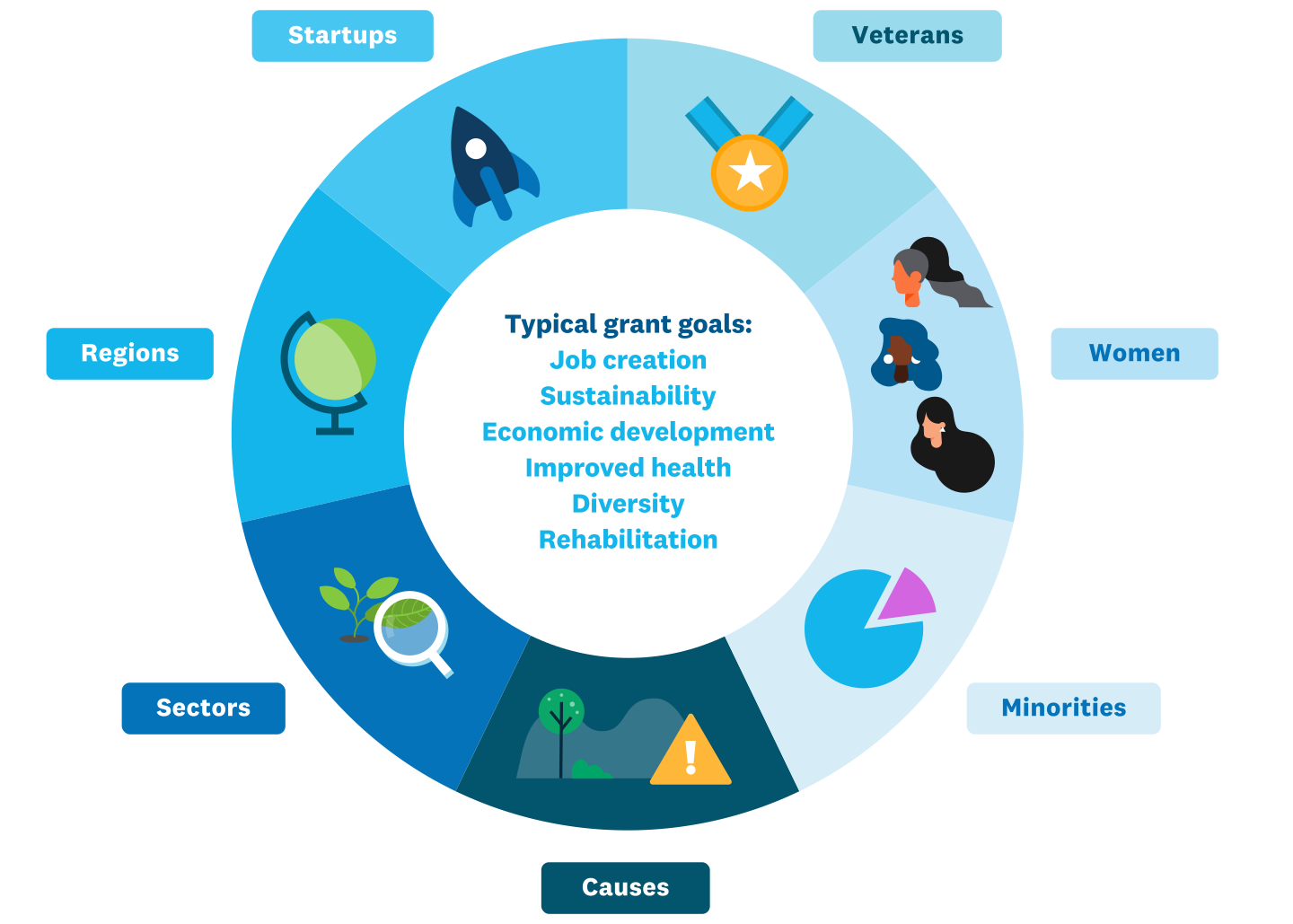
Grants are non-repayable funds awarded by government agencies, foundations, or corporations, usually for specific purposes or to businesses that meet certain criteria (e.g., minority-owned, women-owned, veteran-owned, innovative tech, social impact). While highly competitive, grants can be an ideal funding source as they don’t require repayment or equity dilution. Researching available grants, understanding their eligibility requirements, and meticulously crafting a compelling proposal are key to success. Websites like Grants.gov (for federal grants) and foundation databases are good starting points.
Bootstrapping and Self-Funding Strategies
Bootstrapping involves funding your business primarily from personal savings, operating revenues, and minimal external capital. This strategy emphasizes lean operations, managing costs, and reinvesting profits back into the business. While it can mean slower initial growth, bootstrapping offers maximum control, avoids debt obligations, and prevents equity dilution. Strategies include starting small, offering services before products, leveraging personal assets, and operating out of a home office. Many successful businesses started with little to no external funding, proving the viability of this self-reliant approach.
IV. Mastering the Application and Pitch Process
Once you’ve identified potential funding sources, the next critical step is to navigate the application and pitch process effectively. This stage requires meticulous preparation, persuasive communication, and a clear understanding of what funders are looking for.
Preparing Your Financial Projections
Beyond the initial startup budget, funders will scrutinize your financial projections. These aren’t just guesses; they need to be grounded in realistic assumptions and market research. Develop comprehensive pro forma financial statements, including:
- Projected Income Statements: Showing anticipated revenues and expenses over several years.
- Projected Balance Sheets: Providing a snapshot of your assets, liabilities, and equity at specific points in time.
- Projected Cash Flow Statements: Detailing the movement of cash in and out of your business, which is often the most critical statement for assessing liquidity.
Be prepared to defend your assumptions and demonstrate a clear path to profitability and positive cash flow. Funders want to see that you understand the financial mechanics of your business intimately.
Crafting a Compelling Pitch Deck
For angel investors, VCs, and even some loan officers, a well-designed pitch deck is essential. This concise presentation (typically 10-20 slides) summarizes your business plan in an engaging visual format. Key slides usually include:
- Problem: The market pain point you’re addressing.
- Solution: Your product or service that solves the problem.
- Market Opportunity: The size and growth potential of your target market.
- Business Model: How your company makes money.
- Traction: Key milestones, early adopters, revenue (if any).
- Team: The experience and expertise of your founders.
- Financials: Key projections and funding needs.
- The Ask: A clear statement of the capital sought and how it will be used.
The pitch deck should tell a compelling story, be visually appealing, and clearly articulate your value proposition and potential for return on investment.
Understanding Lender/Investor Expectations
Each type of funder has different expectations and risk tolerances.
- Banks/Lenders: Primarily concerned with your ability to repay the loan. They focus on creditworthiness, collateral, cash flow projections, and the strength of your business plan. They are risk-averse.
- Angel Investors/Venture Capitalists: Seek high growth potential and a significant return on their equity investment. They focus on the market opportunity, the team, competitive advantage, and a clear exit strategy (e.g., acquisition, IPO). They are risk-tolerant, but demand high potential returns.
- Grant Providers: Look for alignment with their mission or specific program objectives. They focus on the problem your business solves, its impact, and your ability to execute on the proposed project.
Tailoring your application and pitch to meet the specific expectations of each funder significantly increases your chances of success.
V. Post-Funding Strategies and Financial Diligence
Securing funding is a significant milestone, but it’s just the beginning. Effective management of these funds and ongoing financial diligence are crucial for sustaining growth, fulfilling obligations, and preparing for future funding rounds.
Strategic Allocation of Funds
Once funds are secured, it’s tempting to spend. However, a disciplined approach to allocation is paramount. Stick to the budget outlined in your business plan and funding request. Prioritize investments that directly contribute to revenue generation, operational efficiency, or critical milestones. Avoid unnecessary expenditures that don’t add value. Regularly review your spending against your budget to ensure you remain on track and avoid running out of capital prematurely.
Maintaining Financial Health and Reporting
Good financial hygiene is critical for long-term success. Implement robust accounting practices from day one. Regularly track income, expenses, assets, and liabilities. Produce monthly or quarterly financial statements (income statements, balance sheets, cash flow statements). If you have investors, provide regular updates on your progress and financial performance. For lenders, ensure timely loan repayments. Transparent and accurate financial reporting builds trust with stakeholders and provides you with the insights needed to make informed business decisions.
Preparing for Future Growth and Funding Rounds
A successful small business will likely require additional funding as it scales. By managing your initial funds responsibly, meeting your financial projections, and maintaining clear records, you build a strong foundation for future funding rounds. This proactive approach ensures that when the time comes to seek further investment for expansion, new product development, or market entry, your business presents a compelling and credible case to potential funders.
In conclusion, securing funds to start a small business is a journey that demands thorough preparation, strategic thinking, and diligent execution. By meticulously building your business plan, understanding your financial needs, exploring the diverse range of funding avenues, mastering the application process, and diligently managing your capital, entrepreneurs can successfully navigate the financial landscape and lay a robust foundation for their ventures to thrive. The path may be challenging, but with persistence and a clear financial strategy, your entrepreneurial dreams can indeed take flight.
aViewFromTheCave is a participant in the Amazon Services LLC Associates Program, an affiliate advertising program designed to provide a means for sites to earn advertising fees by advertising and linking to Amazon.com. Amazon, the Amazon logo, AmazonSupply, and the AmazonSupply logo are trademarks of Amazon.com, Inc. or its affiliates. As an Amazon Associate we earn affiliate commissions from qualifying purchases.