
Securing financing is often a critical juncture for any business, whether it’s a budding startup or an established enterprise seeking to expand. The ability to access capital can dictate the pace of growth, the feasibility of new projects, and even the survival of the venture. Navigating the diverse landscape of funding options requires a clear understanding of your business’s needs, its financial health, and the various avenues available. This guide delves into the strategic steps and common sources businesses leverage to acquire the capital they need to thrive.
Laying the Foundation: Assessing Your Needs and Readiness
Before approaching any lender or investor, a thorough internal assessment is paramount. This foundational work not only clarifies your financial requirements but also strengthens your position when presenting your business to potential funders.
Define Your Funding Purpose and Amount
The first step is to articulate precisely why you need funding and how much you require. Are you looking to purchase new equipment, expand into new markets, hire additional staff, develop a new product, or simply cover operational expenses during a lean period? A clear purpose will inform the type of financing best suited for your situation. Moreover, a detailed breakdown of how the funds will be utilized will demonstrate fiscal responsibility and a strategic approach to potential lenders. Over-estimating your needs can make you seem speculative, while under-estimating can lead to needing more capital sooner than expected.
Develop a Robust Business Plan
A comprehensive business plan serves as your company’s roadmap and a crucial document for any potential investor or lender. It should detail your executive summary, company description, market analysis, organization and management structure, service or product line, marketing and sales strategy, and, most importantly, your financial projections. A well-researched and articulate business plan showcases your understanding of the market, your competitive advantages, your operational strategy, and your potential for profitability and repayment.
Understand Your Creditworthiness (Personal and Business)
Lenders and investors will scrutinize your credit history. For startups and small businesses, personal credit scores of the founders are often heavily weighed, as the business itself may not have an established credit history. A strong personal credit score (FICO score typically above 680, ideally above 720) can significantly improve your chances of securing favorable terms. As your business matures, establishing and maintaining a separate business credit profile becomes vital. Pay bills on time, keep credit utilization low, and ensure there are no inaccuracies in your credit reports.
Prepare Financial Projections
Funders want to see a clear path to profitability and a return on their investment or loan. Prepare detailed financial projections for at least the next three to five years, including income statements, balance sheets, and cash flow statements. These projections should be realistic, justifiable, and demonstrate how the new financing will contribute to growth and financial stability. Include best-case, worst-case, and most-likely scenarios to show a comprehensive understanding of potential risks and rewards.
Exploring Traditional Debt Financing Options
Debt financing involves borrowing money that must be repaid, typically with interest, over a set period. This is the most common form of financing for established businesses and can also be accessible for startups with strong business plans and collateral.
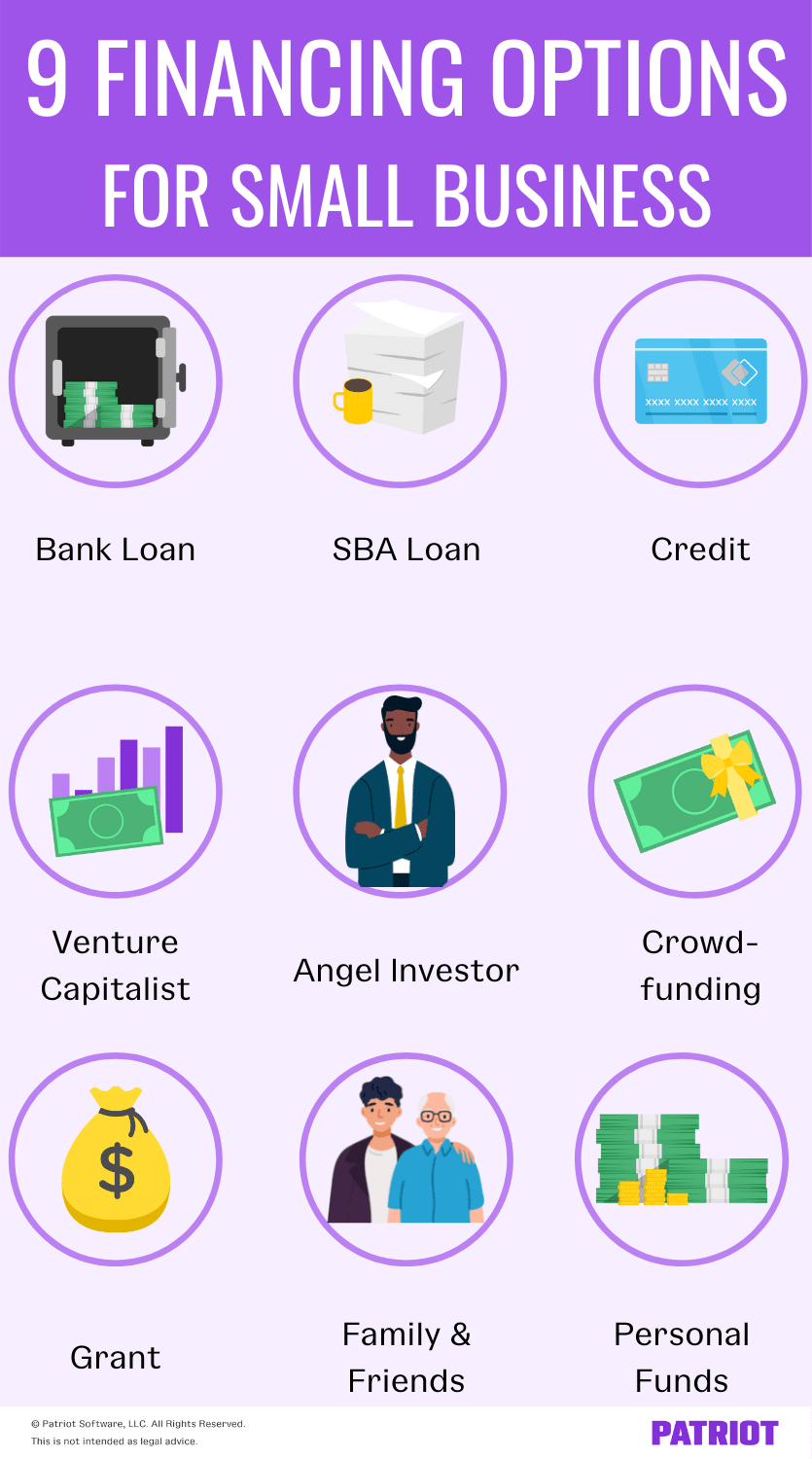
Conventional Bank Loans
Commercial banks are a primary source of debt financing. They offer various loan products, including term loans, lines of credit, and mortgages. Banks typically require a solid business plan, a proven track record (for established businesses), collateral, and a strong credit history. Interest rates and repayment terms can vary widely based on the borrower’s risk profile and market conditions. While often requiring stringent eligibility criteria, bank loans usually come with lower interest rates compared to other debt financing options.
SBA-Backed Loans (7(a), 504, Microloan)
The U.S. Small Business Administration (SBA) does not lend money directly but guarantees a portion of loans made by participating lenders (banks, credit unions, etc.). This guarantee reduces the risk for lenders, making it easier for small businesses to obtain financing.
- SBA 7(a) Loan Program: The most common and flexible SBA loan, suitable for a wide range of general business purposes, including working capital, equipment purchases, and real estate.
- SBA 504 Loan Program: Provides long-term, fixed-rate financing for major fixed assets like real estate and machinery. It usually involves a partnership between a commercial lender, a Certified Development Company (CDC), and the business owner.
- SBA Microloan Program: Offers smaller loans (up to $50,000) for working capital, inventory, supplies, furniture, fixtures, and equipment. This program also provides business counseling and technical assistance.
Business Lines of Credit
Similar to a credit card, a business line of credit provides access to a revolving pool of funds that you can draw upon as needed, up to a certain limit. You only pay interest on the amount you borrow. This is an excellent option for managing cash flow fluctuations, covering unexpected expenses, or seizing short-term opportunities. Lines of credit can be secured (backed by collateral) or unsecured, with unsecured lines typically requiring a stronger credit profile and carrying higher interest rates.
Equipment Financing and Invoice Factoring

- Equipment Financing: If your primary need is to acquire machinery, vehicles, or technology, equipment loans specifically for these assets are available. The equipment itself often serves as collateral, making it easier to secure this type of financing.
- Invoice Factoring (Accounts Receivable Financing): This involves selling your unpaid invoices to a third-party factor at a discount in exchange for immediate cash. It’s a useful solution for businesses with long payment cycles from clients, providing quick access to working capital without incurring new debt. While effective for cash flow, it can be more expensive than traditional loans.
Tapping into Equity and Alternative Funding Sources
Beyond traditional debt, businesses can explore equity financing, where investors provide capital in exchange for ownership stakes, or a range of other innovative funding methods.
Angel Investors and Venture Capital
- Angel Investors: High-net-worth individuals who provide capital for a startup or small business, usually in exchange for convertible debt or ownership equity. Angels often invest their own money and may also provide mentorship and industry connections. They typically fund early-stage companies with high growth potential.
- Venture Capital (VC) Firms: Professional investment firms that manage funds from institutional investors and wealthy individuals. VCs invest in high-growth companies with scalable business models, often requiring significant equity stakes and an active role in guiding the company. VC funding is typically sought by startups aiming for rapid expansion and potentially an IPO or acquisition.
Crowdfunding Platforms (Equity, Reward, Debt)
Crowdfunding allows businesses to raise small amounts of money from a large number of individuals, often via online platforms.
- Reward-Based Crowdfunding: Individuals contribute money in exchange for non-financial rewards (e.g., pre-ordering a product, merchandise). Popular platforms include Kickstarter and Indiegogo.
- Equity Crowdfunding: Investors receive an equity stake in the company. Regulations vary by country (e.g., Reg CF in the US). Platforms like SeedInvest and StartEngine facilitate this.
- Debt Crowdfunding (Peer-to-Peer Lending): Individuals lend money to businesses with the expectation of repayment with interest. Platforms like LendingClub and Prosper offer this.
Government Grants and Small Business Programs
Various government agencies at federal, state, and local levels offer grants to businesses that align with specific public policy objectives (e.g., innovation, job creation, environmental sustainability). Grants do not need to be repaid but are highly competitive and often come with strict reporting requirements. Programs like the Small Business Innovation Research (SBIR) and Small Business Technology Transfer (STTR) grants are significant sources for R&D-focused businesses. Additionally, local economic development agencies may offer specific programs or incentives.
Friends, Family, and Personal Savings
For many entrepreneurs, the first source of capital comes from personal savings or loans/investments from friends and family. This can be an efficient way to get initial seed funding, but it’s crucial to formalize these arrangements with clear loan agreements or equity stakes to prevent future misunderstandings and maintain professional relationships. Using personal savings demonstrates commitment and reduces initial external debt or equity dilution.
Navigating the Application Process and Due Diligence
Once you’ve identified potential funding sources, the application and due diligence phase requires meticulous preparation and strategic communication.
Organize Your Financial Documents
Regardless of the financing type, you will need to provide a comprehensive suite of financial documents. This includes historical financial statements (income statements, balance sheets, cash flow statements) for at least the past three years, tax returns (personal and business), bank statements, personal financial statements of principals, legal documents (articles of incorporation, licenses, permits), and any existing loan agreements. Having these readily accessible and well-organized streamlines the application process.
Craft a Compelling Pitch
For equity investors or even some debt lenders, a concise and engaging pitch is essential. Whether it’s a written executive summary or a verbal presentation, you need to clearly articulate your business’s value proposition, market opportunity, team’s capabilities, financial projections, and how the funding will achieve specific milestones. Focus on the “why” and “how” your business will succeed and generate a return.
Understand Terms and Covenants
Before signing any agreement, thoroughly understand all terms, conditions, interest rates, repayment schedules, collateral requirements, and any covenants (promises made by the borrower). Covenants can include restrictions on future borrowing, dividend payments, or requirements to maintain certain financial ratios. Debt financing will involve a promissory note, while equity financing will involve shareholder agreements, capitalization tables, and potentially term sheets. Do not hesitate to ask questions and seek clarification on any aspect.
The Importance of Legal Counsel
Engaging an attorney specializing in business finance is highly advisable, especially for significant funding rounds. Legal counsel can review loan agreements, investment contracts, and term sheets to ensure they protect your interests, comply with regulations, and clearly define the rights and obligations of all parties involved. A small investment in legal advice upfront can prevent substantial problems down the line.
Securing financing for your business is a journey that requires careful planning, persistent effort, and a deep understanding of the financial landscape. By meticulously preparing your business case, exploring a diverse range of funding options, and diligently navigating the application and negotiation process, entrepreneurs can unlock the capital needed to fuel their ambitions and drive their businesses toward sustained success.
aViewFromTheCave is a participant in the Amazon Services LLC Associates Program, an affiliate advertising program designed to provide a means for sites to earn advertising fees by advertising and linking to Amazon.com. Amazon, the Amazon logo, AmazonSupply, and the AmazonSupply logo are trademarks of Amazon.com, Inc. or its affiliates. As an Amazon Associate we earn affiliate commissions from qualifying purchases.