
In an increasingly digital world, managing personal finance has evolved significantly, with online platforms offering unparalleled convenience and access to financial tools. One of the most common and impactful financial decisions many individuals make is applying for a credit card. Gone are the days when a credit card application invariably meant a trip to a physical bank branch, endless paperwork, and often, a protracted waiting period. Today, the process of securing a credit card can be initiated and completed entirely online, offering a streamlined, efficient, and often more transparent experience.
This guide delves into the nuances of applying for a credit card over the internet, providing a comprehensive roadmap for individuals looking to leverage digital channels for their financial needs. We will explore the inherent advantages of online applications, the critical preparation required, a step-by-step walkthrough of the application process, the factors that financial institutions consider for approval, and crucial advice for responsible credit management post-approval. Our aim is to equip you with the knowledge and insights necessary to navigate the online credit card landscape successfully, ensuring you make informed decisions that contribute positively to your financial well-being.
The Digital Gateway to Credit: Benefits and Considerations
The shift towards online credit card applications reflects a broader trend in personal finance: the embrace of digital solutions for their inherent convenience and accessibility. Understanding why millions opt for online applications is the first step toward embarking on your own digital credit journey.
Why Apply Online? Convenience, Speed, and Choice
The primary allure of online credit card applications lies in their unmatched convenience. You can apply from anywhere, at any time, using a computer, tablet, or smartphone. This eradicates geographical barriers and time constraints associated with traditional banking hours. The application process is often faster, with many providers offering instant preliminary decisions, significantly reducing the waiting time compared to mailed or in-person applications.
Furthermore, the online environment provides an unparalleled breadth of choice. Comparison websites and financial aggregators allow you to browse hundreds of credit card offers from various issuers, meticulously comparing interest rates, rewards programs, annual fees, and other terms side-by-side. This empowers consumers to find a card that precisely matches their spending habits, financial goals, and credit profile, rather than being limited to the offerings of a single bank. The digital format also often presents information more clearly, with interactive tools and FAQs to help demystify complex financial jargon.
Understanding Your Needs: Choosing the Right Credit Card Category
Before you even begin an application, a crucial preliminary step is to understand why you need a credit card and what specific features would best serve your financial objectives. Credit cards are not one-size-fits-all; they come in various categories, each designed for different user profiles and needs.
- Rewards Cards: Ideal for consumers who want to earn points, miles, or cashback on their everyday spending. These are often best for those who pay their balance in full each month to maximize rewards without incurring interest.
- Low-Interest/Balance Transfer Cards: Suited for individuals who anticipate carrying a balance or wish to consolidate existing debt from other cards at a lower interest rate, often with an introductory 0% APR period.
- Secured Credit Cards: A common starting point for those with no credit history or poor credit. These cards require a security deposit, which typically becomes your credit limit, mitigating risk for the issuer and allowing you to build credit responsibly.
- Student Credit Cards: Tailored for college students, often with lower credit limits and educational resources, designed to help young adults establish their credit history.
- Travel Cards: Specifically designed for frequent travelers, offering benefits like airline miles, hotel points, travel insurance, and no foreign transaction fees.
Carefully assessing your spending patterns, debt management philosophy, and future financial goals will guide you toward the most appropriate card category, setting the foundation for a successful and beneficial credit card experience.
Key Steps Before You Begin: Pre-Application Checklist
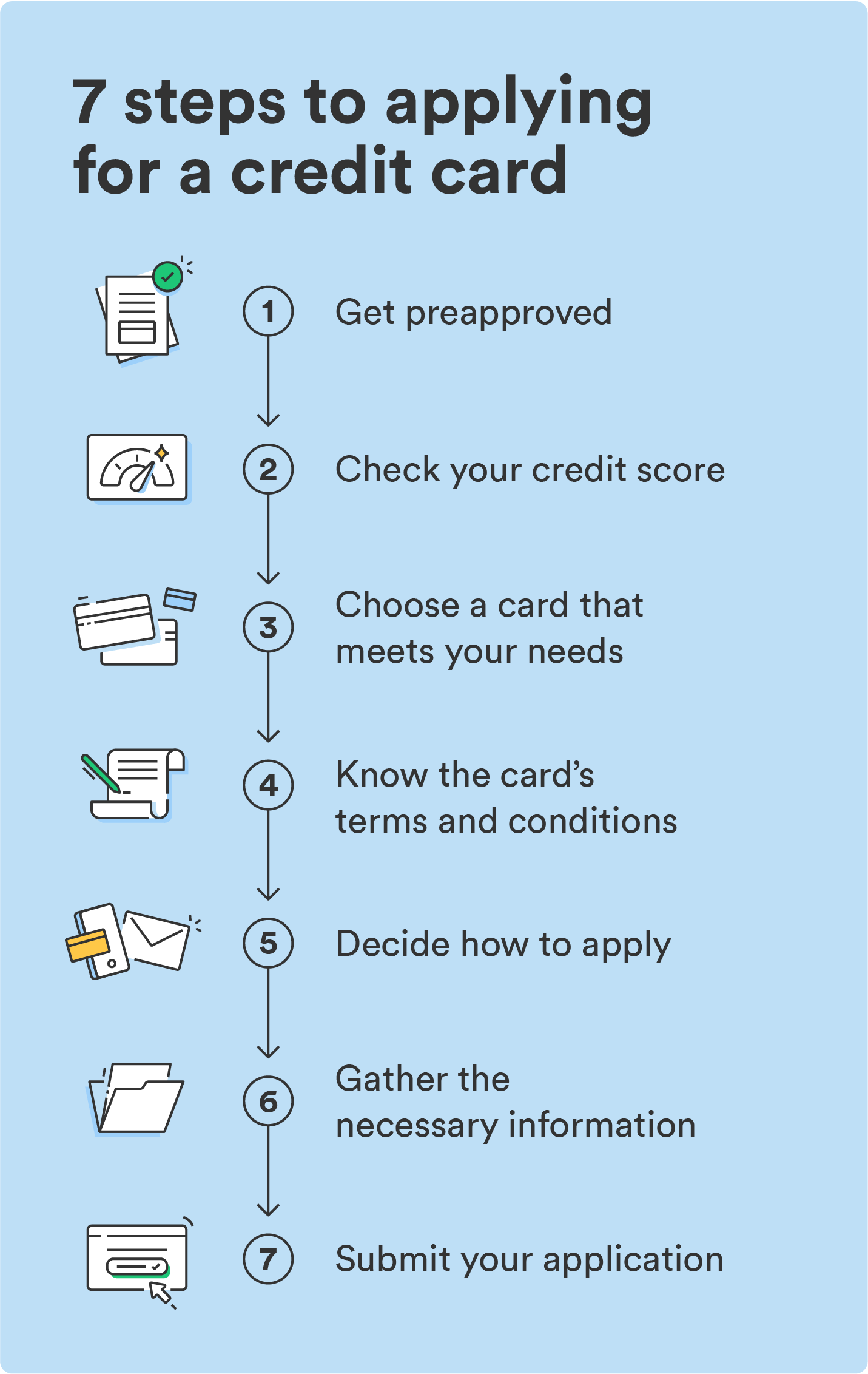
A successful online application is often the result of thorough preparation. Before clicking “apply,” ensure you have the following readily available and understood:
- Personal Information: Full legal name, date of birth, Social Security Number (SSN) or Individual Taxpayer Identification Number (ITIN), and contact information (address, phone, email).
- Financial Information: Your annual gross income (from all sources), employment status, employer’s name and contact, and possibly details on monthly rent/mortgage payments.
- Credit Score Awareness: While not strictly required, knowing your credit score and having a general understanding of your credit report can help you gauge your eligibility for certain cards and avoid applying for cards for which you’re likely to be denied. Services like Experian, TransUnion, and Equifax offer free credit reports annually, and many financial tools and banks provide free credit score access.
- Proof of Identity/Address: Though less common for initial online applications, some issuers may request additional verification documents, such as a driver’s license, state ID, or utility bill, especially if there are discrepancies or security concerns.
Having these details at your fingertips will make the online application process smooth and efficient, reducing the chances of errors or delays.
Navigating the Online Application Process: A Step-by-Step Guide
Once you’ve done your research and gathered your information, the actual online application process is typically straightforward. Adhering to best practices will ensure accuracy and security.
Essential Information and Documentation Required
The online application form will systematically guide you through various sections, requesting the information outlined in your pre-application checklist. This typically includes:
- Identity: Full name, date of birth, SSN/ITIN.
- Contact Information: Current residential address (and previous if applicable), email address, and phone number.
- Employment Details: Current employer’s name, occupation, employment status (employed, self-employed, retired, student), and years at current job.
- Income Details: Your gross annual income from all verifiable sources (salary, wages, investments, government benefits, alimony, etc.). Some applications may also ask about your monthly housing payments.
- Financial Accounts: Occasionally, details of your existing bank accounts might be requested for verification or direct debit purposes, though this is less common for the initial credit card application itself.
It is paramount to provide accurate and truthful information. Misrepresentation can lead to application denial, account closure, or even legal repercussions.
Completing the Digital Application Form Accurately
The online form is designed for user-friendliness, often with clear prompts and drop-down menus. Take your time to fill out each field carefully. Double-check all entries, especially numerical data like your SSN, income figures, and address, to prevent errors that could delay or jeopardize your application. Many forms include a review page before final submission, offering a last chance to verify all details.
Be aware of fields asking about authorized users. If you plan to add someone to your account, you will typically need their name and sometimes their date of birth and SSN. Ensure you have their consent before adding them.
Reviewing Terms, Conditions, and Privacy Policies
This is a critical, yet often rushed, step. Before you click “submit,” thoroughly read the credit card agreement, terms and conditions, and the issuer’s privacy policy. These documents contain vital information about:
- Interest Rates (APR): Purchase APR, cash advance APR, penalty APR.
- Fees: Annual fees, late payment fees, balance transfer fees, foreign transaction fees, cash advance fees.
- Credit Limit: Initial credit limit (though this may only be determined upon approval).
- Payment Due Dates: How interest is calculated and grace periods.
- Rewards Program Details: If applicable, how rewards are earned and redeemed.
- Data Usage: How your personal and financial information will be collected, stored, and shared.
Understanding these terms ensures you are fully aware of your obligations and the card’s cost structure. Do not hesitate to use the issuer’s FAQ section or customer service if anything is unclear.
Submitting Your Application Securely
Always ensure you are applying on a secure website. Look for “https://” in the URL (the ‘s’ stands for secure) and a padlock icon in your browser’s address bar. This indicates that your data transmission is encrypted, protecting your sensitive information from potential interception. Avoid applying over unsecured public Wi-Fi networks.
Once satisfied with all details and terms, click the “submit” button. Most online applications will provide an immediate confirmation message, often with a reference number, which you should save for future inquiries. Some issuers offer instant approval or denial, while others may require further review, which could take a few business days.

Understanding Approval Factors and Maximizing Your Chances
Credit card issuers evaluate several key factors to determine an applicant’s creditworthiness. Understanding these criteria can significantly enhance your chances of approval and help you manage your financial profile proactively.
The Cornerstone of Approval: Your Credit Score and History
Your credit score is arguably the most significant factor in a credit card application. It’s a three-digit number that summarizes your credit risk based on your credit report. Lenders use it to predict the likelihood of you repaying your debts.
- Excellent Credit (750-850 FICO Score): Access to the best rewards cards, lowest APRs, and highest credit limits.
- Good Credit (700-749): Generally eligible for a wide range of competitive cards, though perhaps not always the absolute top-tier offers.
- Fair Credit (650-699): May qualify for some standard cards, but might face higher APRs or fewer perks. Often, secured cards or cards designed for building credit are good options.
- Poor Credit (300-649): Approval for unsecured cards is challenging. Secured cards are typically the best route to start rebuilding credit.
Your credit history, detailed in your credit report, provides the narrative behind your score. Key elements include:
- Payment History (35%): Timeliness of past payments.
- Amounts Owed (30%): How much debt you carry relative to your credit limits (credit utilization ratio).
- Length of Credit History (15%): How long your credit accounts have been open.
- New Credit (10%): Number of recent credit inquiries and new accounts.
- Credit Mix (10%): Diversity of credit types (e.g., credit cards, loans).
A strong, positive credit history demonstrates responsible financial behavior, which is highly appealing to lenders.
Income, Employment, and Debt-to-Income Ratio
Beyond your credit score, issuers want to ensure you have the financial capacity to repay your debts.
- Income: Lenders will ask for your gross annual income. A higher, stable income signals a greater ability to handle credit payments. The CARD Act of 2009 stipulates that applicants must have the ability to make the required minimum payments. For applicants under 21, independent income is usually required.
- Employment Status: Stable employment indicates a consistent income source.
- Debt-to-Income (DTI) Ratio: This ratio compares your total monthly debt payments to your gross monthly income. A low DTI (e.g., below 36%) suggests you have sufficient income left after paying debts to take on new credit. Lenders prefer applicants with manageable existing debt.
Strategies for Improving Your Creditworthiness
If your credit profile isn’t where you want it to be, several strategies can help:
- Pay Bills on Time: This is the single most impactful action. Set up reminders or automatic payments.
- Reduce Credit Utilization: Keep your credit card balances low, ideally below 30% of your available credit limit.
- Avoid Opening Too Many New Accounts: Each hard inquiry can slightly ding your score, and opening multiple accounts in a short period can appear risky.
- Review Your Credit Report Regularly: Check for errors and dispute any inaccuracies, as these can negatively affect your score.
- Maintain Old Accounts: The length of your credit history is beneficial, so avoid closing old, positive accounts.
What to Do if You Have Limited or No Credit History
Starting from scratch can be challenging, but it’s not impossible:
- Secured Credit Cards: As mentioned, these require a deposit and are excellent for building credit.
- Become an Authorized User: If a trusted family member with good credit adds you to their account as an authorized user, their positive payment history can reflect on your report.
- Credit-Builder Loans: Offered by some credit unions and community banks, these loans are designed specifically to help establish credit.
- Student Credit Cards: If you’re a student, these are designed to be an entry point into credit.
Building credit takes time and consistent responsible behavior, but these tools provide effective starting points.
Post-Application: From Decision to Responsible Credit Management
The journey doesn’t end with submitting your application. Understanding what happens next and how to manage your credit responsibly is crucial for long-term financial health.
Awaiting a Decision: What Happens Next?
Upon submission, you might receive an instant decision. If approved, you’ll typically get details about your credit limit and an estimated arrival date for your physical card. If denied, the issuer is legally required to send you an Adverse Action Notice, explaining the specific reasons for the denial.
If your application requires further review, you might receive an email or letter requesting additional information or simply stating that a decision will be sent shortly. It’s often beneficial to follow up with the issuer’s application status line if you haven’t heard back within a reasonable timeframe (e.g., 7-10 business days). Sometimes, a quick call can resolve minor issues or clarify needed information.
Activating Your Card and Understanding Your Cardholder Agreement
Once your physical card arrives in the mail, it will need to be activated. This typically involves calling a toll-free number or activating it online through the issuer’s website or mobile app. Do not use an unactivated card, and always sign the back of your card immediately.
Along with your card, you’ll receive a copy of your Cardholder Agreement (if not already provided online). This document reiterates the terms and conditions you reviewed earlier. It’s vital to keep this document for reference, as it outlines your rights and responsibilities as a cardholder. Pay close attention to your billing cycle, payment due date, minimum payment requirements, and how interest charges are applied.
Responsible Credit Use: Best Practices for Financial Health
Getting a credit card is just the beginning. Responsible usage is paramount to leveraging its benefits and avoiding pitfalls.
- Pay Your Bills on Time, Every Time: This is the golden rule. Late payments incur fees and severely damage your credit score. Set up automatic payments or calendar reminders.
- Pay Your Balance in Full: If possible, pay your entire statement balance each month to avoid interest charges. This is how you maximize rewards and avoid debt.
- Keep Credit Utilization Low: Aim to keep your spending below 30% of your credit limit. High utilization signals financial stress and can lower your score.
- Monitor Your Statements: Regularly review your statements for any unauthorized transactions or billing errors. Report discrepancies immediately.
- Avoid Unnecessary Debt: A credit card is a tool, not an extension of your income. Only charge what you can comfortably afford to repay.
- Understand Your Card’s Features: Make the most of rewards, benefits, and protections offered by your card.
Navigating Denial and Rebuilding Opportunities
A credit card denial is not the end of your financial journey. It’s an opportunity to understand and improve.
- Review the Adverse Action Notice: This letter will clearly state the reasons for denial (e.g., low credit score, high debt-to-income ratio, insufficient income). Use this feedback to pinpoint areas for improvement.
- Check Your Credit Report: If a low credit score was cited, obtain your credit report from AnnualCreditReport.com. Look for errors that could be dragging your score down and dispute them.
- Improve Your Credit Profile: Address the reasons for denial. Focus on paying down debt, reducing utilization, paying bills on time, and building a longer, positive credit history.
- Consider Alternatives: Explore secured credit cards or credit-builder loans specifically designed for those with developing credit histories. Reapply for a standard credit card once your financial profile has improved, typically after 6-12 months of consistent positive credit behavior.
Getting a credit card online is a convenient and accessible pathway to managing your personal finances and building a solid credit history. By understanding the application process, preparing diligently, and committing to responsible usage, you can successfully navigate the digital credit landscape and harness the power of credit to achieve your financial aspirations.
aViewFromTheCave is a participant in the Amazon Services LLC Associates Program, an affiliate advertising program designed to provide a means for sites to earn advertising fees by advertising and linking to Amazon.com. Amazon, the Amazon logo, AmazonSupply, and the AmazonSupply logo are trademarks of Amazon.com, Inc. or its affiliates. As an Amazon Associate we earn affiliate commissions from qualifying purchases.