
Travel is often viewed through the lens of leisure and experience, but for the savvy consumer, it is an exercise in financial management and market timing. The cost of airfare is one of the most volatile variables in a personal budget, fluctuating based on complex algorithms, global demand, and economic shifts. To secure “cheap tickets” is not merely a matter of luck; it is a strategic endeavor that requires an understanding of arbitrage, financial tools, and the mechanics of dynamic pricing.
By treating travel procurement as a financial discipline, individuals can significantly reduce their overhead, allowing for a higher return on their travel investments. This guide explores the sophisticated methodologies required to navigate the travel market, focusing on personal finance strategies, credit optimization, and market analysis.

The Macroeconomics of Airfare: Understanding Dynamic Pricing and Timing
To master the art of finding cheap tickets, one must first understand how airlines price their inventory. Unlike retail goods with fixed margins, airline seats are “perishable” assets. Once a plane takes off, the value of an empty seat drops to zero. Consequently, airlines utilize sophisticated dynamic pricing models to maximize revenue per available seat mile (RASM).
The Concept of Dynamic Pricing as a Market Fluctuation
Airlines use Artificial Intelligence and big data to adjust prices in real-time based on historical trends, current demand, and even the purchasing power of specific demographics. From a financial perspective, an airline ticket is less like a product and more like a commodity or a stock. Prices fluctuate based on “buckets” of inventory. As the lower-priced buckets sell out, the system automatically moves to the next, more expensive tier. Understanding this allows a traveler to view the market with a clinical eye, identifying when a “dip” in the market is likely to occur.
Strategic Timing: When to Buy to Maximize Value
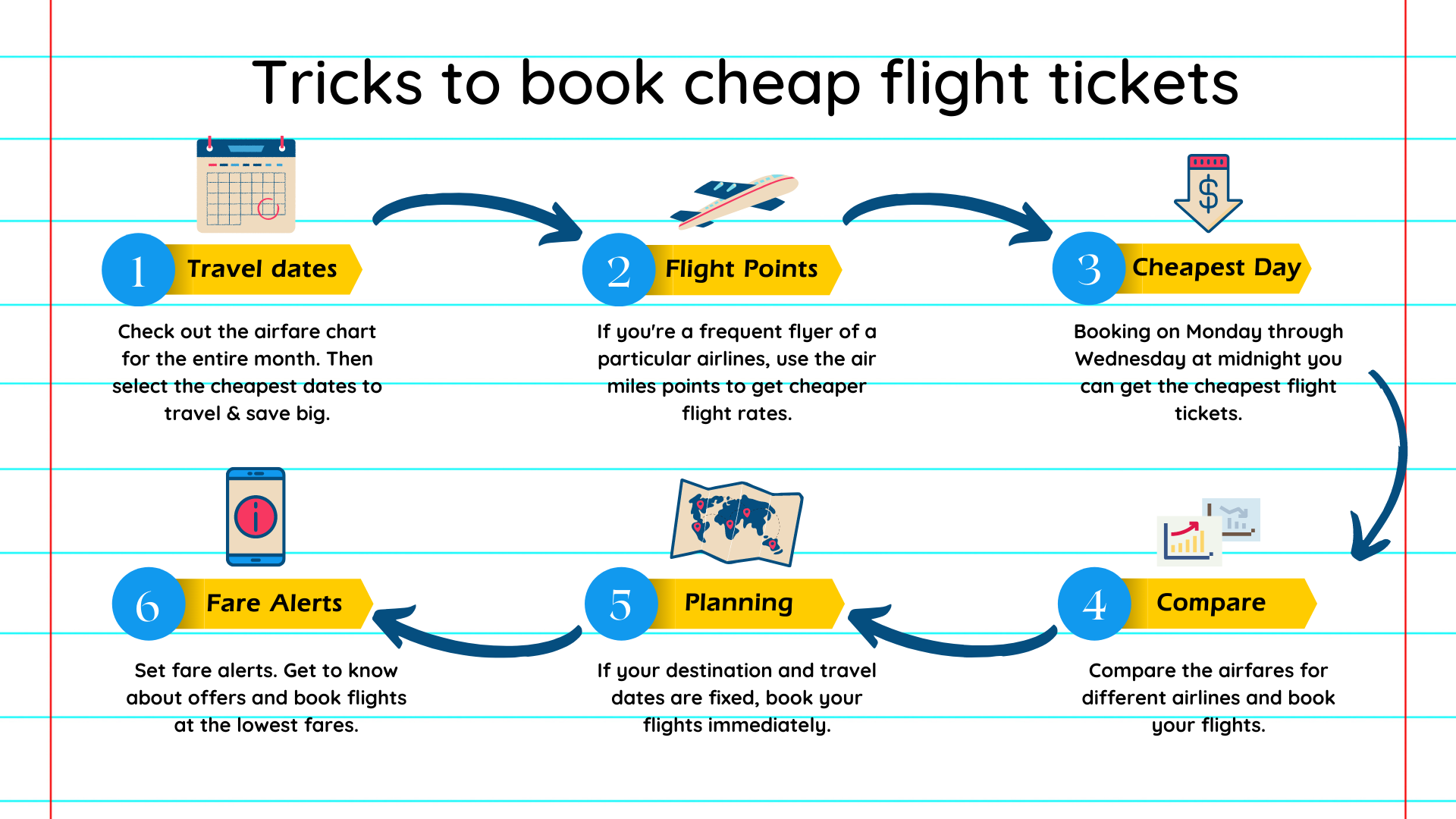
Market timing is a controversial topic in investing, but in travel, there are identifiable windows of liquidity. For domestic travel, the “Goldilocks window” typically falls between one and three months before departure. For international routes, this window extends to three to six months. Financially, booking too early (before the algorithm has adjusted for actual demand) or too late (when demand is inelastic and travelers are desperate) results in a price premium. By monitoring the “booking curve,” travelers can execute their purchase at the point of maximum price efficiency.
Leveraging Financial Tools: Credit Rewards and Travel Arbitrage
In the modern financial landscape, the currency used to purchase tickets is no longer limited to fiat money. Travel rewards, points, and miles represent a parallel financial system that, when leveraged correctly, can reduce the cost of a ticket to nearly zero.
Maximizing Credit Card Rewards for Travel Arbitrage
Strategic credit card usage is the cornerstone of travel hacking. By utilizing cards that offer high-multiplier rewards on everyday spending—such as groceries, dining, or business expenses—consumers can accumulate “travel capital.” The goal is to achieve a high “earn rate” on mandatory expenses. When these points are redeemed for tickets that would otherwise cost thousands of dollars, the effective “return on investment” (ROI) on that daily spending can reach 10% or higher, far outpacing any traditional savings account or standard cashback card.
Transfer Partners: Converting Points into High-Value Redemption
The true financial power lies in transferable point currencies. Rather than being locked into a single airline’s ecosystem, sophisticated travelers hold points in flexible programs (such as Chase Ultimate Rewards, Amex Membership Rewards, or Capital One Miles). These points can be transferred to various airline partners at specific ratios. This allows for “arbitrage”: finding a flight where the cash price is high but the points requirement remains low. For example, a $4,000 business class seat might be available for 60,000 miles. At a valuation of 2 cents per mile, the “cost” is effectively $1,200, representing a significant financial win.
The Economics of Alternative Routing and Inventory Management
Traditional search patterns often lead to the most expensive results because they prioritize convenience. However, from a business finance perspective, convenience is a premium service. By deconstructing the route, a traveler can find hidden value in the airline’s logistics network.
Multi-City Itineraries and Positioning Flights
A common financial oversight is booking a round-trip ticket from one’s home airport without considering regional price disparities. Often, flying from a major hub (like London, New York, or Singapore) is significantly cheaper than flying from a regional airport. A “positioning flight”—a separate, low-cost ticket to a major hub—can unlock much cheaper long-haul fares. This requires a “hub-and-spoke” financial model where the traveler manages two separate bookings to capture the price delta between different markets.
Understanding the Risks and Rewards of Hidden-City Ticketing
Hidden-city ticketing, or “skiplagging,” is a practice where a traveler books a flight with a layover in their actual intended destination because it is cheaper than a direct flight to that destination. Economically, this exploits the “long-haul vs. short-haul” pricing paradox where airlines charge more for direct flights due to convenience. While this offers high financial rewards, it comes with risks, including potential violations of airline terms of service. From a risk-management perspective, this strategy should only be used by those who understand the implications for checked luggage and loyalty accounts.
Financial Automation and Data-Driven Decision Making
In any financial endeavor, data is the most valuable asset. To secure cheap tickets consistently, one must move away from manual searching and toward automated monitoring and data aggregation.
Using Price Aggregators and Alert Systems
Just as a stock trader uses a Bloomberg terminal, a traveler should use price aggregators and meta-search engines. Tools that offer “price protection” or “price tracking” allow the user to set a “strike price”—the maximum amount they are willing to pay. When the market hits that price, the system sends an automated alert. This removes the emotional component of the purchase and ensures the transaction occurs at a pre-determined value point, consistent with disciplined financial planning.
Automating Your Savings for Travel Sinking Funds
Finding a cheap ticket is only half the battle; having the liquid capital ready to execute the purchase is the other half. Financial experts recommend the use of “sinking funds”—dedicated savings sub-accounts for specific goals. By automating a monthly transfer into a travel fund, the traveler ensures they have the “dry powder” necessary to capitalize on a sudden fare drop or an “error fare” (a mistake in the airline’s pricing system). In the world of cheap tickets, the fastest buyer often wins, and liquidity is the key to speed.
Advanced Financial Strategies: Error Fares and Currency Arbitrage
For those operating at the highest level of travel finance, there are “black swan” events and international currency plays that can result in unprecedented savings.
Capitalizing on Airline Pricing Errors
Error fares occur when an airline’s global distribution system (GDS) publishes an incorrect price, often due to a currency conversion mistake or a missing zero in the fare filing. These are the “unicorns” of the travel world. From a financial standpoint, these represent an extreme market inefficiency. While there is always a risk that the airline will void the ticket, the potential ROI is massive. Savvy travelers monitor specialized forums and feeds that track these glitches, ready to book within minutes of the error’s appearance.
Point-of-Sale Optimization: Buying in Different Currencies
The price of a ticket can vary depending on the “Point of Sale” (POS). Due to currency fluctuations and regional pricing strategies, a ticket purchased on an airline’s “United Kingdom” site in Pounds Sterling may be cheaper than the same ticket purchased on the “United States” site in Dollars, even after accounting for exchange rates. By using a credit card with no foreign transaction fees, a traveler can engage in a form of mini-arbitrage, paying in the currency that offers the most favorable conversion at that specific moment.

Conclusion: The Wealth-Building Mindset of the Savvy Traveler
Securing cheap tickets is not about being “frugal” in the sense of deprivation; it is about being financially efficient. It is the application of capital management, market analysis, and technological leverage to a high-cost category of spending. By shifting from a “consumer” mindset to an “investor” mindset, individuals can see the world without compromising their long-term financial health.
Whether through the strategic accumulation of points, the exploitation of market inefficiencies, or the use of automated financial tools, the path to affordable travel is paved with data and discipline. In the end, the money saved on airfare is capital that can be redirected toward investments, retirement, or the next great adventure, proving that in the world of personal finance, how you spend is just as important as how much you earn.
aViewFromTheCave is a participant in the Amazon Services LLC Associates Program, an affiliate advertising program designed to provide a means for sites to earn advertising fees by advertising and linking to Amazon.com. Amazon, the Amazon logo, AmazonSupply, and the AmazonSupply logo are trademarks of Amazon.com, Inc. or its affiliates. As an Amazon Associate we earn affiliate commissions from qualifying purchases.