
For the modern professional or savvy investor, the pursuit of business class travel is rarely about the champagne or the designer amenity kits. Instead, it is a calculated decision rooted in the economics of productivity and physical well-being. Arriving at a destination refreshed, rested, and ready to execute a deal is a high-yield investment. However, paying the full retail “rack rate” for a premium cabin—often five to ten times the price of economy—is rarely the most efficient use of capital.
Mastering the art of securing cheap business class flights requires a shift in mindset: viewing airline seats not as a commodity, but as a volatile financial asset. By applying principles of arbitrage, currency optimization, and strategic credit utilization, travelers can unlock the front of the plane for a fraction of the sticker price.

1. The Financial Architecture of Travel Hacking: Leveraging Points and Miles
The most effective way to secure business class seating without a massive cash outlay is through the strategic use of transferable credit card points. In the financial world, these points act as a secondary currency, one that is often immune to traditional inflation and can provide a disproportionately high Return on Investment (ROI) when redeemed correctly.
Understanding Point Valuations and Transfer Ratios
To treat travel like a financial portfolio, one must first understand “cents per point” (CPP). If a business class ticket to London costs $5,000, but can be purchased for 100,000 miles, each mile is worth 5 cents. Compared to a standard cash-back redemption of 1 cent per point, this represents a 500% increase in value.
The key to this strategy lies in transferable point currencies—such as American Express Membership Rewards, Chase Ultimate Rewards, or Capital One Miles. Rather than being locked into a single airline’s ecosystem, these points allow the holder to move “capital” to whichever airline partner is offering the best “exchange rate” for a specific route.
Strategic Credit Card Churning and Sign-up Bonuses
For many high-net-worth individuals and business owners, the fastest way to accumulate the 80,000 to 150,000 points required for a round-trip business class flight is through sign-up bonuses. By strategically opening new credit lines to coincide with large business expenses or tax payments, one can earn massive influxes of points. This is essentially a form of “rebate” on necessary spending that, when funneled into premium travel, significantly lowers the effective cost of the flight.
2. Market Arbitrage: Exploiting Pricing Inconsistencies
The global aviation market is not a monolith; it is a fragmented system of localized pricing and regional demand. Just as a trader might exploit price differences for a stock across different exchanges, a savvy traveler can exploit “positioning” and “currency arbitrage” to find cheap business class seats.
The Power of Positioning Flights
Direct flights from major hubs like New York, London, or Singapore carry a “convenience premium.” However, airlines often lower prices significantly for flights originating in “secondary” markets to lure passengers away from competitors.
For example, a business class flight from New York to Paris might cost $4,000. However, a flight from Madrid to New York (with a layover in Paris) might only cost $1,800. In this scenario, it may be financially prudent to book a separate, cheap “positioning flight” to Madrid to start the journey. By breaking the journey into two separate tickets, the traveler can save thousands of dollars, often more than offsetting the cost of the short-haul connector.
Currency Arbitrage and “Hidden City” Opportunities
Airlines often price tickets based on the point of sale. When the value of a specific foreign currency drops significantly against the USD or EUR, booking through that country’s version of the airline website can result in substantial savings.

Furthermore, “hidden city” ticketing—while controversial and requiring caution—is a way to exploit the fact that a flight from City A to City C (with a stop in City B) is sometimes cheaper than a direct flight from City A to City B. While this is generally discouraged for business class due to the risk of luggage issues, it highlights the irrationality of airline pricing that a disciplined financial mind can navigate to their advantage.
3. Maximizing Corporate and Small Business Loyalty Programs
For business owners and corporate executives, the distinction between personal and professional finance is a critical lever in reducing travel costs. Many airlines offer specialized programs designed for Small to Mid-sized Enterprises (SMEs) that run parallel to individual frequent flyer programs.
Double-Dipping: Business Programs vs. Individual Rewards
Programs like Delta Edge, United for Business, or British Airways On Business allow a company to earn points for the business itself, while the individual traveler still earns their personal miles. This “double-dip” creates a corporate fund of points that can be used to upgrade employees or the owner to business class on future trips. From a business finance perspective, this reduces the “Cost of Goods Sold” by lowering future travel liabilities.
Tax Implications and Deductible Business Expenses
When a business class flight is booked for a legitimate business purpose, the cost is typically a deductible expense. However, when using points for business travel, the tax situation becomes more nuanced. In many jurisdictions, points earned through business spending are not considered taxable income when redeemed for personal travel. This creates a “tax-free” luxury benefit. Conversely, if a business owner pays cash for a discounted business class fare, the deduction lowers the effective cost of the ticket by the company’s marginal tax rate, making the “real” cost much lower than the face value.
4. Advanced Booking Mechanics and Inventory Management
Timing is a critical variable in the cost of business class seats. Airlines use sophisticated AI and “Yield Management” algorithms to predict demand, but these systems have predictable patterns that can be exploited by those who understand the timeline of inventory release.
The 11-Month Rule and Last-Minute Inventory Dumping
Most airlines release award seats and “saver” level business class fares approximately 330 to 360 days in advance. For those with a long-term financial plan, booking at the opening of the calendar is the most reliable way to secure the lowest rates.
On the opposite end of the spectrum, airlines often “dump” unsold business class inventory 24 to 72 hours before departure. They would rather fill a seat for a few thousand miles or a small upgrade fee than let it fly empty. Financial tools and apps like “ExpertFlyer” or “Seats.aero” allow travelers to monitor “I” or “O” class fare buckets (the codes for discounted premium seats) and pounce when the algorithm lowers the price.
Upgrading at Check-In: The Marginal Cost Advantage
Often, the cheapest way to get into business class is to buy a Premium Economy or high-fare Economy ticket and then pay for a “bid” or “instant” upgrade at check-in. Airlines frequently offer these upgrades at a fraction of the original price difference to maximize the revenue of each flight segment. From a cash-flow perspective, this allows a traveler to “wait and see” if a deal appears, rather than committing to a high-priced ticket months in advance.
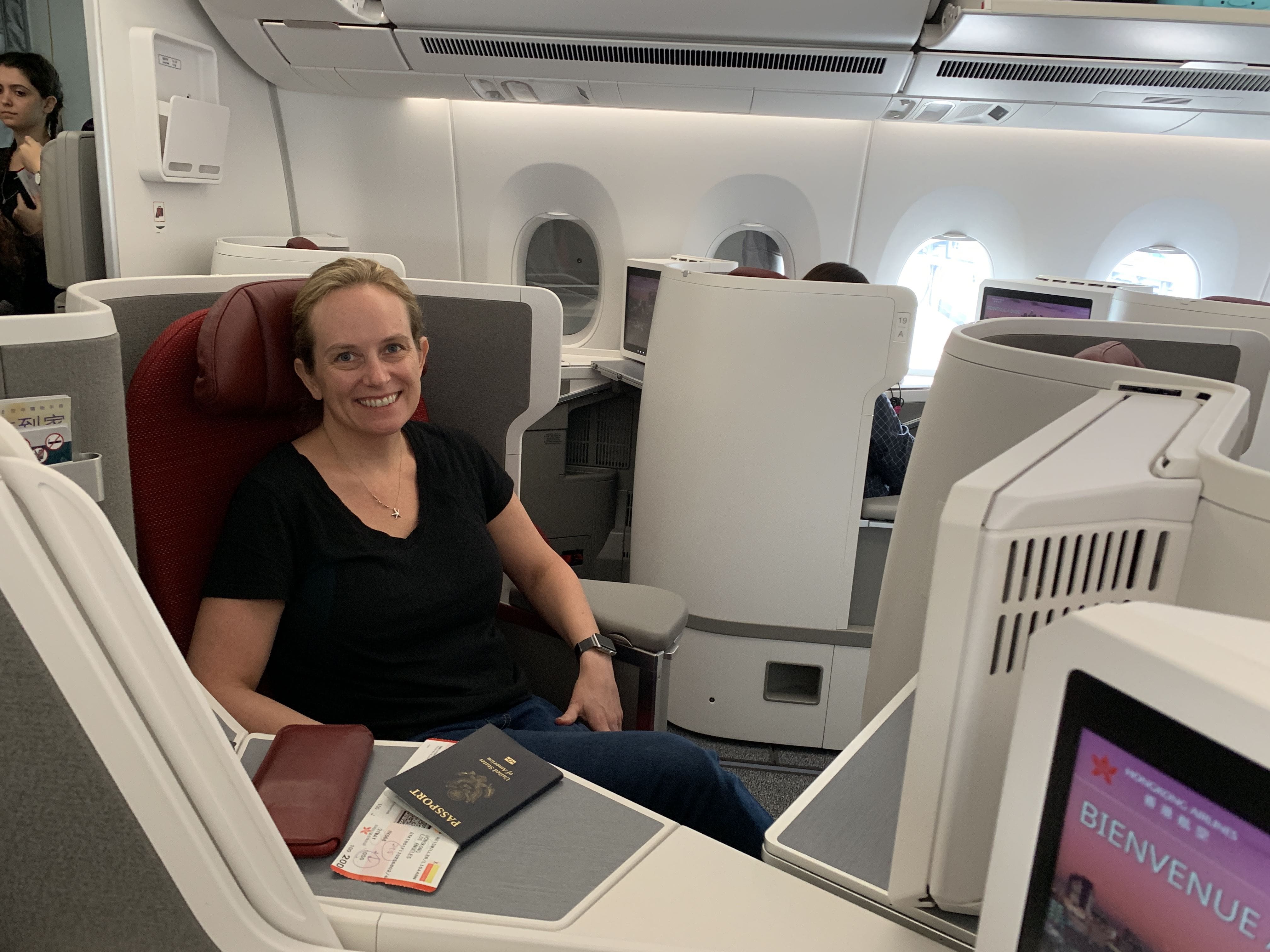
Conclusion: Treating Travel as a Wealth Management Strategy
Securing cheap business class flights is not about luck; it is about the disciplined application of financial principles to the travel industry. By treating points as a strategic asset, exploiting market arbitrage, and maximizing corporate tax advantages, the “cost” of luxury travel is significantly mitigated.
In the world of personal finance, we often talk about the importance of “lifestyle design.” Being able to traverse the globe in comfort while maintaining a lean travel budget is the ultimate expression of that philosophy. Whether you are a solo entrepreneur looking to minimize overhead or a corporate leader looking to maximize your team’s efficiency, mastering the economics of the premium cabin is a high-value skill that pays dividends in both comfort and capital.
aViewFromTheCave is a participant in the Amazon Services LLC Associates Program, an affiliate advertising program designed to provide a means for sites to earn advertising fees by advertising and linking to Amazon.com. Amazon, the Amazon logo, AmazonSupply, and the AmazonSupply logo are trademarks of Amazon.com, Inc. or its affiliates. As an Amazon Associate we earn affiliate commissions from qualifying purchases.