
In the evolving landscape of fintech, the lines between peer-to-peer (P2P) payment platforms and traditional banking institutions have blurred significantly. Cash App, originally launched as Square Cash, has transformed from a simple tool for splitting dinner bills into a robust financial ecosystem. One of its most pivotal features for personal finance management is “Cash App Borrow.” This feature allows eligible users to access short-term micro-loans, providing a digital safety net for those facing unexpected expenses. However, navigating the nuances of digital lending requires a keen understanding of the terms, the underlying financial mechanics, and the strategic implications for one’s overall financial health.
Understanding the Cash App Borrow Ecosystem
Cash App Borrow is not a universal feature available to every user upon registration. It is a targeted financial product designed for users who demonstrate a consistent history with the platform. Unlike a traditional bank loan that might require a lengthy application and a hard credit pull, Cash App utilizes its own internal data to determine creditworthiness.
What is Cash App Borrow?
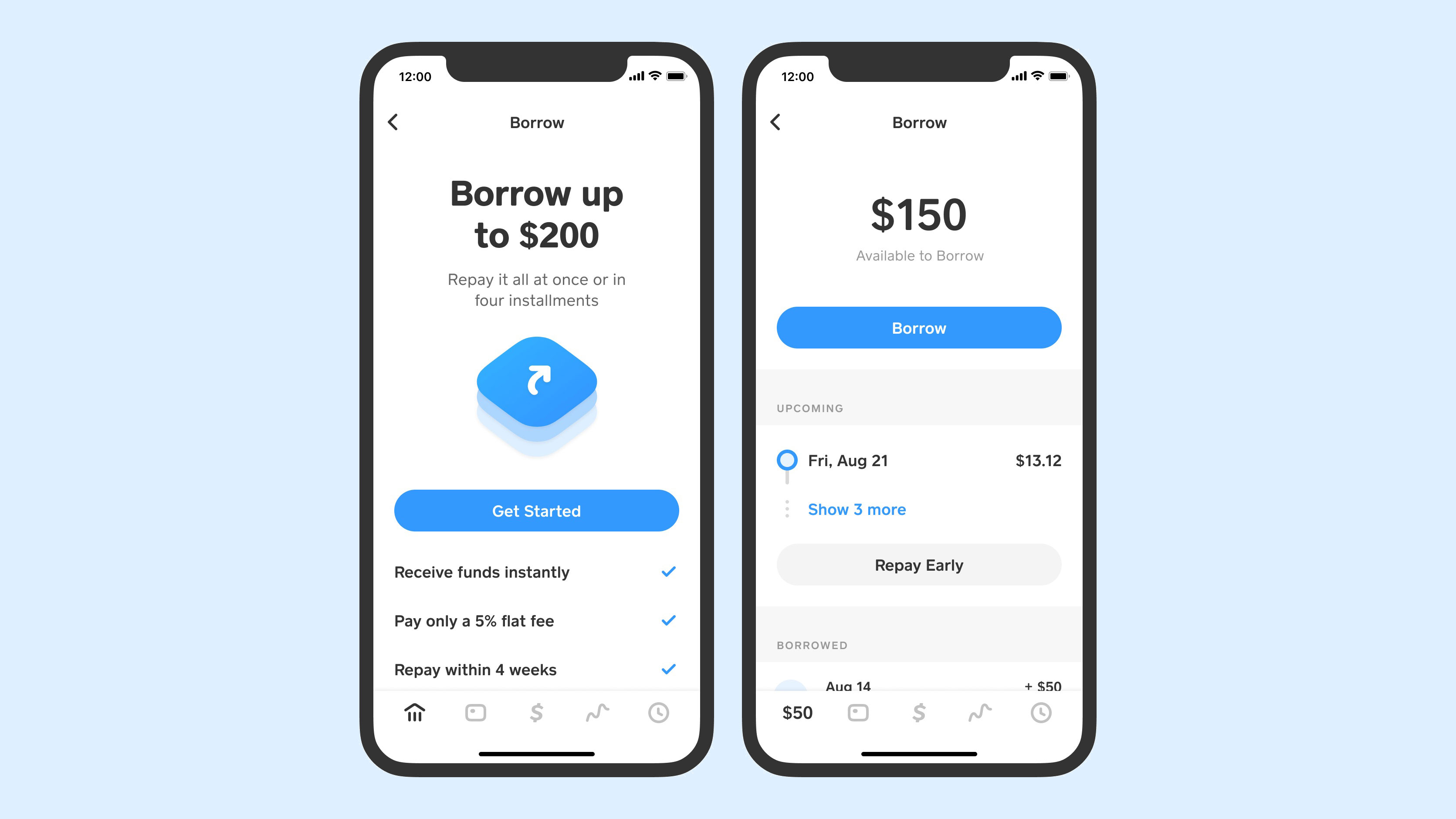
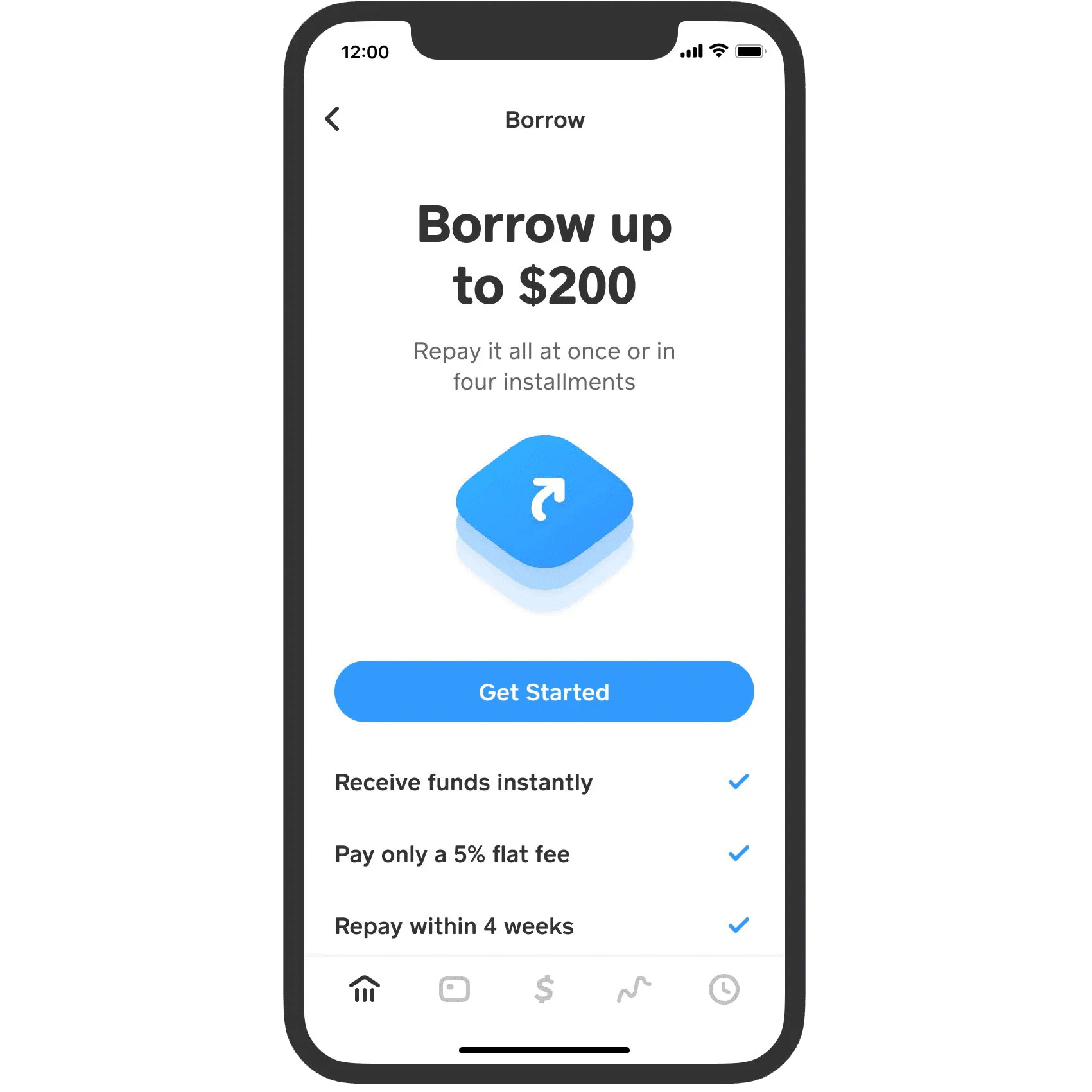
At its core, Cash App Borrow is a short-term lending feature that allows users to borrow small amounts of money—typically ranging from $20 to $200. These loans are designed to be repaid within a short window, usually four weeks. For many, this serves as a more affordable and accessible alternative to traditional payday loans, which are notorious for predatory interest rates and complex terms. Cash App positions this tool as “bridge” financing—money to cover a gap until the next paycheck arrives.
Eligibility Requirements and the “Hidden” Algorithm
The primary challenge for many users is that the “Borrow” button does not appear by default. Eligibility is determined by a proprietary algorithm that looks at several financial factors. While Cash App is not entirely transparent about the exact weight of each factor, several key metrics are known to influence eligibility:
- Account Activity: Users who frequently use their Cash Card and engage in P2P transactions are seen as more active and reliable.
- Direct Deposits: This is arguably the most significant factor. Having a recurring paycheck (at least $300 per month) deposited directly into Cash App signals to the platform that the user has a steady income stream to facilitate repayment.
- Credit History: While a hard credit pull is rare for these small amounts, Cash App may perform a soft credit check that does not impact your score but provides them with a snapshot of your financial reliability.
Why Some Users Don’t See the Feature
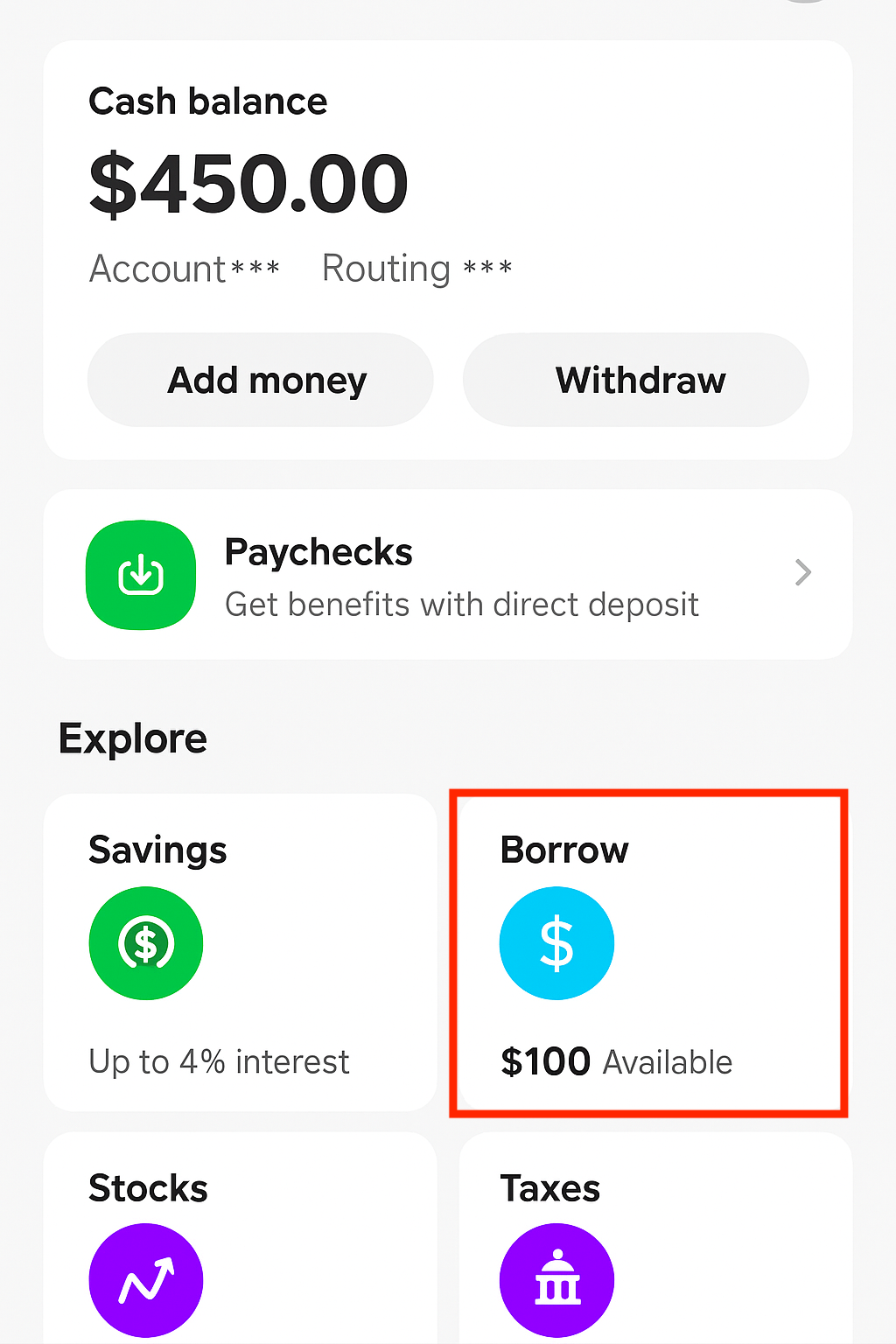
If you find that the “Borrow” option is missing from your “Banking” tab, it is likely due to a lack of sufficient data or a failure to meet the geographic requirements. Currently, Cash App Borrow is only available in certain U.S. states. Furthermore, if your account is unverified or lacks a linked debit card and a history of deposits, the system will categorize you as a higher-risk user and withhold the lending feature until a more robust financial footprint is established.
The Step-by-Step Process to Accessing Funds
Once a user is deemed eligible, the process of securing a loan is remarkably streamlined, reflecting the efficiency of modern fintech. However, the ease of access should not be mistaken for a lack of consequence; these are legal financial obligations that must be managed with professional diligence.
How to Check Your Eligibility
To find out if you have access to this liquidity, open the Cash App and tap on the “Money” or “Banking” icon (usually represented by a dollar sign or a bank building) on the bottom left of the home screen. Scroll through the list of features. If you see the word “Borrow,” you are eligible. If the section is absent, your account currently does not meet the criteria, and you will need to increase your app usage or set up direct deposits to unlock it in the future.
Navigating the Borrow Interface
Upon clicking “Borrow,” the app will display your maximum borrowing limit. It is important to note that you do not have to borrow the full amount. Financial experts suggest only taking what is strictly necessary to cover the immediate need. The interface will then prompt you to select a repayment plan. You can choose to pay it back in a lump sum or in weekly installments. This flexibility is a hallmark of user-centric financial design, allowing individuals to align their repayments with their specific cash flow cycles.
Setting Up Your Repayment Plan
Repayment is typically automated. Cash App will ask for permission to “Auto-pay” the loan from your Cash App balance or linked debit card on the due date. While you can opt for manual repayments, auto-pay is recommended to avoid the risk of forgetting a deadline. Before finalizing, the app provides a clear breakdown of the total amount due, including the flat fee, ensuring that there are no hidden costs before you “Accept” the funds.
Financial Terms, Interest Rates, and Costs
In the realm of personal finance, the cost of capital is the most critical metric. Cash App Borrow is transparent about its fees, but users must translate these fees into annual percentage rates (APR) to understand the true cost compared to other financial products.
Decoding the 5% Flat Fee
Cash App charges a flat fee of 5% on the principal amount borrowed. For example, if you borrow $100, you will owe $105 at the end of the term. On the surface, 5% sounds like a bargain compared to credit card interest rates. However, because this fee is applied to a loan that lasts only four weeks, the effective APR is significantly higher. Mathematically, a 5% fee over a one-month period translates to an APR of roughly 60%. While this is much lower than the 300-400% APR often found in payday loans, it is still a high-cost form of debt.
Understanding the APR and Grace Periods
The “grace period” in Cash App Borrow is a vital component of its consumer-friendly approach. If you are unable to pay the loan back by the original due date, Cash App typically offers an additional one-week grace period. During this week, no additional interest or late fees are accrued. This buffer is essential for users who might experience a slight delay in their paycheck, providing a level of forgiveness rarely found in the traditional banking sector.
Late Fees and the Impact of Non-Payment
If the loan remains unpaid after the grace period ends, a 1.25% non-compounding late fee is added weekly to the balance. While 1.25% may seem negligible, it can quickly erode your financial standing if left unaddressed. Furthermore, persistent non-payment can lead to the suspension of your Cash App account and the loss of access to the Borrow feature indefinitely. While Cash App generally does not report these small micro-loans to credit bureaus like Experian or TransUnion, they reserve the right to do so for delinquent accounts, which could negatively impact your credit score.
Strategic Use of Cash App Borrow for Financial Health
Using micro-loans should be a tactical decision, not a habitual one. In a professional financial strategy, debt is a tool to be used sparingly and with a clear exit strategy.
Comparing Borrow to Traditional Payday Loans
When compared to traditional payday lending storefronts, Cash App Borrow is a superior financial tool. It lacks the aggressive collection tactics, the exorbitant 400%+ APRs, and the predatory “rollover” fees that keep borrowers in a cycle of poverty. For a user who needs $50 to avoid a bank overdraft fee (which can often be $35 per occurrence), paying a $2.50 fee (5% of $50) on Cash App is a highly rational and cost-effective financial move.
Impact on Your Credit Score
As mentioned, Cash App Borrow primarily operates within its own ecosystem. For many users, this is an advantage because it allows them to access credit without a “hard inquiry,” which can temporarily lower a credit score. However, this also means that successfully paying back a Cash App loan does not necessarily help you build credit in the way a secured credit card or a credit-builder loan would. It is a tool for liquidity, not for credit optimization.
Using Borrow as a Bridge, Not a Habit
The danger of fintech convenience is the ease with which one can fall into a cycle of “borrowing from Peter to pay Paul.” If a user finds themselves using the Borrow feature every single month, it is a clear indicator of a structural budget deficit. In such cases, the professional recommendation is to use the Borrow feature only as an emergency bridge while simultaneously auditing one’s monthly expenses to build an emergency fund that eventually makes micro-loans unnecessary.
Optimizing Your Cash App Account for Future Lending
For those who do not yet have access to the Borrow feature but anticipate needing it for future financial flexibility, there are proactive steps to take to “season” the account.
The Role of Direct Deposits
The single most effective way to unlock financial features on Cash App is to utilize its banking routing and account numbers. By directing even a portion of your payroll to Cash App, you provide the platform with verifiable evidence of income. This reduces the platform’s perceived risk and almost always leads to an increase in borrowing limits and feature availability.
Spending Habits and App Activity
Cash App rewards loyalty. Using the Cash Card for daily purchases, such as groceries or fuel, creates a transaction history that the algorithm analyzes. A user who maintains a consistent balance and uses the app for diverse purposes—buying Bitcoin, investing in fractional stocks, or sending money to family—is viewed as a “power user” and is prioritized for new financial products.
Managing Security and Account Verifications
Finally, ensure your account is fully verified. This includes providing your full legal name, the last four digits of your Social Security Number, and a valid government ID. A verified account is a prerequisite for almost all lending features. Furthermore, enabling two-factor authentication (2FA) and biometric locks not only protects your funds but also signals to the platform that you are a responsible user who takes digital security seriously.
In conclusion, Cash App Borrow represents a significant shift in how personal finance is handled in the digital age. By providing a low-friction, relatively low-cost way to access emergency funds, it empowers users to manage short-term cash flow hurdles without resorting to more predatory options. However, like any financial tool, it must be used with a clear understanding of the costs and a disciplined approach to repayment. By following the guidelines outlined in this guide, users can leverage Cash App Borrow to maintain their financial stability and navigate the complexities of modern liquidity management.
aViewFromTheCave is a participant in the Amazon Services LLC Associates Program, an affiliate advertising program designed to provide a means for sites to earn advertising fees by advertising and linking to Amazon.com. Amazon, the Amazon logo, AmazonSupply, and the AmazonSupply logo are trademarks of Amazon.com, Inc. or its affiliates. As an Amazon Associate we earn affiliate commissions from qualifying purchases.