
The evolution of the global financial landscape has brought digital assets from the fringes of experimental technology to the forefront of modern investment portfolios. As Bitcoin continues to gain institutional acceptance and matures as a recognized “store of value,” the question for the individual investor has shifted from “if” they should buy, to “how” they should store it. Acquiring a Bitcoin wallet is not merely a technical necessity; it is a fundamental step in personal financial management, representing the transition from traditional banking dependence to individual financial sovereignty.

In the world of cryptocurrency, the wallet is the bridge between your capital and the decentralized network. Unlike a physical wallet that holds paper currency, a Bitcoin wallet stores the digital credentials—known as private keys—that allow you to access and move your funds on the blockchain. Understanding how to select, set up, and manage these tools is critical for anyone looking to integrate digital assets into their broader financial strategy.
The Financial Philosophy of Self-Custody
Before diving into the mechanics of obtaining a wallet, an investor must understand the concept of custody. In traditional finance, we entrust banks, brokerages, and custodians with our assets. These institutions provide security, but they also introduce counterparty risk. If a bank fails or freezes an account, the individual’s access to their wealth is compromised.
Bitcoin was designed to eliminate this middleman. The industry mantra, “Not your keys, not your coins,” serves as a stark reminder of this reality. When you keep your Bitcoin on a centralized exchange, you do not technically own the Bitcoin; you own a claim against the exchange for that amount. To truly own the asset as a hedge against systemic risk, you must utilize a private wallet where you, and only you, hold the private keys.
The Role of Private and Public Keys
To manage a Bitcoin wallet effectively as a financial tool, one must distinguish between the public key and the private key. The public key is comparable to an IBAN or a bank account number; it is what you share with others to receive funds. The private key, however, is your digital signature and authorization. It is the equivalent of the combination to a vault or the PIN to a high-limit credit card. Financial security in the digital age is defined by how well you protect this private key.
Evaluating Counterparty Risk
For the casual investor, the convenience of an exchange-based “custodial” wallet is often tempting. However, from a professional financial perspective, this exposes the investor to the “all-eggs-in-one-basket” syndrome. By moving assets to a self-custodial wallet, you mitigate the risk of exchange hacks, regulatory freezes, or corporate insolvency, thereby securing your net worth against external institutional failures.
Categorizing Wallets by Investment Horizon
Choosing the right Bitcoin wallet depends heavily on your investment goals, the size of your portfolio, and your liquidity needs. Financial tools are never “one size fits all,” and Bitcoin wallets are no exception.
Hot Wallets: For Liquidity and Active Management
Hot wallets are software applications connected to the internet. These are ideal for individuals who use Bitcoin for frequent transactions, online income, or active trading.
-
Mobile Wallets: These apps are designed for convenience, allowing you to scan QR codes and send payments on the go. They are the “checking accounts” of the crypto world.
-
Desktop Wallets: These offer more robust features for tracking portfolio performance and managing multiple addresses. They are suitable for users who do most of their financial planning from a home office.
While hot wallets offer high liquidity, their constant connection to the internet makes them susceptible to malware and phishing attacks. For significant portions of your wealth, they should only be used as a gateway, not a long-term storage solution.
Cold Wallets: The “Savings Account” of Digital Gold
Cold storage refers to wallets that are kept offline, completely disconnected from the internet. This is the gold standard for long-term investing and wealth preservation.
-
Hardware Wallets: These are physical devices, often resembling USB sticks, that store private keys in a secure offline environment. Even when plugged into a computer, the keys never leave the device. For anyone holding more than a few hundred dollars in Bitcoin, a hardware wallet is an essential investment in financial security.
-
Paper Wallets: Though becoming less common due to the rise of hardware options, paper wallets involve printing your keys on a physical medium. While secure from hackers, they are vulnerable to physical damage like fire or water.
Step-by-Step Guide to Setting Up Your Wallet
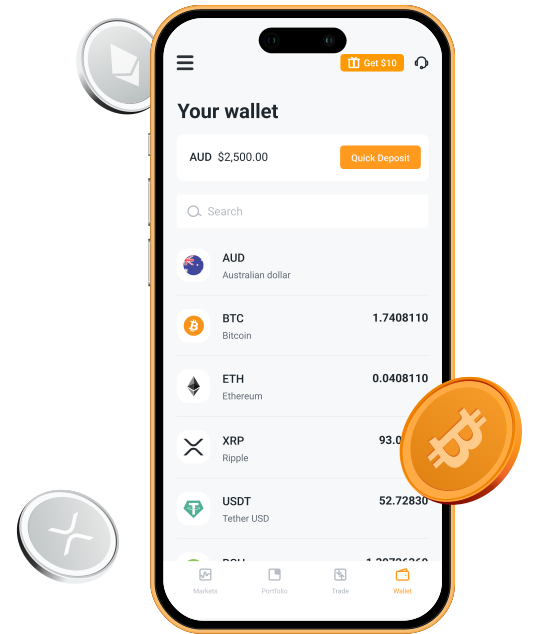
The process of getting a Bitcoin wallet is straightforward, but it requires a disciplined approach to ensure that no security gaps are left open.
Step 1: Selecting a Reputable Provider
In the money niche, reputation is everything. When choosing a software wallet (like BlueWallet or Electrum) or a hardware wallet (like Ledger or Trezor), always download the software directly from the manufacturer’s official website or official app stores. Never purchase hardware wallets from third-party resellers like eBay, as they may have been tampered with to steal funds.
Step 2: The Generation of the Seed Phrase
When you initialize your wallet, you will be presented with a “Seed Phrase”—typically 12 to 24 random words. This phrase is the most important piece of financial data you will ever own. It is a human-readable representation of your private key. If your phone breaks or your hardware wallet is lost, this phrase allows you to recreate your wallet and recover your funds on any device.
Step 3: Physical Security of the Recovery Phrase
In personal finance, we are taught to keep titles to property and insurance policies in safe deposit boxes. Your seed phrase requires the same level of care.
-
Never take a photo of it.
-
Never type it into a cloud-based note-taking app.
-
Never store it in an email draft.
Instead, write it down on physical paper or, for maximum durability, etch it into a stainless steel backup plate. Store this in a fireproof safe or a secure location known only to you and your trusted heirs.
Integrating Bitcoin into Your Financial Strategy
Once you have secured a wallet, it becomes a functional part of your broader financial ecosystem. Effective management of this tool involves more than just holding; it requires strategic oversight.
Portfolio Allocation and Tracking
Modern financial tools allow you to link your Bitcoin wallet addresses to portfolio trackers. This enables you to see your digital assets alongside your stocks, bonds, and real estate. However, from a privacy and security standpoint, many investors prefer “Watch-Only” wallets. These allow you to monitor your balance and see incoming transactions without needing to load your private keys onto your daily-use devices.
Dollar-Cost Averaging (DCA) Directly to Your Wallet
A disciplined investment strategy often involves Dollar-Cost Averaging—buying a set amount of Bitcoin at regular intervals regardless of price. Many modern financial apps now allow you to set up recurring purchases that automatically withdraw from your bank account and send the Bitcoin directly to your self-custody wallet. This removes the “emotional” element of trading and ensures you are consistently building wealth in a secure environment.
Tax Implications and Record Keeping
From a business finance perspective, every movement of Bitcoin can be a taxable event depending on your jurisdiction. When you move funds from an exchange to your wallet, it is generally a non-taxable transfer. However, the “cost basis” of your purchase must be tracked. Maintaining a disciplined record of your wallet addresses and transaction history is vital for accurate tax reporting and avoiding legal complications during an audit.
Advanced Security Protocols for Wealth Preservation
As your digital wealth grows, you may find that a single hardware wallet is no longer sufficient for your risk tolerance. High-net-worth individuals and business entities often employ more sophisticated methods to secure their capital.
Multi-Signature (Multi-sig) Setups
A multi-signature wallet acts like a corporate bank account that requires the signatures of multiple board members to authorize a wire transfer. In a 2-of-3 multi-sig setup, you might have three different hardware wallets stored in three different geographical locations. To spend the Bitcoin, you would need at least two of those devices. This eliminates the “single point of failure.” If one wallet is stolen or one seed phrase is lost, your funds remain secure.
Estate Planning for Digital Assets
One of the most overlooked aspects of personal finance is what happens to digital assets upon the owner’s passing. Unlike a traditional bank account, Bitcoin cannot be “recovered” by a lawyer or a bank if the keys are lost. Part of getting a Bitcoin wallet is creating a “Dead Man’s Switch” or an inheritance plan. This involves ensuring that your beneficiaries know the location of your recovery phrases and have the technical instructions necessary to access the funds, ensuring your legacy is preserved for the next generation.
By viewing a Bitcoin wallet not just as a piece of software, but as a critical instrument of financial empowerment, investors can navigate the digital asset space with confidence. The transition to self-custody is the ultimate expression of financial responsibility, placing the power of the bank directly into the hands of the individual.
aViewFromTheCave is a participant in the Amazon Services LLC Associates Program, an affiliate advertising program designed to provide a means for sites to earn advertising fees by advertising and linking to Amazon.com. Amazon, the Amazon logo, AmazonSupply, and the AmazonSupply logo are trademarks of Amazon.com, Inc. or its affiliates. As an Amazon Associate we earn affiliate commissions from qualifying purchases.