
In the intricate world of finance, numbers are the language, and percentages are one of its most ubiquitous dialects. From calculating a discount on a new purchase to understanding the interest accrued on a loan, assessing investment returns, or dissecting a business’s profit margins, the ability to accurately convert a percentage into a concrete monetary amount is not just a useful skill—it’s an absolute necessity. Mastering this fundamental concept empowers individuals and businesses alike to make informed decisions, navigate financial landscapes with confidence, and avoid costly misunderstandings.
This guide will demystify the process of deriving an amount from a given percentage, grounding it firmly within the context of various financial applications. We’ll explore the underlying principles, walk through practical calculation methods, delve into real-world scenarios across personal and business finance, and highlight common pitfalls to ensure your financial computations are always precise and reliable.
The Fundamentals: Understanding Percentages and Their Role
Before we dive into the mechanics of calculation, it’s crucial to establish a solid understanding of what percentages represent and why they are so pivotal in financial discourse.
What is a Percentage?
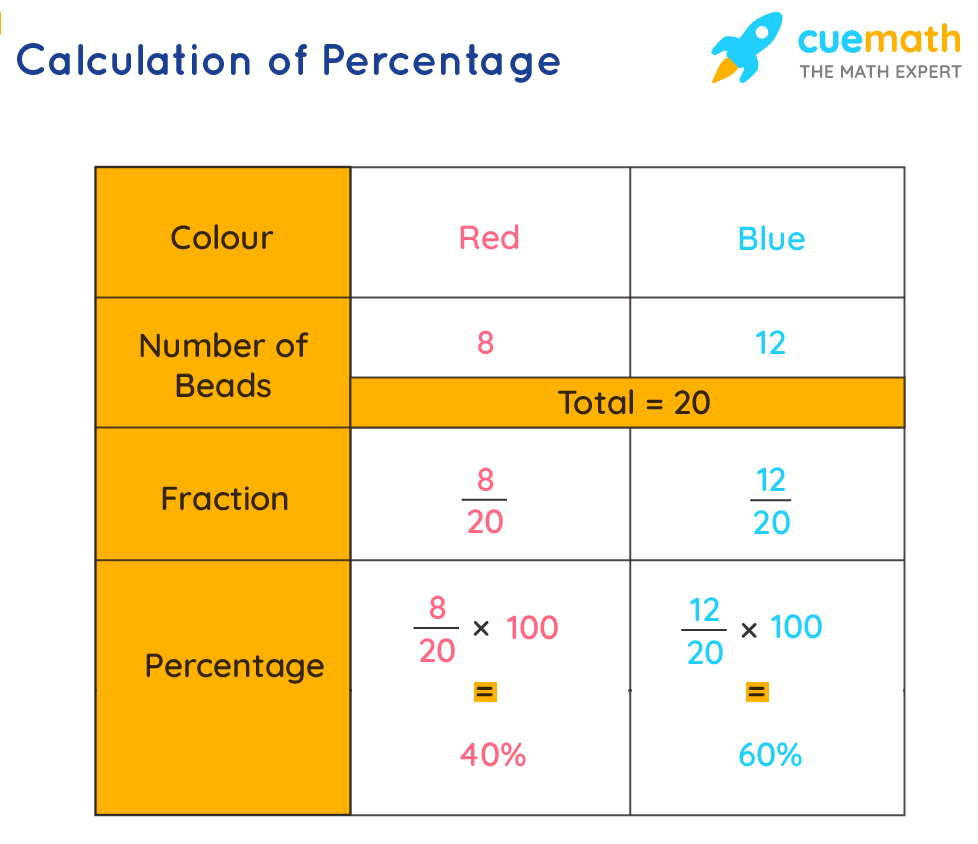
At its core, a percentage is a way of expressing a number as a fraction of 100. The word “percent” literally means “per hundred” or “out of one hundred.” It’s denoted by the symbol “%”. For example, “25%” means 25 out of 100, or 25/100.
Percentages provide a standardized way to compare parts of different wholes. Imagine comparing two investments: one returned $50 on a $1,000 principal, and another returned $200 on a $5,000 principal. Without percentages, it’s not immediately clear which performed better relative to its initial capital. Convert them to percentages (5% and 4% respectively), and the comparison becomes instantly clear.
Why Percentages Matter in Finance
Percentages are the universal language of financial comparison and performance. They allow us to:
-
Standardize Comparisons: As illustrated above, percentages normalize figures, making it easy to compare performance, growth, or decline across different scales.
-
Simplify Complex Data: Instead of stating “the company made $500,000 profit on $5,000,000 in sales,” saying “the company had a 10% profit margin” is more concise and equally informative for comparison.
-
Communicate Financial Information Clearly: Interest rates, tax rates, inflation rates, discount rates, commission rates—all are expressed as percentages because they convey proportional impact.
-
Project Future Values: Understanding percentage growth or depreciation is critical for financial forecasting, whether it’s projecting investment returns or estimating future debt burdens.
Without a firm grasp of percentage calculations, individuals risk misinterpreting financial statements, overpaying on taxes or loans, missing out on savings, or making suboptimal investment choices.
Step-by-Step: Calculating the Amount from a Percentage
The process of converting a percentage back into an absolute amount is straightforward once you understand the underlying relationship. There are two primary methods, both yielding the same result, but understanding both can deepen your comprehension.
Method 1: The Decimal Conversion Approach (Most Common)
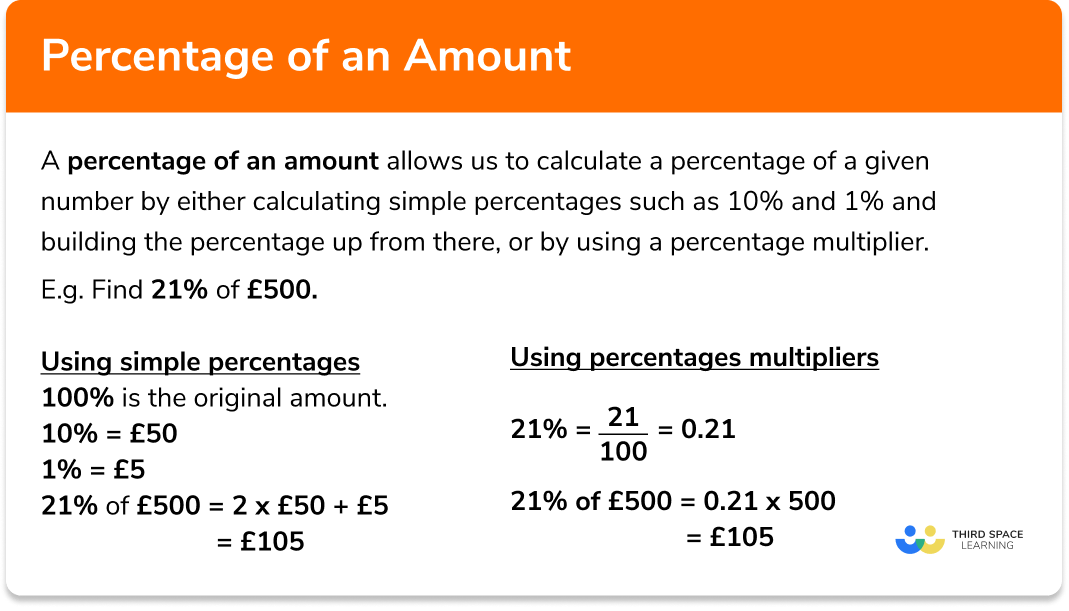
This is the most widely used and intuitive method for financial calculations. It involves converting the percentage into its decimal equivalent and then multiplying it by the total amount (the “whole” or “base” from which the percentage is taken).
Steps:
-
Convert the Percentage to a Decimal: Divide the percentage by 100. For example, 25% becomes 0.25 (25 ÷ 100).
-
Multiply by the Total Amount: Multiply the decimal equivalent by the total value or base figure.
Formula: Amount = (Percentage / 100) × Total Value
Examples:
-
Discount: You see a shirt priced at $80 with a 15% discount.
-
Convert 15% to decimal: 15 ÷ 100 = 0.15
-
Calculate the discount amount: 0.15 × $80 = $12
-
The discount is $12, so the shirt costs $80 – $12 = $68.
-
-
Interest: You have a $5,000 loan with an annual interest rate of 4%.
-
Convert 4% to decimal: 4 ÷ 100 = 0.04
-
Calculate the annual interest amount: 0.04 × $5,000 = $200
-
The annual interest is $200.
-
Method 2: The Fractional Approach
While less common for direct calculation, understanding the fractional approach reinforces the meaning of a percentage.
Steps:
-
Express the Percentage as a Fraction of 100: Write the percentage as a numerator over a denominator of 100. For example, 25% becomes 25/100.
-
Multiply by the Total Amount: Multiply this fraction by the total value. You can simplify the fraction first, but it’s not strictly necessary.
Formula: Amount = (Percentage / 100) × Total Value

Examples:
-
Commission: A salesperson earns a 10% commission on a $1,500 sale.
-
Express 10% as a fraction: 10/100
-
Calculate the commission amount: (10/100) × $1,500 = (1/10) × $1,500 = $150
-
The commission is $150.
-
-
Tax: A sales tax of 7% on an item costing $300.
-
Express 7% as a fraction: 7/100
-
Calculate the tax amount: (7/100) × $300 = $21
-
The sales tax is $21.
-
Both methods are mathematically equivalent. The decimal conversion approach is generally preferred for its directness and ease of use with calculators and spreadsheets.
Real-World Financial Applications
The ability to calculate an amount from a percentage isn’t an academic exercise; it’s a practical skill applied daily across all facets of financial management.
Personal Finance: Budgeting, Savings, Loans
-
Budgeting: Understanding how much of your income goes towards various categories (e.g., 30% for housing, 15% for food). If your monthly net income is $4,000, then 30% for housing means 0.30 * $4,000 = $1,200.
-
Savings Goals: If you aim to save 10% of your $50,000 annual salary, you know you need to put aside 0.10 * $50,000 = $5,000 each year.
-
Loans and Debt: Calculating monthly interest on credit card balances or car loans. If your credit card balance is $2,000 with an 18% annual interest rate, and you’re calculating monthly interest, you’d first find the monthly rate (18% / 12 months = 1.5%), then apply it: 0.015 * $2,000 = $30 in monthly interest.
-
Retirement Contributions: Many employers match a percentage of your 401(k) contributions. Knowing your salary allows you to calculate the precise amount of the match.
Investing: Returns, Portfolio Allocation, Risk Assessment
-
Investment Returns: Calculating the actual dollar gain or loss from a percentage return. If your investment portfolio of $10,000 grew by 8% last year, your gain was 0.08 * $10,000 = $800.
-
Dividend Yield: Understanding the cash dividend per share. A stock priced at $100 with a 3% dividend yield means it pays 0.03 * $100 = $3 per share annually.
-
Portfolio Allocation: Maintaining target asset allocations. If you want 60% of your $50,000 portfolio in stocks, that means 0.60 * $50,000 = $30,000 should be in stocks.
-
Expense Ratios: Mutual funds and ETFs charge expense ratios as a percentage of assets. A 0.50% expense ratio on a $20,000 investment means you pay 0.0050 * $20,000 = $100 in fees annually.
Business Finance: Profit Margins, Sales Growth, Discounts
-
Profit Margins: Calculating the actual profit dollars based on a percentage margin. If a company has $1,000,000 in sales and a 15% net profit margin, its profit is 0.15 * $1,000,000 = $150,000.
-
Sales Growth: Projecting future sales based on a growth percentage. If current sales are $500,000 and expected to grow by 10%, next year’s sales will increase by 0.10 * $500,000 = $50,000, totaling $550,000.
-
Discounts Offered/Received: Businesses constantly calculate the financial impact of trade discounts, early payment discounts, or promotional sales.
-
Commissions: Calculating employee commissions based on sales figures, as shown in previous examples.
-
Payroll Taxes: Businesses calculate various payroll taxes (e.g., FICA) as percentages of employee wages.
Avoiding Common Pitfalls and Enhancing Accuracy
While calculating amounts from percentages seems straightforward, certain mistakes are common. Awareness of these can significantly enhance the accuracy and reliability of your financial computations.
Misinterpreting the “Base” or “Whole”
One of the most frequent errors is applying the percentage to the wrong base number. Always ensure you are clear about what the percentage is of.
-
Example: A price increases by 10%, then decreases by 10%. Does it return to the original price? No.
-
Initial Price: $100
-
Increase by 10%: $100 * 0.10 = $10. New Price = $110.
-
Decrease by 10%: Now, the base is $110, not $100. $110 * 0.10 = $11. Final Price = $110 – $11 = $99.
-
The mistake is often applying the second 10% decrease to the original $100.
-
Always identify the correct “total value” or “whole” that the percentage is being applied to at each step of a multi-stage calculation.
Rounding Errors and Precision
In finance, especially with large sums or sensitive calculations, rounding too early or too aggressively can lead to significant inaccuracies.
-
Best Practice: Perform all calculations with as much precision as possible (many decimal places) and only round the final result to the required number of decimal places (e.g., two for currency).
-
Example: Calculating small interest rates on large balances over many periods. If you round a monthly interest rate like 0.00416667 to 0.0042 prematurely, the cumulative effect over years could be substantial.
Leveraging Financial Tools and Calculators
While understanding the manual process is vital, relying on appropriate tools can improve efficiency and reduce human error, particularly for complex scenarios.
-
Basic Calculators: Most modern calculators have a “%” button, but it’s crucial to understand how your specific calculator handles it. Some interpret
100 + 10%as100 + (10% of 100), while others might do100 + 0.10. Always test it first. -
Spreadsheets (Excel, Google Sheets): These are invaluable. You can input percentages directly (e.g., 10%) and Excel will convert them to decimals for calculations automatically. For example, if cell A1 has 100 and B1 has 15%, the formula
=A1*B1will correctly yield 15. Spreadsheets also allow for complex formulas and error checking. -
Online Financial Calculators: Many websites offer specialized calculators for mortgages, loans, investments, and more, which automate percentage-based calculations.
Familiarity with these tools ensures that even with a strong conceptual understanding, you can execute calculations quickly and accurately.
Conclusion
The ability to extract an amount from a percentage is more than just a mathematical operation; it’s a cornerstone of financial literacy. From the everyday decisions of personal budgeting and smart shopping to the complex analyses in investing and business management, percentages provide the framework for understanding proportional relationships.
By mastering the simple methods of decimal conversion and multiplication, understanding the context of the “base” amount, and utilizing available financial tools, you equip yourself with an indispensable skill. This proficiency not only allows for accurate calculations but fosters greater confidence in interpreting financial data, making sound economic choices, and ultimately, achieving your financial goals. Embrace this fundamental skill, and unlock a clearer understanding of the financial world around you.
aViewFromTheCave is a participant in the Amazon Services LLC Associates Program, an affiliate advertising program designed to provide a means for sites to earn advertising fees by advertising and linking to Amazon.com. Amazon, the Amazon logo, AmazonSupply, and the AmazonSupply logo are trademarks of Amazon.com, Inc. or its affiliates. As an Amazon Associate we earn affiliate commissions from qualifying purchases.