
In an era of fluctuating inflation and rising living costs, the grocery budget has become a focal point for personal finance management. For many households, Whole Foods Market—once colloquially known as “Whole Paycheck”—has transitioned from a high-end luxury to a strategic shopping destination, thanks largely to its integration with Amazon Prime. Since Amazon’s acquisition of the grocery giant in 2017, the financial landscape of organic and high-quality food shopping has shifted. Understanding how to navigate the Amazon Prime Whole Foods discount system is no longer just a perk; it is a fundamental strategy for anyone looking to optimize their household’s monthly cash flow.

The Financial Architecture of the Amazon-Whole Foods Synergy
To effectively leverage the discounts available, one must first understand the financial ecosystem created by the Amazon and Whole Foods partnership. This is not merely a loyalty program; it is a data-driven integration designed to reward high-frequency shoppers and Amazon ecosystem loyalists. By applying a digital-first approach to traditional brick-and-mortar retail, Amazon has created a tiered savings structure that provides tangible ROI on the annual Prime membership fee.
The Prime Membership Value Proposition
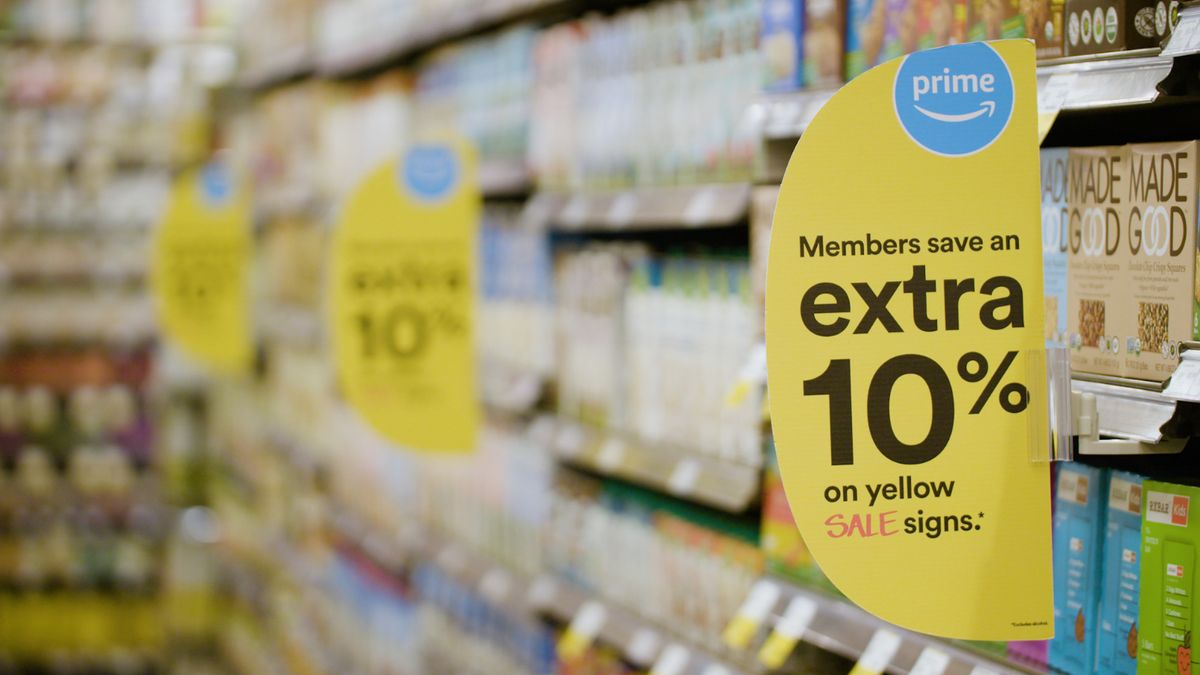
From a personal finance perspective, an Amazon Prime membership should be viewed as an investment rather than an expense. At its current price point, the membership provides a suite of services, but the grocery component is often the most significant “hidden” return. When you factor in the 10% discount on sale items and exclusive “yellow tag” deals, a family spending $400 a month on groceries can potentially recoup the entire cost of a Prime membership in just a few months. This turns the membership into a net-positive financial tool.
Deciphering the Discount Structure
The discount system at Whole Foods is categorized into two primary tiers:
-
The Extra 10% Discount: This applies to items already marked with a yellow sale tag. It is a “sale on top of a sale,” which is one of the most effective ways to lower the price-per-unit on high-quality pantry staples.
-
Prime Member Deals: These are exclusive “blue tag” items that are only discounted for Prime members. These often include high-velocity goods like seasonal produce, meat, and seafood, sometimes offering savings of 20% to 50% off the standard retail price.
Step-by-Step Guide to Activating Your Savings
Achieving these savings requires more than just showing up at the register. There is a technical and procedural setup required to ensure that your Prime identity is recognized at the point of sale. Failing to link these accounts correctly results in “leaving money on the table,” a cardinal sin of personal finance.
Linking Your Accounts for Seamless Integration
The first step is ensuring your Amazon account and Whole Foods profile are synchronized. This is typically handled through the Amazon app or the Whole Foods Market app. From a financial security standpoint, ensuring that your biometric data or secure login is active on these apps is crucial, as they will serve as your digital wallet at the register.
Utilizing the Whole Foods or Amazon App at Checkout
The most common method to claim your discount is by scanning the “In-Store Code” found in either the Amazon or Whole Foods app. At the register, you simply open the app, navigate to the Whole Foods section, and present the QR code to the scanner. This action instantly applies all eligible Prime discounts to your total. For those who prefer a more streamlined approach, linking a credit card to your Prime account allows the system to automatically recognize your membership when you swipe that specific card, though the QR code remains the most reliable method.
Alternative Identification: The Phone Number Method
If you find yourself at the checkout without your smartphone, Whole Foods allows you to use a verified phone number linked to your Amazon account. While this is a convenient backup, it is less secure than the encrypted QR code. From a digital security and financial management perspective, relying on the app is generally preferred to prevent unauthorized use of your account benefits.
Advanced Strategies for Budgeting at Whole Foods
For the savvy financial planner, simply getting the 10% discount is the baseline. To truly maximize the value of the Amazon-Whole Foods partnership, one must look at “stacking” benefits and timing purchases according to market cycles.
Leveraging the Amazon Prime Rewards Visa Card
The most powerful tool in the Whole Foods shopper’s arsenal is the Amazon Prime Rewards Visa Signature Card. This card offers 5% back on all Whole Foods and Amazon purchases for Prime members. In the world of personal finance, a guaranteed 5% return on necessary spending (like groceries) is an elite-tier strategy. When combined with the 10% Prime discount on sale items, your effective savings can reach significant double-digit percentages. This cash back can be funneled back into your brokerage account, used to pay down the balance, or saved for future grocery hauls.
Tracking Seasonal Sales Cycles and Stockpiling
Whole Foods operates on a predictable promotional calendar. High-quality proteins, organic oils, and frozen goods often go on deep discount during specific cycles (e.g., wild-caught salmon in the summer, organic turkeys in November). By using your Prime discount during these deep-sale windows, you can stockpile non-perishable or freezable goods at prices that often beat traditional budget grocers. This “buy low, consume later” approach is a cornerstone of wealthy household management.
Stacking Discounts: Digital Coupons and Store Promos
Occasionally, Whole Foods offers “spend $X, get $Y” promotions, particularly during the holidays or Prime Day events. Smart shoppers align their bulk purchases with these windows. Additionally, the Whole Foods app sometimes features digital coupons that can be stacked with Prime discounts. Understanding the hierarchy of these discounts—where the Prime 10% is calculated after store-wide sales but before taxes—is essential for accurate budget forecasting.
Cost-Benefit Analysis: Is Prime Worth the Grocery Savings?
Any sound financial decision must be backed by a cost-benefit analysis. While the discounts at Whole Foods are enticing, they are only valuable if the cost of the Prime membership does not exceed the savings generated.
Calculating Your Break-Even Point
To determine if the Prime-Whole Foods path is right for your personal finance goals, you must calculate your break-even point. If an annual Prime membership costs $139, and you save an average of $15 per weekly trip through Prime-exclusive deals and the 10% discount, you will break even in roughly nine weeks. For the remaining 43 weeks of the year, your membership is essentially paying you. However, if you only shop at Whole Foods occasionally, or if you primarily buy items that are never on sale, the membership may not be justifiable on grocery savings alone.
Factoring in Delivery and Pickup Efficiency
Time is a non-renewable resource, and in the context of business finance, time is money. Amazon Prime offers free grocery pickup on orders over a certain threshold and delivery for a nominal fee. For busy professionals or entrepreneurs, the ability to order groceries via the app—ensuring that Prime discounts are applied automatically—and avoiding the 60-90 minutes spent in-store is a massive productivity win. This “efficiency dividend” should be factored into the overall value of the Amazon-Whole Foods ecosystem.
The Future of Grocery Tech and Personal Finance
The landscape of grocery shopping is continuing to evolve with the introduction of “Just Walk Out” technology and “Amazon One” palm-scanning payments. These innovations are designed to reduce “friction” at the point of sale. From a psychological and financial standpoint, reducing friction can lead to overspending. Therefore, as you take advantage of the Amazon Prime Whole Foods discount, it is imperative to maintain a disciplined budgeting approach.
Subscription Models and Consumer Behavior
The shift toward subscription-based discounts (like Prime) represents a broader trend in the modern economy. Retailers are willing to offer lower prices in exchange for consistent, predictable data and customer loyalty. As a consumer, your goal is to extract the maximum value from these subscriptions while remaining mindful of the “subscription creep” that can erode your monthly net income.

Final Financial Takeaways
The Amazon Prime Whole Foods discount is a potent tool for anyone looking to optimize their grocery spending without sacrificing food quality. By linking your accounts, utilizing the 5% back credit card, and timing your purchases with blue and yellow tag sales, you can transform Whole Foods from a high-priced retailer into a strategic asset for your personal finances. In the modern economy, being a “smart” shopper requires a blend of technological savvy and traditional budgeting discipline. Mastering the Prime discount is the first step in that journey toward total financial optimization.
aViewFromTheCave is a participant in the Amazon Services LLC Associates Program, an affiliate advertising program designed to provide a means for sites to earn advertising fees by advertising and linking to Amazon.com. Amazon, the Amazon logo, AmazonSupply, and the AmazonSupply logo are trademarks of Amazon.com, Inc. or its affiliates. As an Amazon Associate we earn affiliate commissions from qualifying purchases.