
In the landscape of modern personal finance, managing your money often requires navigating a blend of traditional banking practices and digital solutions. One such enduring requirement, often perplexing for those new to it or accustomed to digital transactions, is the need for a voided check. Whether you’re setting up direct deposit for your new job, establishing automatic bill payments, or linking external financial accounts, a voided check serves as a crucial piece of documentation. For customers of Bank of America, understanding the specific avenues available for obtaining this document, or acceptable alternatives, is key to streamlining your financial operations.

This guide delves into the specifics of acquiring a voided check, or its equivalents, from Bank of America, grounding the discussion in practical financial management. We’ll explore why this seemingly simple document holds such importance, outline the methods to obtain one, and discuss the secure handling of your sensitive financial information.
Understanding the Purpose and Importance of a Voided Check
Before diving into the ‘how-to,’ it’s crucial to grasp the fundamental ‘why.’ A voided check, while seemingly just a discarded piece of paper, is a powerful tool for securely transmitting your bank account details without the risk of it being used for actual payment. It serves as a verifiable record of your routing number and account number, both essential for numerous financial processes.
What Exactly is a Voided Check?
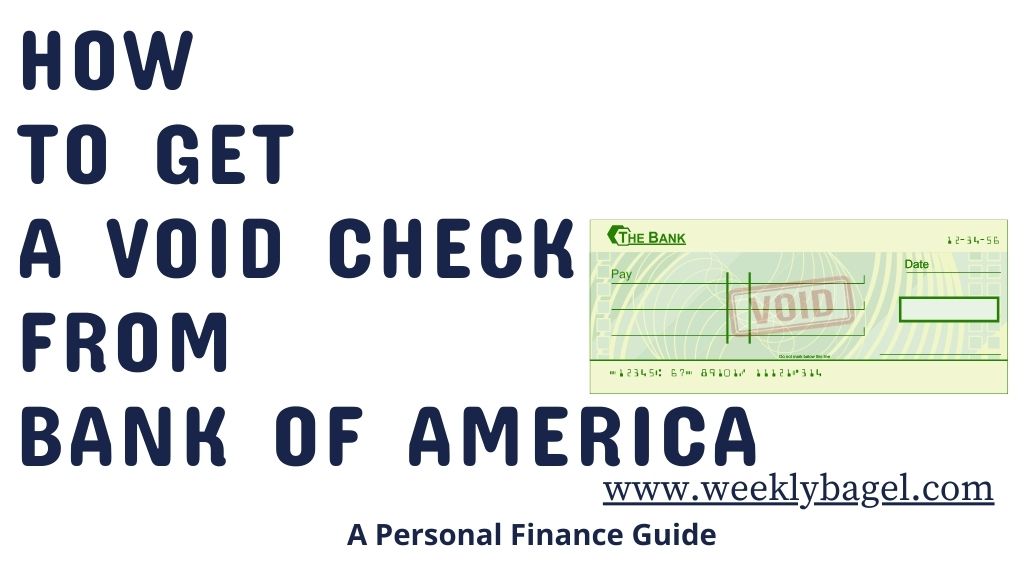
A voided check is a standard check from your checkbook with the word “VOID” written across its front in large, clear letters. The purpose of writing “VOID” is to explicitly invalidate the check, preventing it from being cashed or deposited by anyone. It renders the check unusable for financial transactions but leaves all the printed information intact and legible. This includes the bank’s routing number (a nine-digit code identifying your financial institution) and your individual checking account number. These two pieces of information are the primary reason a voided check is requested.
It’s important to note that a voided check is not the same as a cancelled check. A cancelled check is one that was written, presented for payment, and then processed by the bank, indicating the transaction is complete and the funds have been debursed. A voided check, by contrast, never enters the financial system as a payment instrument.
Common Scenarios Requiring a Voided Check
The instances where you might be asked to provide a voided check are numerous and central to various aspects of personal finance management. Knowing these scenarios helps in anticipating the need and preparing in advance.
Perhaps the most common scenario is setting up direct deposit for your paycheck. Employers require your bank’s routing number and your account number to ensure your earnings are electronically transferred directly into your checking account. This method is far more secure and efficient than physical paychecks. Similarly, establishing direct debit or automatic bill payments for utilities, mortgage, rent, or loan payments often requires a voided check. This authorizes a third party to withdraw funds from your account at regular intervals, ensuring timely payments and avoiding late fees.
Beyond regular income and expenses, voided checks are frequently requested when linking external financial accounts. This could include connecting your checking account to an investment brokerage account, a peer-to-peer payment service, or even another bank account for transfers. Some financial institutions use this as a security measure to verify ownership of the external account. In the realm of business finance or entrepreneurship, setting up merchant accounts or payroll services for a small business also often necessitates a voided check from the business’s operating account. These requirements underscore the voided check’s role as a foundational document for secure electronic money movement.
Why Banks and Employers Request Them
The primary reason banks, employers, and other financial entities request a voided check is for accuracy and verification. The information printed on a physical check—the routing and account numbers—is standardized and less prone to manual transcription errors than if you were to simply write down the numbers. These numbers are machine-readable, reducing the chance of human error during data entry, which can lead to delayed payments or misdirected funds.
Furthermore, a voided check serves as a proof of account ownership. By providing a check that is verifiably linked to your name and bank account, the requesting party gains a level of assurance that the account details belong to you, adding a layer of security against fraud. It’s a simple yet effective mechanism to ensure that funds are directed to, or debited from, the correct and legitimate account holder. This security measure is especially critical when dealing with sensitive financial transactions involving large sums or recurring payments, highlighting its integral role in the broader ecosystem of personal and business finance.
Traditional Methods for Obtaining a Voided Check from Your Checkbook
For Bank of America customers who still utilize a physical checkbook, obtaining a voided check is a straightforward process. This method relies on the tangible presence of checks and is often the quickest solution if a checkbook is readily available.
The Step-by-Step Voiding Process
If you have a Bank of America checkbook handy, follow these simple steps to void a check:
- Select a Check: Choose one of your blank, unused checks from your Bank of America checkbook. It’s generally advisable to pick one from the back of the checkbook, or at least not the very next check you might need for an actual payment, just in case.
- Locate a Pen: Grab a pen with dark ink (blue or black is best) that won’t smudge easily.
- Write “VOID” Clearly: In large, legible letters, write the word “VOID” across the entire front of the check. Ensure that the word covers the areas where the payee’s name, the amount, and the signature would typically go. The goal is to make it absolutely clear that this check cannot be used for payment. Some people prefer to write “VOID” in multiple places (e.g., across the date line, payee line, and amount box) to leave no ambiguity. Make sure you do not obscure the pre-printed routing number (the first set of numbers at the bottom left) or your account number (the second set of numbers) as these are the crucial pieces of information being requested.
- Do Not Sign It: Under no circumstances should you sign a voided check. Signing it, even if voided, could potentially create ambiguity or a security risk. A voided check should only contain the word “VOID” and the pre-printed bank information.
- Record It: Make a note in your checkbook register that this check number has been voided and for what purpose (e.g., “Voided for direct deposit setup”). This helps you keep accurate records and prevents confusion later.
- Make a Copy (Optional but Recommended): Before submitting the voided check, consider making a photocopy or taking a digital photo of it for your own records. This provides proof that you provided the document and ensures you have the routing and account numbers readily accessible for future reference if needed.
Best Practices for Security and Record-Keeping
Even though a voided check cannot be cashed, it still contains sensitive financial information. Therefore, handling it with care is paramount.
- Limit Distribution: Only provide a voided check to trusted entities that genuinely require it, such as your employer’s HR department, a legitimate financial institution, or a recognized service provider. Be wary of sharing it with unknown parties or in response to unsolicited requests.
- Secure Storage: If you make a copy for your records, store it securely, perhaps with other important financial documents. Avoid leaving copies or the original voided check in easily accessible public places.
- Digital Alternatives for Storage: If you digitize your copy, ensure it’s saved in a secure, encrypted location on your computer or cloud storage, rather than an easily accessible folder. Password-protecting documents adds an extra layer of security.
- Shred After Use (if applicable): Once the voided check has served its purpose and you are confident the information has been correctly used (e.g., direct deposit confirmed), consider shredding any physical copies you retained. This prevents the sensitive information from falling into the wrong hands.
- Monitor Your Account: After providing your bank details, it’s always good practice to monitor your Bank of America account statements and online activity for any unusual or unauthorized transactions for a few weeks. While rare with a voided check, vigilance is a cornerstone of personal finance security.
When a Physical Checkbook is Your Only Option
While digital alternatives are increasingly common, there are still scenarios where a physical voided check is explicitly requested and accepted, and perhaps your most convenient option. This often applies to older systems, smaller businesses, or specific governmental agencies that have not fully transitioned to digital verification methods. For instance, some landlords, small local businesses, or even certain government benefit programs might prefer or require a physical voided check over digital forms. If you find yourself in a situation where a physical voided check is the only acceptable document, having a Bank of America checkbook readily available is the most direct path. If you do not have a checkbook, you will need to explore ordering one through Bank of America or using the alternative methods discussed below.
Leveraging Bank of America’s Digital and Branch Services for Alternatives
What if you don’t have a checkbook? Or perhaps you prefer not to use one due to concerns about paper waste or security. Fortunately, Bank of America, like most major financial institutions, offers several secure alternatives to a physical voided check, leveraging both digital platforms and in-person branch services. These alternatives are often more convenient and equally effective for most purposes.
Direct Deposit Forms: A Digital Solution
For the common purpose of setting up direct deposit, many employers now accept a dedicated “Direct Deposit Form” instead of a voided check. Bank of America often provides these forms, pre-filled with your specific account information, directly through their online banking platform.
To access this:
- Log in to Bank of America Online Banking: Visit the Bank of America website or open their mobile app and log in to your checking account.
- Navigate to Account Services: Look for a section related to “Account Services,” “Information & Settings,” or “Documents” within your account dashboard.
- Find Direct Deposit Information: Within this section, there is often a dedicated link or option to “Set Up Direct Deposit” or “View Direct Deposit Information.” Clicking this may lead you to a printable form or a page displaying your routing and account numbers.
- Print or Download: Bank of America may allow you to download a pre-filled PDF document that includes your name, account number, and the bank’s routing number. This document is specifically designed to fulfill direct deposit requirements and often has an official Bank of America header. You can then print this form and provide it to your employer, or in many cases, employers can now accept a digital copy.
This method is highly recommended as it is secure, readily accessible, and tailored precisely for its intended use, significantly streamlining the process of getting paid. It minimizes the need for handling physical checks, aligning with modern financial management practices.
Requesting a Bank Letter or Statement

Another robust alternative, especially useful when a simple direct deposit form isn’t sufficient or if you need more comprehensive proof of account details, is to request an official letter from Bank of America.
- Proof of Account Letter: You can visit a Bank of America branch in person and request an official “Proof of Account” letter. This letter, usually printed on official bank letterhead, will typically include your name, account number, routing number, and the account type (e.g., checking). The bank representative will print and sign this document for you. This letter serves as strong official verification and is often accepted by entities requiring stringent proof of account details.
- Bank Statement: In some instances, a recent bank statement (either paper or a downloaded e-statement from your online banking portal) might suffice. A bank statement clearly shows your name, address, account number, and the bank’s name. While it doesn’t always explicitly show the routing number, many recipients of financial information are familiar with how to look up Bank of America’s routing number based on the account’s state or region. Always check with the requesting party first if a bank statement is acceptable. To download an e-statement, log into your Bank of America online banking, navigate to “Statements & Documents,” and select the desired statement to download as a PDF.
Both options provide official documentation of your account details directly from Bank of America, addressing security and verification concerns effectively.
In-Person Assistance at a Bank of America Branch
For those who prefer face-to-face interaction or require immediate assistance, visiting a Bank of America branch remains a viable and often reassuring option.
- Direct Deposit Slip: A teller at a Bank of America branch can often provide you with a pre-printed deposit slip that includes your account number and the bank’s routing number. While typically used for deposits, these slips contain the necessary information to fulfill the requirements for a voided check substitute. Ensure the teller understands your need is for direct deposit or account verification, not an actual deposit.
- Official Bank Letter: As mentioned, a branch representative can print an official letter verifying your account details. This is an excellent option for formal requirements.
- Guidance on Online Options: If you’re struggling to find the information online, a branch associate can walk you through the process on a bank computer or provide instructions on how to access and print direct deposit forms from your own device.
When visiting a branch, remember to bring a valid form of identification (like a driver’s license or passport) to verify your identity. This ensures the security of your financial information and allows the bank to assist you efficiently. The personal touch and immediate resolution offered by branch visits can be invaluable for complex situations or for those less comfortable with digital banking.
Secure Handling and Alternatives to a Voided Check
In an age of increasing digital transactions and heightened awareness of cybersecurity, the secure handling of your financial information is paramount. Whether you’re using a physical voided check or one of Bank of America’s digital alternatives, understanding how to protect your data is a critical skill in personal finance.
Safeguarding Your Financial Information
The information on a voided check—your routing and account numbers—is sensitive. While it can’t directly be used to initiate a payment from your account, it could potentially be used in conjunction with other stolen personal information (like your name, address, or Social Security number) for fraudulent activities.
- Know Your Recipient: Always verify the legitimacy of the entity requesting your banking information. For employers, ensure you are dealing with official HR personnel. For financial services, confirm they are a reputable and secure institution.
- Secure Transmission: If providing a digital form, ensure you are using secure channels. Avoid sending sensitive documents via unencrypted email. If uploading to a portal, check that the website URL begins with “https://” (indicating a secure connection).
- Limit Information Sharing: Only provide the information specifically requested. For example, if a direct deposit form is requested, do not offer additional personal documents unless explicitly required and validated.
- Regular Account Monitoring: As a general practice, regularly review your Bank of America bank statements and transaction history through online banking or the mobile app. Promptly report any suspicious activity to Bank of America’s fraud department. Early detection is key to mitigating potential financial damage.
- Shredding Physical Documents: Once you no longer need a physical voided check or any printed alternative documents, shred them using a cross-cut shredder. Simply tearing or throwing away documents can leave your information vulnerable.
Accepting Digital Alternatives: A Growing Trend
The financial industry is rapidly embracing digital solutions, and the acceptance of alternatives to physical voided checks is a testament to this shift. Many employers, utility companies, and financial service providers now actively encourage or even prefer digital submissions.
- Bank of America’s Digital Solutions: As discussed, leveraging Bank of America’s online banking portal for direct deposit forms or e-statements is not only convenient but also inherently more secure than mailing physical documents. These digital documents often come with embedded security features or official watermarks.
- Benefits of Digital: Digital alternatives reduce paper waste, offer instant accessibility, and minimize the risk of documents being lost or intercepted in transit. For many, managing these documents on a computer or smartphone is simply more efficient.
- Verification Through Micro-Deposits: A common digital verification method involves “micro-deposits.” When you link an external account, some services will deposit two small, random amounts (e.g., $0.15 and $0.23) into your Bank of America account. You then verify these amounts within the service’s platform, confirming you have access to the account and it is legitimate. This method provides robust security without sharing any sensitive documents directly.
Embracing these digital tools not only simplifies your financial life but also aligns with the broader move towards more secure and environmentally friendly banking practices.
When to Be Cautious About Sharing Bank Information
While providing your bank details for legitimate purposes is necessary, vigilance is crucial. Not all requests for your bank information are benign.
- Unsolicited Requests: Be extremely cautious of unsolicited emails, phone calls, or messages asking for your bank account details, even if they claim to be from Bank of America or another trusted entity. Banks will never ask for your full account number, PIN, or online banking password via email or unverified phone calls.
- Phishing Scams: These scams aim to trick you into revealing sensitive information. Always verify the sender’s identity and the legitimacy of the request. If in doubt, contact Bank of America directly using official contact numbers found on their website, not numbers provided in suspicious communications.
- Too Good to Be True Offers: Be wary of “work-from-home” schemes or online contests that require your bank details for an initial “setup fee” or to “deposit winnings.” These are often fronts for scams designed to gain access to your accounts.
- Public Wi-Fi: Avoid accessing your online banking or submitting sensitive financial documents when connected to unsecured public Wi-Fi networks, as these can be vulnerable to data interception.
Understanding the legitimate uses for your banking information and the secure channels for providing it empowers you to protect your personal finances effectively. Bank of America provides robust security measures, but personal vigilance remains your first and most important line of defense.
Frequently Asked Questions and Troubleshooting
Navigating the nuances of obtaining financial documents can sometimes lead to questions or unexpected hurdles. Here, we address some common queries and offer troubleshooting advice for Bank of America customers.
What if I Don’t Have Any Checks Left?
This is a common predicament in an era where fewer people regularly use paper checks. If you find yourself without a blank check to void, don’t despair—you have several options:
- Order New Checks: You can order new checks directly through Bank of America’s online banking portal, their mobile app, or by calling their customer service. This typically takes 7-10 business days for delivery, so plan ahead if this is your chosen route.
- Utilize Digital Alternatives: This is often the quickest and most practical solution. As discussed, your employer or the requesting entity might accept a Direct Deposit Form available via Bank of America’s online banking, a printed bank statement, or even a Proof of Account letter from a branch. Always ask the requesting party if they accept alternatives to a physical voided check.
- Visit a Bank of America Branch: A teller can provide you with a pre-printed deposit slip that includes your routing and account numbers. While not technically a “voided check,” it contains the essential information. They can also print an official Proof of Account letter for you on the spot.
Prioritize discussing alternatives with the requesting party before resorting to ordering new checks, as digital options are usually faster and more convenient.
How Long Does It Take to Get an Alternative Document?
The turnaround time for alternative documents from Bank of America varies:
- Online Direct Deposit Form/e-Statement: These are typically available instantly once you log into your Bank of America online banking or mobile app. You can download or print them immediately.
- Proof of Account Letter (In-Branch): If you visit a Bank of America branch during business hours, a teller or personal banker can usually print this for you on the spot, assuming your identity is verified. This often takes only a few minutes.
- Deposit Slip (In-Branch): Similar to the official letter, a pre-printed deposit slip with your account details can be provided by a teller immediately during a branch visit.
- Ordered Checks: If you need to order new checks, expect to wait 7-10 business days for them to arrive by mail.
For urgent needs, leveraging Bank of America’s digital banking options or visiting a local branch are the fastest routes to obtaining the necessary account information.
Common Pitfalls to Avoid
When dealing with voided checks or their alternatives, a few common mistakes can cause delays or create security risks:
- Obscuring Information on Voided Checks: When writing “VOID” on a check, ensure you do not write over or obscure the routing number or your account number at the bottom. These are the critical pieces of information.
- Providing a Signed Check: Never provide a signed check, even if it’s voided. A signature on any check, even if voided, creates an unnecessary security risk.
- Forgetting to Record the Voided Check: Always make a note in your checkbook register of the voided check number and the reason. This helps with reconciliation and prevents accidental re-use.
- Sharing Information via Insecure Channels: Avoid emailing photos of your voided check or bank statements unless the recipient’s email is explicitly secure and you are certain of their legitimacy. Use secure portals or hand-delivery whenever possible.
- Not Verifying Acceptance of Alternatives: Before going through the trouble of obtaining a specific document, always confirm with the requesting party (e.g., your employer’s HR, the biller) which alternatives to a physical voided check they will accept. This saves time and ensures you provide the correct documentation from the outset.
- Ignoring Account Monitoring: After providing your bank details, make it a habit to monitor your Bank of America account statements for a few weeks to ensure no unauthorized transactions occur. Vigilance is your best defense against financial fraud.
By understanding these potential pitfalls and following best practices, you can ensure a smooth, secure, and efficient process for managing your Bank of America account details for various financial needs. The flexibility offered by Bank of America, through both traditional and digital channels, empowers customers to choose the method that best suits their circumstances while maintaining the highest standards of financial security.
aViewFromTheCave is a participant in the Amazon Services LLC Associates Program, an affiliate advertising program designed to provide a means for sites to earn advertising fees by advertising and linking to Amazon.com. Amazon, the Amazon logo, AmazonSupply, and the AmazonSupply logo are trademarks of Amazon.com, Inc. or its affiliates. As an Amazon Associate we earn affiliate commissions from qualifying purchases.