
Car insurance is a mandatory expense for most drivers, a financial safety net designed to protect you, your vehicle, and others on the road from the potentially devastating costs of accidents, theft, or other unforeseen events. However, simply having insurance isn’t enough; securing the right policy at the best possible price is a critical component of sound personal financial management. In a market teeming with options, understanding how to effectively obtain and compare car insurance quotes can translate into substantial savings, ensuring you get comprehensive coverage without overpaying. This guide delves into the strategic process of getting car insurance quotes, empowering you to navigate the complexities and make financially astute decisions.

Understanding the Fundamentals of Car Insurance Quotes
Before diving into the mechanics of obtaining quotes, it’s essential to grasp the underlying factors that insurance providers consider when calculating your premium. These elements form the bedrock of your financial risk profile from an insurer’s perspective and directly impact the cost of your policy.
Key Factors Influencing Your Premium
Insurers employ sophisticated algorithms to assess risk, and your premium is a direct reflection of this assessment. Several primary factors come into play:
-
Driver Profile: This is perhaps the most significant determinant.
- Age and Gender: Younger, less experienced drivers (especially males under 25) typically face higher premiums due to statistically higher accident rates.
- Driving Record: A clean record with no accidents, traffic violations, or DUIs is paramount. Every incident, especially those deemed at-fault, will likely increase your rates for several years.
- Marital Status: Married individuals are often viewed as more stable and responsible, sometimes receiving lower rates.
- Location (Garaging Address): Where you live and park your car significantly impacts your premium. Urban areas with higher traffic density, crime rates, or extreme weather conditions tend to have higher rates than rural areas.
- Occupation: Some professions are statistically associated with less risky driving habits, potentially earning discounts.
- Credit Score (where allowed): In many states, insurers use a credit-based insurance score as a predictor of risk. A higher credit score can lead to lower premiums, emphasizing the financial interconnectedness of your decisions.
-
Vehicle Details: The car you drive plays a crucial role.
- Make, Model, and Year: Luxury or high-performance vehicles generally cost more to insure due to higher repair costs and increased theft risk.
- Safety Features: Advanced safety features (e.g., automatic emergency braking, lane-keeping assist, airbags) can lead to discounts.
- Anti-Theft Devices: Alarms, immobilizers, and tracking systems can reduce comprehensive coverage costs.
- Repair Costs and Parts Availability: Cars with expensive or hard-to-find parts will naturally have higher collision and comprehensive premiums.
-
Coverage Types and Limits: The specific types and amounts of coverage you choose are central to your quote.
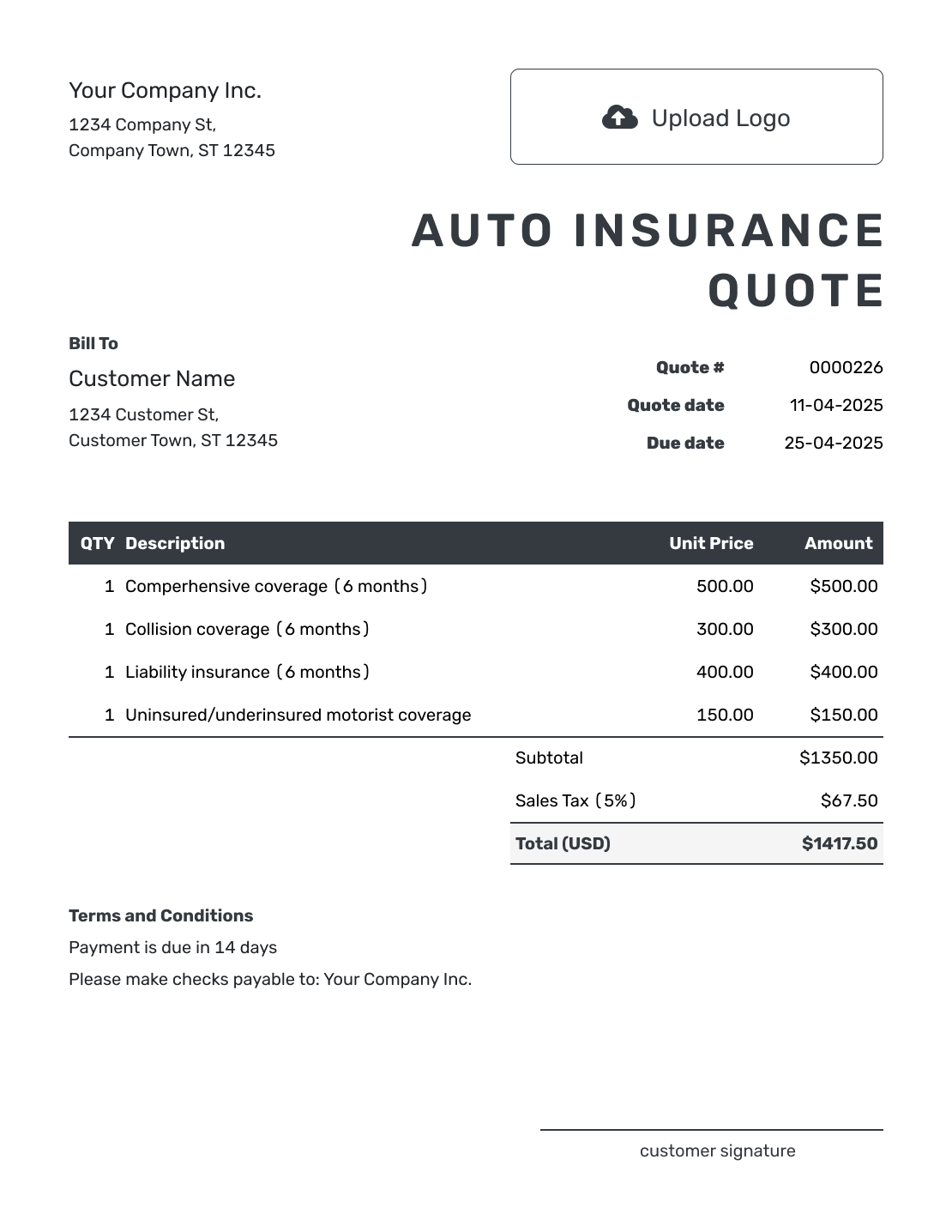
- Liability Coverage: Mandatory in most states, this pays for damages and injuries you cause to others. Higher limits offer greater financial protection but increase premiums.
- Collision Coverage: Pays for damage to your own car in an accident, regardless of fault.
- Comprehensive Coverage: Covers damage to your car from non-collision events like theft, vandalism, fire, hail, or animal strikes.
- Uninsured/Underinsured Motorist (UM/UIM): Protects you if you’re hit by a driver without enough insurance.
- Medical Payments (MedPay) or Personal Injury Protection (PIP): Covers medical expenses for you and your passengers after an accident, regardless of fault.
- Additional Coverages: Options like roadside assistance, rental car reimbursement, or gap insurance add to the premium.
-
Deductibles: This is the amount you pay out-of-pocket before your insurance kicks in for collision and comprehensive claims. A higher deductible typically results in a lower premium, but it means you’ll bear more financial responsibility in the event of a claim. Striking the right balance here is a key financial decision.
-
Usage: How much you drive matters. Higher annual mileage (e.g., a long daily commute) often correlates with increased risk and higher premiums.
The Importance of Accurate Information
When requesting quotes, the accuracy of the information you provide is paramount. Any discrepancies, whether accidental or intentional, can lead to several problems:
- Invalid Quotes: The quote you receive may not be honored if the actual facts differ from what you provided.
- Policy Cancellation: Insurers can cancel your policy if they discover material misrepresentations, leaving you uninsured and potentially facing legal repercussions.
- Claims Denial: In the event of an accident, your claim could be denied if the information on your policy doesn’t match the reality, leading to immense financial burden.
Before seeking quotes, gather essential documents: your driver’s license, vehicle registration, previous insurance policy details, and a clear understanding of your annual mileage and typical usage. Being prepared ensures you receive precise quotes that genuinely reflect your financial commitment.
Navigating the Quote Acquisition Process
With an understanding of the factors at play, you can now strategically approach obtaining quotes. There are several effective channels, each with its own advantages and considerations for your financial decision-making process.
Online Comparison Websites
These platforms have revolutionized the quote-gathering process by allowing you to input your information once and receive multiple quotes from various insurers simultaneously.
-
Pros:
- Convenience and Speed: Get dozens of quotes in minutes from the comfort of your home, saving significant time.
- Broad Options: Exposure to a wide range of national and regional carriers, facilitating extensive price comparisons.
- Financial Transparency: Easily compare prices side-by-side, helping you identify potential savings.
-
Cons:
- Lead Generation: Be prepared for follow-up calls and emails from insurers and agents, as these sites often sell your information as leads.
- Incomplete Listings: Not all insurers participate in every comparison site; some major carriers may be absent.
- Potential for Inaccuracy: While improving, some sites might not capture all specific discounts or unique situations, requiring direct follow-up.
-
Tips for Using Them Effectively: Use these sites as a starting point. Verify the quotes by visiting the individual insurer’s website or contacting them directly to confirm all details and ensure no discounts were missed. Always use consistent information across all platforms to ensure true apples-to-apples comparisons.
Direct from Insurance Carriers
Another straightforward method is to visit the websites of individual insurance companies or call their customer service lines.
-
Pros:
- Exclusive Deals: Some insurers offer unique discounts or promotions only available through their direct channels.
- Customization: Direct interaction allows for more granular control over coverage options and the ability to ask specific questions about complex scenarios.
- No Intermediaries: Avoids the lead generation aspect of comparison sites, offering a more private quoting experience.
-
Cons:
- Time-Consuming: You must re-enter your information for each insurer, which can be tedious.
- Limited Scope: You’re only seeing quotes from that specific company, not easily comparing them with competitors without extra effort.
-
Recommended Carriers: It’s wise to obtain quotes directly from at least 3-5 major carriers known for competitive rates and good service, such as GEICO, Progressive, State Farm, Allstate, Farmers, and Liberty Mutual. Don’t forget smaller, regional insurers who might offer very competitive rates in your area.
Working with Insurance Agents
Insurance agents serve as invaluable resources, especially for those with complex insurance needs or those who prefer personalized guidance in their financial decisions. Agents fall into two main categories:

-
Independent Agents: These professionals work with multiple insurance companies.
- Benefits: They can shop around for you, comparing quotes from various carriers to find the best policy and price. They offer personalized advice, help you understand coverage nuances, and can assist with bundling multiple policies (home, auto, umbrella) for maximum savings and convenience. They act as your advocate, a significant financial advantage.
-
Captive Agents: These agents work exclusively for one insurance company (e.g., a State Farm agent).
- Benefits: They have in-depth knowledge of their company’s products, policies, and discounts. They can provide highly tailored advice specifically within their company’s offerings.
- Considerations: While knowledgeable about their specific offerings, they cannot offer comparisons from other companies, which might limit your options for finding the absolute lowest price.
-
When to Choose an Agent: If you’re new to car insurance, have a unique driving history (e.g., prior accidents, SR-22 requirements), own multiple vehicles, or want to bundle various insurance products, an agent can be a huge asset in navigating the financial complexities and ensuring you’re adequately covered without overspending.
Strategies for Optimizing Your Car Insurance Costs
Obtaining quotes is just the first step. The next crucial phase involves actively seeking ways to reduce your premium while maintaining adequate financial protection.
Leveraging Discounts and Bundling
Insurance companies offer a multitude of discounts that can significantly reduce your premium. Proactively inquiring about these is a smart financial move.
- Multi-Policy/Bundling: Insuring your car and home (or renters, life insurance) with the same company almost always results in a substantial discount on both policies. This is one of the most effective strategies for overall financial savings.
- Good Driver/Safe Driver: For drivers with a clean record over a certain period (e.g., 3-5 years), insurers often reward this with lower rates.
- Telematics/Usage-Based Insurance: Programs that monitor your driving habits (speed, braking, mileage) via an app or device can offer discounts to safe drivers. This is a direct way to prove your low-risk profile and save money.
- Student Discounts: Good student discounts (for high GPAs), distant student discounts (for students away at college without a car), or student driver education course completion discounts can save money for families.
- Vehicle-Related Discounts: Anti-theft devices, new car discounts, or even owning certain makes/models with high safety ratings.
- Payment Discounts: Paying your premium in full upfront, signing up for automatic payments, or opting for paperless billing can all earn small but meaningful reductions.
- Affinity/Group Discounts: Being part of certain professional organizations, alumni associations, or employer groups might qualify you for exclusive rates.
Always ask every insurer or agent for a comprehensive list of all available discounts and check which ones you qualify for.
Adjusting Coverage and Deductibles
Fine-tuning your coverage levels and deductibles is a delicate balance between managing risk and controlling costs.
- Balancing Risk vs. Premium Savings: While state minimum liability coverage might be the cheapest option, it often provides insufficient financial protection in a serious accident. An accident where you are at fault could leave you personally liable for damages exceeding your coverage limits, potentially wiping out your savings or future earnings. Consider higher liability limits (e.g., 100/300/50) for robust financial safeguarding.
- When to Consider Dropping Collision/Comprehensive: For older vehicles with low market value, the cost of collision and comprehensive coverage might exceed the potential payout in a total loss. If your car is worth less than, say, $3,000, consider dropping these coverages. The money saved in premiums can be put into an emergency fund for potential repairs or a future car purchase.
- Understanding the Impact of Higher Deductibles: Choosing a higher deductible (e.g., $1,000 instead of $500) will lower your premium. However, you must be financially prepared to pay that higher amount out-of-pocket if you need to file a claim. Ensure your emergency fund can comfortably cover your chosen deductible.
Improving Your Financial Profile
Some actions extend beyond just insurance and impact your overall financial well-being while indirectly affecting your insurance premiums.
- Impact of Credit Score: In states where permitted, a strong credit score signals financial responsibility to insurers, often translating to lower premiums. Maintaining good credit by paying bills on time, managing debt responsibly, and regularly checking your credit report can yield long-term savings.
- Maintaining a Clean Driving Record: This is the most direct way to keep your premiums low. Drive defensively, avoid speeding tickets, and never drive under the influence. Over time, a spotless record becomes your most valuable discount.
Making an Informed Decision and Finalizing Your Policy
With a stack of quotes in hand and strategies for optimization, the final step is to make an informed decision that aligns with your financial goals and risk tolerance.
Comparing Quotes Beyond Just Price
While price is a major factor, it shouldn’t be the only factor in your decision. A cheap policy that offers inadequate coverage or poor service can be a costly mistake in the long run.
- Coverage Limits and Exclusions: Carefully review what each policy covers and, crucially, what it doesn’t. Ensure the liability limits meet your financial protection needs, and understand any specific exclusions that might apply.
- Customer Service Reputation (Claims Handling): In the event of an accident, prompt and fair claims processing is invaluable. Research customer reviews, J.D. Power ratings, and consumer complaint indexes for each insurer. A company with a poor claims reputation, regardless of price, can create significant financial stress during a difficult time.
- Financial Stability of the Insurer: An insurance policy is only as good as the company backing it. Check ratings from independent agencies like A.M. Best, which assess an insurer’s financial strength. A high rating (e.g., A or A+) indicates a strong ability to meet its financial obligations, ensuring they’ll be there when you need them most.
- Policy Terms and Conditions: Don’t just skim. Read the fine print to understand cancellation policies, payment options, and any specific requirements.
Reviewing the Policy Document
Once you’ve selected an insurer, you’ll receive a full policy document. This is your binding contract.
- Understanding What You’re Signing: Carefully review the declaration page to confirm all your personal details, vehicle information, chosen coverages, limits, deductibles, and applicable discounts are correct.
- Asking Questions: If anything is unclear, contact your agent or the company directly for clarification. It’s better to ask now than to discover a misunderstanding after an accident.
- Confirmation of Discounts: Double-check that all the discounts you were promised have been applied.
When to Re-Quote and Review
Car insurance isn’t a “set it and forget it” expense. Regular review is a smart financial practice.
- Annual Review: Even if you’re happy with your current insurer, make it a habit to re-quote at least once a year, preferably a few weeks before your renewal. Rates can change frequently due to various market factors, and you might find a better deal elsewhere.
- Life Changes: Significant life events warrant re-evaluating your policy and obtaining new quotes:
- New Car Purchase: Different vehicles have different insurance costs.
- New Address: Moving to a new zip code can significantly alter your rates.
- Marriage/Divorce: Marital status changes impact premiums.
- Adding/Removing a Driver: Bringing a new driver onto your policy or removing a driver who no longer lives with you will change rates.
- Driving Record Improvements: If a past accident or ticket falls off your record, your rates might drop, so re-quote.
- Change in Usage: If you start working from home and reduce your commute, inform your insurer as it might qualify you for a low-mileage discount.
Conclusion
Securing the right car insurance quote is far more than a routine task; it’s a strategic exercise in personal financial management. By understanding the factors that influence your premium, judiciously navigating the various quoting channels, and diligently applying cost-saving strategies, you can significantly reduce your annual insurance expenditure without compromising on essential coverage. Remember, the goal is not merely to find the cheapest policy, but to find the best value—a policy that offers robust financial protection at a price that aligns with your budget. Proactive research, meticulous comparison, and regular review are your most powerful tools in navigating the dynamic world of car insurance, ensuring your financial well-being on and off the road.
aViewFromTheCave is a participant in the Amazon Services LLC Associates Program, an affiliate advertising program designed to provide a means for sites to earn advertising fees by advertising and linking to Amazon.com. Amazon, the Amazon logo, AmazonSupply, and the AmazonSupply logo are trademarks of Amazon.com, Inc. or its affiliates. As an Amazon Associate we earn affiliate commissions from qualifying purchases.