
In an increasingly complex financial world, understanding the fundamental mechanics of percentages is not merely a mathematical exercise—it’s an essential life skill. From navigating daily consumer decisions like sales and discounts to making informed business and investment choices, the ability to calculate a percentage of a price empowers individuals and businesses alike to make sound financial judgments. This guide will demystify percentage calculations, offering practical applications across personal and business finance, and equipping you with the knowledge to leverage this powerful concept for greater financial clarity and control.

The Core Concept: Deconstructing Percentages
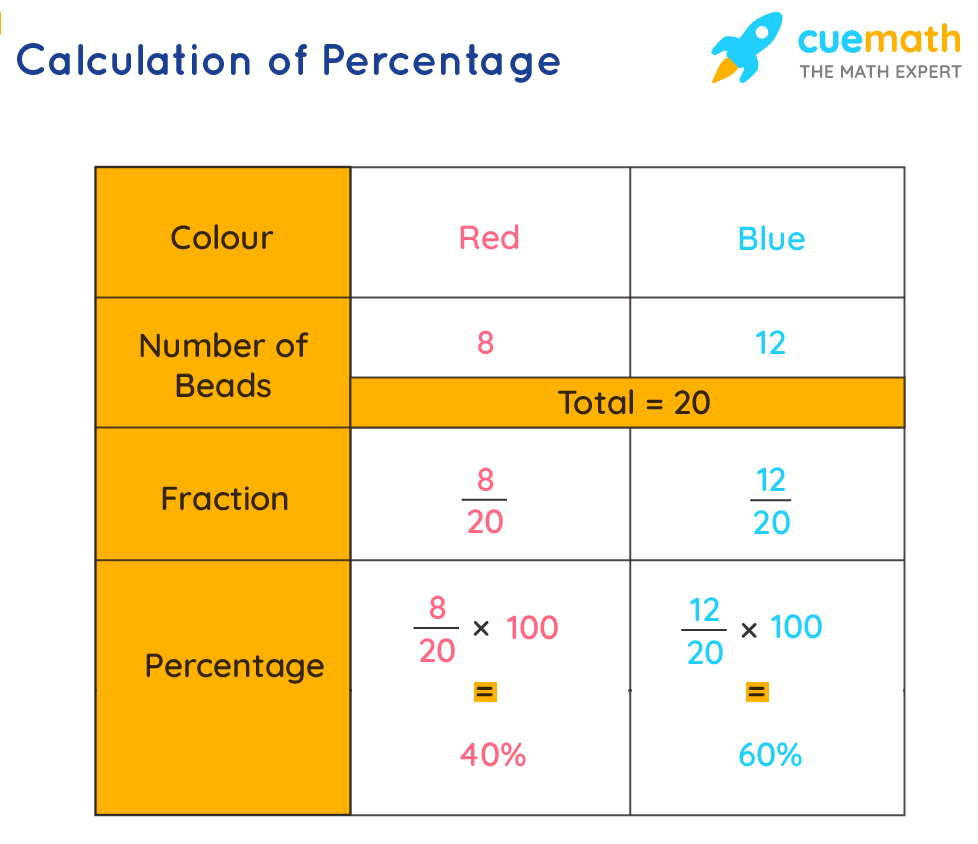
At its heart, a percentage is a way of expressing a number or a ratio as a fraction of 100. The word “percent” literally means “per hundred” or “out of one hundred.” This standardized representation makes it incredibly useful for comparing quantities, understanding proportions, and evaluating changes in a digestible format, particularly when dealing with monetary values.
What is a Percentage?
Imagine a pie cut into 100 slices. If you take 25 slices, you have 25 out of 100, which is 25%. If you were to say you received “a quarter” of the pie, that’s the same as 25%. Percentages provide a universal language for expressing parts of a whole, making comparisons straightforward, regardless of the original size of the whole. In finance, this “whole” is often a total price, an income, an investment principal, or a budget.
The Fundamental Formula: Part, Whole, and Percentage
The relationship between a part, a whole, and a percentage can be expressed through a simple formula. If you want to find a certain percentage of a given price (the whole), the most common approach is:
Percentage of Price = (Percentage / 100) * Whole Price
Let’s break this down:
-
Percentage: The numerical value (e.g., 10 for 10%, 25 for 25%).
-
100: The constant denominator, reflecting “per hundred.”
-
Whole Price: The total price or base value you are working with.
Calculating a Percentage of a Price
This is perhaps the most common application. You have a price, and you need to find a specific percentage of that price.
Example: You want to find 20% of a $50 item.
-
Convert the percentage to a decimal: 20 / 100 = 0.20
-
Multiply the decimal by the whole price: 0.20 * $50 = $10
So, 20% of $50 is $10.
This calculation is vital whether you’re figuring out a discount, a sales tax, or a commission.
Finding the Percentage Difference Between Two Prices
Beyond calculating a percentage of a price, it’s often crucial to determine the percentage change between two prices, such as a price increase or decrease.
Formula for Percentage Change:
Percentage Change = [(New Price – Original Price) / Original Price] * 100
Example: An item originally cost $40 and now costs $50.
-
Difference: $50 – $40 = $10
-
Divide by the original price: $10 / $40 = 0.25
-
Multiply by 100: 0.25 * 100 = 25%
The price increased by 25%.
Understanding these core calculations forms the bedrock for navigating the financial landscape with confidence.
Personal Finance Power: Everyday Applications of Percentage Calculations
Percentages are interwoven into the fabric of our daily financial lives, often without us consciously realizing it. Mastering these calculations empowers consumers to make smarter spending, saving, and borrowing decisions.
Navigating Discounts and Sales
The most immediate application for most consumers is understanding discounts. A “25% off” sign is only truly meaningful if you can quickly calculate the actual savings and the final price.
Example: A shirt costs $60 and is 30% off.
-
Calculate the discount amount: (30 / 100) * $60 = 0.30 * $60 = $18
-
Subtract the discount from the original price: $60 – $18 = $42
The final price is $42.
Alternatively, if you’re taking 30% off, you’re paying 70% (100% – 30%). So, 0.70 * $60 = $42. This shortcut is often quicker.
Understanding Sales Tax and Gratuities
Adding percentages to a base price is another common scenario. Sales tax is a percentage added to the cost of goods and services, while gratuities (tips) are a percentage voluntarily added for service.
Example (Sales Tax): An item costs $100 with an 8% sales tax.
-
Calculate the tax amount: (8 / 100) * $100 = 0.08 * $100 = $8
-
Add tax to the original price: $100 + $8 = $108
Total cost is $108.
Example (Gratuity): A restaurant bill is $75, and you want to leave a 15% tip.
-
Calculate the tip amount: (15 / 100) * $75 = 0.15 * $75 = $11.25
-
Add tip to the bill: $75 + $11.25 = $86.25
Total paid is $86.25.
Demystifying Interest Rates on Loans and Savings
Interest is essentially the “price” of borrowing money or the “reward” for lending or saving it, expressed as a percentage of the principal amount.
-
Simple Interest: Calculated only on the principal amount.
Formula: Interest = Principal * Rate * Time (where Rate is in decimal, Time in years)
Example: $1,000 loan at 5% simple interest for 2 years: $1,000 * 0.05 * 2 = $100 interest.
-
Compound Interest: Calculated on the principal and accumulated interest from previous periods. This is how most savings accounts, investments, and loans work, leading to exponential growth or debt. While the full formula is more complex, understanding the basic concept of interest being a percentage of an evolving balance is key.

Budgeting and Expense Allocation
Percentages are powerful tools for managing personal budgets. Many financial advisors recommend allocating specific percentages of your income to different categories (e.g., 50/30/20 rule: 50% needs, 30% wants, 20% savings/debt).
Example: If your monthly income is $4,000, and you follow the 50/30/20 rule:
-
Needs: 50% of $4,000 = $2,000
-
Wants: 30% of $4,000 = $1,200
-
Savings/Debt: 20% of $4,000 = $800
This method provides a clear, proportional framework for financial planning.
Business Finance Mastery: Strategic Use of Percentages
For businesses, percentages are not just calculation tools; they are strategic metrics that drive decisions, evaluate performance, and ensure profitability. From setting prices to analyzing market share, understanding these calculations is paramount for success.
Pricing Strategies: Markups and Profit Margins
Businesses use percentages to determine sale prices and assess profitability.
-
Markup: The percentage added to the cost price of a product to determine its selling price. It’s calculated on the cost.
Formula: Markup Percentage = (Selling Price – Cost) / Cost * 100
-
Profit Margin: The percentage of revenue that remains after deducting costs. It’s calculated on the selling price.
Formula: Profit Margin Percentage = (Selling Price – Cost) / Selling Price * 100
Example: An item costs a business $50 to produce and sells for $75.
-
Markup: (($75 – $50) / $50) * 100 = ($25 / $50) * 100 = 50% markup.
-
Profit Margin: (($75 – $50) / $75) * 100 = ($25 / $75) * 100 = 33.33% profit margin.
These distinct but related percentages are critical for setting competitive prices while ensuring financial viability.
Commissions and Royalties
Many sales roles, creative professions, and licensing agreements involve earnings based on a percentage of sales, revenue, or usage.
Example: A salesperson earns a 10% commission on sales. If they sell $10,000 worth of products:
- Commission = (10 / 100) * $10,000 = 0.10 * $10,000 = $1,000
This direct application motivates sales teams and provides a scalable compensation model.
Cost Analysis and Budgeting
Businesses meticulously track costs using percentages to understand where money is going and to optimize spending. A cost breakdown often shows each expense category as a percentage of total operating costs or revenue.
Example: A company’s total monthly expenses are $50,000. Rent is $10,000.
- Percentage of total expenses for rent: ($10,000 / $50,000) * 100 = 20%
This insight helps management identify areas for cost reduction or reallocation.
Performance Metrics and Growth Rates
Business performance is frequently measured in percentages. Sales growth, market share, customer retention rates, and website conversion rates are all expressed as percentages, allowing for easy comparison over time and against competitors.
Example: A company’s sales increased from $1,000,000 last year to $1,200,000 this year.
- Percentage growth: [($1,200,000 – $1,000,000) / $1,000,000] * 100 = ($200,000 / $1,000,000) * 100 = 20% growth.
Such metrics are indispensable for strategic planning and reporting to stakeholders.
Beyond the Basics: Advanced Financial Insights Through Percentages
Moving beyond day-to-day calculations, percentages offer profound insights into more complex financial phenomena, helping individuals and businesses plan for the long term.
Investment Returns and Portfolio Allocation
When investing, percentages are crucial for understanding performance and managing risk.
-
Return on Investment (ROI): Measures the profitability of an investment as a percentage of its cost.
Formula: ROI = [(Current Value of Investment – Cost of Investment) / Cost of Investment] * 100
-
Portfolio Allocation: Investors distribute their assets across different categories (stocks, bonds, real estate) based on percentages to balance risk and potential return, aligning with their financial goals and risk tolerance. For instance, a common strategy might be 60% stocks, 30% bonds, 10% cash.
Inflation and Purchasing Power
Inflation, the rate at which the general level of prices for goods and services is rising, is expressed as a percentage. Understanding this percentage is vital because it erodes the purchasing power of money over time. If inflation is 3%, your money buys 3% less than it did the previous year. This directly impacts savings, retirement planning, and wage negotiations.
Debt Management and Reduction Strategies
Percentages are at the forefront of debt management. Understanding the interest rate (APR) on loans and credit cards, and how much of your payment goes towards principal versus interest, is critical. Strategies like the “debt snowball” or “debt avalanche” rely on calculating and prioritizing debts based on their interest percentages.
Tools and Best Practices for Accuracy
While the principles of percentage calculation are straightforward, accuracy is paramount in financial matters. Fortunately, a variety of tools can assist.
Manual Calculations and Mental Math Shortcuts
For quick estimates, especially when shopping, mental math can be a valuable skill. For example, to find 10% of a price, simply move the decimal point one place to the left. To find 20%, double the 10%. For 5%, halve the 10%. While not precise enough for all financial contexts, these shortcuts are excellent for on-the-spot assessments.
Leveraging Digital Calculators and Spreadsheets
For precision, a standard calculator is your best friend. For more complex or recurring calculations, spreadsheets like Microsoft Excel or Google Sheets are indispensable. They allow you to set up formulas once and apply them to numerous data points, automating calculations for budgeting, financial modeling, and performance analysis. Financial software and budgeting apps often have built-in percentage calculators, simplifying tasks like tip calculations or expense tracking.
Avoiding Common Pitfalls
-
Percentage vs. Percentage Point: Be clear whether a change is a “percentage change” (relative to the original value) or a “percentage point change” (an absolute difference between two percentage figures). For instance, an interest rate moving from 5% to 7% is a 2 percentage point increase, but a 40% percentage increase ( (7-5)/5 * 100 = 40%).
-
Base Value Errors: Always ensure you are applying the percentage to the correct base value. For example, a “20% raise” is 20% of your current salary, not your starting salary.
-
Order of Operations: When combining discounts or taxes, the order matters. A 10% discount followed by a 5% discount is not the same as a 15% discount.
In conclusion, the ability to “get a percentage of a price” is more than just arithmetic; it’s a gateway to financial fluency. By understanding the core mechanics and applying them diligently across personal spending, business operations, and investment strategies, you gain the clarity and control needed to navigate the financial world confidently and make decisions that truly serve your monetary goals.
aViewFromTheCave is a participant in the Amazon Services LLC Associates Program, an affiliate advertising program designed to provide a means for sites to earn advertising fees by advertising and linking to Amazon.com. Amazon, the Amazon logo, AmazonSupply, and the AmazonSupply logo are trademarks of Amazon.com, Inc. or its affiliates. As an Amazon Associate we earn affiliate commissions from qualifying purchases.