
Securing a loan from your bank can be a pivotal step towards achieving various financial goals, whether it’s purchasing a home, funding a business, consolidating debt, or covering unexpected expenses. While the prospect of applying for a loan might seem daunting, understanding the process, requirements, and available options can significantly streamline your journey. This guide will walk you through the intricacies of obtaining a loan from your bank, focusing on preparation, application, and maximizing your chances of approval. By demystifying the banking process, you’ll be better equipped to navigate the world of personal and business finance, making informed decisions that align with your financial aspirations.
Understanding Different Types of Bank Loans
Before approaching your bank, it’s crucial to understand the diverse range of loan products available. Each type is designed for specific purposes, comes with its own set of terms, and caters to different financial situations. Identifying the right loan for your needs is the first critical step.
Personal Loans: Unsecured vs. Secured, Common Uses
Personal loans are highly versatile and often sought for a variety of individual financial needs. They can be either unsecured or secured. An unsecured personal loan is granted based primarily on your creditworthiness and income, requiring no collateral. This makes them ideal for purposes like debt consolidation, where you combine multiple high-interest debts into one manageable payment, home improvements, medical expenses, or even funding a wedding. However, due to the lack of collateral, interest rates can be higher, and strict credit requirements apply.
Conversely, a secured personal loan requires you to pledge an asset as collateral, such as a savings account, certificate of deposit (CD), or even a vehicle. The collateral mitigates risk for the lender, often resulting in lower interest rates and more flexible terms, even for applicants with less-than-perfect credit. The downside is the risk of losing your collateral if you default on the loan. Choosing between secured and unsecured depends on your credit profile, the assets you possess, and your comfort level with risk.
Mortgage Loans: Home Purchase, Refinancing, Equity Loans
Mortgage loans are arguably the most significant financial commitment most individuals undertake, designed specifically for real estate transactions. A home purchase mortgage provides the funds to buy a residential property, with the property itself serving as collateral. These loans come in various forms, including fixed-rate mortgages (where the interest rate remains constant for the life of the loan) and adjustable-rate mortgages (ARMs), where the interest rate can fluctuate after an initial fixed period. Understanding the nuances of each and their long-term financial implications is vital.
Beyond purchasing, banks also offer refinancing options. Refinancing involves replacing your existing mortgage with a new one, often to secure a lower interest rate, change loan terms, or convert equity into cash. A home equity loan (HEL) or a home equity line of credit (HELOC) allows homeowners to borrow against the equity they’ve built in their home. HELs provide a lump sum, while HELOCs offer a revolving credit line, similar to a credit card, allowing you to borrow and repay funds as needed, up to a certain limit. Both use your home as collateral and are popular for large expenses like renovations, college tuition, or debt consolidation.
Auto Loans: New vs. Used Car Financing
Auto loans are designed specifically for the purchase of vehicles, with the car itself serving as collateral. Whether you’re eyeing a brand-new model or a pre-owned gem, banks offer tailored financing solutions. New car loans typically come with lower interest rates and longer terms due to the vehicle’s higher value and perceived reliability. Used car loans, while still competitive, might have slightly higher rates and shorter terms, reflecting the car’s depreciation and potentially higher risk.
When applying for an auto loan, banks will consider your credit score, income, and the vehicle’s age and mileage. It’s often beneficial to get pre-approved for an auto loan before stepping into a dealership. Pre-approval gives you a clear understanding of what you can afford, strengthens your negotiating position, and simplifies the car-buying process by separating the financing from the purchase decision.
Small Business Loans: Term Loans, Lines of Credit, SBA Loans
For entrepreneurs and small business owners, bank loans are a lifeline for growth, expansion, or managing cash flow. A small business term loan provides a lump sum of capital that is repaid over a fixed period with regular interest payments. These are suitable for specific investments like purchasing equipment, expanding facilities, or funding a large project.
A business line of credit offers more flexibility, acting like a revolving credit account that a business can draw from as needed, up to a set limit. It’s ideal for managing working capital, bridging cash flow gaps, or handling unexpected expenses. Interest is typically only paid on the amount borrowed.
Additionally, many banks participate in Small Business Administration (SBA) loan programs. SBA loans are partially guaranteed by the U.S. government, reducing risk for lenders and making it easier for small businesses to qualify for financing, often with more favorable terms and lower down payments than conventional bank loans. These include various programs like the 7(a) loan, CDC/504 loan, and microloans, each serving different business needs and sizes.
Essential Prerequisites for Loan Approval
Regardless of the type of loan you seek, banks will evaluate several key factors to assess your creditworthiness and ability to repay. Understanding and preparing these aspects can significantly improve your chances of approval.
Credit Score and History: What Lenders Look For, How to Improve It
Your credit score is a numerical representation of your creditworthiness, derived from your credit history. Lenders use it to gauge the likelihood of you repaying your loan on time. Generally, a higher credit score (typically 670 and above, with 740+ being excellent) indicates lower risk and can qualify you for better interest rates and terms. Lenders also review your credit history—the detailed record of your borrowing and repayment behavior over time. They look for consistent, on-time payments, a low credit utilization ratio (how much credit you’re using versus how much you have available), and a healthy mix of credit accounts.
To improve your credit score, focus on paying all bills on time, keeping credit card balances low, avoiding opening too many new credit accounts at once, and regularly checking your credit report for errors. Consistently demonstrating responsible financial behavior builds a positive credit history over time, which is invaluable for securing loans.
Income and Employment Stability: Debt-to-Income Ratio, Proof of Income
Lenders want assurance that you have a stable and sufficient income to comfortably make loan payments. They assess your employment stability, preferring applicants with a consistent work history (typically at least two years in the same job or industry). They’ll also scrutinize your debt-to-income (DTI) ratio, which compares your total monthly debt payments to your gross monthly income. A lower DTI ratio (ideally below 36%, though some lenders go higher) indicates you have more disposable income to cover new loan payments, signaling a lower risk.
You’ll need to provide proof of income, which commonly includes recent pay stubs (typically 1-3 months), W-2 forms from the past two years, and sometimes tax returns (especially for self-employed individuals). For business loans, banks will require detailed financial statements, profit and loss statements, and balance sheets. The more comprehensive and stable your income documentation, the more confident the bank will be in your ability to repay.
Collateral (for Secured Loans): Assets Acceptable to Banks
For secured loans, collateral is a critical component. Collateral is an asset that you pledge to the lender as security for the loan. If you default on the loan, the lender has the right to seize and sell the collateral to recover their losses. Common examples of acceptable collateral include real estate (for mortgages and home equity loans), vehicles (for auto loans), savings accounts, CDs, investment accounts, and for businesses, inventory, accounts receivable, or equipment.
The value and liquidity of the collateral are paramount. Banks will typically require an appraisal or valuation of the asset to ensure its value adequately covers the loan amount. Understanding what assets your bank accepts as collateral and their valuation process is important when considering a secured loan.
Debt-to-Income (DTI) Ratio: Importance and Calculation
As mentioned, your DTI ratio is a crucial metric for lenders. It’s calculated by dividing your total monthly debt payments (including rent/mortgage, credit card minimums, car loans, student loans, and any other recurring debt) by your gross monthly income. For example, if your total monthly debt payments are $1,500 and your gross monthly income is $4,000, your DTI is 37.5% ($1,500 / $4,000).
A lower DTI ratio signifies that you have more income available to cover additional debt, making you a more attractive borrower. While acceptable DTI thresholds vary by lender and loan type, generally, a DTI below 36% is considered very good, while anything above 43% may make it challenging to qualify for some loans. Reducing existing debt before applying for a new loan is an effective way to improve this ratio.
Relationship with Your Bank: Existing Accounts, Loyalty Benefits
Your existing relationship with your bank can sometimes play a role in the loan approval process, especially if you have a long history of responsible banking. Banks often prioritize existing customers, offering them more favorable terms, faster processing, or special discounts. If you have checking, savings, or investment accounts with the bank, or have previously managed other financial products responsibly, it demonstrates a proven track record.
This established relationship can provide the bank with additional insight into your financial habits beyond what a credit report might show, potentially giving you an edge. While not a guarantee, loyalty and a strong existing relationship can certainly be beneficial, particularly for personal loans or small business financing where a personal touch from a loan officer can make a difference.
The Step-by-Step Loan Application Process
Navigating the loan application process efficiently requires preparation and attention to detail. While specific steps might vary slightly between banks and loan types, the general outline remains consistent.
Research and Compare Lenders: Your Current Bank vs. Competitors
Even if you prefer to get a loan from “your bank,” it’s always wise to conduct thorough research and compare offers from multiple lenders, including credit unions and online lenders, alongside your primary bank. Different institutions specialize in various loan products and cater to different customer profiles. What one bank offers in terms of interest rates, fees, repayment terms, and customer service might be significantly different from another.
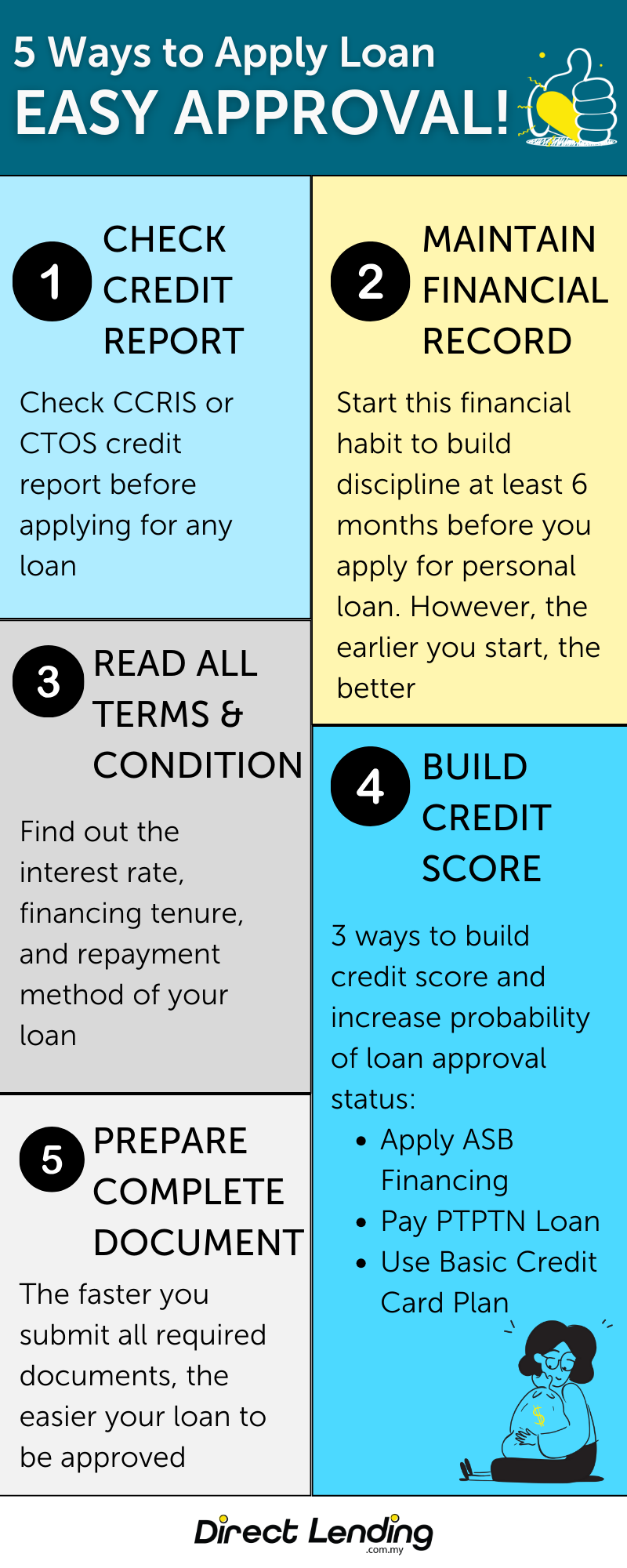
Compare interest rates (APR, Annual Percentage Rate, which includes fees), origination fees, prepayment penalties, and eligibility requirements. Your current bank might offer a convenience factor or loyalty benefits, but a competitor might have a more attractive rate that could save you thousands over the life of the loan. Use online comparison tools, read reviews, and speak to loan officers at various institutions to get a comprehensive view of the market.
Gather Required Documentation: Pay Stubs, Tax Returns, Bank Statements, Identification
The success of your loan application heavily relies on providing accurate and complete documentation. Banks require specific paperwork to verify your identity, income, assets, and liabilities. Common documents typically include:
-
Proof of Identity: Government-issued ID (driver’s license, passport).
-
Proof of Address: Utility bill, lease agreement, or mortgage statement.
-
Income Verification: Recent pay stubs (1-3 months), W-2 forms (past 2 years), 1099s, and complete tax returns (past 2 years, especially for self-employed or complex income).
-
Bank Statements: Recent statements (2-3 months) for all checking and savings accounts to show cash flow and reserves.
-
Asset Information: Statements for investment accounts, retirement accounts, or property deeds if using as collateral.
-
Debt Information: Statements for existing loans (car loans, student loans, credit cards) to verify your DTI.
-
Business Financials (for Business Loans): Profit and Loss statements, balance sheets, cash flow statements, business tax returns.
Having all these documents organized and readily accessible will prevent delays and demonstrate your readiness to the lender.
Pre-qualification vs. Pre-approval: Understanding the Difference and Benefits
These two terms are often used interchangeably but have distinct meanings, especially in mortgage and auto lending.
Pre-qualification is an informal assessment of what you might be able to borrow. It typically involves a quick review of your financial information (income, debts, assets) that you provide verbally or through a simple online form, often resulting in a “soft” credit inquiry that doesn’t affect your credit score. Pre-qualification gives you a general idea of your borrowing capacity but isn’t a commitment from the lender.
Pre-approval, on the other hand, is a more rigorous process. It involves a detailed review of your financial documents and a “hard” credit inquiry, which might temporarily ding your credit score by a few points. If approved, you receive a conditional commitment letter from the lender stating the maximum loan amount you qualify for, the estimated interest rate, and specific terms. Pre-approval makes you a much stronger buyer or borrower, demonstrating to sellers or dealerships that you are serious and financially capable, significantly speeding up the final approval process once you find what you need.
Complete the Application Form: Accuracy and Completeness
Once you’ve chosen a lender and understand your options, the next step is to accurately and completely fill out the loan application form. Whether it’s an online form or a physical document, every field is important. Provide precise figures for your income, assets, debts, and personal information. Any discrepancies between the information on your application and your supporting documents could lead to delays or even denial.
Be honest about your financial situation. Attempting to misrepresent information can have serious consequences, including loan denial and legal repercussions. If you have questions about any part of the application, don’t hesitate to ask a loan officer for clarification. A well-filled, accurate application reflects positively on your attention to detail and seriousness as a borrower.
Underwriting and Approval: What Happens Behind the Scenes
After you submit your application and all supporting documents, your bank will begin the underwriting process. This is the lender’s due diligence phase, where a professional underwriter thoroughly reviews your financial profile, credit history, income stability, and collateral (if applicable) to assess the risk of lending to you. They will verify all the information you provided, often contacting employers, pulling additional credit reports, and ordering appraisals for secured loans.
The underwriter’s goal is to ensure you meet the bank’s lending criteria and that the loan terms are appropriate for your financial situation. This phase can take anywhere from a few days to several weeks, depending on the complexity of the loan and the volume of applications. If everything checks out, you’ll receive a loan offer detailing the terms, interest rate, fees, and repayment schedule. This is your chance to review everything carefully before moving to the final stage of approval and funding.
Maximizing Your Chances of Loan Approval
While the prerequisites and application process are critical, there are proactive steps you can take to bolster your application and present yourself as an ideal borrower.
Review Your Credit Report: Identify and Dispute Errors
Before even thinking about applying for a loan, pull your credit reports from all three major bureaus (Equifax, Experian, TransUnion) via AnnualCreditReport.com. Review them meticulously for any inaccuracies or outdated information. Errors on your credit report, such as incorrect late payments, fraudulent accounts, or mistaken identities, can unfairly lower your score and negatively impact your loan eligibility.
If you find errors, dispute them immediately with the credit bureau and the creditor. Correcting these inaccuracies can quickly boost your credit score, making you a more attractive candidate to lenders. This pre-emptive step is one of the most powerful ways to prepare for a loan application.
Reduce Existing Debt: Lower Your DTI Ratio
A high debt-to-income (DTI) ratio is one of the biggest red flags for lenders. Before applying for a new loan, focus on paying down existing debts, especially those with high interest rates like credit card balances. Even a small reduction in your monthly debt payments can significantly improve your DTI ratio, demonstrating to lenders that you have sufficient capacity to take on new financial obligations.
Consider strategies like the “debt snowball” or “debt avalanche” method to aggressively tackle your existing debt. By reducing your DTI, you not only improve your chances of approval but also potentially qualify for better interest rates, saving you money in the long run.
Save for a Down Payment: Especially for Large Secured Loans
For large secured loans like mortgages or auto loans, a substantial down payment can make a profound difference. A larger down payment reduces the amount you need to borrow, thereby lowering your monthly payments and potentially the total interest paid over the life of the loan. It also signals to the lender that you are a serious and committed borrower, reducing their risk.
For mortgages, a down payment of 20% or more can help you avoid private mortgage insurance (PMI). For auto loans, a significant down payment can secure you a lower interest rate. Even for some personal loans, showing substantial savings can enhance your application by demonstrating financial responsibility and an emergency fund.
Be Transparent and Honest: With All Financial Information
Integrity is paramount in financial dealings. Always be completely transparent and honest with your bank about your financial situation. Provide accurate income figures, disclose all existing debts, and be truthful about the purpose of your loan. Attempting to hide information or misrepresent your finances can lead to your application being denied, or worse, legal consequences.
Lenders have sophisticated tools and processes to verify information, and inconsistencies will eventually come to light. Building a trusting relationship with your bank, even if your financial picture isn’t perfect, is far more beneficial than trying to deceive them. A loan officer can often work with you to find suitable solutions if you’re upfront about your challenges.
Understand Loan Terms: Interest Rates, Fees, Repayment Schedule
Before signing any loan agreement, meticulously review and fully understand all the loan terms. Pay close attention to the Annual Percentage Rate (APR), which includes the interest rate plus any fees associated with the loan, giving you the true cost of borrowing. Inquire about any origination fees, application fees, or prepayment penalties. Some loans charge a fee for paying off your loan early, which could impact your financial planning.
Carefully examine the repayment schedule: the monthly payment amount, the number of payments, and the total amount you will pay over the life of the loan. Understand what happens if you miss a payment or want to make extra payments. Ask questions until you are completely comfortable with every aspect of the agreement. Knowing these details upfront will help you avoid surprises and ensure the loan fits within your budget.
Post-Approval and Loan Management
Once your loan is approved, the journey doesn’t end. Responsible loan management is crucial to maintaining good financial health and achieving your objectives.
Review and Sign Loan Documents: Read the Fine Print Carefully
The moment of truth arrives when you receive the final loan documents for signing. This is not a formality; it’s a critical step where you legally bind yourself to the loan’s terms. Take your time to review every single clause, ensuring that the final terms (interest rate, payment schedule, fees, collateral details) match what you were offered and understood. Do not hesitate to ask your loan officer to explain anything you don’t comprehend.
Look out for any last-minute changes or conditions. Understand your rights and responsibilities as a borrower, including default clauses, grace periods, and procedures for late payments. Signing these documents signifies your agreement to all conditions, so read the fine print carefully to avoid future misunderstandings or unfavorable surprises.
Understand Repayment Responsibilities: Due Dates, Payment Methods
Once the loan is disbursed, your primary responsibility shifts to consistent and timely repayment. Clearly understand your monthly payment amount, the exact due date, and the various payment methods available. Most banks offer convenient options like automatic payments from your checking account, which can help ensure you never miss a due date and maintain a perfect payment history.
Missing payments can lead to late fees, negative impacts on your credit score, and potentially higher interest rates or even default on your loan. Set up reminders or automatic payments to stay on track. If you anticipate difficulty making a payment, contact your bank immediately. Many lenders are willing to work with borrowers experiencing temporary financial hardship to find solutions, such as deferment or modified payment plans, provided you communicate proactively.
Monitor Your Loan Account: Track Payments, Remaining Balance
Regularly monitoring your loan account is a good financial habit. Access your online banking portal or statements to track your payments, verify they have been applied correctly, and see your remaining loan balance. This practice helps you stay informed about your loan’s progress, identify any discrepancies early, and understand how your payments are reducing the principal versus covering interest.
For variable-rate loans, monitoring also allows you to keep an eye on interest rate fluctuations and anticipate changes in your monthly payments. Knowing your current balance is also essential if you’re planning to make extra payments or considering refinancing in the future.
Strategies for Early Repayment: If Applicable and Beneficial
For many loans, especially those with high interest rates or long terms, early repayment can save you a significant amount of money in interest over the life of the loan. Before pursuing early repayment, however, verify if your loan agreement includes any prepayment penalties. If there are no penalties, strategies like making extra principal payments whenever possible, making bi-weekly payments (effectively paying an extra month’s payment each year), or rounding up your monthly payments can accelerate your repayment schedule.
While early repayment is often beneficial, assess your overall financial situation. Ensure you still maintain an adequate emergency fund and are not sacrificing other important financial goals, such as retirement savings, to pay off a low-interest loan faster. Strategically choosing which debts to pay off early (e.g., high-interest credit card debt before a low-interest mortgage) is key.
What if Your Application is Denied? Next Steps and Improving Your Profile
A loan denial can be disheartening, but it’s not the end of your financial journey. Federal law (the Equal Credit Opportunity Act) requires lenders to provide you with a specific reason for denial or inform you of your right to request one. This information is invaluable for understanding your shortcomings and taking corrective action.
Typical reasons for denial include a low credit score, high DTI ratio, insufficient income, unstable employment, or too many recent credit inquiries. Once you understand the reason, you can develop a targeted plan: work on improving your credit score, pay down existing debt, save for a larger down payment, or seek a co-signer. You can also explore alternative lending options, such as credit unions (which often have more lenient criteria), online lenders, or community development financial institutions (CDFIs) that cater to specific needs. Use a denial as a learning opportunity to strengthen your financial profile for future success.
Conclusion
Obtaining a loan from your bank is a structured process that, when approached with careful preparation and understanding, can be straightforward and successful. From identifying the right loan type for your needs to meticulously gathering documentation, understanding the underwriting process, and responsibly managing your repayments, each step plays a crucial role. By focusing on building a strong credit profile, managing your debt, and fostering a transparent relationship with your financial institution, you significantly enhance your chances of securing the financing you need. Remember, a loan is a tool for achieving your financial aspirations, and responsible borrowing is the cornerstone of long-term financial health.
aViewFromTheCave is a participant in the Amazon Services LLC Associates Program, an affiliate advertising program designed to provide a means for sites to earn advertising fees by advertising and linking to Amazon.com. Amazon, the Amazon logo, AmazonSupply, and the AmazonSupply logo are trademarks of Amazon.com, Inc. or its affiliates. As an Amazon Associate we earn affiliate commissions from qualifying purchases.