
Starting a new business often requires significant capital, and for many entrepreneurs, securing a start-up loan is a critical step. Navigating the complex world of business finance can be daunting, but with the right preparation and understanding of available options, securing the necessary funding is an achievable goal. This guide delves into the essential steps, considerations, and types of financing available to help new ventures secure their initial capital.
Understanding the Landscape of Startup Funding
Before diving into applications, it’s crucial to grasp the fundamental distinctions in funding types and common challenges faced by new businesses. Startup funding generally falls into two broad categories: debt financing and equity financing. While this article focuses on loans (debt financing), understanding the alternative provides valuable context.
Debt vs. Equity Financing
- Debt Financing (Loans): This involves borrowing money that must be repaid, typically with interest, over a set period. The lender does not gain ownership in the company. Common sources include banks, credit unions, government-backed programs, and online lenders. The primary advantage is maintaining full ownership and control; the disadvantage is the obligation to repay regardless of business performance.
- Equity Financing: This involves selling a portion of ownership in your company to investors in exchange for capital. Investors may include venture capitalists, angel investors, or even friends and family. The advantage is no repayment obligation, but the trade-off is relinquishing some control and sharing future profits.
For startups, debt financing can be more challenging to secure than for established businesses due to the inherent risk. Lenders often look for a proven trackability record, consistent cash flow, and collateral, which new businesses typically lack.
Common Misconceptions About Startup Loans
Many aspiring entrepreneurs harbor misconceptions that can hinder their search for funding.
- “My brilliant idea is enough.” Lenders fund viable business models with strong financial plans, not just concepts.
- “Banks are the only option.” A diverse ecosystem of lenders exists, including government-backed programs and alternative online platforms.
- “I don’t need a personal credit score.” For most small business loans, especially startups, your personal credit history is a significant factor.
- “Collateral is always required.” While often preferred, some loans are unsecured or rely on future revenue projections and strong personal guarantees.
Dispelling these myths is the first step toward a realistic and successful funding strategy.
Preparing Your Business for a Loan Application
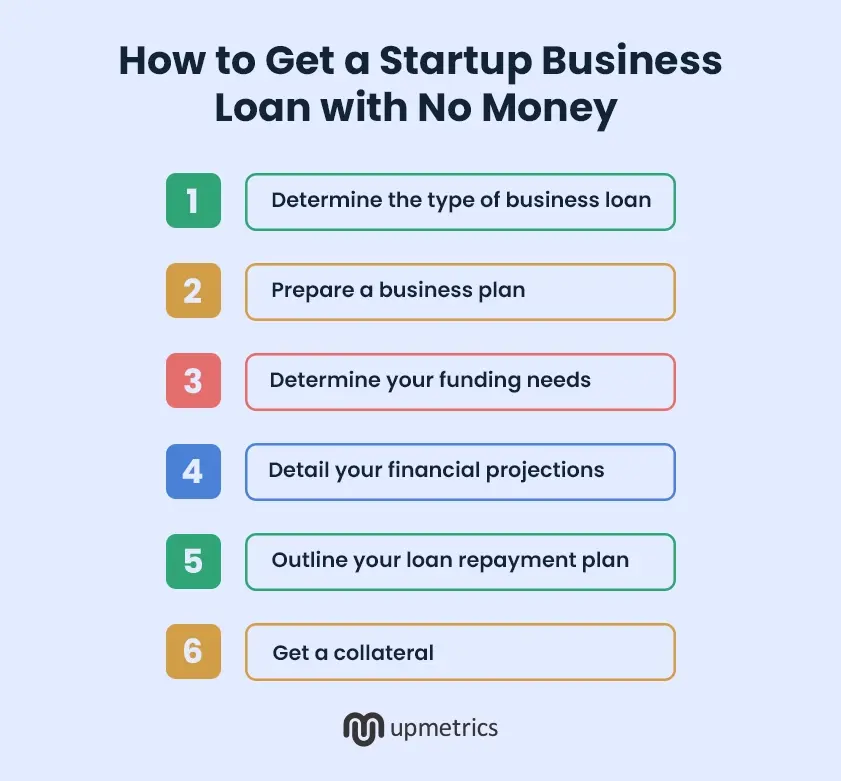
Lenders meticulously evaluate risk, and your preparation directly impacts your chances of approval. A well-structured business plan, clear financial projections, and a solid personal financial standing are non-negotiable.
Crafting a Robust Business Plan
Your business plan is the cornerstone of your loan application. It articulates your vision, strategy, and how you intend to generate revenue and repay the loan. A comprehensive business plan should include:
- Executive Summary: A concise overview of your business, its mission, products/services, target market, and financial projections.
- Company Description: Legal structure, history, and goals.
- Products or Services: Detailed description, unique selling propositions, and intellectual property.
- Market Analysis: Industry overview, target market segmentation, size, growth potential, and competitive analysis.
- Organization and Management: Ownership structure, management team bios, and organizational chart.
- Marketing and Sales Strategy: How you plan to reach customers, acquire sales, and build brand awareness.
- Financial Projections: This is perhaps the most critical section for lenders. It includes start-up costs, income statements, balance sheets, cash flow projections for at least 3-5 years, and break-even analysis. Be realistic and well-researched.
- Funding Request: A clear outline of the amount of funding needed, how it will be used, and how it will be repaid.
A compelling business plan demonstrates your understanding of the market, your operational strategy, and your financial viability.
Financial Projections and Personal Creditworthiness
Lenders need assurance of repayment. This comes from both the projected financial health of your business and your personal financial history.
- Start-Up Costs: Itemize every expense required to launch: equipment, inventory, rent, legal fees, marketing, salaries, etc. Be thorough and realistic.
- Cash Flow Projections: Show how money will flow into and out of your business over time. Positive cash flow is essential for repayment.
- Personal Credit Score: Your FICO score (generally 680 and above is preferred) is a primary indicator of your financial responsibility. Lenders will examine your payment history, credit utilization, and any bankruptcies or delinquencies. Work to improve your score well in advance if it’s not strong.
- Personal Financial Statements: Be prepared to provide personal bank statements, tax returns, and a statement of assets and liabilities.
- Collateral: Many start-up loans, especially from traditional banks, require collateral (assets that can be seized if you default) or a personal guarantee. This can include real estate, equipment, or even inventory.
Legal Structure and Registration
Ensure your business is legally registered and structured appropriately. This includes obtaining all necessary licenses and permits, choosing a legal entity (e.g., Sole Proprietorship, LLC, S-Corp), and obtaining an Employer Identification Number (EIN) from the IRS. A legally compliant business appears more legitimate and organized to lenders.
Exploring Different Types of Startup Loans
The lending landscape offers various options, each with its own criteria and advantages. It’s vital to research and determine which type best fits your business needs and qualifications.
Traditional Bank Loans
Commercial banks are a common source of funding, but they typically have the strictest lending criteria, especially for startups. They often prefer businesses with a proven track record, substantial collateral, and a strong credit history.
- Pros: Lower interest rates, longer repayment terms.
- Cons: Difficult for true startups to qualify, extensive application process, often require significant collateral.
SBA Loans
The U.S. Small Business Administration (SBA) doesn’t directly lend money but guarantees a portion of loans made by approved lenders (banks and credit unions). This guarantee reduces the risk for lenders, making them more willing to lend to small businesses and startups.
- SBA 7(a) Loans: The most common and flexible SBA loan program, suitable for a wide range of uses, including working capital, equipment purchases, and real estate. Loan amounts can go up to $5 million.
- SBA Microloans: Designed for very small businesses, offering loans up to $50,000 for working capital or inventory. These are often processed through non-profit community-based organizations.
- Pros: Lower down payments, flexible terms, competitive interest rates, easier to qualify than conventional bank loans.
- Cons: Still requires a strong business plan and credit, lengthy approval process, personal guarantees often required.
Microloans
Beyond the SBA’s program, various non-profit organizations and community development financial institutions (CDFIs) offer microloans. These are typically smaller loans (ranging from a few hundred to tens of thousands of dollars) aimed at underserved entrepreneurs or businesses that struggle to access traditional financing. They often come with business training and support.
- Pros: Accessible to a wider range of entrepreneurs, often focus on community impact, less stringent requirements than banks.
- Cons: Smaller loan amounts, interest rates can vary, may require specific eligibility criteria.
Alternative Lenders and Online Platforms
The rise of financial technology (FinTech) has introduced a plethora of online lenders that offer more streamlined applications and faster approvals than traditional banks. They often use alternative data points for underwriting, making them more accessible to businesses with less-than-perfect credit or limited operating history.
- Pros: Faster application and approval, more flexible criteria, diverse product offerings (e.g., short-term loans, lines of credit, merchant cash advances).
- Cons: Potentially higher interest rates, shorter repayment terms, can be predatory if not researched carefully. Examples include Kabbage, OnDeck, and Fundbox. Always read the fine print regarding fees and APR.
Friends, Family, and Personal Loans
While not strictly business loans, many entrepreneurs start by borrowing from their personal network or by using personal savings, credit cards, or home equity loans.
- Pros: Quick access to funds, flexible terms (especially from friends/family), no formal application process.
- Cons: Can strain personal relationships, personal credit card interest rates are very high, puts personal assets at risk. If borrowing from friends/family, formalize the agreement with a written contract.
The Application Process: What Lenders Look For
Once you’ve identified potential lenders, the application process will begin. Be prepared to provide extensive documentation and demonstrate your business’s viability and your commitment.
Demonstrating Repayment Capability
Lenders are primarily concerned with your ability to repay the loan. This is evidenced by:
- Strong Cash Flow Projections: Realistic and detailed forecasts showing how your business will generate enough revenue to cover expenses and loan payments.
- Debt Service Coverage Ratio (DSCR): Lenders will calculate this ratio to see if your business’s net operating income is sufficient to cover its debt obligations. A DSCR of 1.25 or higher is generally preferred.
- Experience and Expertise: Highlight your and your team’s relevant experience, qualifications, and industry knowledge. Lenders want to see that the management team has the skills to execute the business plan.
Collateral and Guarantees
As mentioned, collateral significantly mitigates risk for lenders. If your business has tangible assets (real estate, equipment, inventory, accounts receivable), be prepared to offer them. If not, many lenders will require a personal guarantee, meaning you are personally liable for the loan if your business defaults. This puts your personal assets at risk but can be necessary for securing funding as a startup.
Understanding Loan Terms and Conditions
Always thoroughly review the loan agreement before signing. Pay close attention to:
- Interest Rate: Fixed or variable?
- Repayment Schedule: Monthly, quarterly? Over what period?
- Fees: Origination fees, closing costs, late payment penalties.
- Covenants: Conditions or restrictions imposed by the lender (e.g., maintaining certain financial ratios, not taking on additional debt without permission).
- Prepayment Penalties: Fees for paying off the loan early.
Seek legal and financial advice if any terms are unclear.
Post-Approval: Managing Your Loan Responsibly
Securing the loan is a significant achievement, but the journey doesn’t end there. Responsible management of funds and adherence to loan terms are crucial for your business’s success and future access to financing.
Adhering to Loan Covenants
Many business loans come with covenants designed to protect the lender’s interest. These can include requirements to submit regular financial reports, maintain certain insurance coverages, or achieve specific financial benchmarks. Failing to comply can lead to default, even if you’re making payments on time. Understand and meticulously adhere to all covenants.
Strategic Use of Funds
Use the loan funds exactly as outlined in your business plan and funding request. Avoid diverting funds for personal use or unrelated business expenses. Strategic allocation ensures the money is working to grow your business, generate revenue, and ultimately, enable repayment. Track all expenditures carefully.

Building a Positive Financial History
Successful repayment of your start-up loan builds a positive credit history for your business, making it easier to secure future financing at more favorable terms. This establishes your business as a reliable borrower, paving the way for expansion, equipment upgrades, or inventory purchases down the line. Maintain meticulous financial records, pay on time, and communicate proactively with your lender if you anticipate any challenges.
Securing a business start-up loan is a comprehensive process that demands thorough preparation, an understanding of financial options, and responsible management. By approaching it strategically and diligently, entrepreneurs can unlock the capital needed to transform their visions into thriving businesses.
aViewFromTheCave is a participant in the Amazon Services LLC Associates Program, an affiliate advertising program designed to provide a means for sites to earn advertising fees by advertising and linking to Amazon.com. Amazon, the Amazon logo, AmazonSupply, and the AmazonSupply logo are trademarks of Amazon.com, Inc. or its affiliates. As an Amazon Associate we earn affiliate commissions from qualifying purchases.