
Acquiring an existing business can be a strategic pathway to entrepreneurship or a significant expansion for an established company. Rather than building from scratch, purchasing a business provides an immediate customer base, revenue stream, and established operations. However, the capital required for such an acquisition often necessitates external financing. Understanding how to secure a business loan specifically for this purpose is crucial for a successful transaction. This guide delves into the nuances of business acquisition loans, the factors lenders evaluate, available financing options, and a step-by-step approach to the application process, all within the realm of sound business finance.

Understanding Business Acquisition Loans
Unlike loans for starting a new venture or general working capital, business acquisition loans are designed to facilitate the transfer of ownership of an existing entity. This distinction significantly influences the application and approval process, shifting the focus to the acquired business’s historical performance and projected future, alongside the buyer’s qualifications.
What Sets Acquisition Loans Apart?
The primary difference lies in the emphasis on an existing business’s track record. Lenders scrutinize the target business’s financials—its revenue, profitability, cash flow, and asset base—to assess its inherent value and ability to service the debt. This contrasts with startup loans, which heavily rely on the entrepreneur’s personal financial strength and the viability of a new business plan. Acquisition loans also typically involve more extensive due diligence to verify the target business’s assets, liabilities, and overall health.
The Goal: Strategic Growth or Entrepreneurial Entry
For seasoned businesses, an acquisition loan might fund strategic growth, allowing them to enter new markets, acquire competitors, diversify product lines, or gain access to proprietary technology or talent. For individuals, these loans offer a path to becoming a business owner without the uncertainties of launching a startup. It allows entrepreneurs to leverage an existing brand, operational framework, and customer relationships, often providing a more predictable financial outlook than a nascent venture.
Key Factors Lenders Assess
Lenders undertake a comprehensive evaluation process when considering a business acquisition loan, examining both the prospective buyer and the target business. Their goal is to mitigate risk by ensuring the acquired entity can generate sufficient cash flow to repay the loan, and that the new owner possesses the capability to manage it successfully.
The Buyer’s Financial Health and Experience
- Personal Credit Score (FICO): A strong personal credit score indicates financial responsibility and can significantly impact eligibility and interest rates, especially for smaller acquisitions or when the buyer will personally guarantee the loan.
- Net Worth and Liquidity: Lenders want to see that the buyer has sufficient personal assets and liquid capital to contribute a down payment and potentially cover initial operational expenses. A substantial down payment demonstrates commitment and reduces the lender’s risk.
- Relevant Industry or Management Experience: Buyers with prior experience in the target business’s industry or a proven track record in managing similar operations are viewed favorably. This expertise suggests a higher likelihood of successful post-acquisition integration and management.
- Business Plan for the Acquired Entity: The buyer must present a compelling business plan detailing how they intend to operate, manage, and grow the acquired business. This includes financial projections that demonstrate the ability to service the new debt while maintaining profitability.
The Target Business’s Viability and Value
- Financial Performance: The most critical factor is the target business’s historical financial performance. Lenders will examine several years of profit and loss statements, balance sheets, and cash flow statements. They look for consistent revenue, strong profitability (e.g., EBITDA), and healthy cash flow that can cover the proposed loan payments.
- Asset Valuation: The tangible and intangible assets of the business are appraised. Tangible assets include real estate, equipment, inventory, and accounts receivable. Intangible assets, such as intellectual property, customer lists, brand reputation, and goodwill, also contribute to the business’s overall value, though their valuation can be more subjective.
- Industry Trends and Market Position: Lenders assess the industry in which the business operates, looking for stable or growing markets. The target business’s competitive advantage, market share, customer retention rates, and susceptibility to economic downturns are all critical considerations.
- Seller’s Rationale: Understanding why the current owner is selling can provide insight into the business’s true health and future prospects. A seller seeking retirement is often viewed more favorably than one divesting due to financial distress or competitive pressures.
Deal Structure and Due Diligence
The specifics of the acquisition deal, including the purchase price allocation and any seller financing components, are scrutinized. Furthermore, comprehensive due diligence is paramount. This involves a thorough investigation of the target company’s financial records, legal documents, contracts, operational procedures, and environmental compliance to uncover any hidden liabilities or risks before the acquisition is finalized.
Types of Business Acquisition Loans
Several financing avenues are available for purchasing an existing business, each with its own advantages, requirements, and typical use cases.
SBA Loans (Small Business Administration)
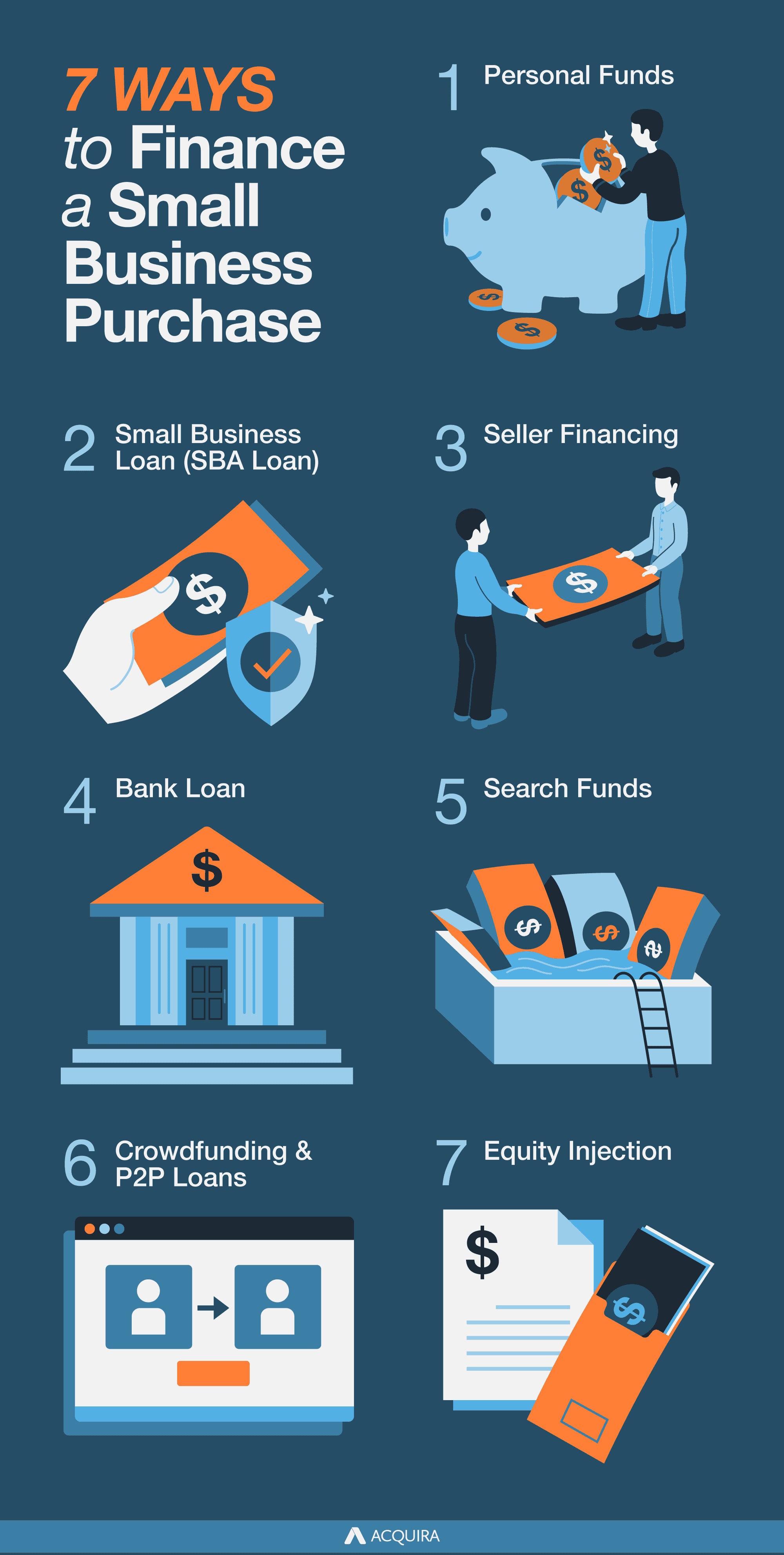
SBA loans are among the most popular options due to their favorable terms, lower down payments, and longer repayment schedules. The SBA doesn’t lend money directly but guarantees a portion of loans made by approved lenders, reducing risk for financial institutions.
- SBA 7(a) Loans: This is the most versatile and common type of SBA loan, suitable for a wide range of business purposes, including acquisition. Loan amounts can go up to $5 million, with government guarantees up to 85% for loans under $150,000 and 75% for larger loans. Requirements typically include that the business must be for-profit, operate in the U.S., and meet the SBA’s small business size standards.
- SBA 504 Loans: Primarily used for the purchase of real estate or heavy machinery, the 504 program can be a component of a larger acquisition if the deal includes significant fixed assets. It involves a partnership between a conventional lender, a Certified Development Company (CDC), and the borrower.
Conventional Bank Loans
Direct loans from commercial banks are another option, particularly for borrowers with strong financial profiles and a solid relationship with their bank. These loans often require a larger down payment, substantial collateral, and a robust credit history. While potentially faster to process if the borrower has a strong existing relationship, they may come with stricter covenants and less flexible terms than SBA loans.
Seller Financing
In seller financing, the current owner acts as a lender, extending credit for a portion of the purchase price. The buyer makes payments directly to the seller over an agreed-upon period. This option is mutually beneficial: it reduces the buyer’s upfront cash requirement and shows the seller’s confidence in the business’s continued viability. It is often combined with other forms of financing to bridge funding gaps.
Asset-Based Lending (ABL)
ABL involves securing a loan against the target business’s existing assets, such as accounts receivable, inventory, and equipment. This can be a viable option for businesses with strong tangible assets but perhaps less consistent cash flow or for those with limited access to traditional bank financing. The loan amount is determined by the liquidation value of the pledged assets.

Private Equity and Venture Capital
For larger acquisitions, particularly those involving high-growth potential businesses or those requiring significant capital for post-acquisition growth, private equity firms or venture capital funds may provide financing. These are typically equity investments rather than loans, meaning the investor takes an ownership stake in the company in exchange for capital. This often comes with a loss of some control but provides access to substantial resources and strategic expertise.
Rollovers as Business Start-ups (ROBS)
ROBS allows individuals to use their retirement funds (e.g., 401(k), IRA) to finance a business acquisition without incurring taxes or early withdrawal penalties. This involves setting up a new C-corporation, which then establishes a new 401(k) plan. The existing retirement funds are rolled into the new 401(k), which then invests in the C-corporation’s stock. This process is complex and requires specialized guidance from legal and financial professionals.
The Application Process: A Step-by-Step Guide
Securing an acquisition loan is a structured process that requires meticulous preparation and strategic engagement with lenders.
Step 1: Self-Assessment and Business Search
Before approaching any lender, clearly define your acquisition criteria. What industry, size, and location are you targeting? Assess your financial capacity, industry experience, and management skills. This initial self-assessment helps narrow down suitable targets and informs your business plan.
Step 2: Identify and Evaluate Target Businesses
Once potential businesses are identified, conduct initial due diligence. Request financial statements, review their market position, operational efficiency, and growth potential. Engage a business broker or M&A advisor to assist with valuation and negotiations to arrive at an offer.
Step 3: Develop a Comprehensive Business Plan
A well-researched and articulate business plan is crucial. It should detail your vision for the acquired business, including operational strategies, marketing plans, a management team structure, and detailed financial projections. Your projections must convincingly demonstrate the business’s ability to generate sufficient cash flow to cover the loan payments while achieving profitability.
Step 4: Assemble Your Financial Package
Prepare a thorough financial package for lenders. This typically includes:
- Your personal financial statements and tax returns for several years.
- The target business’s historical financial statements (P&L, balance sheets, cash flow statements) for the past 3-5 years.
- Detailed projections for the acquired business under your ownership.
- Any appraisals of assets, environmental reports, or other third-party evaluations.
- A resume highlighting relevant experience.
- A Letter of Intent (LOI) or purchase agreement for the business.
Step 5: Engage with Lenders
Research lenders that specialize in business acquisition loans or have a strong track record with SBA loans. Present your meticulously prepared financial package and business plan. Be ready to articulate your vision, answer detailed questions, and provide additional information as requested. Consider applying to multiple lenders to compare terms and improve your chances of approval.
Step 6: Due Diligence and Underwriting
Once a lender expresses interest, they will initiate their own extensive due diligence process. This involves a deep dive into the target business’s financials, legal standing, contracts, and operational aspects. They may commission third-party appraisals, environmental assessments, and legal reviews. This phase can be lengthy and requires the full cooperation of both the buyer and the seller.
Step 7: Closing the Deal
Upon successful completion of underwriting, the lender will issue a loan commitment letter. Carefully review all terms and conditions with your legal counsel. Once all parties agree and all contingencies are met, the loan funds are disbursed, and the ownership of the business is officially transferred.
Strategies for Success and Common Pitfalls
Navigating the acquisition loan landscape requires both foresight and careful execution. Employing strategic approaches and being aware of common pitfalls can significantly increase your chances of a successful acquisition.
Maximizing Your Chances of Approval
- Strong Personal Financials: Maintain excellent personal credit and demonstrate sufficient liquidity for a substantial down payment. This signals financial prudence to lenders.
- Realistic Projections: Present conservative yet compelling financial projections. Overly optimistic forecasts can undermine credibility. Base your projections on the target business’s historical performance and well-researched market trends.
- Clear, Actionable Business Plan: Articulate a clear vision for the acquired business, detailing how you will leverage its strengths and address its weaknesses. Demonstrate how your management experience and operational strategies will drive profitability and ensure loan repayment.
- Engage Experienced Professionals: Work with a team of experts, including a business broker, an M&A attorney, and an experienced accountant. Their expertise can provide invaluable guidance through valuation, due diligence, negotiation, and legal complexities.
- Thorough Due Diligence: Conduct exhaustive due diligence on the target business. Uncover all liabilities, verify financial statements, and understand the market. This protects you from unforeseen issues and demonstrates your preparedness to lenders.
- Consider Seller Financing: Incorporating seller financing can make the deal more attractive to lenders by reducing their initial exposure and showing the seller’s faith in the business’s future.
Avoiding Common Pitfalls
- Insufficient Due Diligence: Failing to thoroughly investigate the target business is a common and costly mistake. Hidden liabilities, undisclosed litigation, or misrepresentations in financial statements can cripple the acquired business post-purchase.
- Overpaying for the Business: Relying solely on the seller’s asking price without an independent valuation can lead to an inflated purchase price, making it harder to achieve profitability and service the debt.
- Inadequate Working Capital: Many buyers focus solely on the acquisition cost and underestimate the working capital needed to sustain operations, invest in growth, and manage unexpected expenses post-acquisition.
- Poorly Structured Deal: Not aligning the loan terms and payment schedule with the business’s expected cash flow can lead to financial strain. A mismatch can result in cash flow crises or even default.
- Lack of Post-Acquisition Integration Plan: Simply acquiring a business is not enough. Without a clear plan for integrating new operations, retaining key employees, and leveraging synergies, the acquisition may fail to deliver its intended value.
- Ignoring Red Flags: During the due diligence process, it’s crucial to address any warning signs or discrepancies. Dismissing red flags can lead to significant problems down the line.
Obtaining a business loan to purchase a business is a sophisticated financial endeavor. By meticulously preparing, understanding lender expectations, exploring various financing options, and seeking professional guidance, entrepreneurs can significantly enhance their prospects of acquiring a successful business and securing their financial future.
aViewFromTheCave is a participant in the Amazon Services LLC Associates Program, an affiliate advertising program designed to provide a means for sites to earn advertising fees by advertising and linking to Amazon.com. Amazon, the Amazon logo, AmazonSupply, and the AmazonSupply logo are trademarks of Amazon.com, Inc. or its affiliates. As an Amazon Associate we earn affiliate commissions from qualifying purchases.