
The allure of earning money without the daily grind is a powerful one, often conjuring images of early retirement, endless travel, or simply more time for passion projects. While the phrase “without working” might seem paradoxical or even utopian, in the realm of personal finance, it refers to the strategic establishment of passive income streams. These are earnings generated from assets or endeavors that require an initial investment of time, money, or effort, but subsequently demand minimal ongoing labor to maintain. This article explores the legitimate pathways to cultivating such financial autonomy, delving into the strategies, mindset, and practical tools necessary to transition from active income reliance to a more passive wealth-generation model. It’s not about magic or avoiding effort entirely, but rather about working smarter, investing strategically, and building systems that work for you, even while you sleep.

Understanding the Philosophy of “Money Without Working”
To truly grasp how one can gain money without working, it’s essential to redefine what “work” means in this context. It doesn’t imply idleness or a complete absence of effort. Instead, it shifts the focus from directly trading time for money (active income) to building assets that generate income independently (passive income). This philosophy is rooted in financial independence principles, where your accumulated assets and investments produce enough income to cover your living expenses, thereby freeing your time from the necessity of conventional employment.
Defining Passive Income vs. Active Income
Active income is what most people are familiar with: wages, salaries, hourly pay, or fees for services rendered directly. You work, you get paid. The moment you stop working, the income stops. Passive income, conversely, is money earned regularly with little to no ongoing effort. Crucially, “little to no ongoing effort” doesn’t mean “no effort ever.” It almost always requires significant upfront effort, capital, or intellectual property creation. Examples range from rental income to dividends from investments, royalties from creative works, or profits from an automated online business. The distinction lies in the decoupling of your time from your earnings.
The Long-Term Vision and Mindset Shift
Achieving a state where money flows in without direct, constant labor requires a significant long-term vision and a profound mindset shift. It moves away from instant gratification towards strategic planning, delayed gratification, and continuous learning. This journey often involves initial sacrifices, disciplined savings, calculated risk-taking, and a commitment to financial education. Individuals pursuing this path must cultivate patience, resilience, and an entrepreneurial spirit, recognizing that passive income streams are built, not simply acquired. It’s about building a financial machine that operates independently, rather than being the cog in someone else’s machine.
Leveraging Capital for Passive Returns: The Investor’s Path
One of the most established and powerful ways to generate income “without working” is through strategic investments. By deploying existing capital into various financial instruments or assets, individuals can earn returns in the form of dividends, interest, rent, or capital appreciation, often with minimal day-to-day involvement. This approach relies on the principle of money working for you.
Stock Market Dividends and Interest-Bearing Assets
Investing in the stock market can be a cornerstone of a passive income strategy. Companies often distribute a portion of their profits to shareholders in the form of dividends. By building a diversified portfolio of dividend-paying stocks, investors can receive regular income. This requires research into financially sound companies with a history of consistent dividend payouts. Similarly, bonds, high-yield savings accounts, certificates of deposit (CDs), and peer-to-peer lending platforms offer interest payments, providing another avenue for passive earnings. While often lower yield, these can offer greater stability, depending on the asset type and issuer. The key is to understand risk tolerance and diversification to safeguard capital while seeking returns.
Real Estate Investments for Rental Income
Real estate is a classic passive income generator. Owning residential or commercial properties and renting them out can provide a steady stream of income. While it initially requires substantial capital for down payments and closing costs, and some effort in property management (which can also be outsourced), the ongoing income can be largely passive. Strategies include long-term rentals, vacation rentals (like Airbnb), or even investing in Real Estate Investment Trusts (REITs), which allow investors to own shares in portfolios of income-generating real estate without direct property management responsibilities. Understanding local markets, property valuation, and tenant management (or the costs of professional management) is crucial for success in this domain.
Diversified Investment Portfolios
A truly robust passive income strategy through investing often involves diversification across multiple asset classes. This means not putting all your eggs in one basket. A well-balanced portfolio might include a mix of dividend stocks, bonds, real estate, and potentially alternative investments like precious metals or commodities, depending on an individual’s financial goals and risk tolerance. Diversification helps mitigate risk and can provide more consistent returns over time, ensuring that if one asset class underperforms, others may compensate, thereby maintaining the flow of passive income. Consulting with a financial advisor can be invaluable in constructing such a personalized and diversified investment strategy.
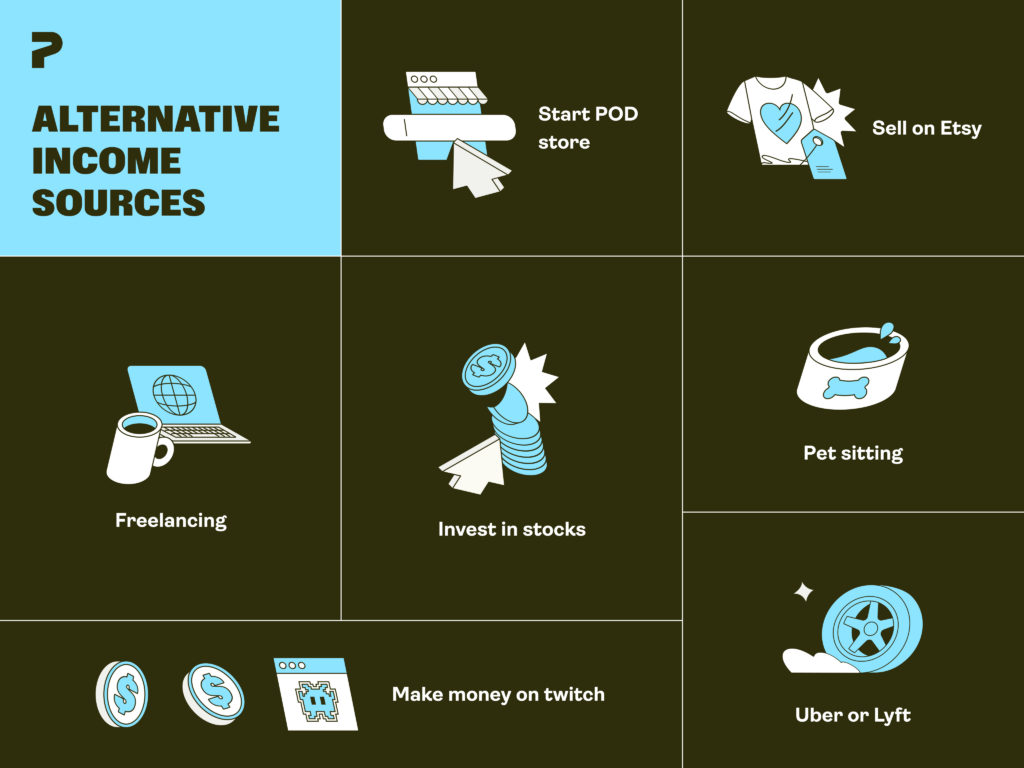
Building Automated Income Streams: The Creator’s & Entrepreneur’s Route
Beyond leveraging existing capital, another powerful path to earning “without working” involves creating assets or systems that generate income automatically or semi-automatically. This route often involves an initial intensive period of creation and setup, but once established, these streams can operate with minimal ongoing input. This is where intellectual property and automated business models shine.
Digital Products and Online Content
The digital age has opened vast opportunities for generating passive income through digital products. This includes creating and selling e-books, online courses, stock photos/videos, software, templates, or digital art. Once created, these products can be sold repeatedly with virtually no additional cost of goods sold. Platforms like Gumroad, Teachable, Etsy, and various stock photo sites facilitate sales and distribution. Similarly, building a blog, YouTube channel, or podcast that generates advertising revenue, affiliate commissions, or sponsorships can become a passive income stream once a substantial audience is established. The initial effort involves content creation, audience building, and marketing, but once traction is gained, the income can be quite hands-off.
Affiliate Marketing and Niche Websites
Affiliate marketing involves promoting other companies’ products or services and earning a commission on sales made through your unique referral link. This can be highly passive once a website, blog, or social media presence has been built with relevant content that attracts an audience. A niche website focused on product reviews, comparisons, or how-to guides can attract organic traffic, and embedded affiliate links convert that traffic into passive income. The initial work lies in choosing a profitable niche, creating high-quality content, and optimizing for search engines (SEO). Once ranked, the content continues to attract visitors and generate commissions with minimal daily intervention.
Licensing and Royalties from Creative Works
For artists, musicians, writers, inventors, and photographers, licensing and royalties represent a true form of passive income. Once a creative work (a song, a book, a patent, a photograph, a piece of software code) is produced, it can be licensed for use by others, generating royalty payments each time it is used or sold. For example, a photographer can license their images to stock photo agencies, a musician can earn royalties from their songs being played on radio or streaming services, and an author earns royalties from book sales. The upfront effort is the creation of the intellectual property; the ongoing income is derived from its continued value and usage by others.
Strategic Planning and Mindset for Financial Autonomy
Achieving a state of financial autonomy through passive income is less about specific tactics and more about a holistic approach encompassing strategic planning, continuous learning, and a disciplined mindset. It’s a marathon, not a sprint, and requires a foundational understanding of personal finance.
Financial Literacy and Education
The journey to gaining money without working is fundamentally paved with financial literacy. Understanding concepts like budgeting, saving, investing principles, compound interest, tax implications of various income streams, and risk management is non-negotiable. Continuous education, through books, online courses, seminars, and reputable financial news sources, empowers individuals to make informed decisions and adapt their strategies to changing economic landscapes. This foundational knowledge reduces reliance on external advice and fosters self-sufficiency in financial management.
Risk Management and Diversification of Income Streams
While the appeal of passive income is strong, it’s crucial to acknowledge and manage risks. Every investment and business venture carries some level of risk. Proper risk management involves not only diversifying investment portfolios but also diversifying income streams themselves. Relying on a single passive income source can be precarious. Instead, building multiple, independent streams of income creates a safety net. If one source diminishes, others can compensate. This strategy offers greater stability and resilience in the face of market fluctuations or unforeseen challenges in a particular venture.
Long-Term Vision, Patience, and Adaptability
Finally, the path to earning money without working is a testament to the power of a long-term vision and unwavering patience. Passive income streams rarely provide substantial returns overnight. They require time to grow, compound, and mature. There will be setbacks, learning curves, and moments of doubt. The ability to stay committed, learn from failures, and adapt strategies as circumstances change is paramount. It’s about cultivating discipline, avoiding get-rich-quick schemes, and consistently working towards the ultimate goal of financial freedom, where your money truly works for you, freeing your time to live life on your own terms.
In conclusion, gaining money without working is not about idleness but about intelligent financial design. It’s about shifting from active participation in labor to strategic asset building and system creation. Whether through savvy investments in the market and real estate, or through the diligent creation of digital assets and automated businesses, the goal remains the same: to generate income streams that afford greater freedom and control over one’s time and future. It’s a journey demanding knowledge, discipline, and a forward-looking perspective, ultimately leading to a more robust and autonomous financial life.
aViewFromTheCave is a participant in the Amazon Services LLC Associates Program, an affiliate advertising program designed to provide a means for sites to earn advertising fees by advertising and linking to Amazon.com. Amazon, the Amazon logo, AmazonSupply, and the AmazonSupply logo are trademarks of Amazon.com, Inc. or its affiliates. As an Amazon Associate we earn affiliate commissions from qualifying purchases.