
Founding an organization is an ambitious undertaking that bridges the gap between a visionary concept and a sustainable economic entity. While many focus on the mission or the product, the survival and eventual success of any organization—whether it is a high-growth startup, a non-profit, or a boutique consultancy—depend entirely on its financial architecture. Founding is not merely an act of creation; it is a strategic deployment of capital, a rigorous exercise in risk management, and a commitment to long-term fiscal viability. To navigate the complexities of modern business finance, founders must understand how to structure their entities for tax efficiency, secure the necessary funding, and maintain the cash flow required to scale.

Laying the Financial Foundation: Capitalization and Legal Structure
The first step in founding an organization is determining the legal and financial framework that will house its operations. This decision dictates how the organization will be taxed, how it can raise money, and the extent of the founders’ personal liability. From a “Money” perspective, the choice of entity is the most significant tax-planning decision a founder will ever make.
Choosing the Right Business Entity for Tax Efficiency
In the United States and many global markets, the legal structure defines the flow of capital. A Sole Proprietorship or General Partnership is often the simplest to start but offers no protection against personal financial ruin. For those looking to build a scalable organization, the Limited Liability Company (LLC) and the C-Corporation are the primary vehicles of choice.
The LLC is favored for its flexibility and “pass-through” taxation, where profits and losses are reported on the owners’ personal tax returns, avoiding the double taxation of dividends. However, if the goal is to attract venture capital or eventually go public, the C-Corporation is the gold standard. While it faces corporate income tax, it allows for the issuance of different classes of stock and provides a cleaner structure for institutional investors. Understanding the nuances of Section 1202—which can potentially allow for the exclusion of capital gains on Qualified Small Business Stock (QSBS)—is a critical financial incentive for founders choosing the C-Corp route.
Estimating Seed Capital and Burn Rates
Before the first dollar is spent, a founder must conduct a thorough “Use of Funds” analysis. This involves calculating the minimum viable capital required to reach the first major milestone—often referred to as the “seed stage.” Founders must distinguish between “Hard Costs” (equipment, legal fees, inventory) and “Soft Costs” (marketing, research, travel).
Central to this phase is the concept of the “Burn Rate”—the rate at which the organization spends its venture capital to finance overhead before generating positive cash flow from operations. A founder must calculate both the “Gross Burn” (total monthly expenses) and “Net Burn” (expenses minus any early revenue). Estimating these figures accurately prevents the organization from running into a liquidity crisis before it has had a chance to prove its market value.
Securing Funding: Navigating the Landscape of Private and Institutional Investment
Rarely can a significant organization be founded entirely on the personal savings of its creator. Securing outside capital is a sophisticated financial maneuver that requires an understanding of equity, debt, and the cost of capital.
Bootstrapping vs. Venture Capital
Bootstrapping—founding an organization using only personal finances and operating revenue—allows the founder to maintain 100% ownership and control. However, it often limits the speed of growth. In contrast, seeking Venture Capital (VC) or Angel Investment provides a massive injection of liquidity but at the cost of equity.
Founders must weigh the “Cost of Equity.” While equity doesn’t require monthly interest payments like a loan, it is ultimately the most expensive form of capital because it involves giving away a percentage of all future earnings and the eventual exit value. For organizations with predictable revenue models, debt financing or Small Business Administration (SBA) loans may be a more cost-effective way to fund growth without diluting ownership.
Mastering the Pitch and Financial Forecasting
To attract investors, a founder must move beyond the “big idea” and present a rigorous financial model. This model should include three to five years of projected Income Statements, Balance Sheets, and Cash Flow Statements.

Investors look for “Unit Economics”—the direct revenues and costs associated with a particular business model, expressed on a per-unit basis. For a software-as-a-service (SaaS) organization, this means demonstrating a high Customer Lifetime Value (LTV) relative to the Customer Acquisition Cost (CAC). If the LTV is at least three times the CAC, the organization is viewed as a financially sound investment. Founders must be prepared to defend their assumptions regarding market penetration, churn rates, and margin expansion.
Operational Excellence: Budgeting, Cash Flow, and Financial Systems
Once the organization is funded and legal entities are established, the focus shifts to internal financial management. The transition from “founding” to “operating” is where many organizations fail, often due to poor visibility into their own numbers.
Implementing Robust Accounting and Tax Compliance
Modern founders must leverage financial technology (FinTech) to maintain a lean operation. Cloud-based accounting platforms like QuickBooks or Xero, integrated with payroll systems like Gusto, allow for real-time tracking of expenses. This is not just about staying organized; it is about tax compliance and audit readiness.
A founder must establish internal controls to prevent fraud and mismanagement. This includes the “segregation of duties”—ensuring that the person who approves an expense is not the same person who issues the payment. Furthermore, understanding the tax obligations of the organization—including payroll taxes, sales taxes, and estimated corporate taxes—is vital. Failing to set aside reserves for these liabilities can lead to catastrophic legal and financial penalties that can bankrupt a young organization.
Managing Cash Flow for Long-Term Sustainability
Profit is an accounting concept, but cash is a reality. An organization can be profitable on paper while being simultaneously insolvent because its cash is tied up in accounts receivable or inventory. Founders must master the “Cash Conversion Cycle” (CCC), which measures how fast an organization can convert its investments in inventory and other resources into cash flows from sales.
Effective cash management involves negotiating favorable payment terms with vendors (Accounts Payable) while ensuring that customers pay as quickly as possible (Accounts Receivable). By extending payables and shortening receivables, a founder can create “negative working capital,” effectively using their suppliers’ money to fund the organization’s growth. This level of financial sophistication is what separates enduring organizations from those that flame out after their first year.
Scaling the Organization: Investment Diversification and Wealth Management
The final stage of founding an organization is transitioning from a fragile startup to a robust, scalable enterprise. At this point, the founder’s role evolves into that of a Chief Investment Officer, deciding how to best allocate the organization’s profits.
Reinvesting Profits for Exponential Growth
Once an organization achieves “Break-even,” the founder faces a critical choice: distribute profits to shareholders or reinvest them into the business. For high-growth organizations, the highest Return on Investment (ROI) is often found by doubling down on proven acquisition channels or expanding into new markets.
This is the phase where “Operating Leverage” becomes apparent. Operating leverage occurs when an organization’s revenue grows faster than its expenses, leading to expanding profit margins. A founder must analyze the “Marginal Cost” of each new customer. If the cost of serving the next customer is significantly lower than the price they pay, the organization has achieved the financial “Holy Grail” of scalability.
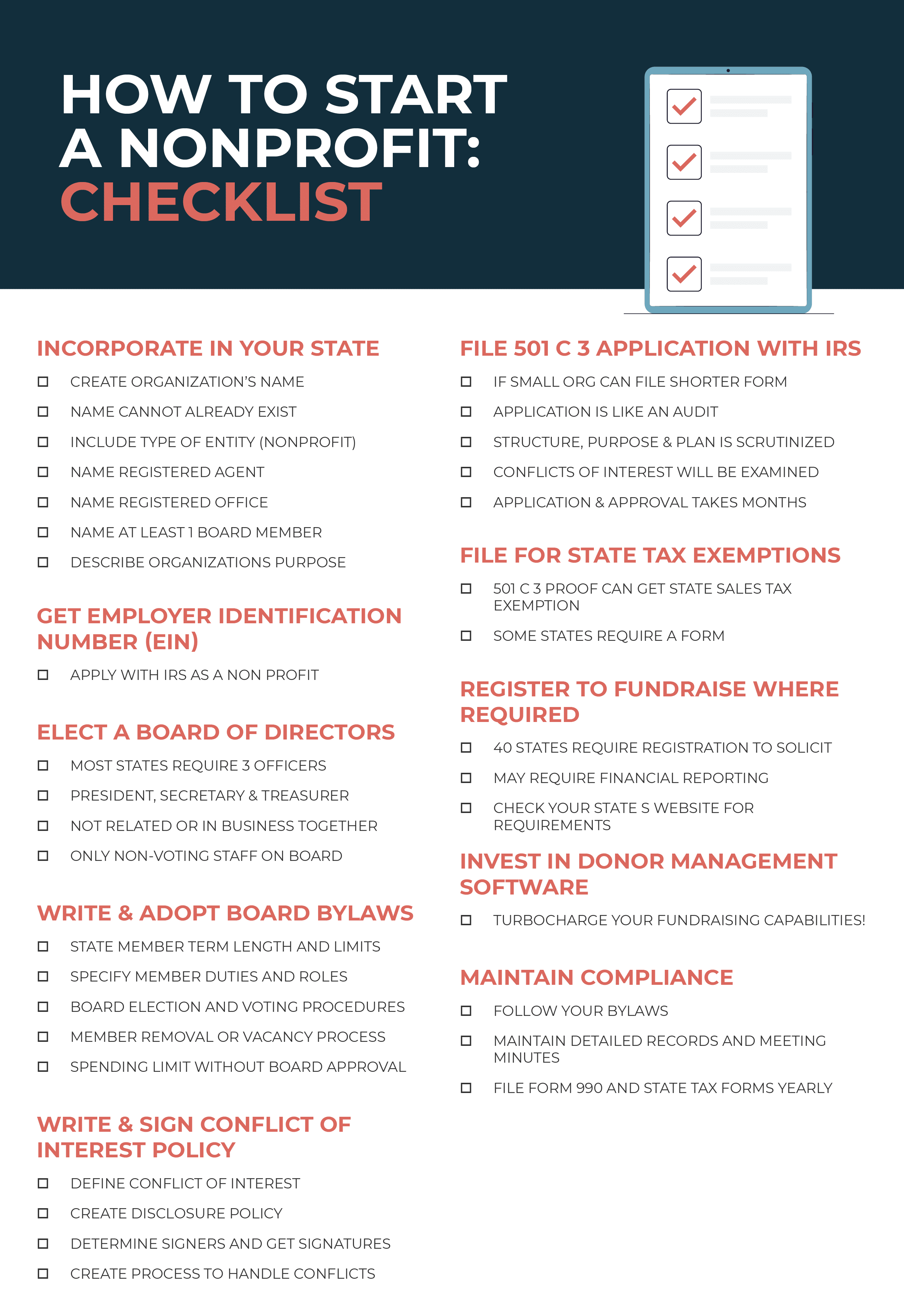
Exit Strategies and Liquidity Events
Founding an organization is often the largest single investment in a founder’s portfolio. Therefore, the founder must always keep an eye on the “Exit Strategy.” Whether the goal is an Initial Public Offering (IPO), a strategic acquisition by a larger corporation, or a management buyout, the organization must be built with a “liquidity event” in mind.
A “Strategic Acquisition” often occurs when a larger company sees a higher value in the organization’s assets or market share than the organization can generate on its own. To maximize valuation, founders must ensure their financial records are impeccable, their intellectual property is protected, and their revenue streams are diversified. The ultimate financial success of founding an organization is realized when the founder can convert their years of “sweat equity” into liquid wealth, providing the capital for their next venture or a secure financial future.
In conclusion, founding an organization is an exercise in financial discipline as much as it is an act of creativity. By meticulously choosing the right legal structure, securing capital through informed negotiation, managing cash flow with surgical precision, and scaling through strategic reinvestment, a founder transforms a mere idea into a valuable financial asset. In the world of business, those who master the money, master the mission.
aViewFromTheCave is a participant in the Amazon Services LLC Associates Program, an affiliate advertising program designed to provide a means for sites to earn advertising fees by advertising and linking to Amazon.com. Amazon, the Amazon logo, AmazonSupply, and the AmazonSupply logo are trademarks of Amazon.com, Inc. or its affiliates. As an Amazon Associate we earn affiliate commissions from qualifying purchases.