
In the modern financial landscape, the ability to move capital quickly and accurately is the backbone of personal wealth management. Whether you are setting up a direct deposit for a new high-paying career, connecting your brokerage account to fund long-term investments, or establishing an automated system for a side hustle, your Chase routing number is a critical piece of data. Often referred to as an ABA routing transit number (RTN), this nine-digit code serves as the primary address for your financial institution within the United States banking system.
Understanding how to locate and utilize this number is not just a matter of administrative convenience; it is a fundamental step in mastering your personal finances. JPMorgan Chase, as one of the “Big Four” banks in the United States, manages trillions of dollars in assets, and its routing system is designed to handle a massive volume of transactions daily. However, because Chase has expanded through decades of mergers and acquisitions, routing numbers can vary significantly based on where you opened your account.

The Essential Role of Routing Numbers in Personal Finance
Before diving into the “how,” it is vital for any savvy financial manager to understand the “what” and the “why.” The American Bankers Association (ABA) developed the routing number system in 1910 to facilitate the processing of paper checks. Today, while digital transactions have largely replaced physical paper, the routing number remains the standard for identifying the bank responsible for an Electronic Funds Transfer (EFT).
A routing number is structured with nine digits. The first four digits identify the Federal Reserve Bank district where the institution is located. The next four digits identify the specific bank itself, and the final digit is a check digit—a mathematical tool used to verify that the preceding eight digits were entered correctly. In the context of Chase, this number ensures that funds intended for your account don’t end up lost in the digital ether or directed to a different regional branch.
For individuals focused on financial growth, the routing number is the gateway to automation. Automation is the “secret sauce” of wealth building; it allows you to divert funds into high-yield savings accounts or investment portfolios before you have the chance to spend them. Without the correct Chase routing number, these automated pipelines cannot be established.
Four Proven Ways to Find Your Chase Routing Number
Chase has invested heavily in its digital infrastructure, making it relatively simple for account holders to retrieve their banking details. There are four primary methods to find your routing number, depending on whether you have digital access or physical documents on hand.
1. Utilizing the Chase Mobile App
For most users, the Chase Mobile App is the most efficient tool. Once you have logged in using your biometric data or password, follow these steps:
-
Select the specific checking or savings account you are inquiring about from the home screen.
-
Tap on “Account Details” or look for the “See more” dropdown menu.
-
The app will display your full account number (hidden by default for security) and your nine-digit routing number.
2. Accessing Chase Online Banking via Desktop
If you are at your desk managing your budget or setting up a new financial tool, using the desktop portal is often easier for copying and pasting data.
-
Log in to the Chase official website.
-
Click on the account tile you wish to use.
-
Navigate to the “Account services” or “Show details” tab.
-
Here, you will find your routing number clearly labeled alongside your account number.
3. Reviewing a Physical Check
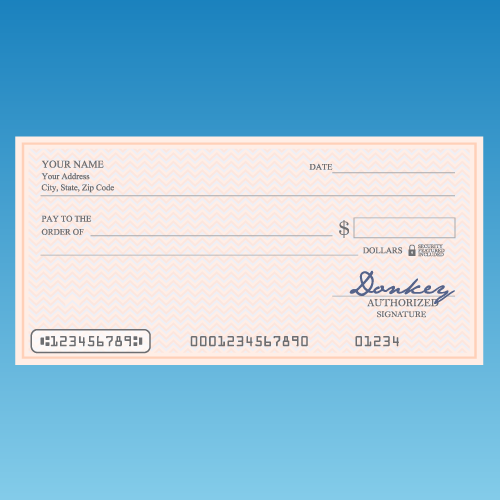
If you still carry a checkbook, the routing number is printed directly on every check. Look at the bottom-left corner. You will see a string of numbers printed in a specialized font known as MICR (Magnetic Ink Character Recognition).
-
The first set of nine digits is your routing number.
-
The second set of numbers is your account number.
-
The third set is the specific check number.
Always ensure you are looking at the nine digits bracketed by specific symbols, as these denote the start and end of the routing transit code.
4. Checking Your Monthly Statement
Your monthly bank statement—whether delivered via mail or downloaded as a PDF—contains all pertinent identification information for your account. The routing number is usually located in the header or the “Account Summary” section. This is often the best method if you need to provide a formal “voided check” equivalent for payroll or professional services.
Decoding State-Specific Routing and Wire Transfer Requirements
One of the most common pitfalls in personal finance is the assumption that a large bank like Chase uses a single routing number for all its operations. This is not the case. Chase utilizes different routing numbers based on the geographic region where the account was originally opened.
Regional Nuances
If you opened your account in New York, your routing number will differ from an account opened in California or Texas. This is a legacy of the various regional banks that Chase has acquired over the years, such as Chemical Bank, WaMu, or Bank One. When setting up an ACH (Automated Clearing House) transfer—which is used for things like direct deposit and utility bills—it is imperative that you use the number associated with your specific branch’s region. Using the wrong regional number can result in a “Return to Sender” error, which can delay paychecks or lead to late fees on bills.
ACH vs. Wire Transfers
There is a critical distinction that every Chase customer should know: the difference between an ACH routing number and a Wire Transfer routing number.
-
ACH Transfers: Used for standard transactions like payroll, Venmo transfers, and monthly bill payments. This is the “standard” routing number found on your checks.
-
Wire Transfers: Used for high-priority, large-sum transfers, such as a down payment on a home. Chase often uses a specific, centralized routing number for all domestic incoming wires, regardless of which state the account was opened in.
If you are receiving a domestic wire, you should verify the specific “Wire Routing Number” through the Chase app or website, as it may differ from the number on the bottom of your checks. Using the ACH number for a wire transfer is a frequent mistake that can lead to significant administrative headaches.
Strategic Financial Management: Using Routing Numbers for Wealth Building
Beyond the simple logistics of finding a number, understanding your banking details is a step toward sophisticated financial management. In the “Money” niche, we view these numbers as the coordinates for our financial engine.
Streamlining Income Streams
If you are managing multiple side hustles or freelance contracts, you need a streamlined way to collect payments. By providing your Chase routing and account numbers to clients or platforms like Stripe or PayPal, you bypass the fees associated with credit card processing or the delays of physical checks. This allows for a higher “velocity of money,” where your earnings can be put to work in investments sooner.
Funding Investment Vehicles
Most brokerage platforms (like Vanguard, Fidelity, or Charles Schwab) require a routing number to link your “funding” account. By correctly identifying your Chase routing number, you can set up a “push” system where a portion of every paycheck is automatically sent from Chase to your brokerage account. This utilizes the principle of dollar-cost averaging, ensuring you are consistently buying assets regardless of market volatility.
Security Protocols and Preventing Transfer Errors
Sharing your routing number is a standard part of doing business, but it must be handled with professional care. While a routing number alone cannot be used to withdraw money from your account, when paired with your account number, it provides the keys to your liquid assets.
Safety Best Practices
-
Only share with trusted entities: Only provide your routing and account numbers to verified employers, government agencies (like the IRS), and reputable financial institutions.
-
Monitor your accounts: Even when using the correct routing number, errors can occur. Use Chase’s “Account Alerts” to receive a text or email every time a transfer is initiated.
-
Verify the recipient: When sending money to another person or business using their routing number, double-check every digit. Unlike a credit card transaction, ACH and wire transfers can be notoriously difficult to reverse once the funds have left your account.

Troubleshooting Common Issues
If you provide a routing number and the transaction fails, the first step is to confirm the type of transfer. As mentioned, the most common error is using an ACH routing number for a wire transfer. The second most common error is using a routing number from an old account that was closed during a bank merger. If you have been a Chase customer for a long time, ensure you are using their current, updated routing digits and not a legacy number from a previous institution.
By maintaining a clear record of your Chase routing number and understanding its regional and functional nuances, you position yourself as a more capable and efficient manager of your own capital. In the world of personal finance, the details matter—and few details are as foundational as the nine digits that tell the world exactly where your money belongs.
aViewFromTheCave is a participant in the Amazon Services LLC Associates Program, an affiliate advertising program designed to provide a means for sites to earn advertising fees by advertising and linking to Amazon.com. Amazon, the Amazon logo, AmazonSupply, and the AmazonSupply logo are trademarks of Amazon.com, Inc. or its affiliates. As an Amazon Associate we earn affiliate commissions from qualifying purchases.