
In an increasingly digital financial landscape, managing your money effectively hinges on understanding the foundational elements of banking. Among these, the bank routing number stands out as a critical identifier, acting as a digital address for your financial institution. Whether you’re setting up direct deposit, paying bills online, sending a wire transfer, or managing your tax refunds, knowing how to quickly and accurately locate your bank’s routing number is an essential skill for anyone navigating the complexities of modern personal and business finance.
This comprehensive guide will demystify the bank routing number, explaining its significance, outlining multiple reliable methods to find it, and offering crucial insights into its secure handling. By the end, you’ll be well-equipped to manage your financial transactions with confidence and precision.

Understanding the Routing Number: Your Financial GPS
Before diving into the “how-to,” it’s vital to grasp what a routing number is and why it holds such importance in the financial ecosystem. Think of it as the unique identifier that directs funds to the correct bank, credit union, or financial institution within the U.S. banking system.
What is a Bank Routing Number?
A bank routing number, also known as an ABA (American Bankers Association) routing transit number (RTN), is a nine-digit code that identifies the financial institution to which a payment is directed. It’s primarily used for clearing funds for electronic transactions, such as Automated Clearing House (ACH) payments (e.g., direct deposits, automatic bill payments) and wire transfers. Each digit in the nine-digit sequence carries specific information, allowing the Federal Reserve to correctly route funds between banks. While a single bank may have multiple routing numbers depending on its size, location, or types of transactions, each specific account is typically associated with a particular routing number for most common operations.
The Critical Role of Routing Numbers in Modern Finance
The routing number is the linchpin of numerous financial operations that are integral to daily life for individuals and businesses alike. Without it, the seamless transfer of funds between different banks would be impossible.
- Direct Deposit: For your paycheck, government benefits, or tax refunds to land directly in your account, your employer or the issuing agency needs your bank’s routing number along alongside your specific account number.
- Automatic Bill Payments: Setting up recurring payments for utilities, loans, or subscriptions often requires this number to ensure funds are debited from the correct institution.
- Wire Transfers: Both domestic and international wire transfers rely on routing numbers (or their international equivalents like SWIFT codes) to ensure funds reach the intended recipient bank securely and swiftly.
- Online Payments and Transfers: Using platforms like Zelle, PayPal, or directly initiating transfers through your bank’s online portal often involves routing numbers in the background, even if you don’t input them directly.
- Paper Checks: Every check you write or receive contains the routing number, enabling the bank to process the transaction and clear the funds.
Understanding its role underscores why having quick access to this number is a fundamental aspect of efficient personal finance management.
Key Situations Where You’ll Need It
While we’ve touched on some, it’s helpful to list common scenarios:
- Setting up direct deposit: For employment, Social Security, VA benefits, or tax refunds.
- Initiating ACH payments: For mortgages, rent, car payments, or recurring utility bills.
- Receiving wire transfers: For large sums of money, often from selling assets or receiving business payments.
- Sending wire transfers: To transfer money to another person or business, domestically.
- Ordering new checks or deposit slips: Your check provider will need this to ensure the correct bank information is printed.
- Linking external accounts: For financial aggregation apps or transferring funds between your accounts at different banks.
- Filing taxes: Sometimes required for direct deposit of refunds or direct debit of payments.
Your Go-To Methods for Locating Your Routing Number
Fortunately, finding your bank routing number is usually straightforward, with several reliable methods at your disposal. Knowing these options ensures you can always access this vital piece of information when needed.
Checking Your Bank Statements
One of the most common and accessible places to find your routing number is on your bank statement. Whether you receive paper statements by mail or access digital statements through your online banking portal, the routing number is typically prominently displayed.
- Paper Statements: Look for it near your account number, bank address, or in a dedicated section often labeled “Routing Number” or “ABA RTN.” It might be at the top, bottom, or on the side of the statement.
- Online Statements: Log into your online banking account and navigate to the section for “Statements” or “eStatements.” Open your most recent statement (or any recent one) and look for the routing number in the same areas as a paper statement. This is often the quickest digital method.
The Power of Online Banking and Mobile Apps
In the age of digital finance, your bank’s online platform or mobile application is an invaluable resource for managing your accounts and finding key information.
- Online Banking Portals: After logging into your bank’s website, navigate to your account details. This might be under a tab like “Account Summary,” “Account Information,” “My Profile,” or “Statements & Documents.” The routing number is usually listed clearly alongside your account number. Some banks even have a dedicated section like “Direct Deposit Information” where both numbers are presented for convenience.
- Mobile Banking Apps: Most major banks’ mobile apps offer similar functionality. Log in, select the specific account you need information for, and look for “Account Details,” “Info,” or a similar option. The routing number, along with your account number, should be readily available. Some apps even feature a quick button or link specifically for “Direct Deposit Info” which will display both numbers.
Deciphering Your Checkbook
For those who still use paper checks, your physical checks are a reliable source of your routing number. This method is particularly useful if you don’t have immediate access to online banking or statements.
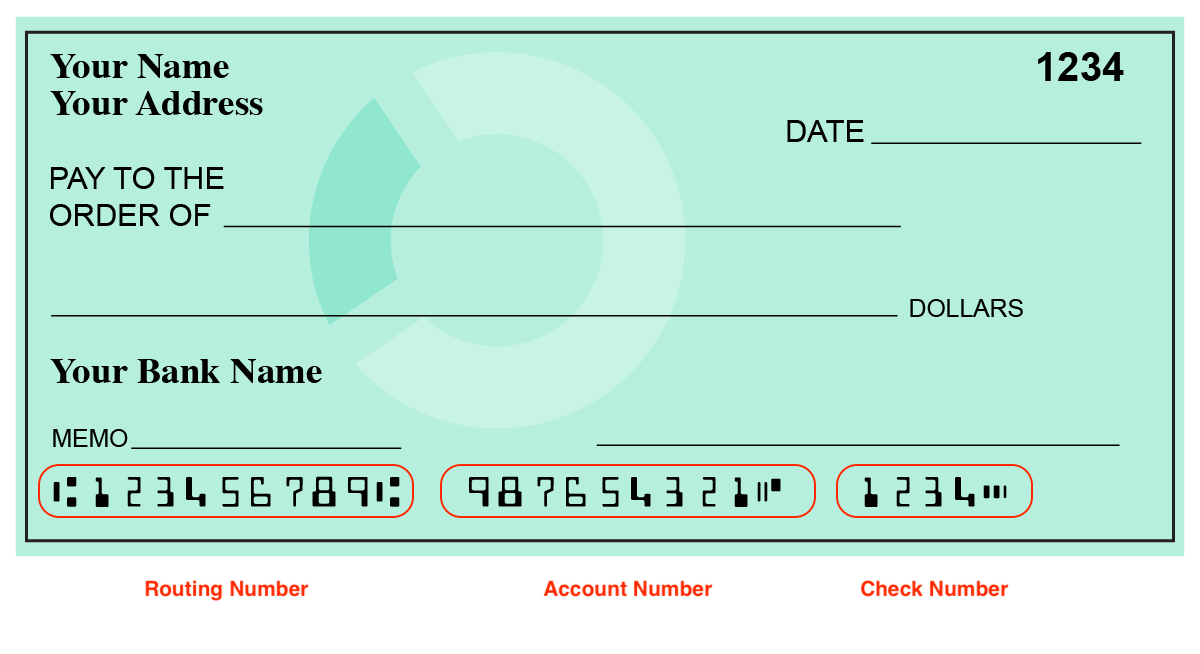
- On a Personal Check: Look at the bottom of a check. You will typically see three sets of numbers. From left to right, these are:
- Routing Number: The first set of nine digits.
- Account Number: The second set of numbers (length varies).
- Check Number: The third set of numbers, matching the number at the top right of the check.
Make sure you’re looking at a standard check from your current bank account, not a starter check or a deposit slip, as these sometimes have different formatting or different routing numbers for specific purposes.
Direct Contact with Your Bank
If all else fails, or if you prefer direct confirmation, contacting your bank is always a foolproof method.
- Phone Call: Call your bank’s customer service line. Be prepared to verify your identity (e.g., account number, last four digits of your Social Security number, address) before they can provide your routing number. This ensures the security of your financial information.
- In-Person Visit: Visit a local branch of your bank. A teller or customer service representative can provide you with the correct routing number for your account. Remember to bring a valid form of identification.
- Bank’s Official Website: Many banks have a “Contact Us” or “FAQ” section on their public website where they list their primary routing numbers. Be cautious, however, if you have multiple accounts or if your bank operates regionally, as the correct number might depend on your specific account type or location. Always double-check with one of the other methods if you’re unsure.
Beyond the Basics: Specific Scenarios and Considerations
While the primary methods cover most situations, understanding certain nuances can prevent common mistakes and ensure accuracy, especially in more complex financial transactions.
Distinguishing Between Different Routing Numbers (ACH vs. Wire)
It’s crucial to understand that some financial institutions, particularly larger ones, may use different routing numbers for different types of transactions.
- ACH (Automated Clearing House) Routing Number: This is the most common routing number used for direct deposits, automatic bill payments, and other electronic transfers that go through the ACH network. This is the number you’ll typically find on your checks and statements.
- Wire Transfer Routing Number: Some banks have a specific routing number for incoming domestic wire transfers. This is often different from the ACH routing number. Using the wrong number can delay or even reject a wire transfer, leading to frustration and potential fees. If you’re expecting a wire transfer, always confirm the specific wire transfer routing number with your bank or the sender.
Always clarify with your bank if you are performing a wire transfer to ensure you have the correct routing number for that specific transaction type.
Finding Routing Numbers for Digital-First Banks or Payment Platforms
With the rise of online-only banks, fintech companies, and payment apps, the process might slightly differ.
- Digital Banks: For banks like Ally Bank, Chime, or Capital One 360, you’ll primarily rely on their online banking portals or mobile apps. They typically make this information very accessible within your account details.
- Payment Platforms (e.g., PayPal, Venmo): These platforms often act as intermediaries. While they allow you to link your bank account using its routing number, they do not have their own routing numbers in the same sense as traditional banks. If you’re looking for a routing number to send money directly to your PayPal account, you’d typically need to generate a specific “Direct Deposit” routing and account number through PayPal itself, which then routes funds to your PayPal balance, not directly to an underlying bank. This is a crucial distinction.
What If You Have Multiple Accounts or Banks?
If you manage accounts at different banks or have multiple accounts (e.g., checking, savings) at the same bank, ensure you’re using the correct routing number for the specific account involved in the transaction. While many banks use the same routing number for all checking and savings accounts, it’s not universally true, especially if accounts were opened in different regions or at different times. Always verify the number directly from the statement or online portal of the account you intend to use.
International Transfers and SWIFT Codes (Brief Distinction)
While routing numbers are for domestic (U.S.) transfers, international money transfers involve a different set of identifiers.
- SWIFT/BIC Code: For international wire transfers, you’ll need the SWIFT (Society for Worldwide Interbank Financial Telecommunication) code, also known as a BIC (Bank Identifier Code). This is an internationally recognized code that identifies banks in global transactions. Your bank will have a specific SWIFT code if it handles international transfers. Do not confuse this with a routing number; they serve different purposes and geographies.
Security Best Practices When Handling Financial Information
Your routing number, when combined with your account number, provides access to your funds. Therefore, treating this information with care and vigilance is paramount for your financial security.
Protecting Your Routing Number and Account Details
- Be Mindful of Who You Share With: Only provide your routing and account numbers to trusted entities for legitimate purposes (e.g., your employer, government agencies, reputable billers).
- Verify Requests: If someone contacts you asking for this information, always verify their identity and the legitimacy of the request. Scammers often impersonate banks or government agencies.
- Secure Online Access: Use strong, unique passwords for your online banking. Enable multi-factor authentication whenever possible.
- Secure Documents: Shred old bank statements and voided checks before discarding them.
- Public Wi-Fi Caution: Avoid accessing sensitive financial information over unsecured public Wi-Fi networks.
Verifying Information Sources
When looking up your bank’s routing number online, always use your bank’s official website or a trusted financial resource. Be wary of third-party websites that claim to list routing numbers, as these might be outdated, incorrect, or even malicious. Cross-referencing with your bank statement or online banking portal is always the safest approach.
Recognizing and Avoiding Common Scams
- Phishing Attempts: Be suspicious of emails or text messages that ask for your bank details, even if they appear to be from your bank. Banks rarely ask for sensitive information via unsolicited communications.
- Fake Websites: Always double-check the URL of any banking website you visit to ensure it’s legitimate. Scammers often create convincing fake sites.
- Unusual Requests: If a supposed “bank employee” asks you to transfer money to a “safe account” using your routing number, it’s a scam. Banks will never ask you to do this.
The Future of Financial Transactions and Your Routing Number
While payment technologies continue to evolve at a rapid pace, the underlying infrastructure often still relies on traditional identifiers like routing numbers.
Evolution of Payment Systems
Innovations like instant payment networks (e.g., The FedNow Service in the U.S.) aim to make fund transfers even faster, but these systems still build upon or interact with the existing banking framework. The role of the routing number, while potentially abstracted for the end-user in some applications, remains crucial for identifying the destination financial institution within these advanced networks.
The Enduring Relevance of Traditional Banking Identifiers
Despite the rise of digital wallets, cryptocurrencies, and peer-to-peer payment apps, the bank routing number maintains its fundamental importance for traditional banking operations and for linking these newer technologies to your foundational bank accounts. It continues to be the bedrock upon which reliable and secure money movement within the U.S. financial system is built.

Conclusion
The bank routing number, a seemingly small nine-digit code, is an indispensable component of personal finance. From ensuring your paycheck arrives on time to enabling seamless online bill payments and facilitating larger financial transfers, its role is foundational. By familiarizing yourself with the reliable methods of finding this number—whether through your checks, bank statements, online banking, or direct contact with your financial institution—you empower yourself with the knowledge needed for smooth and secure financial transactions.
Always prioritize accuracy and security when handling your routing and account numbers. With the insights provided in this guide, you are now better prepared to navigate your financial world with confidence, ensuring your money always finds its way home.
aViewFromTheCave is a participant in the Amazon Services LLC Associates Program, an affiliate advertising program designed to provide a means for sites to earn advertising fees by advertising and linking to Amazon.com. Amazon, the Amazon logo, AmazonSupply, and the AmazonSupply logo are trademarks of Amazon.com, Inc. or its affiliates. As an Amazon Associate we earn affiliate commissions from qualifying purchases.