
In the complex world of personal finance, business, and investing, numbers tell a story. But raw numbers alone often lack the context needed for informed decisions. This is where percentages become indispensable. From understanding interest rates on a loan to calculating profit margins on a sale, deciphering discounts, or tracking investment growth, percentages provide a universal language for comparison, analysis, and strategic planning. They transform absolute figures into relative proportions, making it easier to grasp the significance of financial data and make sound choices.
This guide delves into the fundamental principles of finding “what percent,” not just as a mathematical exercise, but as a critical skill for navigating the financial landscape. We’ll explore core formulas, illustrate their practical applications across various financial scenarios, and equip you with the knowledge to wield this powerful tool with confidence and precision.

Understanding the Foundation: What is a Percent?
At its core, a percentage is a way of expressing a number as a fraction of 100. The term “percent” literally means “per hundred” or “out of one hundred.” It provides a standardized way to compare parts to a whole, regardless of the size of the whole. This standardization is what makes percentages so powerful in financial analysis, allowing for apples-to-apples comparisons across vastly different scales.
The Concept of Proportion
Every percentage calculation fundamentally deals with proportion. It asks: “What part of this whole does this specific amount represent?” If you have 25 apples out of a total of 100 apples, that’s 25 percent. If you earn $250 interest on a $10,000 investment, you’re looking for the proportional relationship between the interest earned and the principal invested. Understanding this part-to-whole relationship is the bedrock of all percentage calculations. It’s about recognizing that whether we’re discussing a small discount on a retail item or a massive change in a national economic indicator, the underlying mathematical concept remains consistent.
Why Percentages Matter in Finance
In finance, percentages are more than just numbers; they are indicators of health, growth, risk, and opportunity.
- Comparability: They allow you to compare the performance of different investments, the cost-effectiveness of various loans, or the profitability of diverse business ventures, even if the absolute monetary values are vastly different.
- Clarity: A 10% interest rate is immediately understandable, whereas stating “$1,000 on a $10,000 loan” requires an extra step of mental calculation to grasp its impact.
- Decision-Making: They empower you to make informed decisions about budgeting, saving, investing, and spending by clearly quantifying impacts and returns. For instance, understanding the percentage of your income spent on housing helps you manage your budget effectively.
- Forecasting: Historical percentage changes in inflation, market returns, or expense growth can be used to project future trends, aiding in long-term financial planning.
Core Formulas and Practical Applications
Mastering a few fundamental percentage formulas will unlock a world of financial understanding. These formulas are versatile and can be adapted to almost any financial question involving proportions.
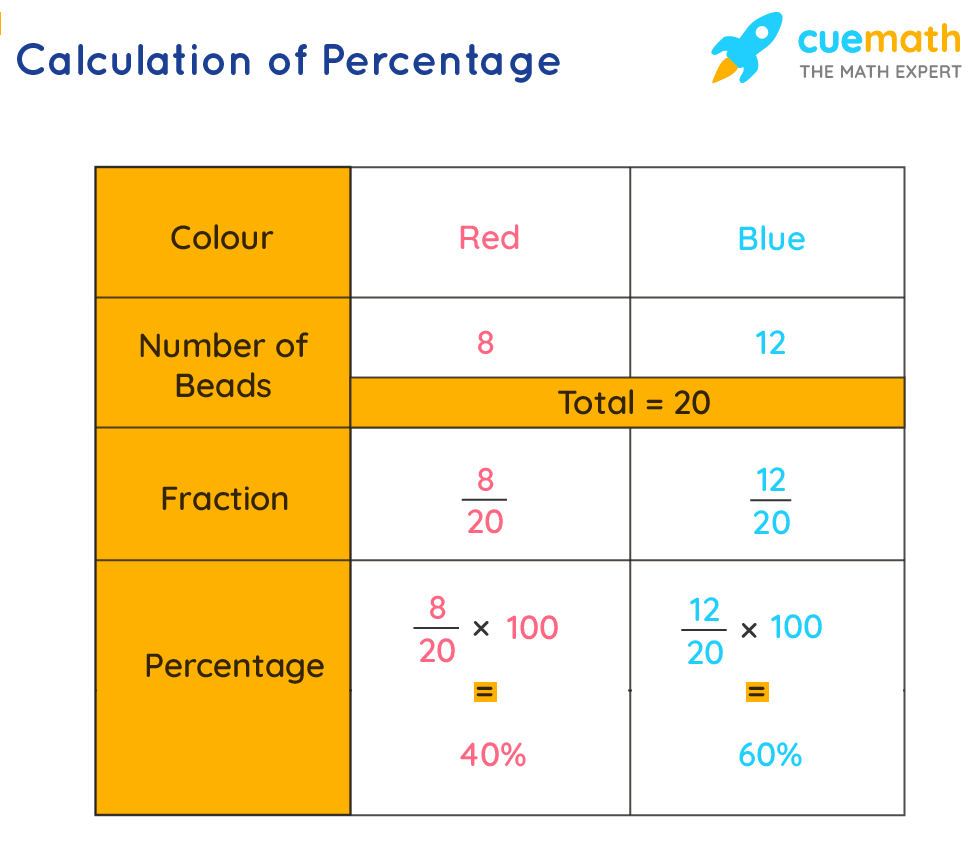
The most basic formula for finding “what percent” one number is of another is:
Percentage (%) = (Part / Whole) × 100
Let’s break down how this core concept is applied in various financial scenarios.
Finding a Percentage of a Number (Discounts, Taxes, Commissions)
This is perhaps the most common application. You know the whole amount and a percentage, and you want to find the “part” that percentage represents.
Formula: Amount = Percentage (as a decimal) × Whole
To convert a percentage to a decimal, divide it by 100 (e.g., 20% = 0.20).
Financial Examples:
- Discounts: If an item costs $150 and is on sale for 20% off, the discount amount is
0.20 × $150 = $30. The new price is$150 - $30 = $120. - Taxes: If you buy something for $50 and the sales tax is 8%, the tax amount is
0.08 × $50 = $4. The total cost is$50 + $4 = $54. - Commissions: If a salesperson earns a 5% commission on a $1,000 sale, their commission is
0.05 × $1,000 = $50.
Determining One Number as a Percentage of Another (Profit Margins, Expense Ratios)
This is the classic “how to find what percent” scenario: you have two numbers, and you want to express one as a percentage of the other. This is crucial for evaluating efficiency and profitability.
Formula: Percentage (%) = (Amount / Total) × 100
Financial Examples:
- Profit Margins: If a product sells for $100 and cost $60 to produce, the profit is $40. The profit margin (profit as a percentage of revenue) is
($40 / $100) × 100 = 40%. - Expense Ratios: If your total monthly income is $4,000 and you spend $1,200 on rent, your rent expense ratio is
($1,200 / $4,000) × 100 = 30%. This helps in budgeting and understanding where your money goes. - Portfolio Allocation: If your investment portfolio is worth $50,000 and $15,000 is allocated to stocks, the percentage allocation to stocks is
($15,000 / $50,000) × 100 = 30%.

Calculating Percentage Change (Investment Growth, Inflation, Salary Increases)
Understanding how quantities change over time, expressed as a percentage, is vital for tracking progress, evaluating performance, and making future projections.
Formula: Percentage Change (%) = ((New Value - Old Value) / Old Value) × 100
A positive result indicates a percentage increase, while a negative result indicates a percentage decrease.
Financial Examples:
- Investment Growth: If an investment grew from $10,000 to $12,000, the percentage growth is
(($12,000 - $10,000) / $10,000) × 100 = ($2,000 / $10,000) × 100 = 20%. - Inflation: If a basket of goods cost $100 last year and $103 this year, the inflation rate is
(($103 - $100) / $100) × 100 = ($3 / $100) × 100 = 3%. - Salary Increases: If your salary increased from $50,000 to $53,000, your raise was
(($53,000 - $50,000) / $50,000) × 100 = ($3,000 / $50,000) × 100 = 6%.
Real-World Financial Scenarios Solved with Percentages
The ability to calculate and interpret percentages is not just an academic skill; it’s a life skill that profoundly impacts financial well-being. Let’s explore several common financial scenarios where percentages are at the forefront.
Navigating Sales and Discounts
Every time you shop, percentages are at play. Understanding them helps you determine the actual savings and compare deals. A “30% off” sign instantly tells you the magnitude of the discount relative to the original price, allowing you to quickly assess its value. When faced with multiple discounts (e.g., 20% off, then an additional 10% off for cardholders), knowing how to calculate sequential percentages correctly ensures you understand the true final price. It’s often not simply adding the percentages.
Deciphering Interest Rates and Loan Payments
Interest rates, whether on savings accounts, credit cards, or mortgages, are always expressed as percentages.
- Savings: A 2% annual interest rate on your savings tells you how much your money will grow over a year.
- Loans: A 6% annual percentage rate (APR) on a loan indicates the cost of borrowing. Understanding how to calculate the actual interest paid over the life of a loan or the interest portion of a monthly payment is crucial for managing debt and avoiding financial pitfalls. These calculations often involve compound interest, where the percentage is applied not just to the initial principal but also to accumulated interest, leading to significant differences over time.
Analyzing Investment Returns and Portfolio Performance
For investors, percentages are the primary metric for evaluating performance.
- Return on Investment (ROI): This tells you the profitability of an investment relative to its cost, expressed as a percentage. It allows comparison of different investment vehicles.
- Annualized Returns: This standardizes returns over different time periods, making it possible to compare a 6-month gain with a 5-year gain.
- Expense Ratios of Funds: Mutual funds and ETFs charge management fees, expressed as a percentage of the assets under management. Even small percentages can significantly erode long-term returns, making their understanding essential.
- Diversification: Understanding what percentage of your portfolio is allocated to different asset classes (stocks, bonds, real estate) helps you manage risk and achieve your financial goals.
Budgeting and Expense Management
Effective personal and business budgeting relies heavily on percentages.
- Budget Allocation: Many financial experts recommend allocating specific percentages of income to different categories, such as 50% for needs, 30% for wants, and 20% for savings and debt repayment.
- Tracking Spending: Calculating what percentage of your income goes towards housing, food, transportation, or entertainment helps identify areas where you might be overspending and can make adjustments.
- Debt-to-Income Ratio: Lenders often assess your creditworthiness based on your debt-to-income ratio, a key percentage that reveals how much of your monthly gross income goes towards debt payments.
Tools and Tips for Accurate Percentage Calculations
While the underlying math is straightforward, accuracy is paramount in financial calculations. Thankfully, modern tools make the process seamless.
Leveraging Calculators and Spreadsheets
- Basic Calculators: Most standard calculators have a percentage button (%). While useful, it’s important to understand how it functions, as its behavior can vary between models. Generally, to find 20% of 150, you might type
150 * 20 %. - Scientific and Financial Calculators: These offer more advanced functions that can simplify complex calculations involving compound interest, present value, and future value, which are all percentage-driven.
- Spreadsheets (Excel, Google Sheets): These are invaluable for larger datasets and recurring calculations.
- To find 20% of a number in cell A1:
=A1*0.20or=A1*20%. - To find what percentage A1 is of B1:
=(A1/B1)*100or simply=(A1/B1)and then format the cell as a percentage. - To calculate percentage change between A1 (old) and B1 (new):
=((B1-A1)/A1)*100.
Spreadsheets allow you to build models for budgeting, investment tracking, and business analysis, with percentages updating automatically as underlying numbers change.
- To find 20% of a number in cell A1:
- Online Percentage Calculators: Numerous websites offer simple, free tools for quick percentage calculations.
Common Pitfalls to Avoid
Even with tools, errors can occur.
- Misinterpreting the “Whole”: Always be clear about what constitutes the “whole” or the base number when calculating a percentage. Is it the original price or the discounted price? Is it gross income or net income?
- Confusing Percentage Points with Percentage Change: A change from 5% to 7% is a 2 percentage point increase, but it’s a
((7-5)/5)*100 = 40%percentage increase. These are distinctly different. - Rounding Errors: For critical financial decisions, avoid premature rounding. Carry calculations to sufficient decimal places and only round the final result.
- Ignoring Context: A 10% return on investment sounds good, but not if the market average was 15% or if it took five years to achieve. Always consider the larger financial context.
- Sequential Discounts: Remember that “20% off, then an additional 10% off” is not 30% off. It’s 20% off the original price, and then 10% off the already discounted price.
Developing Your Financial Fluency
The ultimate goal isn’t just to be able to perform the calculations, but to understand what they mean. Practice is key. Regularly apply these concepts to your own financial life: analyze your budget, track your investments, compare loan offers, and evaluate sales. The more you engage with percentages in a financial context, the more intuitive they will become, transforming you from a passive observer of your money into an active, informed financial manager.
In conclusion, “how to find what percent” is a foundational question that opens the door to greater financial literacy and control. By mastering these core calculations and understanding their profound implications in money matters, you empower yourself to make smarter financial decisions, manage your resources more effectively, and confidently navigate the intricate world of personal finance, investing, and business.
aViewFromTheCave is a participant in the Amazon Services LLC Associates Program, an affiliate advertising program designed to provide a means for sites to earn advertising fees by advertising and linking to Amazon.com. Amazon, the Amazon logo, AmazonSupply, and the AmazonSupply logo are trademarks of Amazon.com, Inc. or its affiliates. As an Amazon Associate we earn affiliate commissions from qualifying purchases.