
In the world of finance, percentages are the primary language of progress, risk, and stability. Whether you are tracking the growth of a retirement fund, calculating the interest on a mortgage, or evaluating the profit margins of a side hustle, understanding how to find the percentage is not just a mathematical skill—it is a fundamental pillar of financial literacy. Percentages allow us to normalize data, making it possible to compare a small local business to a multinational corporation or to weigh the benefits of a high-yield savings account against the volatility of the stock market.

To truly master your money, you must move beyond a basic understanding of fractions and decimals and learn how to apply percentage calculations to various financial scenarios. This guide explores the essential formulas and strategic applications of percentages within the realms of personal finance, investment analysis, and business management.
The Fundamentals of Percentages in Personal Budgeting
At its core, a percentage is a way to express a number as a fraction of 100. In personal finance, this “whole” is usually your total income, your total debt, or your total net worth. By converting raw dollar amounts into percentages, you gain a clearer perspective on your financial health, allowing you to make adjustments that raw numbers might obscure.
Calculating the Savings Rate
One of the most critical percentages in personal finance is your savings rate. To find this percentage, you take the amount of money you save each month and divide it by your total take-home pay, then multiply by 100. For example, if you earn $5,000 a month and save $1,000, your savings rate is 20%.
Why does this matter more than the dollar amount? Because a $1,000 savings goal means something very different to someone earning $3,000 versus someone earning $10,000. By focusing on the percentage, you create a scalable habit that remains relevant even as your income increases. Financial experts often recommend the 50/30/20 rule: 50% for needs, 30% for wants, and 20% for savings and debt repayment. Monitoring these percentages ensures that “lifestyle creep” does not erode your financial future.
Understanding Debt-to-Income (DTI) Ratios
When you apply for a mortgage or a car loan, lenders do not just look at your salary; they look at your Debt-to-Income (DTI) ratio. To find this percentage, add up all your monthly debt obligations (credit card minimums, student loans, car payments) and divide them by your gross monthly income.
A DTI of 36% or lower is generally considered healthy. If you find your DTI creeping toward 50%, it is a mathematical red flag that you are overleveraged. Calculating this percentage yourself allows you to take proactive steps—such as aggressive debt paydown or seeking higher income—before a lender denies your application.
The Impact of Inflation on Purchasing Power
Inflation is measured as a percentage increase in the Consumer Price Index (CPI). If the annual inflation rate is 3%, the “value” of your dollar has essentially decreased by that percentage. Understanding how to calculate the real value of your money involves subtracting the inflation percentage from your nominal gains. If your savings account offers a 4% interest rate but inflation is at 3%, your “real” percentage gain is only 1%. Knowing how to find these percentages prevents you from falling into the trap of thinking you are getting wealthier when your purchasing power is actually stagnating.
Applying Percentage Calculations to Investment Performance
Investing is perhaps the area where percentage calculations are most vital. Investors use percentages to measure volatility, diversification, and, most importantly, the success of their capital allocations. Without these metrics, an investor is essentially flying blind.
Determining Return on Investment (ROI)
The most common question in investing is: “How much did I make?” To find the percentage of your Return on Investment (ROI), you use the formula: [(Current Value - Original Cost) / Original Cost] * 100.
If you bought a stock for $150 and it is now worth $180, your profit is $30. Dividing $30 by the original $150 gives you 0.20, or a 20% ROI. This percentage allows you to compare the performance of that stock against other assets, such as real estate or bonds, which may have different price points but comparable growth trajectories.
Evaluating Dividend Yields and Capital Gains
For income-focused investors, the dividend yield is a crucial percentage. It is calculated by dividing the annual dividend payment by the current share price. If a stock pays $2 in dividends per year and costs $50, the yield is 4%.
However, savvy investors look at the “Total Return,” which combines the dividend yield percentage with the capital gains percentage. A stock might have a high dividend yield of 8% but a capital loss of 10%, resulting in a total return of -2%. Learning to find and combine these percentages ensures you are not blinded by high yields that mask underlying asset depreciation.
Portfolio Rebalancing and Asset Allocation
Diversification is managed through percentages. An investor might decide on an allocation of 70% stocks and 30% bonds. Over time, if the stock market performs exceptionally well, the portfolio might shift to 80% stocks and 20% bonds.
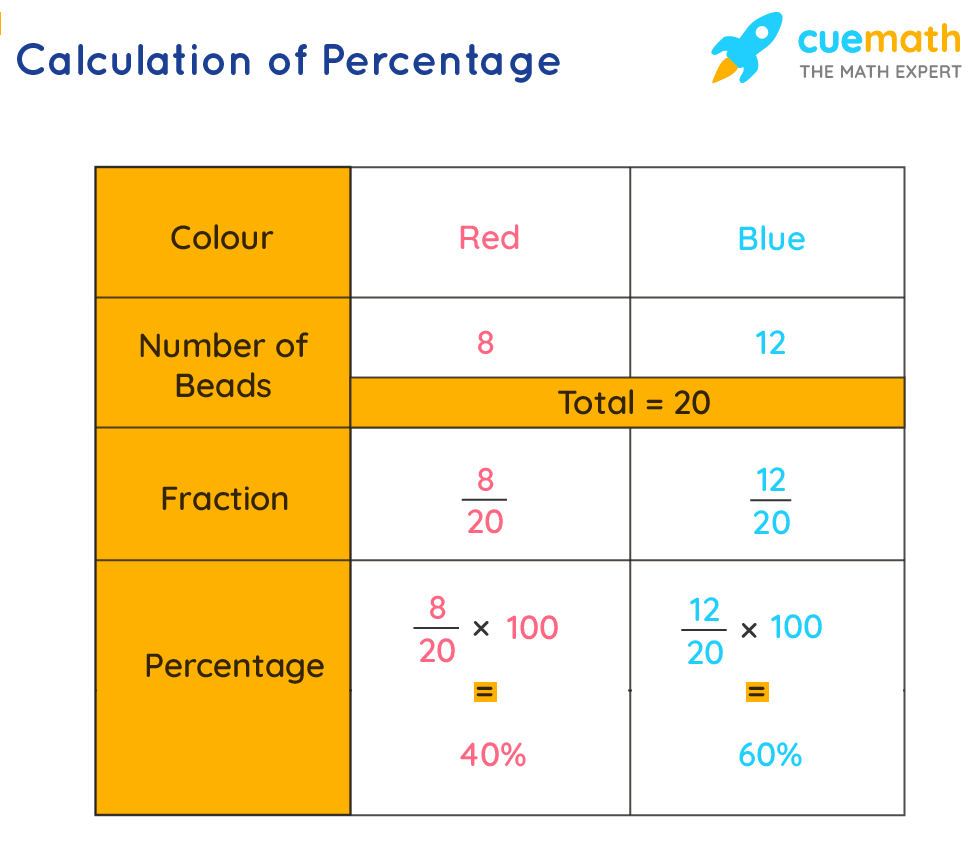
To find the percentage of each asset class, you divide the value of that specific asset by the total portfolio value. Rebalancing requires selling a portion of the outperforming asset to return to the original percentage targets. This disciplined approach—driven entirely by percentage calculations—forces the investor to “sell high and buy low,” a cornerstone of successful long-term wealth building.
Strategic Percentages for Business Finance and Growth
For entrepreneurs and business owners, percentages are the pulse of the company. They distinguish between a business that is simply moving a lot of cash and a business that is actually generating sustainable wealth.
Gross and Net Profit Margins
Revenue is a “vanity metric,” but profit margin is a “sanity metric.” To find the Gross Profit Margin percentage, subtract the Cost of Goods Sold (COGS) from total revenue, divide by revenue, and multiply by 100. This tells you how efficiently you are producing your product.
The Net Profit Margin is even more critical, as it accounts for all expenses, including taxes, interest, and overhead. A company might have millions in sales, but if the Net Profit Margin is only 2%, it is highly vulnerable to even minor market fluctuations. By tracking these percentages month-over-month, business owners can identify where costs are leaking and where pricing power can be improved.
Year-over-Year (YoY) Growth Metrics
To determine if a business is expanding, stagnant, or shrinking, leaders look at Year-over-Year (YoY) growth percentages. The formula is: [(Current Period Value - Prior Period Value) / Prior Period Value] * 100.
If a business earned $500,000 in 2022 and $600,000 in 2023, the growth percentage is 20%. This metric is far more telling than the $100,000 increase alone. In a fast-moving industry, a 20% growth rate might be considered slow, whereas, in a mature industry, it could represent market dominance. Understanding the percentage context helps in setting realistic goals and attracting potential investors.
Customer Acquisition Cost (CAC) and Lifetime Value (LTV)
In modern business finance, particularly in the digital and SaaS (Software as a Service) sectors, the ratio between CAC and LTV is expressed as a percentage or a multiple. If you spend $100 to acquire a customer (CAC) and that customer generates $300 in profit over their lifetime (LTV), your LTV is 300% of your CAC. Monitoring the percentage of marketing spend relative to revenue ensures that the business model is scalable and that the company is not “buying” growth at a loss.
The Impact of Percentages on Interest, Loans, and Credit
The way interest is calculated can be the difference between building wealth and falling into a debt trap. Understanding the nuances of how these percentages are applied is essential for anyone dealing with banks or credit institutions.
Annual Percentage Rate (APR) vs. Annual Percentage Yield (APY)
Financial institutions often use two different terms for interest: APR and APY. While they look similar, the math behind them affects your wallet differently.
- APR (Annual Percentage Rate) is usually applied to debt, like credit cards or car loans. It represents the simple interest rate over a year.
- APY (Annual Percentage Yield) is typically applied to savings and investments. It accounts for the effects of compounding—the interest you earn on your interest.
To find the actual cost of a loan or the actual gain on a savings account, you must understand how frequently the interest is compounded. A 5% APY is more profitable than a 5% APR because of that compounding effect. Being able to distinguish between these two percentages allows you to choose the most favorable financial products.
The Mathematics of Credit Card Interest
Credit card companies calculate interest based on a “Daily Periodic Rate,” which is your APR divided by 365. If you have a balance of $1,000 and an APR of 24%, your daily interest percentage is approximately 0.065%. While this seems small, it is applied to your balance every single day.
By understanding how to find this daily percentage, you can visualize how quickly debt snowballs. This mathematical reality is often the strongest motivation for consumers to pay off their balances in full each month, avoiding the high-interest trap that fuels the banking industry’s profits.
The Power of Compound Interest
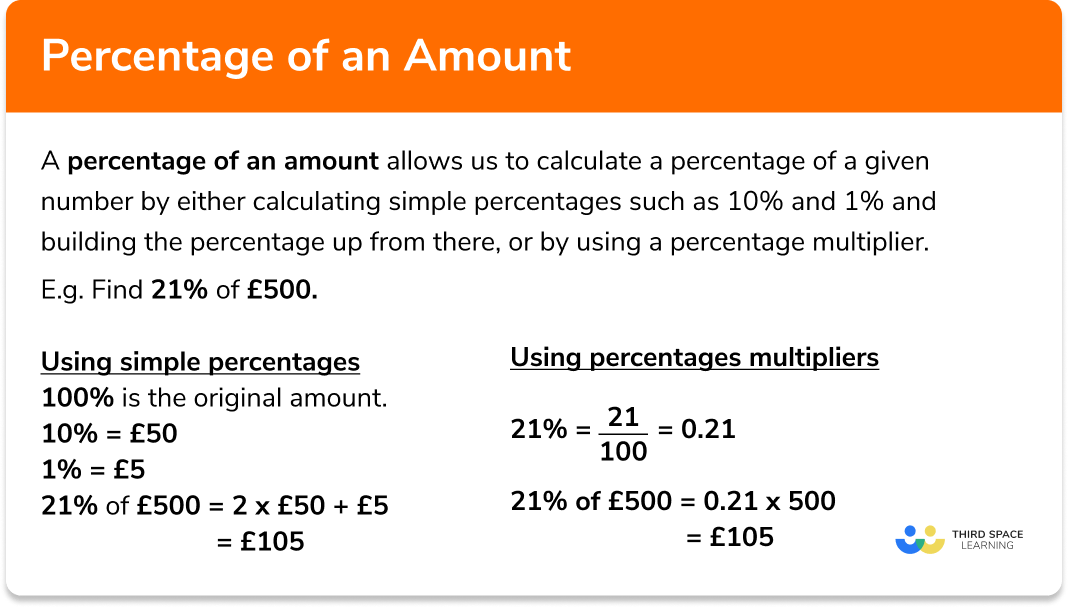
Albert Einstein reportedly called compound interest the “eighth wonder of the world.” To calculate the future value of an investment with compounding, the percentage rate is used exponentially. The “Rule of 72” is a quick way to use percentages to estimate when your money will double. Divide 72 by your annual interest rate percentage; for example, at a 7% return, your money will double in approximately 10.2 years. Mastering this simple percentage-based shortcut can transform your approach to long-term retirement planning and wealth accumulation.
In conclusion, the ability to find and interpret percentages is the ultimate tool in the investor’s and saver’s toolkit. From evaluating the health of a personal budget to analyzing the complex returns of a diversified portfolio or a growing business, percentages provide the clarity needed to make informed, unemotional financial decisions. By mastering these calculations, you move from being a passive participant in your financial life to being a strategic manager of your economic future.
aViewFromTheCave is a participant in the Amazon Services LLC Associates Program, an affiliate advertising program designed to provide a means for sites to earn advertising fees by advertising and linking to Amazon.com. Amazon, the Amazon logo, AmazonSupply, and the AmazonSupply logo are trademarks of Amazon.com, Inc. or its affiliates. As an Amazon Associate we earn affiliate commissions from qualifying purchases.