
In the intricate world of personal finance, business operations, and investment strategies, numbers reign supreme. Yet, among all the numerical concepts, few are as omnipresent and critical as the percentage. From understanding a discount at your favorite store to dissecting the performance of your investment portfolio, percentages are the universal language that translates raw data into actionable insights. They allow us to compare, assess, and forecast, providing a crucial lens through which we view our financial landscape.
This guide delves into the fundamentals of finding percentages in math, but with a distinct and unwavering focus on its application in the realm of money. We’ll explore not just the “how-to,” but also the “why it matters” in every financial decision you make. Mastering percentages isn’t just about arithmetic; it’s about empowering yourself with financial literacy, enabling smarter choices, and ultimately, building a more secure and prosperous future.
The Foundation of Financial Literacy: Understanding Percentages
Before we dive into the calculations, it’s essential to grasp what a percentage truly represents and why its role in finance is non-negotiable. It’s more than just a symbol; it’s a powerful comparative tool.
What Exactly is a Percentage?
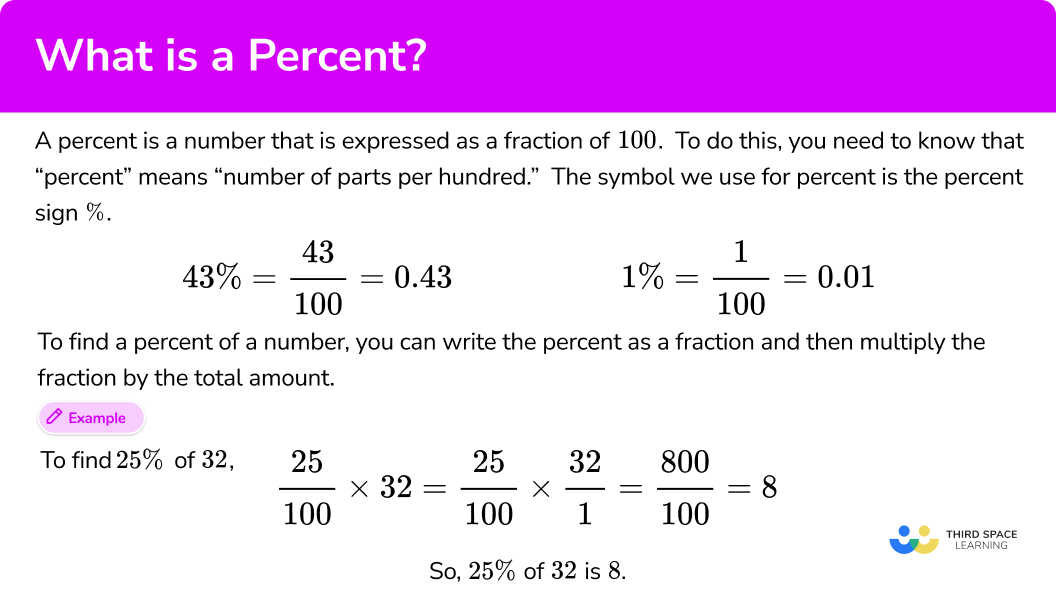
At its core, a percentage is a way of expressing a number as a fraction of 100. The word “percent” originates from the Latin phrase “per centum,” meaning “by the hundred.” When you see 25%, it means 25 out of every 100, or 25/100. This standardized way of expressing parts of a whole makes comparisons incredibly straightforward, regardless of the original size of the whole.
In finance, this concept is applied universally. For instance, if you own 10% of a company, it means you possess 10 shares for every 100 total shares issued. If your savings account offers an annual interest rate of 0.5%, it means for every $100 you have deposited, you’ll earn $0.50 in interest over a year. Understanding this fundamental definition is the first step towards demystifying financial statements and economic news.
Why Percentages Matter in Your Financial Life
The ubiquity of percentages in finance is no accident. They provide clarity, context, and a common basis for comparison across diverse financial scenarios.
- Interest Rates: Whether you’re earning interest on savings or paying interest on a loan or credit card, these are almost exclusively expressed as percentages (e.g., Annual Percentage Rate – APR).
- Discounts and Sales: Every shopper understands the appeal of a “20% off” sign. Percentages help you quickly calculate the savings and decide if a deal is truly worthwhile.
- Taxes: Income tax, sales tax, property tax – all are calculated as a percentage of a base amount. Understanding these percentages is vital for budgeting and financial planning.
- Investment Returns: The performance of stocks, bonds, mutual funds, or real estate is almost always communicated as a percentage return on investment (ROI). This allows for easy comparison between different investment vehicles.
- Inflation: The rate at which the cost of goods and services rises is measured as a percentage, directly impacting your purchasing power and the real value of your savings.
- Budgeting: Allocating a certain percentage of your income to housing, food, savings, or entertainment is a common and effective budgeting strategy.
Without a solid grasp of percentages, navigating these everyday financial situations becomes akin to sailing without a compass.
Mastering Basic Percentage Calculations for Everyday Finance
The good news is that the core mathematical operations for finding percentages are relatively simple. Once you understand the fundamental formula, you can apply it to a myriad of financial scenarios.
The Core Formula: Part, Whole, and the Power of 100
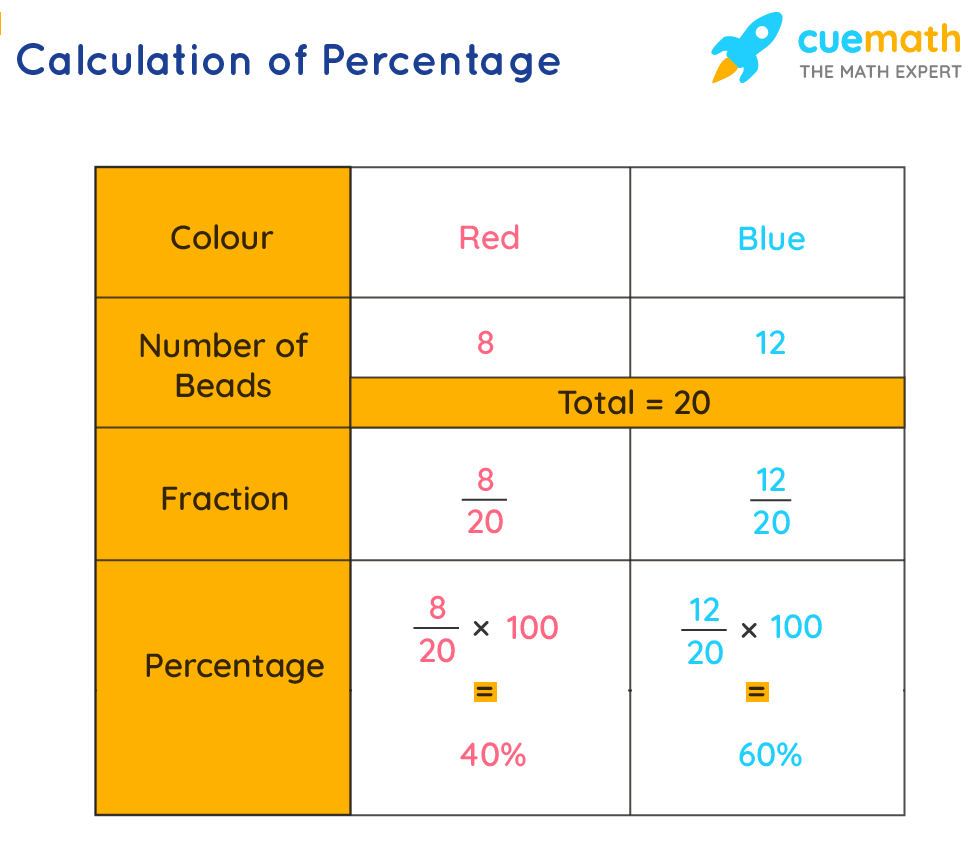
The most fundamental way to find a percentage is by using the formula:
Percentage = (Part / Whole) × 100
Let’s break this down with financial examples:
- Example 1: Budget Allocation. If your monthly income (Whole) is $4,000, and you spend $1,200 (Part) on housing, what percentage of your income goes to housing?
- Percentage = ($1,200 / $4,000) × 100 = 0.30 × 100 = 30%
- Example 2: Portfolio Composition. If your total investment portfolio (Whole) is worth $100,000, and $25,000 (Part) is invested in a specific stock, what percentage of your portfolio is that stock?
- Percentage = ($25,000 / $100,000) × 100 = 0.25 × 100 = 25%
This formula is the bedrock. Understand it, and you’ve unlocked a significant portion of financial arithmetic.
Calculating a Percentage of a Number
Often, you’ll need to find what a certain percentage is of a given number. This is crucial for calculating taxes, discounts, or commissions. The formula is a rearrangement of the core one:
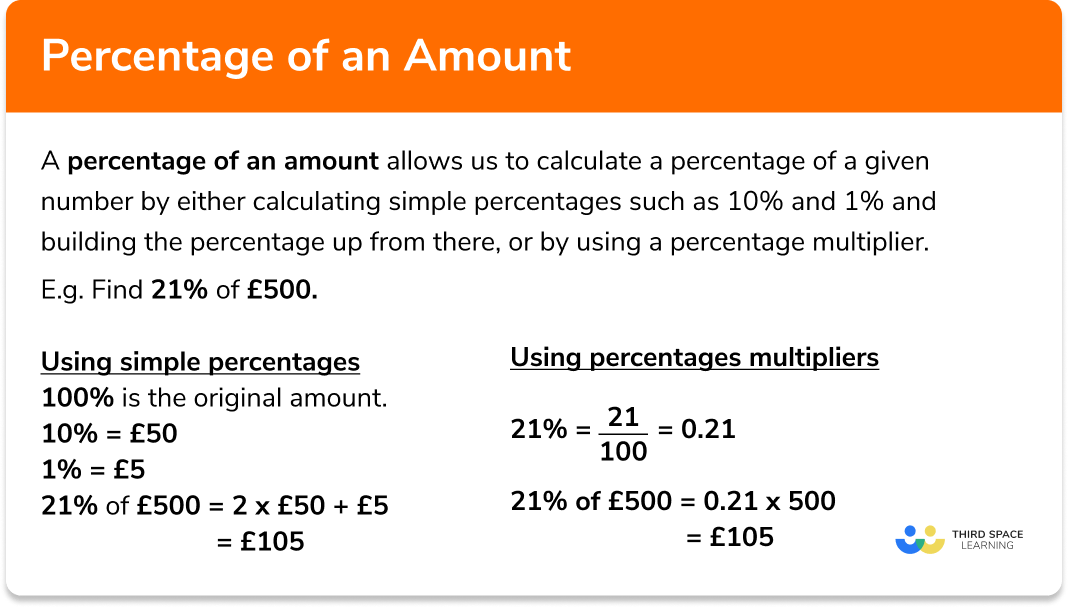
Part = (Percentage / 100) × Whole
Or, more simply, convert the percentage to a decimal (divide by 100) and multiply by the whole.
- Example 1: Sales Tax. If an item costs $50 (Whole) and the sales tax is 7% (Percentage), how much is the sales tax (Part)?
- Sales Tax = (7 / 100) × $50 = 0.07 × $50 = $3.50
- Total cost = $50 + $3.50 = $53.50
- Example 2: Discount Amount. You see a jacket priced at $120 (Whole) with a “25% off” (Percentage) sign. How much money do you save (Part)?
- Discount = (25 / 100) × $120 = 0.25 × $120 = $30
- Final price = $120 – $30 = $90
- Example 3: Commission. A salesperson earns a 15% commission (Percentage) on sales. If they make $5,000 in sales (Whole), how much commission do they earn (Part)?
- Commission = (15 / 100) × $5,000 = 0.15 × $5,000 = $750
Determining the Original Whole from a Percentage
Sometimes you know the “part” and its percentage, but you need to find the “whole.” This is useful for understanding original prices, or gross income before deductions.
Whole = Part / (Percentage / 100)
- Example 1: Finding Original Price After Discount. You bought an item on sale for $75 (Part), which was marked “25% off.” What was the original price (Whole)?
- If it’s 25% off, you paid 100% – 25% = 75% of the original price.
- Original Price = $75 / (75 / 100) = $75 / 0.75 = $100
- Example 2: Gross Income Before Tax. Your take-home pay (Part) is $3,500, and you know 20% (Percentage) of your gross income was withheld for taxes. What was your gross income (Whole)?
- If 20% was withheld, your take-home pay is 100% – 20% = 80% of your gross income.
- Gross Income = $3,500 / (80 / 100) = $3,500 / 0.80 = $4,375
Navigating Financial Changes: Percentage Increase and Decrease
Financial life is dynamic, characterized by constant fluctuations in value. Percentage increase and decrease are vital tools for measuring these changes accurately.
Understanding Growth: Percentage Increase
A percentage increase tells you how much a value has grown relative to its original amount. This is critical for assessing investment performance, inflation, or salary growth.
Percentage Increase = [(New Value – Original Value) / Original Value] × 100
- Example 1: Investment Returns. You invested $1,000 in a stock, and it grew to $1,250. What is the percentage increase?
- Percentage Increase = [($1,250 – $1,000) / $1,000] × 100 = ($250 / $1,000) × 100 = 0.25 × 100 = 25%
- Example 2: Salary Raise. Your annual salary increased from $50,000 to $53,000. What was your percentage raise?
- Percentage Increase = [($53,000 – $50,000) / $50,000] × 100 = ($3,000 / $50,000) × 100 = 0.06 × 100 = 6%
Analyzing Reductions: Percentage Decrease
Conversely, a percentage decrease quantifies a reduction in value, essential for understanding depreciation, market downturns, or discount rates.
Percentage Decrease = [(Original Value – New Value) / Original Value] × 100
- Example 1: Market Downturn. Your stock portfolio was worth $80,000, but due to a market correction, it dropped to $72,000. What is the percentage decrease?
- Percentage Decrease = [($80,000 – $72,000) / $80,000] × 100 = ($8,000 / $80,000) × 100 = 0.10 × 100 = 10%
- Example 2: Asset Depreciation. You bought a car for $30,000. A year later, its market value is $24,000. What is the percentage decrease in value?
- Percentage Decrease = [($30,000 – $24,000) / $30,000] × 100 = ($6,000 / $30,000) × 100 = 0.20 × 100 = 20%
The Pitfalls of Percentage Points vs. Percentage Change
A common source of confusion, particularly in financial news, is the difference between “percentage points” and “percentage change.”
- Percentage Points refers to the absolute difference between two percentages.
- Example: If an interest rate increases from 3% to 4%, that’s an increase of 1 percentage point.
- Percentage Change refers to the relative change, calculated using the percentage increase/decrease formula.
- Example: An increase from 3% to 4% is not a 1% increase. It’s an increase of [(4 – 3) / 3] × 100 = (1 / 3) × 100 = 33.33% in the rate itself.
This distinction is crucial for accurately interpreting financial data, especially when discussing interest rates, unemployment figures, or economic growth rates.
Real-World Financial Applications: Putting Percentages to Work
The theoretical understanding of percentages truly shines when applied to practical financial scenarios. Here’s how they directly impact your money decisions.
Personal Budgeting and Saving Goals
Percentages are invaluable for creating and sticking to a budget. Many financial advisors recommend allocating percentages of your after-tax income to various categories (e.g., 50% for needs, 30% for wants, 20% for savings and debt repayment – the 50/30/20 rule). This flexibility allows the budget to scale with your income and provides clear targets. Tracking your savings rate as a percentage of your income (e.g., saving 15% of every paycheck) helps you visualize progress towards long-term financial goals like a down payment or retirement.
Investment Analysis and Portfolio Performance
Every serious investor relies heavily on percentages.
- Return on Investment (ROI): Calculated as (Net Profit / Cost of Investment) × 100, ROI is the primary metric for evaluating an investment’s profitability.
- Expense Ratios: Mutual funds and ETFs charge an annual fee, expressed as a percentage of your total investment (e.g., 0.50% expense ratio). Even small differences can significantly impact long-term returns.
- Asset Allocation: Deciding what percentage of your portfolio to put into stocks, bonds, or real estate (e.g., 60% stocks, 40% bonds) is a fundamental part of risk management and aligning investments with your financial goals.
Debt Management and Loan Interest
Understanding the percentages associated with debt is critical.
- Annual Percentage Rate (APR): This is the yearly cost of a loan, including interest and other charges, expressed as a percentage. A higher APR means higher borrowing costs.
- Minimum Payments: Often calculated as a percentage of your outstanding balance, knowing how much of your payment goes to interest versus principal helps you understand your repayment trajectory. Recognizing how compounding interest works (e.g., 18% APR on a credit card balance) motivates faster debt repayment.
Sales, Discounts, and Consumer Smarts
Beyond simply calculating the discount amount, understanding percentages allows you to be a savvier consumer.
- Comparing Deals: Is “buy one get one 50% off” better than “30% off the total bill”? Knowing how to calculate the effective percentage discount helps you make informed choices.
- Understanding Markups: While primarily a business concern, consumers who understand markups (the percentage added to cost to determine selling price) can better judge the value of products.
Tools and Tips for Error-Free Financial Percentage Calculations
While the underlying math is straightforward, accuracy is paramount in finance. A misplaced decimal or a misread percentage can have significant consequences.
Leveraging Calculators and Spreadsheets
For complex or repetitive calculations, don’t rely solely on mental math.
- Basic Calculators: Most modern calculators have a “%” button, which can simplify common operations like finding a percentage of a number or adding/subtracting a percentage.
- Spreadsheets (e.g., Excel, Google Sheets): These are indispensable for financial planning. They allow you to set up formulas (e.g.,
=A1*0.05for 5% of cell A1), automatically update calculations, and organize large datasets. Learning basic spreadsheet functions is a powerful financial skill. - Online Converters/Calculators: Numerous websites offer quick percentage calculators for various scenarios, which can be helpful for double-checking your work.
Common Mistakes to Avoid
Even seasoned professionals can make simple errors. Be vigilant against:
- Misinterpreting the Base: Always ensure you’re calculating the percentage of the correct whole. For example, a “20% increase on your salary” means 20% of your original salary, not your new one.
- Decimal Point Errors: Forgetting to convert a percentage to a decimal (dividing by 100) before multiplying, or vice versa. 25% is 0.25, not 25.
- Rounding Errors: In financial contexts, small rounding errors can accumulate, especially over long periods or with large sums. Be mindful of how many decimal places are appropriate for accuracy.
- Confusing Percentage Points with Percentage Change: As discussed, this can lead to a drastic misunderstanding of actual growth or decline.
Cultivating a Percentage Mindset
Beyond the formulas and tools, developing a “percentage mindset” is perhaps the most valuable takeaway. This means:
- Questioning Figures: When you see a financial statistic, always ask: “Percentage of what?” or “Percentage point change or actual percentage change?”
- Thinking Comparatively: Use percentages to benchmark against industry averages, personal goals, or historical data.
- Visualizing Proportions: Understand that a percentage represents a slice of a pie, helping you grasp the relative significance of different financial components.
Mastering how to find and interpret percentages is more than just a math skill; it’s a foundational pillar of financial literacy. By understanding these concepts, you equip yourself to make more informed decisions, manage your money more effectively, and confidently navigate the ever-evolving financial world.
aViewFromTheCave is a participant in the Amazon Services LLC Associates Program, an affiliate advertising program designed to provide a means for sites to earn advertising fees by advertising and linking to Amazon.com. Amazon, the Amazon logo, AmazonSupply, and the AmazonSupply logo are trademarks of Amazon.com, Inc. or its affiliates. As an Amazon Associate we earn affiliate commissions from qualifying purchases.