
In the landscape of modern personal finance, travel often represents one of the most significant discretionary expenses. For the astute budgeter and the strategic investor alike, the ability to minimize the cost of airfare is not merely about “saving a few dollars”—it is about optimizing capital allocation. Every hundred dollars saved on a cross-continental flight is capital that can be redirected toward an emergency fund, a high-yield savings account, or a diversified investment portfolio. Finding the best flight rates requires a blend of psychological discipline, technical proficiency with financial tools, and an understanding of the complex algorithms that drive airline revenue management.
Understanding the Economics of Modern Airfare
To master the art of finding low-cost flights, one must first understand that airline pricing is a masterpiece of dynamic economic modeling. Unlike a retail product with a fixed price tag, a seat on an airplane is a “perishable good.” If the plane takes off with an empty seat, the revenue potential for that seat drops to zero instantly. Consequently, airlines utilize sophisticated Revenue Management Systems (RMS) to fluctuate prices based on demand, velocity of sales, and historical data.
The Myth of the “Magic Booking Day”
In the realm of personal finance advice, there is a persistent myth that booking on a Tuesday at 3:00 PM will yield the lowest rates. While there was a grain of statistical truth to this a decade ago when airlines manually updated their databases, modern AI-driven pricing engines work in real-time. Prices change by the minute. Instead of looking for a “magic day,” savvy travelers focus on the “booking window.”
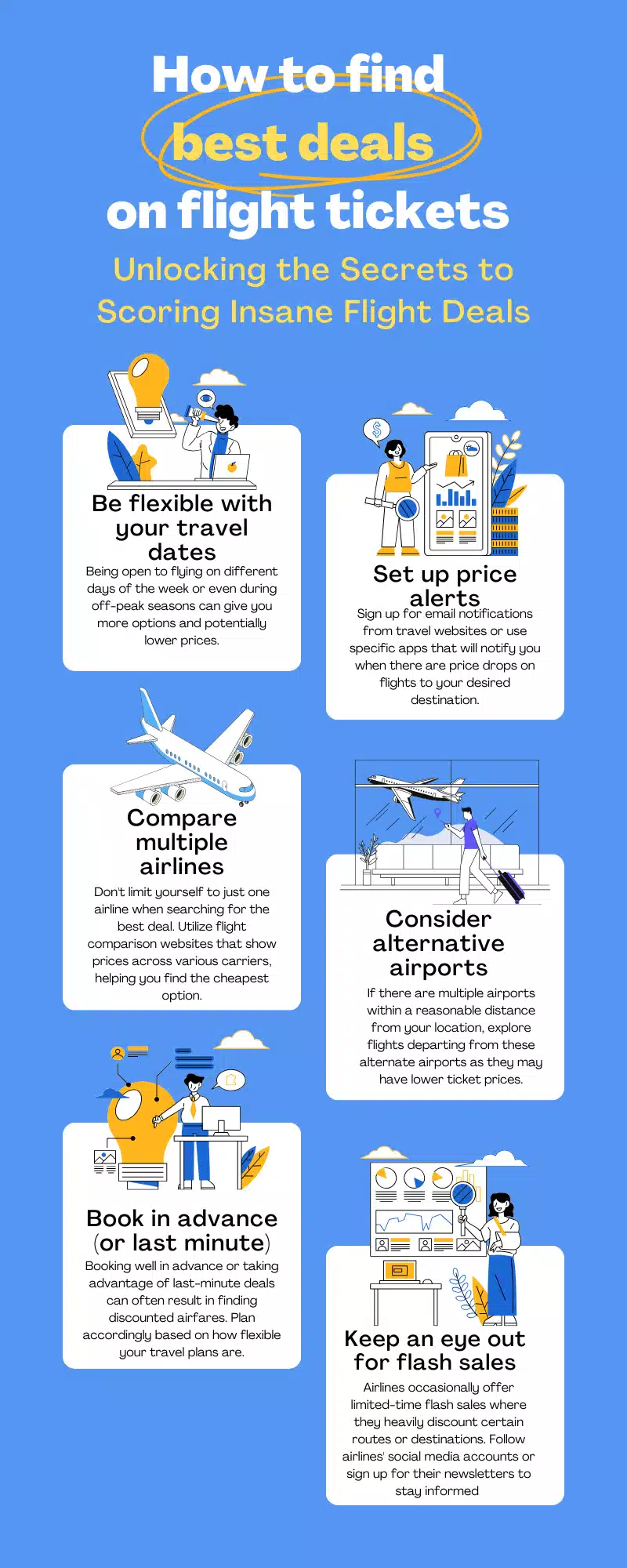
For domestic flights, the financial “sweet spot” typically occurs between one and three months before departure. For international travel, the window expands to three to six months. Booking too early can be just as financially detrimental as booking too late, as airlines often set high initial prices to capture revenue from inflexible corporate travelers before lowering them to fill remaining capacity.
Dynamic Pricing and Behavioral Finance
Airlines are experts at behavioral finance. They use scarcity cues—such as “only 2 seats left at this price”—to trigger an emotional response known as Loss Aversion. From a financial perspective, it is crucial to remain objective. Often, those “last two seats” are merely the last two in a specific “fare bucket,” and once they are sold, the price may only increase by a marginal amount. By remaining detached and relying on data rather than urgency, travelers can avoid overpaying due to artificial pressure.
Leveraging Financial Tools and Aggregators
In the digital age, your greatest asset in the pursuit of lower flight rates is information. However, the sheer volume of data can be overwhelming. To find the best rates, one must treat the search process like market research for a high-stakes investment.
Mastering Search Engine Filters
Google Flights and Skyscanner have become the “Bloomberg Terminals” of the travel world. To utilize them effectively for financial gain, you must look beyond the basic search. The “Explore” feature in Google Flights allows you to view a map of the world with the lowest prices from your home airport over a flexible timeframe. This is a powerful tool for those whose primary goal is cost-avoidance rather than a specific destination.
Furthermore, using filters to exclude specific airlines or to limit the number of stops can help you calculate the “true cost” of a flight. A flight that is $50 cheaper but involves a 12-hour layover may actually be more expensive when you factor in the cost of food, airport amenities, and the opportunity cost of your time.
Setting Price Alerts for Long-Term Savings
The most successful investors don’t watch the ticker 24/7; they set alerts for when a stock hits their target price. The same logic applies to airfare. Financial discipline dictates that you should determine your “strike price”—the maximum you are willing to pay for a specific route—and set alerts across multiple platforms. When the price drops into your target range, the decision is already made, removing the emotional hesitation that often leads to missing out on a deal.
Travel Arbitrage: Maximizing Credit Card Points and Loyalty Programs
Perhaps the most sophisticated way to lower flight costs is through travel arbitrage—using credit card rewards and loyalty points to offset the cash price of a ticket. In the “Money” niche, this is often referred to as “Travel Hacking,” but it is essentially a form of asset management.
The ROI of Premium Travel Cards

While many are hesitant to pay annual fees for credit cards, the Return on Investment (ROI) can be substantial. A card with a $550 annual fee might offer a $300 travel credit, a $100 credit for Global Entry, and a sign-up bonus worth $1,000 in airfare. From a balance sheet perspective, the card provides $1,400 in value for a $550 investment in the first year.
Furthermore, these cards often provide “Primary Rental Car Insurance” and “Trip Cancellation Insurance.” By utilizing these built-in financial products, you can decline the expensive insurance upsells offered by airlines and rental agencies, saving hundreds of dollars per trip.
Transfer Partners and Point Valuation
The real wealth in the points system lies in transferability. Instead of booking a flight directly through a bank’s portal (where points are usually worth a fixed 1 to 1.5 cents each), savvy users transfer those points to airline partners.
For example, a business class seat to Europe might cost $4,000 cash or 60,000 points. By transferring points to the airline, you achieve a valuation of roughly 6.6 cents per point—a massive increase in the purchasing power of your rewards. Understanding the “Cent Per Point” (CPP) metric is vital for determining whether to pay with cash or points for a particular flight.
Strategic Booking Maneuvers for the Budget-Conscious Traveler
Beyond tools and points, there are structural ways to manipulate the geography of airfare to your financial advantage. This requires a shift from a “passenger” mindset to a “logistics manager” mindset.
The Open-Jaw and Multi-City Strategy
A common mistake in personal travel budgeting is assuming that a round-trip ticket to a single city is always the cheapest option. Often, “Open-Jaw” tickets—flying into London and out of Paris, for example—can save both time and money. When you factor in the cost of backtracking to your original arrival city (train tickets, gas, hotel nights), the Open-Jaw ticket often results in a lower “Total Trip Cost.”
Currency Arbitrage and Regional Site Booking
This is a more advanced financial tactic. Airlines often price tickets differently depending on the “Point of Sale.” By using a VPN or navigating to the local version of an airline’s website (e.g., the .com.br version for a Brazilian airline), you may find rates priced for the local economy rather than the international market.
When doing this, it is essential to use a credit card with no foreign transaction fees. Paying in the local currency (Pesos, Euros, or Yen) allows you to benefit from favorable exchange rates that the airline’s “auto-conversion” tool might hide behind a hidden 3-5% markup.
Long-Term Financial Planning for Travel
Finding the best flight rates is not just about the moment of purchase; it is about how travel fits into your broader financial ecosystem. If travel is a priority, it should be treated as a line item in your budget, not an impulse spend.
Sinking Funds for Periodic Travel Expenses
The most common financial pitfall in travel is the “credit card hangover”—paying for a flight on credit and carrying the balance at a 20%+ interest rate. To find the best rates in a way that actually builds wealth, one must use a “Sinking Fund.”
By automating a transfer of $100 or $200 a month into a dedicated “Travel” bucket in your savings account, you ensure that when a flight deal appears, you have the liquidity to capitalize on it immediately. Being “cash-ready” allows you to jump on mistake fares or limited-time flash sales that those without liquid savings must pass up.

The Opportunity Cost of Luxury
Finally, finding the best flight rate involves an honest assessment of the opportunity cost. Is the $800 upgrade to Premium Economy worth the $800 that could have been compounded in an S&P 500 index fund over the next ten years? For a six-hour flight, that is an expense of $133 per hour for slightly more legroom.
By applying a financial lens to every aspect of the flight-finding process—from the algorithm to the seat selection—you transform travel from a drain on your net worth into a managed expense. The best flight rate isn’t just the lowest number on the screen; it is the price that provides the highest utility for the lowest impact on your long-term financial goals.
aViewFromTheCave is a participant in the Amazon Services LLC Associates Program, an affiliate advertising program designed to provide a means for sites to earn advertising fees by advertising and linking to Amazon.com. Amazon, the Amazon logo, AmazonSupply, and the AmazonSupply logo are trademarks of Amazon.com, Inc. or its affiliates. As an Amazon Associate we earn affiliate commissions from qualifying purchases.