
In the intricate world of personal finance, a myriad of numbers, codes, and credentials govern the movement of your money. Among these, the bank routing number stands as a foundational identifier, critical for a vast array of financial transactions. While often overlooked until explicitly requested, understanding what a routing number is, its purpose, and — most importantly — how to locate it, is fundamental for anyone managing their finances in the modern era.
A routing number acts as a unique address for your financial institution within the U.S. banking system. It’s the digital postal code that directs funds to the correct bank or credit union, ensuring your paychecks arrive, your bills are paid, and your transfers land in the right place. Without this seemingly simple nine-digit code, the seamless flow of money that we often take for granted would grind to a halt. This guide will demystify the routing number, provide clear, actionable steps to find yours, and highlight why this small piece of data plays such a pivotal role in your financial life.

Understanding the Core of Your Financial Transactions
The banking system, while appearing complex, is built upon a framework of standardized identifiers designed for efficiency and accuracy. The routing number is a prime example of such an identifier, facilitating virtually all domestic electronic money transfers.
What Exactly is a Routing Number?
At its heart, a routing number is a nine-digit code that identifies a specific financial institution in the United States. Also known as an ABA (American Bankers Association) routing transit number (RTN), it was originally developed in 1910 to identify processing endpoints for paper checks. Today, its role has expanded dramatically to encompass electronic funds transfers.
Each digit in the routing number holds significance, though its internal structure isn’t something most consumers need to decipher. What’s crucial to understand is that it’s a bank-level identifier, not an account-level one. This means that while your individual bank account has a unique account number, your bank (or a specific branch/region of your bank) will have a routing number that applies to many customers. It acts as the first filter, guiding transactions to the correct institution before your individual account number then directs it to your specific funds. It’s also vital to distinguish it from other codes like SWIFT/BIC codes, which are used for international wire transfers and serve a different purpose entirely.
Why You Need Your Routing Number
The applications for your bank’s routing number are extensive and touch almost every aspect of your financial life that involves moving money electronically to or from your account. Knowing where to find it and having it readily available can save you time and prevent delays in crucial transactions.
- Direct Deposit: Perhaps its most common use, your routing number is essential for setting up direct deposit for your paycheck, government benefits (like Social Security), or tax refunds. It ensures your funds are electronically transferred from the payer directly into your account.
- Automatic Bill Payments: Many services and lenders allow you to set up recurring automatic payments directly from your bank account. This requires your routing number along with your account number to ensure seamless, on-time payments for utilities, mortgages, car loans, credit cards, and subscriptions.
- ACH Transfers (Automated Clearing House): This is the network that processes electronic payments and transfers in the U.S. Any time you send or receive money electronically between different banks – for instance, transferring funds from your checking account at one bank to a savings account at another – an ACH transfer is likely at play, necessitating your routing number.
- Wire Transfers (Domestic): While less common for everyday transactions, domestic wire transfers, especially for large sums, will require your bank’s routing number (and sometimes specific wire transfer routing numbers, which can differ from standard ACH routing numbers).
- Linking Financial Apps: Modern personal finance apps, investment platforms, and payment services (like Venmo, PayPal, Zelle) often require you to link your bank account using your routing and account numbers to facilitate transfers to and from these services.
Practical Methods to Locate Your Routing Number
Given its critical role, banks make it relatively straightforward to find your routing number. Several reliable methods are available, ensuring you can access this information whenever it’s needed.
Check Your Bank Statements
One of the most common and accessible places to find your routing number is on your bank statement. Whether you receive paper statements in the mail or access them digitally through your online banking portal, the routing number is typically displayed prominently.
For paper statements, look at the top or bottom sections, often near your account number or other bank identification details. For online statements, download the PDF version of your statement. The routing number will usually be in the same locations as a physical statement. This method is particularly useful if you need to confirm the routing number for an older account or if you don’t use physical checks.
Use Your Checkbook
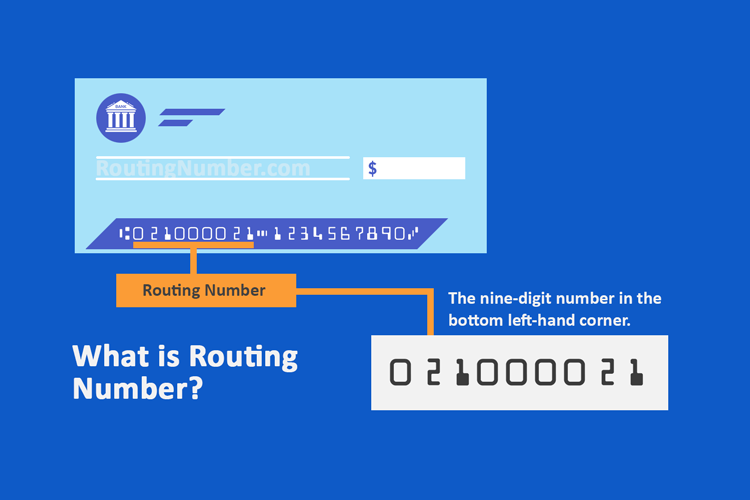
For many people, a physical checkbook is the most intuitive place to look for a routing number. When you examine a standard check, you’ll see a series of numbers printed along the bottom edge. These numbers are typically divided into three groups, printed using magnetic ink character recognition (MICR) font.
From left to right, these numbers represent:
- Your bank’s routing number (ABA RTN): This is the first set of nine digits on the far left.
- Your bank account number: This is the middle set of numbers, identifying your specific account.
- The check number: This is the last set of numbers, corresponding to the sequential number on the top right of the check.
Be cautious when using temporary checks provided by your bank, as they sometimes omit the routing number or provide a generic one that may not be specific to your account. Always use a personalized check from your ordered checkbook for the most reliable information.
Access Your Online Banking Portal or Mobile App
In today’s digital age, your online banking portal or mobile app provides instant access to virtually all your account information, including your routing number. This is often the quickest and most convenient method.
After logging into your account, navigate to your account details or profile section. Look for options such as “Account Information,” “Direct Deposit Information,” “Account Summary,” or similar labels. Many banks have a dedicated section for “Routing & Account Numbers” to make this information easily discoverable. For mobile apps, this information is usually found within the specific account details screen after selecting an account from your dashboard.
Contact Your Bank Directly
If you’ve exhausted other options or prefer to speak with a representative, contacting your bank directly is always a reliable method. This ensures you receive accurate and up-to-date information, especially if you have an unusual account setup or are unsure about branch-specific routing numbers.
You can typically find your bank’s customer service phone number on their official website, the back of your debit card, or on a recent bank statement. When you call, be prepared to verify your identity with personal information. Alternatively, you can visit a local branch in person. Bank tellers and customer service representatives can provide you with the correct routing number for your account. Many banks also offer secure messaging systems within their online banking portals where you can send a direct query.
Utilize Your Bank’s Official Website
Beyond logging into your specific account, your bank’s general public website is another excellent resource. Many banks publish their routing numbers on easily accessible pages for the convenience of their customers and other institutions.
Look for sections like “Contact Us,” “FAQ,” “About Us,” or “Direct Deposit Information.” Some banks have dedicated pages titled “Routing Number Information” or similar. Often, they will list various routing numbers if they have different ones for different regions or types of transactions (e.g., standard ACH vs. wire transfers). Always ensure you are on the official bank website to avoid phishing scams and unreliable information from third-party sites.
Important Considerations and Common Pitfalls
While finding your routing number is generally straightforward, there are several nuances and potential pitfalls that every account holder should be aware of to ensure smooth and secure financial transactions.
Branch-Specific vs. Bank-Wide Routing Numbers
One common point of confusion arises with banks that operate across multiple regions or states. Large national banks often use a single routing number for all domestic transactions, regardless of where your account was opened. However, some regional banks, credit unions, or even larger institutions with historical mergers might use different routing numbers depending on the state or even the specific branch where your account was established.
It’s crucial to verify the correct routing number for your specific account, especially if you’ve moved, the bank has undergone mergers, or if you bank with a smaller, localized institution. The methods outlined above (check, statement, online banking, direct contact) will provide the correct number for your particular account.
Distinguishing Routing from Account Numbers
This cannot be stressed enough: never confuse your routing number with your account number. These are two distinct identifiers, and interchanging them can lead to significant problems, from failed transactions to funds being sent to the wrong destination.
- Routing Number: Identifies your bank or financial institution. It’s the same for many customers of that specific bank/branch.
- Account Number: Identifies your unique account within that bank. It is specific to you and your funds.
Always double-check which number is being requested and ensure you provide the correct one. On a check, they are clearly distinct, with the routing number first (leftmost) and the account number in the middle.
International Transfers (SWIFT/BIC)
It’s imperative to remember that U.S. routing numbers are solely for domestic transactions within the United States. If you need to send or receive money internationally, you will typically require a SWIFT code (Society for Worldwide Interbank Financial Telecommunication) or BIC (Bank Identifier Code).
SWIFT/BIC codes are international standards for identifying banks globally and are completely different from routing numbers. Using a routing number for an international transfer will result in the transaction being rejected or delayed, and potentially incurring fees. Always confirm with your bank the correct SWIFT/BIC code for international wire transfers.
Security Best Practices
Your routing and account numbers are sensitive pieces of information that, if misused, could potentially compromise your finances. While routing numbers are less sensitive than account numbers alone (as they only identify the bank, not your specific funds), they should still be handled with care.
- Share only with trusted parties: Only provide your routing and account numbers to legitimate institutions, employers, or individuals you absolutely trust for financial transactions.
- Be wary of unsolicited requests: Never provide this information in response to unexpected emails, texts, or calls, especially if they claim to be from your bank. Banks will rarely ask for this information via unsecured channels.
- Verify sources: When setting up direct deposit or bill pay online, ensure you are on the official website of the company or institution. Look for “https://” in the URL and a padlock icon.
- Monitor your accounts: Regularly review your bank statements and transaction history for any unauthorized activity.
Leveraging Your Routing Number for Financial Efficiency
Knowing how to quickly and accurately find your routing number isn’t just about avoiding transaction errors; it’s about unlocking a more efficient and streamlined approach to managing your personal finances.
Streamlining Bill Payments
With your routing number, you can set up automatic payments for virtually all your recurring bills directly from your bank account. This eliminates the need to remember due dates, write checks, or manually initiate payments each month. From rent and utilities to loan repayments and insurance premiums, automation ensures bills are paid on time, helping you avoid late fees, maintain a healthy credit score, and free up mental bandwidth. This proactive approach to bill management significantly reduces financial stress and potential penalties.
Maximizing Direct Deposit
Direct deposit is perhaps the most ubiquitous and beneficial application of your routing number. By providing it to your employer, government agency, or any other source of recurring income, you ensure that funds are deposited directly into your chosen bank account, often available sooner than paper checks.
Beyond convenience, many banks offer incentives or waive fees for accounts with direct deposit. You can also often instruct your employer to split your direct deposit across multiple accounts (e.g., a portion to checking for spending, another portion to savings for specific goals), turning your payroll into an automated savings mechanism.
Inter-Bank Transfers and Budgeting
For individuals who use multiple bank accounts—perhaps a primary checking account at one institution and a high-yield savings account or investment account at another—your routing number is essential for seamlessly transferring funds between these accounts. This enables sophisticated budgeting strategies, such as the “envelope system” or “bucket budgeting,” where you allocate specific funds for different purposes into separate accounts.
Regularly moving money between your own accounts to fund savings goals, investment contributions, or simply consolidate funds becomes a quick and easy process, supporting a more organized and disciplined financial strategy.
Connecting with Financial Apps
The burgeoning ecosystem of financial technology (fintech) apps relies heavily on your bank’s routing and account numbers to function. Whether it’s a budgeting app like Mint or YNAB, an investment platform like Fidelity or Robinhood, or a payment service like Venmo or PayPal, linking your bank account through these identifiers is typically the first step.
This connectivity allows for automated tracking of expenses, real-time insights into your spending habits, easy transfers to investment portfolios, and peer-to-peer payments. By securely linking your accounts, you gain a more holistic view and greater control over your financial landscape, empowering you to make informed decisions and achieve your financial goals with greater ease.

Conclusion
The bank routing number, a seemingly small nine-digit code, is an indispensable component of the modern financial system. It serves as the precise address that directs your money to and from your financial institution for a multitude of transactions, from direct deposits and automatic bill payments to inter-bank transfers and linking with innovative financial technologies.
Understanding its purpose and knowing the various reliable methods to locate it—whether on your checks, bank statements, online banking portal, or through direct contact with your bank—is a fundamental aspect of effective personal finance management. By confidently identifying and utilizing your routing number, you not only ensure the accuracy and smooth processing of your financial movements but also unlock greater efficiency, control, and peace of mind in navigating your financial world. Always prioritize accuracy and security when handling this crucial piece of financial information.
aViewFromTheCave is a participant in the Amazon Services LLC Associates Program, an affiliate advertising program designed to provide a means for sites to earn advertising fees by advertising and linking to Amazon.com. Amazon, the Amazon logo, AmazonSupply, and the AmazonSupply logo are trademarks of Amazon.com, Inc. or its affiliates. As an Amazon Associate we earn affiliate commissions from qualifying purchases.