
In an increasingly complex financial world, the ability to quickly and accurately calculate percentages is not just a mathematical skill—it’s a critical life skill. From understanding sales discounts and calculating tips to deciphering interest rates on loans or investments, percentages are the universal language of finance. While the concept might seem daunting to some, the modern calculator—whether a physical device or a digital app—transforms this challenge into a simple, accessible task.
This comprehensive guide will demystify percentage calculations using your calculator, empowering you to make smarter financial decisions with confidence. We’ll delve into the core principles of percentages, walk through practical, real-world financial scenarios, and show you exactly how to execute these calculations with ease. Beyond just pressing buttons, we’ll explore how to interpret results and avoid common pitfalls, transforming you from a mere button-presser into a financially savvy individual capable of navigating the percentage-laden landscape of personal and business finance.
The Ubiquitous Role of Percentages in Finance
Percentages are the bedrock of countless financial decisions, affecting everything from your daily spending to your long-term investment strategies. Understanding how they work and how to calculate them is paramount to financial literacy.
Understanding the Basics: What is a Percentage?
At its core, a percentage is simply a way to express a part of a whole as a fraction of 100. The term “percent” literally means “per hundred.” So, 25% means 25 out of 100, or 25/100, which can also be written as a decimal (0.25). This concept of comparing a part to a whole is incredibly powerful because it provides a standardized way to express proportions, making comparisons easier regardless of the original total amount.
For instance, knowing that you paid 10% interest on a $1,000 loan or 10% on a $100,000 mortgage clearly communicates the cost of borrowing in a way that absolute dollar figures alone might not. Similarly, understanding that a stock gained 5% in value provides a clearer picture of its performance than just stating it went up by $2, especially if you don’t know the initial stock price. The simplicity and universality of this “out of 100” framework are what make percentages so indispensable in financial discussions and calculations.
Real-World Financial Scenarios
The practical applications of percentages in personal and business finance are virtually limitless. Here are just a few common scenarios where mastering calculator-based percentage calculations can save you money, time, and stress:
-
Shopping and Discounts: Black Friday sales, clearance racks, loyalty programs—they all hinge on percentages. Calculating a “30% off” discount correctly ensures you know the actual price you’ll pay and can gauge whether it’s truly a good deal.
-
Sales Tax and Tips: Whether you’re dining out or making a purchase, sales tax and tips are almost always expressed as percentages. Quickly calculating these helps you budget accurately and avoid overspending or under-tipping.
-
Interest Rates: Loans (mortgages, car loans, credit cards) and investments (savings accounts, bonds) are fundamentally driven by interest rates, which are percentages. Understanding how to calculate interest helps you compare offers, assess borrowing costs, and project investment growth.
-
Budgeting and Personal Finance: Tracking expenses as percentages of your income (e.g., 30% for housing, 15% for food) is a common and effective budgeting strategy. It helps you visualize your spending habits and make informed adjustments.
-
Business Finance: For entrepreneurs and business owners, percentages are crucial for calculating profit margins, growth rates, commission earnings, markups, and evaluating financial performance. A 20% profit margin on a product tells a different story than a 5% margin, guiding strategic decisions.
-
Inflation and Economic Data: Economic indicators like inflation, unemployment rates, and GDP growth are frequently reported as percentages, providing crucial context for financial planning and market analysis.
These examples underscore why a solid grasp of percentage calculations, aided by your calculator, is not just academic but profoundly practical for navigating the financial aspects of everyday life.
Mastering Your Calculator for Percentage Calculations
While calculators vary in their interface, the fundamental operations for percentages remain consistent. Most calculators offer a dedicated “%” button, which can simplify some tasks, but it’s equally important to understand the underlying multiplication and division principles for maximum flexibility.
Basic Percentage Calculation: Finding X% of Y
The most common percentage calculation is finding a certain percentage of a given number. This applies to calculating discounts, sales tax, or a specific portion of a budget.
Method 1: Using the Multiplication Method (Universal)
This method works on any calculator, even those without a dedicated “%” button, by converting the percentage to a decimal.
-
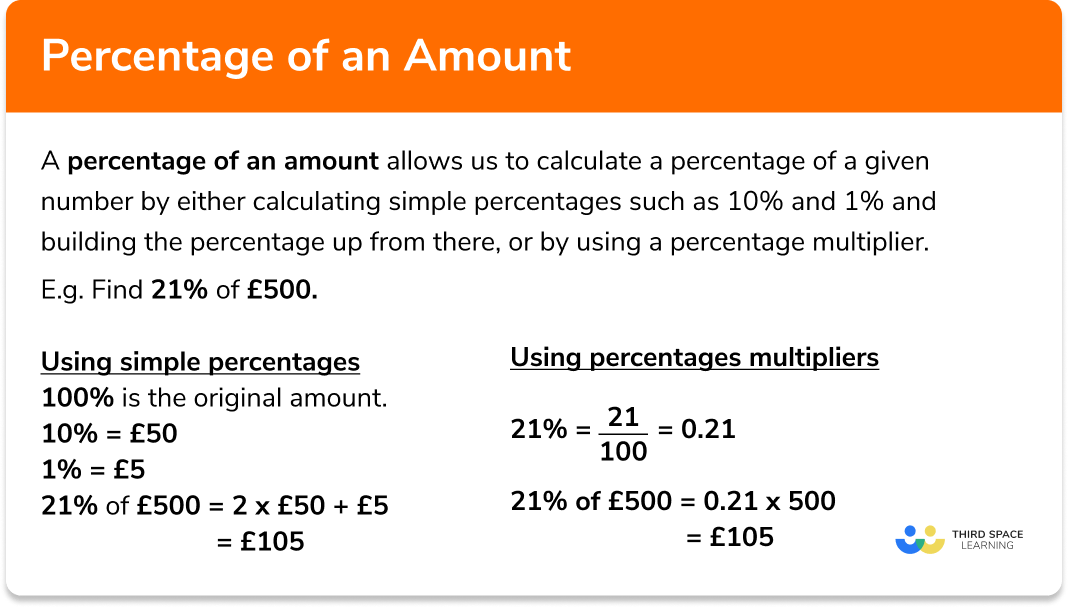
Convert the percentage to a decimal: Divide the percentage by 100.
-
Example: 25% becomes 0.25 (25 ÷ 100).
-
Example: 5% becomes 0.05 (5 ÷ 100).
-
-
Multiply the decimal by the number:
-
Scenario: You want to find 25% of $80.
-
Calculation: 0.25 * 80 = 20.
-
Result: 25% of $80 is $20.
-
Method 2: Using the “%” Button (If Available)
Many calculators have a percentage button, which can streamline the process. The exact sequence might vary slightly by model.
-
Enter the number: Type in the whole number.
-
Scenario: Find 15% of $200.
-
Input: 200
-
-
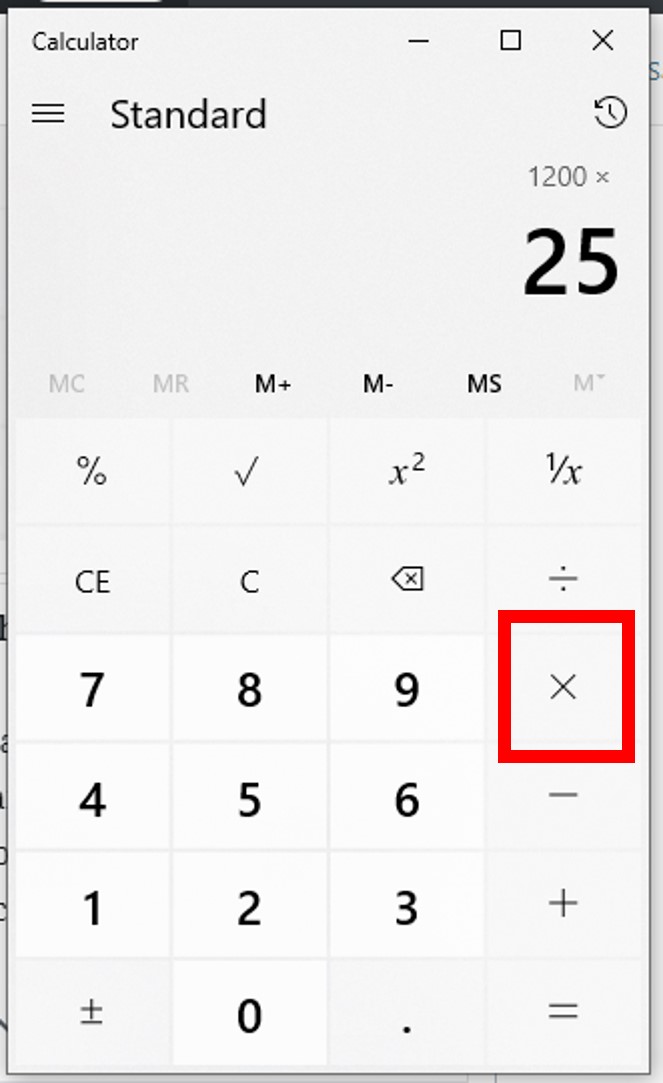
Press the multiplication button: *
- Input: 200 *
-
Enter the percentage value:
- Input: 200 * 15
-
Press the percentage button: %
-
Input: 200 * 15 %
-
The calculator might directly display the answer (30) or you might need to press “=” or “Enter” depending on the model.
-
Result: 15% of $200 is $30.
-
Pro-Tip for Adding/Subtracting Percentages (e.g., Sales Tax or Discount):
Some calculators allow you to add or subtract percentages directly using the “%” button.
-
Adding Sales Tax (e.g., 7% tax on a $50 item):
- Input: 50 + 7 % = (Result: 53.50)
-
Applying a Discount (e.g., 10% off a $120 item):
- Input: 120 – 10 % = (Result: 108)
This functionality saves a step, as it calculates the percentage and then automatically adds or subtracts it from the original number.
Calculating Percentage Increase or Decrease
Beyond finding a percentage of a number, you’ll often need to calculate the change between two numbers as a percentage. This is vital for tracking financial growth, inflation, or depreciation.
The formula for percentage change is:
(New Value – Old Value) / Old Value * 100
Scenario: Investment Growth
- Your investment started at $500 (Old Value) and grew to $650 (New Value). What is the percentage increase?
-
Find the difference: 650 – 500 = 150
-
Divide by the old value: 150 / 500 = 0.3
-
Multiply by 100 to get the percentage: 0.3 * 100 = 30%
- Result: Your investment increased by 30%.

Scenario: Price Drop
- A product was $120 (Old Value) and is now on sale for $90 (New Value). What is the percentage decrease?
-
Find the difference: 90 – 120 = -30 (or simply 120 – 90 = 30 for the absolute change)
-
Divide by the old value: -30 / 120 = -0.25
-
Multiply by 100: -0.25 * 100 = -25%
- Result: The price decreased by 25%. (We typically express decrease as a positive percentage, e.g., “a 25% decrease.”)
Reversing the Calculation: Finding the Original Number
Sometimes you know the result of a percentage calculation and need to work backward to find the original amount. This is common when dealing with prices after tax, or knowing a portion of a total and needing the full amount.
Scenario: Finding Original Price Before Tax
- You paid $53.50 for an item, which included 7% sales tax. What was the original price before tax?
-
Understand the total: The $53.50 represents 100% of the original price + 7% tax, totaling 107% of the original price.
-
Convert the total percentage to a decimal: 107% = 1.07
-
Divide the final amount by this decimal: $53.50 / 1.07 = $50
- Result: The original price of the item was $50.
Scenario: Finding the Full Amount from a Discounted Price
- You bought a shirt for $36, which was discounted by 25%. What was the original price?
-
Understand the remaining percentage: If it was discounted by 25%, you paid 100% – 25% = 75% of the original price.
-
Convert the remaining percentage to a decimal: 75% = 0.75
-
Divide the discounted price by this decimal: $36 / 0.75 = $48
- Result: The original price of the shirt was $48.
These inverse calculations are incredibly useful for dissecting financial statements or verifying pricing.
Advanced Applications and Common Pitfalls
Beyond basic calculations, percentages are often combined in multi-step problems, requiring careful attention to order and context. Being aware of common mistakes can save you from costly errors.
Multi-Step Percentage Problems (e.g., Discount + Tax)
Real-world financial scenarios rarely involve just one percentage. Often, you’ll encounter situations where multiple percentages apply sequentially, such as a discount followed by sales tax, or an investment with compounded returns.
Scenario: Discount and Sales Tax
-
You’re buying a $100 item with a 20% discount, and then a 5% sales tax is applied. What is the final price?
- Crucial Rule: Discounts are usually applied before tax.
-
Calculate the discount:
-
20% of $100 = 0.20 * 100 = $20
-
Discounted price = $100 – $20 = $80
-
-
Calculate sales tax on the discounted price:
- 5% of $80 = 0.05 * 80 = $4
-
Add tax to the discounted price:
-
Final price = $80 + $4 = $84
-
Result: The final price is $84.
-
Important Note: If you mistakenly calculated 20% + 5% = 25% off, or applied tax to the original price, your result would be incorrect. Always perform percentage operations sequentially in the order they occur.
Scenario: Consecutive Discounts
-
An item is first discounted by 10%, then an additional 15% is applied to the sale price. What is the total discount percentage?
- Crucial Rule: Consecutive discounts do not simply add up (10% + 15% ≠ 25%).
-
Assume an initial price (e.g., $100 for simplicity):
-
First discount (10% off $100):
-
$100 * 0.10 = $10 discount
-
Price after first discount = $100 – $10 = $90
-
-
Second discount (15% off $90):
-
$90 * 0.15 = $13.50 discount
-
Price after second discount = $90 – $13.50 = $76.50
-
-
Calculate total percentage decrease:
-
Total discount = $100 – $76.50 = $23.50
-
Percentage discount = ($23.50 / $100) * 100 = 23.5%
-
Result: The total effective discount is 23.5%, not 25%. This small difference can accumulate substantially in larger financial transactions.
-
Avoiding Common Mistakes
Even with a calculator, errors can occur if you’re not careful.
-
Order of Operations: As seen above, the order in which you apply percentages matters. Always follow the logical sequence of events (e.g., discount then tax, not the other way around).
-
Confusing Original vs. New Value: When calculating percentage increase or decrease, always divide by the original (old) value, not the new value.
-
Decimal vs. Percentage: Remember to convert percentages to decimals (divide by 100) before multiplying, unless your calculator’s “%” button handles this automatically. Forgetting this step (e.g., trying to multiply by “20” instead of “0.20”) will yield wildly incorrect results.
-
Misinterpreting the “%” button: Some calculators require you to hit “=” after the “%” button, while others display the result instantly. Understand your specific calculator’s functionality.
-
Rounding Errors: When dealing with very small percentages or large numbers, excessive rounding in intermediate steps can lead to inaccuracies. It’s often best to keep more decimal places during calculations and round only at the final step.
By understanding these complexities and potential pitfalls, you can use your calculator with greater precision and confidence, ensuring your financial calculations are always accurate.
Choosing the Right Calculator and Building Financial Fluency
The tool you use matters, but your understanding of the underlying financial concepts is ultimately more important.
Physical vs. Digital Calculators: Which is Best for You?
Both physical and digital calculators offer distinct advantages for percentage calculations in finance.
-
Physical Calculators:
-
Pros: Tangible buttons reduce input errors for some; no distractions from notifications; always available without battery drain issues (for solar models). Basic models are inexpensive.
-
Cons: Can be bulky; limited features compared to apps.
-
Best For: Everyday quick calculations, exam settings, those who prefer tactile feedback. A good financial calculator (like a basic scientific or dedicated business calculator) can offer advanced functions that might be useful for more complex financial modeling.
-
-
Digital Calculators (Smartphone Apps, Web-based Tools):
-
Pros: Always with you (on your phone); often free or low-cost; many offer advanced features like history logs, unit conversions, and specialized financial functions (e.g., loan amortization, currency conversion); easy to copy/paste results.
-
Cons: Distractions from phone notifications; screen glare can be an issue; might require internet access for web-based tools.
-
Best For: On-the-go calculations, complex financial planning, leveraging specialized features. Many modern smartphone calculators have excellent percentage functions built-in.
-
Ultimately, the “best” calculator is the one you are most comfortable and proficient with. Practice using your chosen tool until percentage calculations become second nature.
Beyond the Calculator: Developing Financial Intuition
While your calculator is an invaluable aid, developing a strong financial intuition regarding percentages is equally important. This means being able to mentally estimate results or quickly spot if a calculator-derived answer seems off.
-
Benchmark with Simple Percentages: Know that 10% is simply moving the decimal one place to the left (e.g., 10% of $150 is $15). 50% is half. 1% is moving the decimal two places to the left. Use these as mental anchors.
-
Practice Estimation: Before hitting the calculator, try to estimate the answer. If an item is $80 and it’s 25% off, you know 25% is one-quarter, so the discount should be around $20. The final price would be about $60. This mental check helps you catch input errors on the calculator.
-
Understand the “Why”: Don’t just know how to calculate; understand why you’re performing the calculation. What does a 5% interest rate really mean for your monthly payments? How does a 2% inflation rate impact your purchasing power over time? This deeper understanding enhances your financial fluency.
By combining efficient calculator usage with a developing financial intuition, you empower yourself to navigate the myriad percentage-based financial scenarios with greater clarity and control.
Conclusion
Percentages are far more than abstract mathematical concepts; they are the bedrock of everyday financial decisions, influencing everything from your morning coffee purchase to your retirement savings. Mastering how to find the percentage of a number on a calculator is an essential skill for anyone looking to take control of their personal finance, make informed purchasing decisions, and understand the economic world around them.
By following the simple steps outlined in this guide—whether you’re calculating a discount, an interest rate, or working backward to find an original price—you can unlock the full potential of your calculator as a powerful financial tool. Remember to practice, understand the logical flow of your calculations, and cultivate a financial intuition that complements your computational skills. With these abilities, you’ll not only avoid common financial pitfalls but also gain the confidence to manage your money more effectively and achieve your financial goals.
aViewFromTheCave is a participant in the Amazon Services LLC Associates Program, an affiliate advertising program designed to provide a means for sites to earn advertising fees by advertising and linking to Amazon.com. Amazon, the Amazon logo, AmazonSupply, and the AmazonSupply logo are trademarks of Amazon.com, Inc. or its affiliates. As an Amazon Associate we earn affiliate commissions from qualifying purchases.