
In the intricate world of finance, numbers are the universal language. Yet, raw figures alone often fail to convey the full story. It’s when these numbers are contextualized, compared, and expressed as percentages that their true meaning and impact become evident. From understanding investment growth and budgeting allocations to deciphering discounts and calculating loan interest, the ability to accurately find percentages between two numbers is not just a mathematical skill; it’s a fundamental pillar of financial literacy and sound decision-making for individuals and businesses alike.
This guide delves into the essential methods for calculating percentages, specifically tailored to illuminate their critical applications in personal finance, investing, business operations, and various financial tools. By mastering these calculations, you equip yourself with a powerful analytical lens to navigate the complexities of the money world, making informed choices that can significantly impact your financial well-being.
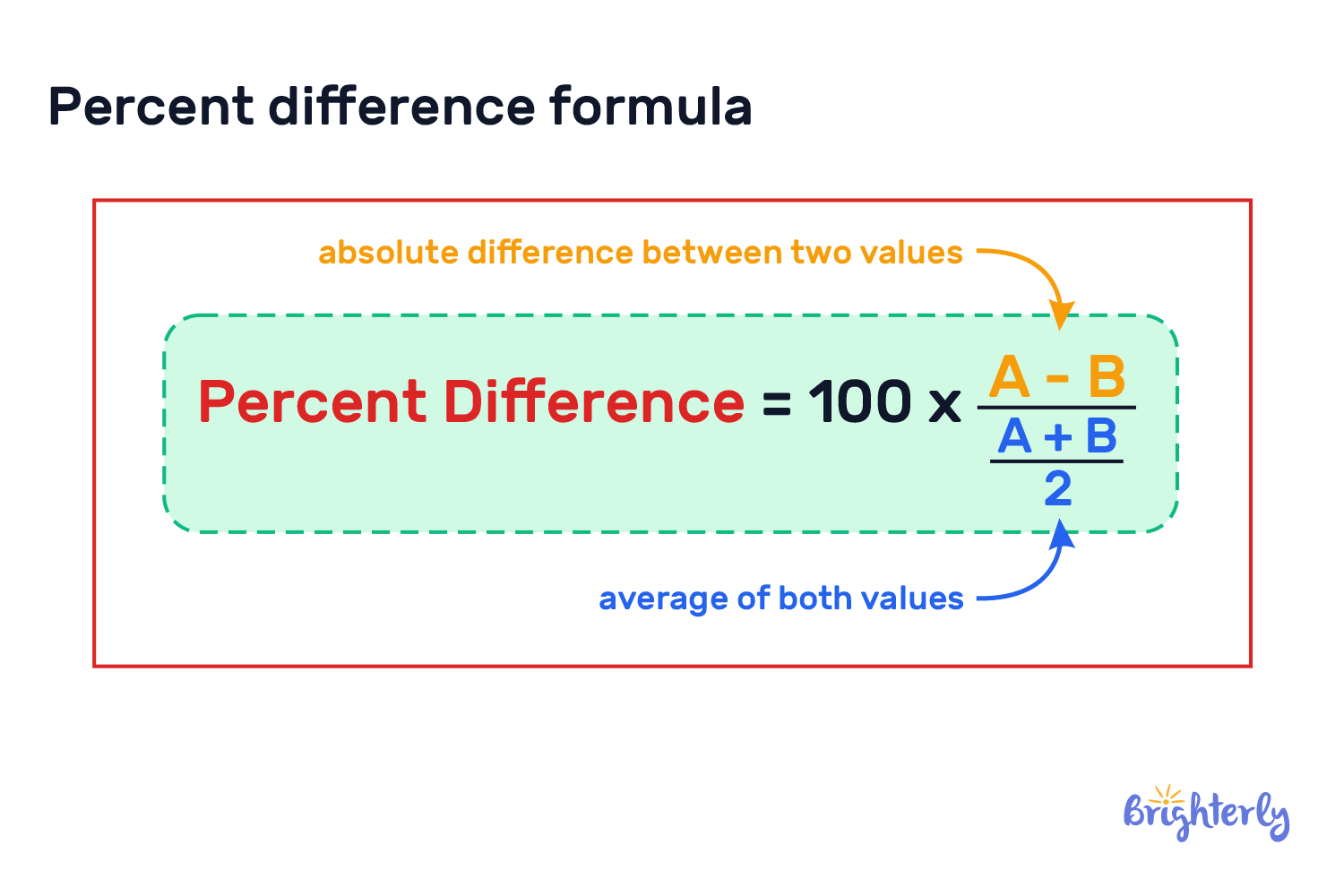
The Core Concept: Understanding Percentages as a Financial Metric
Before we dive into the mechanics of calculation, it’s crucial to solidify our understanding of what a percentage truly represents and why it holds such significant weight in financial contexts. A percentage provides a standardized way to express a part of a whole, a change, or a ratio, making comparisons intuitive and universally understood.
What is a Percentage? A Foundation for Financial Insight
At its heart, a “percent” means “per hundred” or “out of one hundred.” It’s a way of expressing a number as a fraction of 100. For instance, 50% means 50 out of 100, which can also be written as the fraction 50/100 or the decimal 0.50. The beauty of percentages lies in their ability to standardize comparisons. Whether you’re comparing a small start-up’s quarterly revenue growth or a multinational corporation’s annual profit margin, expressing these figures as percentages allows for an apples-to-apples comparison, regardless of the absolute scale of the numbers involved.
In finance, percentages transform complex data into digestible insights. They allow us to grasp concepts like:
-
Growth and Decline: How much did an investment appreciate or depreciate?
-
Proportion: What portion of my income goes towards housing?
-
Efficiency: What is the profit margin on a product?
-
Risk: What percentage of my portfolio is allocated to high-risk assets?
Without this common denominator, financial analysis would be a daunting task, making it difficult to assess performance, identify trends, or set meaningful financial goals.
Why Percentages Matter in Finance: More Than Just Numbers
The financial landscape is riddled with situations where percentages are not just useful but absolutely essential. Consider these scenarios:
-
Personal Finance: When you track your budget, you might want to know what percentage of your monthly income is spent on groceries versus entertainment. When saving, the interest rate on your savings account or a certificate of deposit (CD) is expressed as a percentage, directly impacting your earnings.
-
Investing: Investment returns are almost always communicated as percentages (e.g., a stock gained 15%). Understanding percentage change is critical for evaluating portfolio performance, assessing market movements, and comparing different investment vehicles.
-
Business Finance: Businesses use percentages to calculate profit margins, assess cost efficiency, determine market share, and analyze sales growth. A discount offered to customers is a percentage off the original price.
-
Lending and Borrowing: Loan interest rates (APR – Annual Percentage Rate) dictate the cost of borrowing. Mortgage rates, credit card interest, and car loan rates are all expressed as percentages, profoundly affecting your monthly payments and overall financial burden.
Mastering percentage calculations empowers you to interpret these financial indicators accurately, allowing for more strategic planning and informed decision-making across all aspects of your financial life.
Calculating Percentage Change: Gauging Financial Growth and Decline
One of the most frequent applications of percentages in finance is to measure change over time. Whether it’s the appreciation of an asset, the increase in your salary, or the decline in market value, understanding percentage change provides a clear, standardized metric for performance and trend analysis.
The Fundamental Formula for Percentage Change
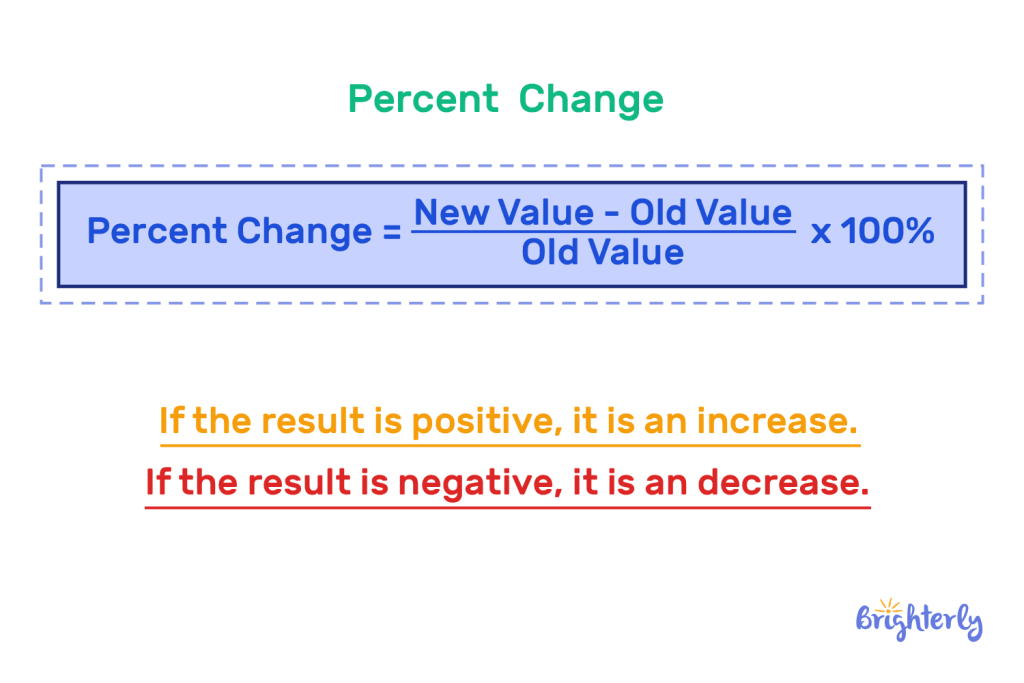
The formula for calculating percentage change is straightforward and universally applicable:
Percentage Change = [(New Value – Original Value) / Original Value] * 100
Let’s break down the components:
-
New Value: The most recent or final number.
-
Original Value: The starting or initial number.
-
Subtracting the Original Value from the New Value (New Value – Original Value): This gives you the absolute change or the difference between the two numbers.
-
Dividing by the Original Value: This step normalizes the absolute change, expressing it as a fraction relative to the starting point. This is crucial because a $100 increase means something different for an original value of $1,000 than it does for an original value of $10,000.
-
Multiplying by 100: This converts the decimal fraction into a percentage.
If the result is positive, it indicates a percentage increase (growth). If the result is negative, it indicates a percentage decrease (decline).
Real-World Application: Analyzing Investment Returns
Imagine you bought shares of a company for $50 per share. A year later, the shares are trading at $62.50 per share. To calculate your percentage return:
-
Original Value = $50
-
New Value = $62.50
Percentage Change = [($62.50 – $50) / $50] * 100
Percentage Change = [$12.50 / $50] * 100
Percentage Change = [0.25] * 100
Percentage Change = 25%
This means your investment grew by 25%. Conversely, if the stock dropped to $40 per share:
Percentage Change = [($40 – $50) / $50] * 100
Percentage Change = [-$10 / $50] * 100
Percentage Change = [-0.20] * 100
Percentage Change = -20%
Your investment declined by 20%. These percentage figures are invaluable for comparing the performance of different investments over similar periods, helping you assess which assets are growing faster or losing value more significantly.
Real-World Application: Tracking Budgeting and Expense Shifts
On a personal finance level, percentage change helps you monitor your spending habits. Suppose your grocery bill last month was $400, and this month it was $450.
Percentage Change = [($450 – $400) / $400] * 100
Percentage Change = [$50 / $400] * 100
Percentage Change = [0.125] * 100
Percentage Change = 12.5%
This tells you that your grocery spending increased by 12.5% this month, prompting you to investigate the reasons for the rise and adjust your budget if necessary. Such insights are crucial for maintaining financial discipline and achieving savings goals.
Calculating Percentage of a Whole: Allocations and Proportions
Beyond tracking changes, percentages are fundamental for understanding how different parts contribute to a total. This is critical for everything from understanding asset allocation in an investment portfolio to calculating profit margins and determining debt-to-income ratios.
The Formula for Percentage of a Whole
To find what percentage one number (the “part”) is of another number (the “whole”), you use this formula:
Percentage of Whole = (Part / Whole) * 100
Here:
-
Part: The specific amount or number you want to express as a percentage.
-
Whole: The total amount or the base number.
Real-World Application: Understanding Discounts and Markups
When you see a “20% off” sale, you’re looking at a percentage of a whole. Let’s say an item originally costs $80, and it’s 20% off. First, find the discount amount:
Discount Amount = 20% of $80 = 0.20 * $80 = $16
New Price = Original Price – Discount Amount = $80 – $16 = $64
Conversely, if an item is $64 and you know it was discounted by $16, you can find the percentage discount:
Percentage Discount = ($16 / $80) * 100 = 0.20 * 100 = 20%
Businesses also use this to calculate profit margins. If a product sells for $100 and its cost to produce was $60:
Profit = $100 – $60 = $40
Profit Margin (as a percentage of revenue) = ($40 / $100) * 100 = 40%
This percentage gives a clear indicator of a business’s profitability on each sale.
Real-World Application: Portfolio Allocation & Asset Distribution
For investors, understanding portfolio allocation is key to managing risk and aligning investments with financial goals. If you have a total investment portfolio of $100,000, and $30,000 is in stocks, $50,000 in bonds, and $20,000 in real estate:
-
Stocks: ($30,000 / $100,000) * 100 = 30%
-
Bonds: ($50,000 / $100,000) * 100 = 50%
-
Real Estate: ($20,000 / $100,000) * 100 = 20%
This breakdown allows you to see if your portfolio aligns with your desired risk profile (e.g., a higher percentage in bonds typically indicates a more conservative approach).
Real-World Application: Debt-to-Income Ratio (DTI)
Lenders frequently use the Debt-to-Income (DTI) ratio to assess your ability to manage monthly payments and repay debts. It’s expressed as a percentage of your gross monthly income. Suppose your gross monthly income is $5,000, and your total monthly debt payments (rent/mortgage, credit cards, loans) are $1,500.
DTI Ratio = (Total Monthly Debt Payments / Gross Monthly Income) * 100
DTI Ratio = ($1,500 / $5,000) * 100
DTI Ratio = 0.30 * 100 = 30%
A lower DTI percentage indicates better financial health and a higher likelihood of loan approval. This single percentage provides a powerful snapshot of your financial leverage.
Finding the Original Number from a Percentage: Reversing the Financial Equation
Sometimes, you know the percentage change or a percentage of a value, and you need to work backward to find the original amount. This is common when dealing with discounted prices, sales tax calculations, or projecting original costs.
Reversing the Calculation: Unlocking the Original Value
To find the original number when you know a final number after a percentage increase or decrease, or when you know a part and its percentage of the whole, you’ll need to adjust your approach.
Scenario 1: Finding the Original Number after a Percentage Increase
If a number increased by X% to reach a New Value, the Original Value can be found using:
Original Value = New Value / (1 + (X/100))
(Where X is the percentage increase)
Scenario 2: Finding the Original Number after a Percentage Decrease (Discount)
If a number decreased by X% to reach a New Value (e.g., a sale price), the Original Value can be found using:
Original Value = New Value / (1 – (X/100))
(Where X is the percentage decrease)
Real-World Application: Uncovering Original Prices After a Discount
You bought an item for $75, which was on sale for “25% off.” What was the original price?
Here, the New Value is $75, and the percentage decrease (X) is 25.
Original Price = $75 / (1 – (25/100))
Original Price = $75 / (1 – 0.25)
Original Price = $75 / 0.75
Original Price = $100
Understanding this allows you to quickly verify savings and track true value, rather than just the final price paid.
Real-World Application: Projecting Future Values and Original Costs
Imagine you received a bonus, and after 10% tax was deducted, you got $2,700. What was your original gross bonus?
Here, the New Value is $2,700, and the percentage decrease (X) is 10.
Original Bonus = $2,700 / (1 – (10/100))
Original Bonus = $2,700 / (1 – 0.10)
Original Bonus = $2,700 / 0.90
Original Bonus = $3,000
This skill is invaluable for understanding net vs. gross figures, calculating pre-tax income, or even projecting how much you need to save before taxes to reach a specific net savings goal.
Leveraging Tools for Accurate Financial Calculations
While manual calculation is essential for understanding the underlying principles, modern financial management often benefits from leveraging readily available tools to ensure accuracy and efficiency, especially with complex or frequent calculations.
Spreadsheets and Financial Calculators: Your Digital Allies
For anyone seriously engaged in personal finance or business, spreadsheets like Microsoft Excel or Google Sheets are indispensable. They allow you to:
-
Automate Calculations: Set up formulas once, and they will automatically update as your numbers change. This is invaluable for dynamic budgets, investment trackers, and financial models.
-
Organize Data: Keep all your financial figures in one place, making it easy to perform comparisons over time or across categories.
-
Perform Complex Analysis: Beyond simple percentages, spreadsheets can handle more advanced financial functions, scenario planning, and data visualization.
Dedicated financial calculators (either physical devices or online versions) are also highly effective, particularly for specific tasks like loan amortization, future value calculations, or compound interest, all of which heavily rely on percentage-based formulas.
Online Percentage Calculators and Apps: Convenience at Your Fingertips
For quick, one-off calculations, a plethora of online percentage calculators and mobile apps can provide instant results. Simply input your two numbers, and the tool will compute the percentage change, percentage of a whole, or reverse calculations. These tools are fantastic for:
-
Rapid Verification: Double-checking manual calculations.
-
On-the-Go Analysis: Quickly figuring out a discount while shopping or checking a financial ratio during a meeting.
-
Reducing Error: Minimizing the chances of human error, especially with more intricate numbers.
While convenient, it’s always wise to understand the underlying logic these tools employ. Blindly trusting an output without understanding how it was derived can be a pitfall.
The Importance of Double-Checking: Avoiding Costly Errors
Regardless of whether you’re calculating by hand, using a spreadsheet, or relying on an app, the final and perhaps most crucial step is to double-check your work. A misplaced decimal, an incorrect original value, or a simple typo can lead to significant financial miscalculations.
For instance, miscalculating an interest rate by a fraction of a percentage point on a large loan can cost you thousands over its lifetime. An incorrect profit margin percentage can lead to flawed pricing strategies for a business. Always take a moment to review your inputs and outputs, and if possible, try a different method or tool to confirm your results. This diligence is a hallmark of sound financial management.

Conclusion
The ability to find percentages between two numbers is far more than an academic exercise; it’s a vital life skill, particularly within the realm of finance. From empowering individuals to make smarter personal budgeting choices and discerning investment opportunities, to enabling businesses to analyze profitability and strategic growth, percentages provide the common language for understanding value, change, and proportion.
By mastering the core formulas for percentage change and percentage of a whole, understanding how to reverse these calculations, and effectively leveraging modern financial tools, you transform raw data into actionable insights. This fundamental quantitative literacy empowers you to interpret financial news, evaluate personal financial decisions, and navigate the complex economic landscape with confidence and precision. In a world increasingly driven by numbers, your proficiency in percentage calculations is a powerful asset for achieving lasting financial success.
aViewFromTheCave is a participant in the Amazon Services LLC Associates Program, an affiliate advertising program designed to provide a means for sites to earn advertising fees by advertising and linking to Amazon.com. Amazon, the Amazon logo, AmazonSupply, and the AmazonSupply logo are trademarks of Amazon.com, Inc. or its affiliates. As an Amazon Associate we earn affiliate commissions from qualifying purchases.