
In the intricate world of personal finance, investing, and business, understanding percentages isn’t merely a mathematical exercise; it’s a critical lens through which we interpret data, make informed decisions, and track our progress towards financial goals. From calculating discounts and interest rates to analyzing investment returns and budgeting effectively, the ability to find the percent between two numbers is a foundational skill that empowers individuals and businesses alike. This guide delves into the core mechanics of percentage calculation and explores its pervasive applications within the financial realm, providing insights that can significantly enhance your financial literacy and decision-making capabilities.
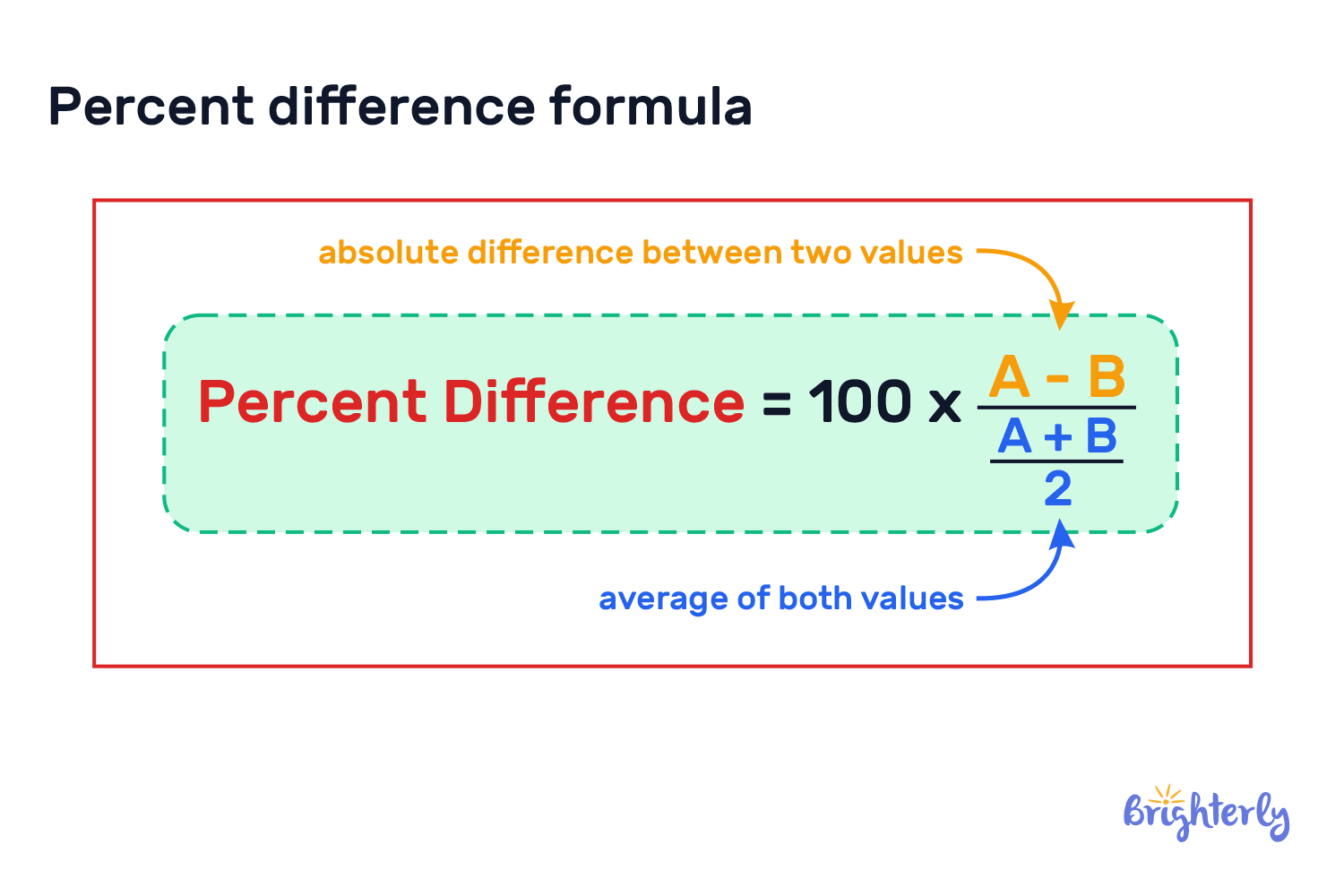
The Essential Mechanics: Understanding and Calculating Percentages
At its heart, a percentage is a way of expressing a number as a fraction of 100. It’s a standardized method for comparing proportions, making disparate figures relatable and comprehensible. When we talk about finding the percent between two numbers, we’re typically referring to one number as a ‘part’ of another ‘whole,’ or expressing a change from one value to another.
What is a Percentage and Why Does it Matter Financially?
A percentage, denoted by the symbol “%”, means “per hundred.” So, 50% means 50 out of 100, or 0.5 as a decimal. This standardized unit allows for universal comparison. In finance, this standardization is invaluable. Imagine comparing the performance of two investments: one gained $500 on an initial $5,000, and another gained $1,000 on an initial $20,000. Without percentages, it’s hard to tell which performed better proportionally. With percentages, the first is a 10% gain, and the second is a 5% gain, clearly indicating the superior proportional performance of the first investment.
The Basic Formula: Part/Whole * 100
The most fundamental formula for calculating a percentage is:
Percentage = (Part / Whole) × 100
Here, the ‘Part’ is the specific amount or portion you are interested in, and the ‘Whole’ is the total or original amount that the ‘Part’ is being compared against. Let’s look at some immediate financial applications:
Example: Calculating a Discount
You see a laptop advertised for $1,200, originally priced at $1,500. You want to know the percentage discount.
-
Part (discount amount): $1,500 – $1,200 = $300
-
Whole (original price): $1,500
-
Percentage Discount: ($300 / $1,500) × 100 = 0.20 × 100 = 20%
Understanding this helps you evaluate deals and ensures you’re getting the advertised savings.
Example: Calculating a Tip
You have a dinner bill of $75 and want to leave a 15% tip. While this is working from a percentage to a part, the underlying understanding of parts and wholes is crucial. To find the tip amount:
-
Percentage: 15% (or 0.15 as a decimal)
-
Whole (bill amount): $75
-
Part (tip amount): 0.15 × $75 = $11.25
This ensures you tip appropriately and manage your spending.
Calculating Percentage Change: The Dynamic View
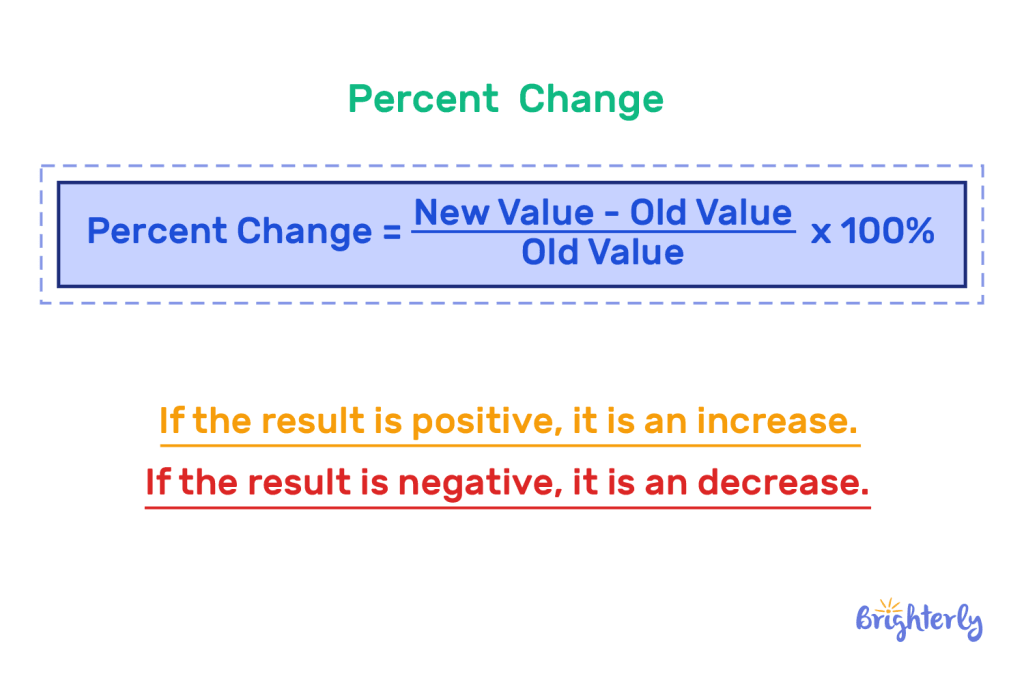
Often in finance, we’re not just looking at a static part of a whole, but rather how much something has changed over time. The formula for percentage change is:
Percentage Change = [(New Value – Old Value) / Old Value] × 100
-
If the result is positive, it’s a percentage increase.
-
If the result is negative, it’s a percentage decrease.
Example: Measuring Investment Growth
Your stock portfolio started the year at $10,000 and is now worth $11,500.
-
New Value: $11,500
-
Old Value: $10,000
-
Percentage Increase: [($11,500 – $10,000) / $10,000] × 100 = ($1,500 / $10,000) × 100 = 0.15 × 100 = 15%
This tells you your portfolio has grown by 15%, a crucial metric for evaluating investment performance.
Applying Percentages in Personal Finance
Percentages are the bedrock of effective personal financial management, transforming raw numbers into actionable insights for budgeting, saving, and managing debt.
Budgeting and Expense Tracking
Understanding where your money goes is the first step towards financial control. Percentages allow you to categorize and analyze your spending relative to your income.
Percentage of Income Spent on Categories
If your monthly take-home pay is $4,000 and you spend $1,200 on housing, $500 on groceries, and $300 on transportation:
-
Housing: ($1,200 / $4,000) × 100 = 30% of income
-
Groceries: ($500 / $4,000) × 100 = 12.5% of income
-
Transportation: ($300 / $4,000) × 100 = 7.5% of income
This breakdown helps you adhere to budgeting rules (like the 50/30/20 rule for needs/wants/savings) and identify areas where you might be overspending or could reallocate funds for better financial health.
Identifying Areas for Savings
By visualizing your expenses as percentages, you can quickly spot disproportionate spending. If entertainment takes up 20% of your income, you might decide to cut that down to 10% to free up funds for savings or debt repayment.
Savings Goals and Progress
Percentages are vital for setting achievable savings goals and monitoring your progress.
How Much of Your Goal Have You Reached?
If you’re saving for a $10,000 down payment and have accumulated $4,000:
- Progress: ($4,000 / $10,000) × 100 = 40% towards your goal.
This provides motivation and a clear benchmark.
Calculating Saving Rates
A common financial recommendation is to save 10-15% of your income. If your income is $4,000 and you save $600:
- Saving Rate: ($600 / $4,000) × 100 = 15%
Regularly calculating your saving rate helps ensure you’re on track for long-term financial security.
Debt Management
Interest rates are universally expressed as percentages, making their comprehension essential for managing loans and credit cards.
Interest Rates on Loans/Credit Cards
A 20% APR (Annual Percentage Rate) on a credit card means you’re being charged 20% of your outstanding balance annually. Understanding this percentage helps you grasp the true cost of borrowing and prioritize paying off high-interest debts.
Percentage of Income Allocated to Debt Payments
Financial advisors often suggest keeping consumer debt payments (excluding mortgage) below 10-15% of your take-home pay. Calculating this percentage helps you assess your debt burden and avoid over-leveraging.
Percentages in Investing and Wealth Building
For investors, percentages are the language of performance, risk, and portfolio construction. They enable accurate comparisons and strategic decision-making.
Return on Investment (ROI)
ROI is arguably the most crucial percentage for investors, measuring the profitability of an investment.
Calculating Gains/Losses
If you invested $1,000 in a stock that is now worth $1,200:
- ROI: [($1,200 – $1,000) / $1,000] × 100 = 20% return.
Conversely, if it dropped to $800, it would be a -20% return. ROI allows direct comparison between vastly different investments.
Comparing Different Investments
Knowing that Fund A returned 8% last year while Fund B returned 12% provides a clear basis for evaluating their past performance, assuming all other factors are equal.
Portfolio Allocation
Diversification is key to managing investment risk, and percentages dictate your asset allocation.
Desired Asset Mix
A common portfolio strategy might be 60% stocks, 30% bonds, and 10% real estate. These percentages reflect your risk tolerance and financial goals.
Rebalancing Strategies
Over time, market fluctuations will shift your portfolio’s percentages. If your stocks outperform, they might grow to 70% of your portfolio. Understanding this percentage change prompts you to “rebalance” by selling some stocks and buying bonds to restore your desired 60/30/10 mix, ensuring your risk profile remains consistent.
Compounding Interest: The Power of Percentages Over Time
Compounding is the process where the interest you earn also starts earning interest, accelerating wealth growth. It’s percentages working dynamically.
The Magic of Compounding
A 7% annual return on an investment means your capital grows by 7% each year, but crucially, that 7% is applied to the new, larger principal amount, leading to exponential growth. Understanding this percentage effect is key to long-term wealth accumulation.
The Rule of 72
This financial rule of thumb uses percentages to estimate how long it takes for an investment to double. Divide 72 by the annual rate of return (as a percentage).
-
At a 6% annual return: 72 / 6 = 12 years to double your money.
-
At a 10% annual return: 72 / 10 = 7.2 years to double your money.
This simple calculation highlights the profound impact of different percentage returns on wealth accumulation.
Percentages for Business and Online Income
Entrepreneurs, small business owners, and those generating online income rely heavily on percentages to gauge performance, profitability, and growth.
Profit Margins
Profit margins are critical indicators of a business’s financial health.
Gross vs. Net Profit
-
Gross Profit Margin: (Gross Profit / Revenue) × 100. This percentage tells you how much profit a company makes from each sale after deducting the cost of goods sold.
-
Net Profit Margin: (Net Profit / Revenue) × 100. This more comprehensive percentage reveals how much profit a company retains from each dollar of revenue after all expenses, including operating costs, interest, and taxes, are paid.
Understanding these percentages allows business owners to price products effectively, control costs, and assess overall business efficiency.
Growth Rates
Measuring growth through percentages helps businesses track progress and plan for the future.
Revenue Growth
If a company’s revenue increased from $100,000 to $120,000 in a year:
- Revenue Growth Rate: [($120,000 – $100,000) / $100,000] × 100 = 20%
This metric is vital for investors and owners to understand a company’s trajectory.
Customer Growth
Similarly, a 15% increase in customer count signals positive momentum and market penetration.
Commissions and Royalties
Many online income streams, from affiliate marketing to content creation, involve percentages.
Calculating Earnings from Sales or Intellectual Property
If you earn a 10% commission on every product you sell for $50:
- Commission per sale: 0.10 × $50 = $5
If you earn 5% royalties on book sales, knowing the percentage helps you project income and negotiate fair terms.
Common Pitfalls and Advanced Considerations
While the basic percentage calculation is straightforward, its application in finance can sometimes be nuanced.
Percentage Points vs. Percent Change
This distinction is crucial in understanding financial news.
-
If an interest rate goes from 5% to 6%, it’s an increase of 1 percentage point.
-
However, it’s a 20% percentage change [((6-5)/5) * 100] in the interest rate itself.
Confusing these can lead to significant misinterpretations, especially in discussions about central bank policies or investment returns.
Understanding “Basis Points”
In financial markets, especially for bonds, interest rates, and fee structures, changes are often expressed in “basis points” (bps). One basis point is 0.01%, or 1/100th of a percentage point. So, a 25 basis point change is a 0.25% change. This level of precision is common in professional financial analysis.
Using Financial Tools
While manual calculations are good for understanding, for complex scenarios or large datasets, leverage financial tools. Spreadsheets like Excel or Google Sheets (using formulas like =(B2-A2)/A2 for percentage change) and online financial calculators can automate these calculations, reducing errors and saving time, allowing you to focus on the interpretation rather than the arithmetic.

Conclusion
The ability to accurately find the percent between two numbers is far more than a basic math skill; it is a fundamental tool for achieving financial mastery. Whether you’re navigating personal budgets, evaluating investment opportunities, or managing a business, percentages provide the context and clarity needed to make informed and strategic decisions. By understanding the core calculations and consistently applying them across various financial domains, you can transform raw data into powerful insights, paving your way toward greater financial understanding and success. Embrace percentages as your constant companion on the journey to financial well-being.
aViewFromTheCave is a participant in the Amazon Services LLC Associates Program, an affiliate advertising program designed to provide a means for sites to earn advertising fees by advertising and linking to Amazon.com. Amazon, the Amazon logo, AmazonSupply, and the AmazonSupply logo are trademarks of Amazon.com, Inc. or its affiliates. As an Amazon Associate we earn affiliate commissions from qualifying purchases.