
For millions of Americans, Social Security benefits represent a fundamental pillar of financial security, particularly in retirement. While often perceived as a complex system, understanding your potential benefits is not only straightforward but also an indispensable step in effective personal financial planning. Whether you’re decades away from retirement, nearing eligibility, or already receiving benefits, knowing what to expect from Social Security can profoundly impact your savings strategies, investment decisions, and overall sense of financial preparedness. This comprehensive guide will walk you through the various methods available to access your Social Security information, explain what that information means, and highlight why this knowledge is critical for your financial future.

The Cornerstone of Retirement: Why Social Security Matters
Social Security is more than just a government program; it’s a social insurance system that provides a safety net for retirees, individuals with disabilities, and surviving family members. Funded through payroll taxes (FICA taxes), it provides a baseline income that can significantly supplement pensions, 401(k)s, IRAs, and other personal savings. For many, it’s the difference between a comfortable retirement and financial struggle.
A Brief Overview of Social Security
Established in 1935, the Social Security Act was designed to provide a limited income to retired workers. Over the decades, its scope expanded to include disability insurance, survivor benefits, and Medicare. Today, Social Security benefits are calculated based on your average indexed monthly earnings (AIME) during your 35 highest-earning years. The more you earn and pay into the system over your working life, the higher your potential benefit will be. However, there are maximum limits, and factors like your age when you claim benefits can also significantly alter the amount you receive.
Why Knowing Your Benefits Is Crucial
Understanding your estimated Social Security benefits is not merely an exercise in curiosity; it’s a critical component of robust financial planning. Here’s why:
-
Retirement Planning: Your Social Security benefit forms a key part of your projected retirement income. Knowing this amount helps you determine how much more you need to save to meet your desired lifestyle in retirement. Without this information, you’re essentially planning with an unknown variable.
-
Income Gap Analysis: By estimating your future expenses and comparing them to your projected Social Security and other retirement income, you can identify any potential income gaps and adjust your savings strategy accordingly.
-
Claiming Strategy: Social Security offers flexibility in when you can start receiving benefits, typically between age 62 and 70. Knowing your benefit estimates at different claiming ages allows you to make an informed decision that maximizes your lifetime benefits, considering your health, other income sources, and financial needs.
-
Disability and Survivor Planning: Your Social Security statement also provides estimates for disability and survivor benefits, which are vital for understanding your family’s financial protection in unforeseen circumstances. This information can help you assess your life and disability insurance needs.
-
Accuracy Check: Reviewing your earnings record helps ensure that all your contributions have been correctly recorded, preventing potential benefit shortfalls due to errors.
The Easiest Path: Your My Social Security Online Account
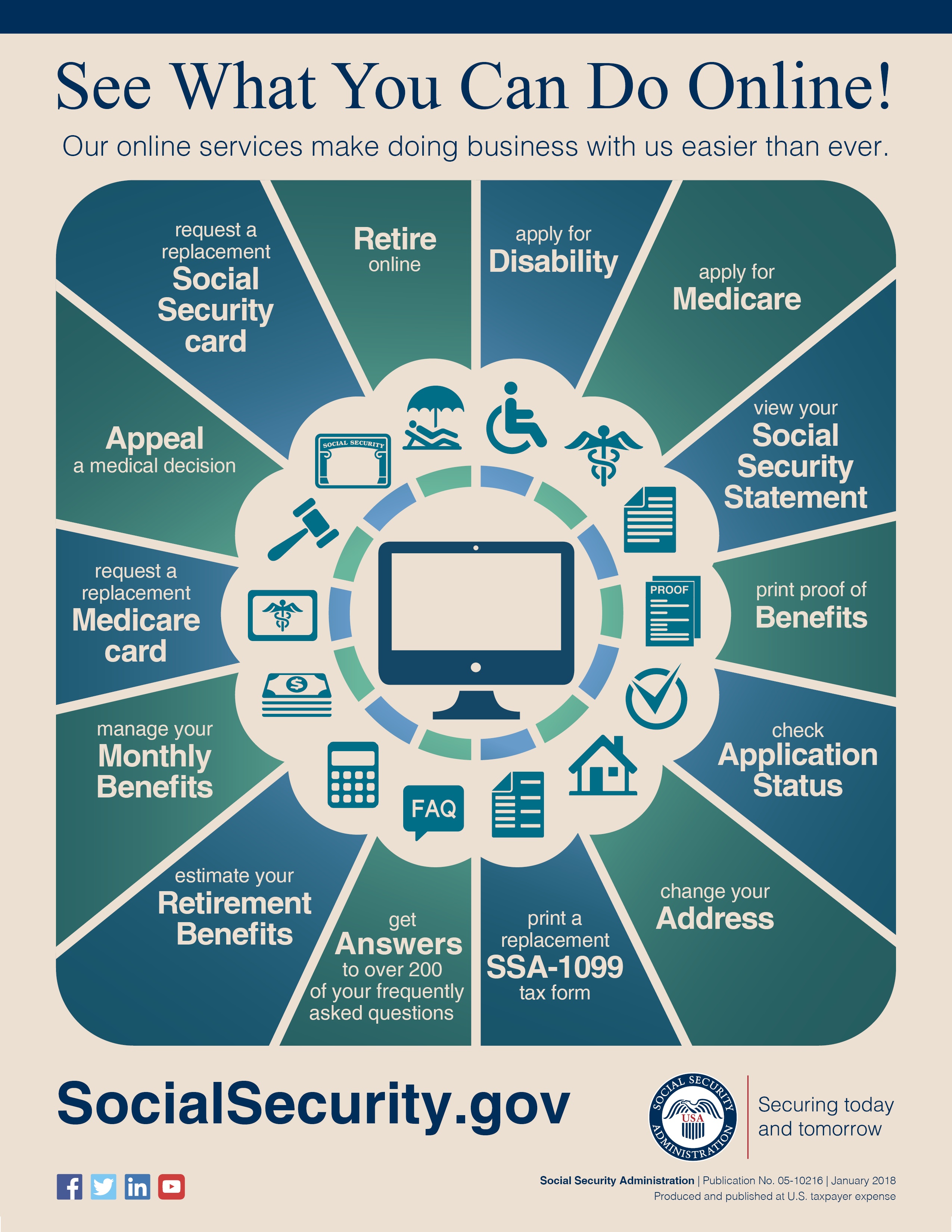
In the digital age, the most convenient and comprehensive way to access your Social Security information is through the official “my Social Security” online portal. This secure, personalized account provides instant access to your earnings record, benefit estimates, and much more.
Setting Up Your Account: A Step-by-Step Guide
Creating a “my Social Security” account is straightforward and takes only a few minutes. You’ll need to visit the official Social Security Administration (SSA) website (SSA.gov) and follow these steps:
-
Click “Sign In/Up”: On the homepage, locate the “Sign In/Up” button for “my Social Security.”
-
Create a New Account: If you don’t already have one, select “Create an Account.”
-
Agree to Terms: Read and agree to the Terms of Service.
-
Verify Your Identity: This is the most critical step for security. You’ll be asked to provide personal information such as your name, date of birth, Social Security number, and address. The SSA will then ask a series of security questions based on your credit history or other public records to confirm your identity. It’s crucial to answer these accurately. If you struggle with identity verification, there are alternative methods for assistance, which you can find on the SSA website.
-
Create Username and Password: Once your identity is verified, you’ll create a unique username and a strong password. You may also be prompted to set up multi-factor authentication for added security.
-
Confirm Your Account: You’ll typically receive an email or text message to confirm your account creation.
What You’ll Find Inside: A Treasure Trove of Information
Once logged into your “my Social Security” account, you’ll gain access to a wealth of personalized information:
-
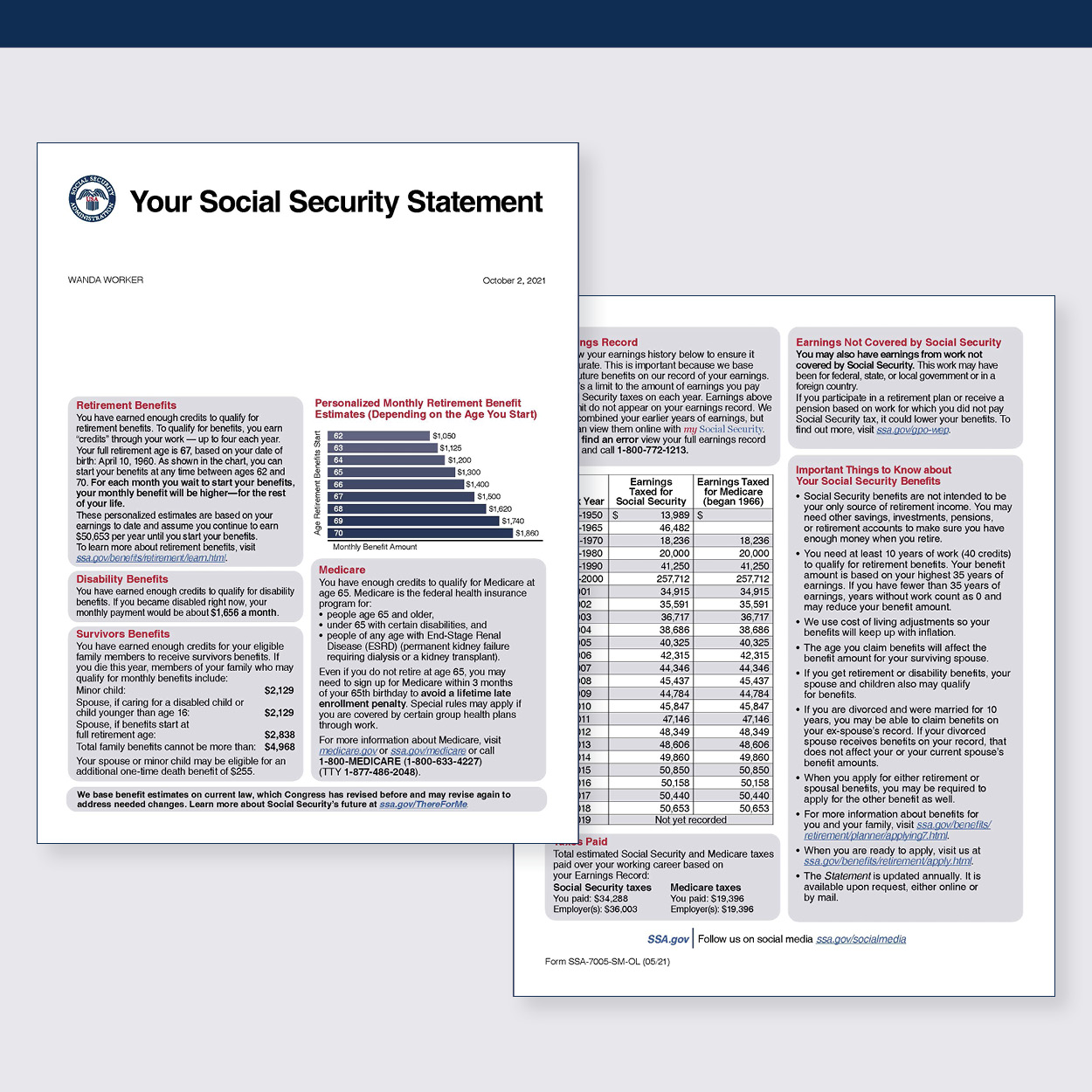
Your Social Security Statement: This digital statement is the cornerstone of your account. It provides a detailed record of your earnings history, estimated benefits for retirement (at various ages), disability, and survivor benefits.
-
Earnings Record: You can review your complete yearly earnings record that the SSA has on file. It’s vital to check this for accuracy, as errors could impact your future benefits.
-
Benefit Estimates: See personalized estimates for your future retirement benefits at your full retirement age, as well as at age 62 and age 70. This helps you model different claiming scenarios.
-
Disability Benefits: Get an estimate of the monthly benefit you (and potentially your family) could receive if you became disabled.
-
Survivor Benefits: Learn about the benefits your spouse and children might be eligible for in the event of your death.
-
Benefit Verification Letter: If you’re already receiving benefits, you can instantly download an official letter confirming your current benefit amount, which is often required for mortgages, loans, or other financial applications.
-
Manage Your Benefits: If you’re already receiving benefits, you can change your address, direct deposit information, or get a replacement Medicare card directly through your online account.
Advantages of Online Access
The “my Social Security” account offers numerous advantages:
-
Instant Access: Get your information anytime, anywhere, without waiting for mail or phone calls.
-
Convenience: All your key Social Security information is consolidated in one secure place.
-
Accuracy Check: Easily review your earnings history and report any discrepancies.
-
Planning Tools: Use the benefit estimates to inform your long-term financial planning.
-
Eco-Friendly: Reduces paper waste by opting for digital statements.
-
Security: The SSA employs robust security measures to protect your personal data.
Alternative Avenues: Accessing Your Information Offline
While the online account is highly recommended, the SSA recognizes that not everyone prefers or has access to digital services. Several traditional methods are available to obtain your Social Security information.
Requesting a Statement by Mail
If you prefer a physical document or are unable to create an online account, you can request a paper copy of your Social Security Statement.
-
Eligibility: Generally, the SSA automatically mails a paper statement to workers age 60 and over who are not yet receiving Social Security benefits and who do not have a “my Social Security” online account. If you’re under 60, or if you haven’t received one, you can request it.
-
How to Request: Visit the SSA’s website (SSA.gov) and search for “Request a Social Security Statement.” You’ll need to fill out Form SSA-7004, “Request for Social Security Statement,” and mail it to the address provided on the form.
-
Waiting Time: It typically takes several weeks to receive your statement by mail after your request has been processed.
Direct Assistance: Visiting a Local SSA Office
For personalized assistance or if you encounter issues with online or mail requests, visiting a local Social Security office can be an effective option.
-
Finding an Office: Use the SSA’s online office locator tool (SSA.gov/locator) to find the office nearest to you.
-
What to Bring: When visiting, it’s wise to bring identification (such as a driver’s license or state ID), your Social Security card, and any relevant documents concerning your earnings or employment history.
-
Services: Staff at the office can help you create an online account, explain your statement, answer specific questions about your benefits, or assist with applications for benefits.
-
Appointment Recommended: Due to potentially long wait times, it’s often advisable to call ahead and schedule an appointment.
Speaking to an Expert: The Toll-Free Number
For general inquiries or to speak with an SSA representative, you can call their national toll-free number.
-
Number: 1-800-772-1213.
-
Hours: Representatives are typically available Monday through Friday, from 8:00 AM to 7:00 PM Eastern Time.
-
Be Prepared: Have your Social Security number and other identifying information ready to confirm your identity. While representatives can answer general questions and help with specific issues, they may not be able to provide as detailed or personalized information as your online statement or an in-person visit.
Deciphering Your Benefit Statement: What the Numbers Mean
Once you have your Social Security Statement in hand (or on screen), it’s important to understand what all the figures represent. This document is packed with crucial information about your past earnings and future benefits.
Understanding Your Estimated Retirement Benefits
Your statement will typically show three key retirement benefit estimates:
-
Full Retirement Age (FRA) Benefit: This is your “primary insurance amount” (PIA), the maximum benefit you’re entitled to based on your earnings history, assuming you wait until your FRA to claim benefits. Your FRA depends on your birth year.
-
Early Retirement Benefit (Age 62): This shows a reduced benefit amount if you choose to start receiving benefits as early as age 62. Claiming early results in a permanent reduction, as you’ll be receiving benefits for a longer period.
-
Late Retirement Benefit (Age 70): This illustrates an increased benefit amount if you delay claiming benefits past your FRA, up to age 70. For each month you delay past your FRA, your benefit amount increases, a concept known as “delayed retirement credits.”
These estimates are projections based on your current earnings and the assumption that you’ll continue to earn at a similar rate until retirement.
Disability and Survivor Benefits: Beyond Retirement
Beyond retirement, your statement also provides vital estimates for:
-
Disability Benefits: This is the monthly amount you (and potentially your family) would receive if you were to become severely disabled and unable to work. Social Security Disability Insurance (SSDI) provides income replacement for workers who have paid into the system.
-
Survivor Benefits: In the event of your death, your eligible spouse and children may be entitled to survivor benefits. Your statement provides estimates for the total amount your family could receive. This information is critical for assessing your life insurance needs.
Reviewing Your Earnings Record for Accuracy
One of the most critical sections of your statement is your detailed earnings record, listing your taxed earnings year by year. It is absolutely essential to review this for accuracy. Social Security benefits are calculated based on your highest 35 years of earnings; therefore, any errors could lead to a lower benefit amount.
-
Check for Missing Years: Ensure all your working years are listed.
-
Verify Amounts: Cross-reference the listed earnings with your W-2s or tax returns, especially for your higher-earning years.
-
Reporting Errors: If you find discrepancies, contact the SSA immediately to resolve them. You’ll need to provide evidence, such as W-2 forms, tax returns, or pay stubs.
Integrating Social Security into Your Broader Financial Plan
Knowing your Social Security benefits is not an end in itself; it’s a starting point for more robust financial planning. These benefits are a foundational element that should be integrated with your other financial assets and goals.
Strategic Retirement Planning with Social Security
Your estimated Social Security benefits help you gauge how much more you need to save. If your projected benefits cover a smaller portion of your desired retirement income than you anticipated, it’s a clear signal to increase your contributions to 401(k)s, IRAs, or other investment vehicles. Conversely, if Social Security provides a substantial baseline, you might be able to allocate more aggressively in your personal investments, taking on calculated risks for higher returns. Understanding your FRA and the impact of delayed retirement credits is crucial for developing a claiming strategy that aligns with your overall financial and personal circumstances.
Addressing Potential Gaps: Insurance and Savings
The disability and survivor benefit estimates provided by Social Security can inform your insurance needs. If these benefits wouldn’t adequately support your family in your absence or if you became disabled, it indicates a need for additional life insurance or long-term disability insurance. This ensures that your loved ones are protected and that your financial plans remain robust even in the face of unexpected life events. Social Security is a safety net, but it’s rarely enough to cover all needs, making personal savings and insurance critical complements.
The Future Outlook: Staying Informed
While Social Security has proven to be an enduring program, its long-term financial stability is a frequent topic of discussion. Projections often indicate that without legislative changes, the program may face challenges in paying 100% of promised benefits in the distant future. This uncertainty underscores the importance of not solely relying on Social Security for your retirement. Diversifying your retirement income streams, saving diligently, and staying informed about potential changes to the program are all vital steps in building a secure financial future. Regularly reviewing your “my Social Security” account and remaining aware of policy discussions will help you adapt your financial plan as needed.
In conclusion, understanding your Social Security benefits is a powerful tool for financial empowerment. By leveraging the convenient online “my Social Security” account or utilizing traditional methods, you can gain clarity on a critical component of your financial safety net. This knowledge will not only help you plan for a secure retirement but also make informed decisions about disability and survivor protection, ultimately paving the way for a more confident and prepared financial future.
aViewFromTheCave is a participant in the Amazon Services LLC Associates Program, an affiliate advertising program designed to provide a means for sites to earn advertising fees by advertising and linking to Amazon.com. Amazon, the Amazon logo, AmazonSupply, and the AmazonSupply logo are trademarks of Amazon.com, Inc. or its affiliates. As an Amazon Associate we earn affiliate commissions from qualifying purchases.