
In an increasingly data-driven world, understanding percentages isn’t just a mathematical convenience; it’s a fundamental skill, especially when it comes to managing and growing your money. From decoding sales tax and investment returns to strategizing personal budgets and business profits, percentages are the universal language of finance. They allow us to compare, allocate, measure growth, and understand the true impact of financial decisions. Without a firm grasp of how to calculate and interpret them, navigating the complexities of personal finance, investing, and even everyday shopping can feel like a shot in the dark.

This article aims to demystify percentages, transforming a potentially intimidating mathematical concept into an accessible and powerful tool for financial empowerment. We’ll explore the core mechanics of percentage calculation and, more importantly, dive into its myriad practical applications across various facets of your financial life. Whether you’re a student trying to understand loan interest, an investor tracking portfolio performance, or a business owner analyzing profit margins, mastering percentages is your gateway to making informed, confident financial choices.
The Foundational Concepts: What is a Percentage?
At its heart, a percentage is simply a way to express a part of a whole as a fraction of 100. It’s a standardized measurement that makes comparisons easier and more intuitive than dealing with raw fractions or decimals alone. Understanding this core definition is the first step toward unlocking its practical utility in finance.
Defining the Core: Part of a Whole
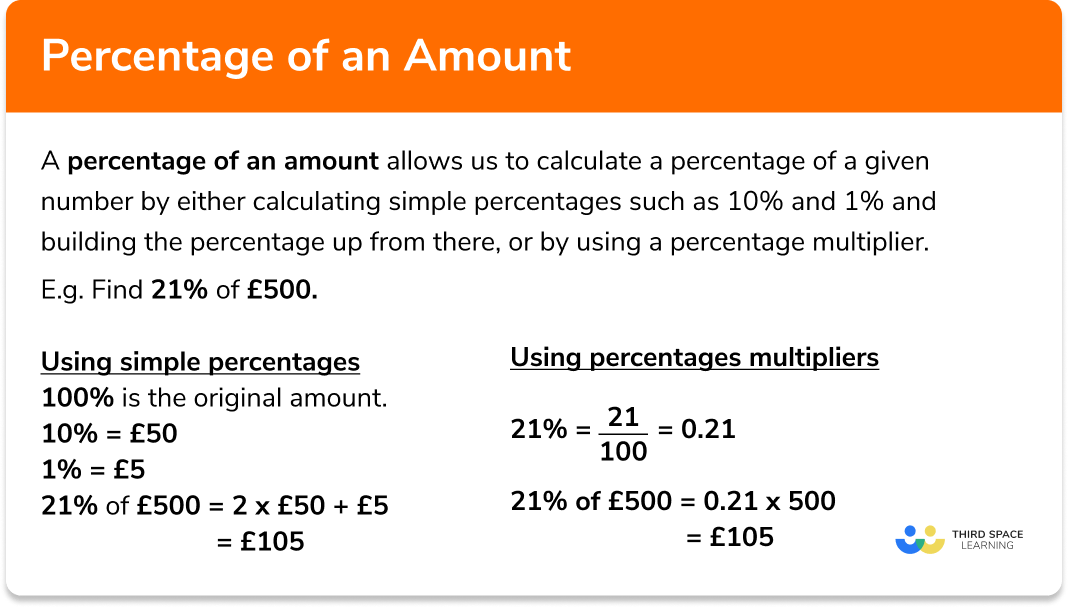
The word “percent” literally means “per hundred” or “out of one hundred.” When you see “25%,” it signifies 25 out of every 100 units. This concept allows us to simplify proportions. For instance, knowing that 25 out of 100 students prefer online learning is far more digestible than knowing that 1/4 or 0.25 of students do. In finance, this translates to understanding that if your savings account offers a 2% interest rate, you’ll earn $2 for every $100 you have saved annually.
To establish this relationship, percentages are inherently linked to fractions and decimals:
- Fraction: A percentage can be written as a fraction with a denominator of 100 (e.g., 25% = 25/100).
- Decimal: To convert a percentage to a decimal, simply divide it by 100 (e.g., 25% = 0.25). This decimal form is particularly useful when performing calculations.
Basic Formula: (Part / Whole) x 100
The fundamental formula for calculating a percentage is straightforward:
Percentage = (Part / Whole) × 100
Let’s break down the components:
- Part: This is the specific quantity you are interested in, a subset of the larger whole.
- Whole: This represents the total amount or the base value against which the part is being compared.
- 100: Multiplying by 100 converts the decimal or fractional ratio into its percentage form.
Consider a simple non-financial example to solidify this: If you scored 45 questions correctly out of a total of 50 questions on a test, your percentage score would be (45 / 50) × 100 = 0.9 × 100 = 90%. This same logic extends directly into financial calculations, where the “part” might be the interest earned and the “whole” might be the principal amount.
Practical Applications in Personal Finance
Percentages are the bedrock of everyday financial literacy. From your shopping cart to your monthly budget, an understanding of percentage calculations empowers you to make smarter spending, saving, and borrowing decisions.
Calculating Discounts and Sales Tax
One of the most common applications of percentages is in retail. Whether you’re snagging a deal or paying your dues, percentages are at play.
- Discounts: When an item is “20% off,” you need to calculate 20% of the original price and subtract that amount.
- Example: A shirt costs $50. It’s 20% off.
- Discount amount = $50 × 0.20 = $10.
- New price = $50 – $10 = $40.
- Alternatively, you’re paying 80% of the original price: $50 × (1 – 0.20) = $50 × 0.80 = $40.
- Example: A shirt costs $50. It’s 20% off.
- Sales Tax: Similarly, sales tax is typically added as a percentage of the purchase price.
- Example: You buy an item for $100 in a state with 7% sales tax.
- Sales tax amount = $100 × 0.07 = $7.
- Total cost = $100 + $7 = $107.
- Example: You buy an item for $100 in a state with 7% sales tax.
Understanding Interest Rates (Loans and Savings)
Interest is the cost of borrowing money or the reward for saving it, almost universally expressed as a percentage.
- Simple Interest Calculation: For basic scenarios, interest is calculated on the principal amount.
- Formula: Interest = Principal × Rate × Time.
- Example: You deposit $1,000 into a savings account with a 3% annual simple interest rate.
- Interest after one year = $1,000 × 0.03 × 1 = $30.
- APR vs. APY:
- Annual Percentage Rate (APR): This is the annual rate charged for borrowing or earned by investing, typically without compounding. It’s common for credit cards and loans.
- Annual Percentage Yield (APY): This reflects the actual rate of return earned on an investment, taking into account the effect of compounding interest. APY is usually higher than APR for the same nominal rate if compounding occurs more than once a year. Understanding the difference is crucial for comparing financial products effectively.
Budgeting and Financial Allocation
Percentages are indispensable tools for creating and sticking to a budget, helping you allocate your income effectively across various categories.
- The 50/30/20 Rule: A popular budgeting guideline suggests allocating 50% of your income to needs (housing, groceries), 30% to wants (entertainment, dining out), and 20% to savings and debt repayment.
- Example: If your monthly after-tax income is $4,000:
- Needs: $4,000 × 0.50 = $2,000
- Wants: $4,000 × 0.30 = $1,200
- Savings/Debt: $4,000 × 0.20 = $800
- Example: If your monthly after-tax income is $4,000:
- Calculating what percentage of your income goes to specific categories allows you to identify areas for potential savings or adjustments, providing clear insights into your spending habits.
Percentages in Investing and Wealth Growth
For investors, percentages are the language of performance, risk, and diversification. They enable you to evaluate returns, allocate assets, and comprehend macroeconomic factors like inflation.
Measuring Investment Returns
The primary use of percentages in investing is to quantify gains or losses and compare the performance of different investments.
- Percentage Gain/Loss:
- Formula: ((Current Value – Original Value) / Original Value) × 100
- Example: You bought stocks for $5,000, and they are now worth $6,200.
- Percentage gain = (($6,200 – $5,000) / $5,000) × 100 = ($1,200 / $5,000) × 100 = 0.24 × 100 = 24%.
- Compound Annual Growth Rate (CAGR): For investments held over multiple years, CAGR provides a smoothed annual growth rate, accounting for compounding. While the formula is more complex, understanding what it represents—the average annual growth rate of an investment over a specified period longer than one year—is vital for assessing long-term performance. It helps compare investments that have grown over different timeframes.
Portfolio Allocation
Smart investors use percentages to diversify their holdings, spreading risk across different asset classes.
- Asset Allocation: This refers to dividing an investment portfolio among different asset categories, such as stocks, bonds, and cash. A common strategy might be 60% stocks, 30% bonds, and 10% cash, adjusting based on age, risk tolerance, and financial goals.
- Example: If you have a $100,000 investment portfolio and want a 70% stock allocation:
- Amount in stocks = $100,000 × 0.70 = $70,000.
- Example: If you have a $100,000 investment portfolio and want a 70% stock allocation:
- Regularly checking the percentage breakdown of your portfolio against your target allocation helps in rebalancing, ensuring your investments remain aligned with your strategy.
Understanding Inflation
Inflation, the rate at which the general level of prices for goods and services is rising, and subsequently, purchasing power is falling, is always expressed as a percentage.
- Example: If the inflation rate is 3% annually, an item that costs $100 today will cost approximately $103 next year to purchase the same amount of goods or services.
- Understanding how to calculate the real return on your investments (nominal return minus inflation rate) is crucial for assessing if your money is truly growing or just keeping pace with rising costs. Percentages allow us to quantify this erosion of purchasing power over time.
Business Finance and Operational Insights
For businesses, percentages are critical analytical tools. They offer concise insights into profitability, growth, efficiency, and financial health, guiding strategic decisions and operational improvements.
Profit Margins and Markups
Businesses live and die by their ability to generate profit, and percentages are the standard metrics for evaluating it.
- Gross Profit Margin: This tells you the percentage of revenue left after deducting the cost of goods sold (COGS).
- Formula: ((Revenue – COGS) / Revenue) × 100
- Example: A company has $1,000,000 in revenue and $600,000 in COGS.
- Gross Profit Margin = (($1,000,000 – $600,000) / $1,000,000) × 100 = ($400,000 / $1,000,000) × 100 = 40%.
- Net Profit Margin: This shows the percentage of revenue remaining after all expenses (COGS, operating expenses, interest, taxes) have been deducted. It’s a key indicator of a company’s overall profitability.
- Markups: Businesses often set prices by applying a percentage markup to their cost.
- Example: If an item costs $20 to produce and you want a 50% markup.
- Markup amount = $20 × 0.50 = $10.
- Selling price = $20 + $10 = $30.
- Example: If an item costs $20 to produce and you want a 50% markup.
Growth Rates and KPIs
Key Performance Indicators (KPIs) and growth rates, frequently expressed as percentages, help businesses track their progress and identify trends.
- Revenue Growth: The percentage increase in revenue over a period (e.g., quarter-over-quarter, year-over-year).
- Formula: ((Current Revenue – Previous Revenue) / Previous Revenue) × 100
- Example: If last year’s revenue was $1M and this year’s is $1.2M.
- Revenue Growth = (($1.2M – $1M) / $1M) × 100 = ($0.2M / $1M) × 100 = 20%.
- Other percentage-based KPIs include customer growth rate, market share percentage, and conversion rates, all of which provide vital insights into business health and competitive positioning.
Financial Ratios
Many crucial financial ratios used to assess a company’s liquidity, solvency, efficiency, and profitability are often expressed as percentages or easily convertible to them.
- Debt-to-Equity Ratio: While often shown as a decimal, multiplying by 100 gives a clear percentage, indicating the proportion of debt financing relative to equity.
- Return on Equity (ROE): This profitability ratio measures the percentage of profit a company earns for each dollar of shareholder equity.
- These ratios allow stakeholders—from management to investors—to quickly gauge a company’s financial standing and compare it against industry benchmarks.
Tools and Tips for Accurate Percentage Calculations
While the underlying math is simple, efficiency and accuracy in percentage calculations can be significantly enhanced with the right tools and a careful approach.
Utilizing Calculators and Spreadsheets
For most financial applications, you won’t need to do complex percentage calculations manually.
- Basic Calculators: Most standard calculators have a “%” button, which can simplify some operations (e.g., entering
50 + 20%might directly give you60if your calculator treats20%as0.20of50added to50). However, it’s often safer and clearer to perform the calculation manually:50 * 0.20 = 10, then50 + 10 = 60. - Excel/Google Sheets: Spreadsheets are invaluable for financial calculations involving percentages, especially for budgeting, investment tracking, and business analysis.
- To calculate a percentage: If
Partis in cell A1 andWholeis in B1,=(A1/B1)*100gives the percentage. You can also format the cell as a percentage to automatically multiply by 100. - To find an amount after a percentage increase:
=OriginalValue * (1 + PercentageRate). - To find an amount after a percentage decrease:
=OriginalValue * (1 - PercentageRate).
- To calculate a percentage: If
Common Mistakes to Avoid
Even seasoned professionals can make errors if not careful.
- Confusing Base Values: Ensure you’re always calculating a percentage of the correct “whole” or original amount. For example, a “percent increase” from an initial value versus a “percent of” a current value.
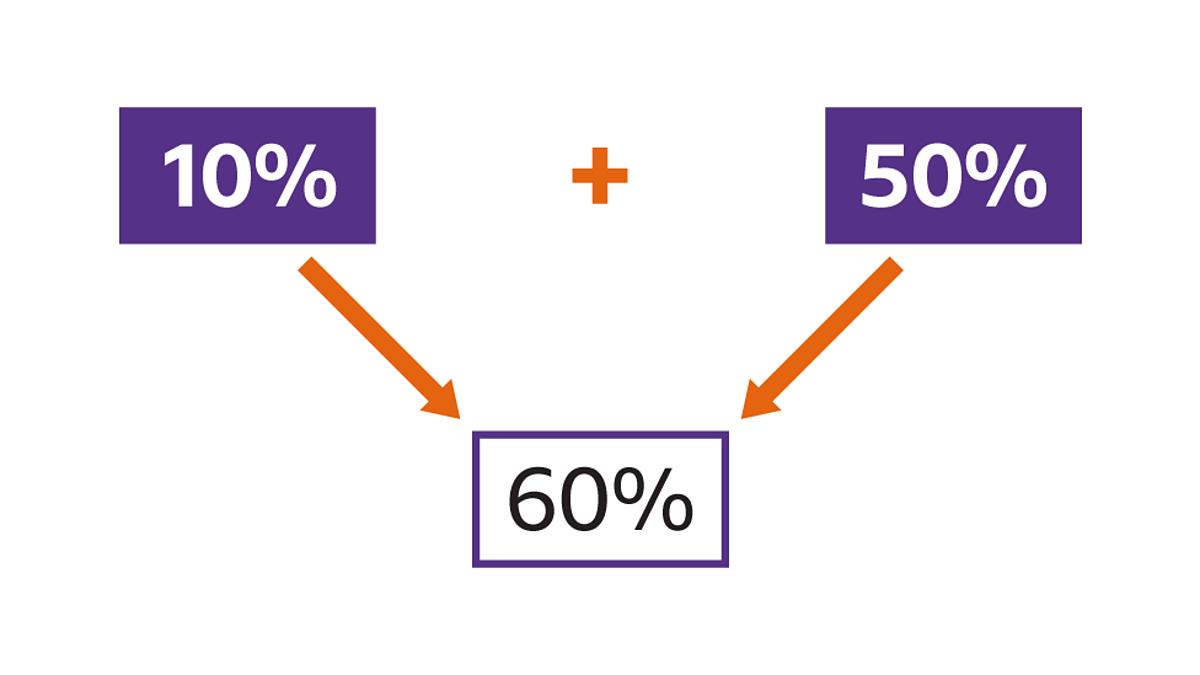
- Incorrectly Adding/Subtracting Percentages: You cannot simply add or subtract percentages from each other without a common base. A “10% discount followed by another 10% discount” is not a “20% discount” on the original price.
- Example: Item $100. First 10% off: $100 – ($100 * 0.10) = $90. Second 10% off the new price: $90 – ($90 * 0.10) = $81. The total discount is $19, or 19%, not 20%.
- Rounding Errors: Be mindful of when and how you round, especially in complex calculations involving multiple steps. For financial accuracy, it’s often best to perform calculations with maximum precision and round only the final result.
Developing Your Financial Fluency
The more you practice using percentages in real-world financial scenarios, the more intuitive they become. Don’t shy away from running quick calculations on sales tags, comparing interest rates, or evaluating your budget allocations. This hands-on experience builds confidence and transforms percentage calculations from a chore into a powerful financial habit.
Conclusion
Percentages are far more than just mathematical curiosities; they are the essential tools that unlock clarity and control in your financial life. From managing your daily expenses and planning for future investments to driving business growth, the ability to find out and interpret percentages empowers you to make informed decisions. By understanding the foundational concepts, applying them diligently to personal and business finance, and leveraging the right tools, you can transform complex financial data into actionable insights. Embrace the power of the percentage – it’s a skill that pays dividends, literally and figuratively, across every aspect of your financial journey.
aViewFromTheCave is a participant in the Amazon Services LLC Associates Program, an affiliate advertising program designed to provide a means for sites to earn advertising fees by advertising and linking to Amazon.com. Amazon, the Amazon logo, AmazonSupply, and the AmazonSupply logo are trademarks of Amazon.com, Inc. or its affiliates. As an Amazon Associate we earn affiliate commissions from qualifying purchases.